EN/
EN/ Romana
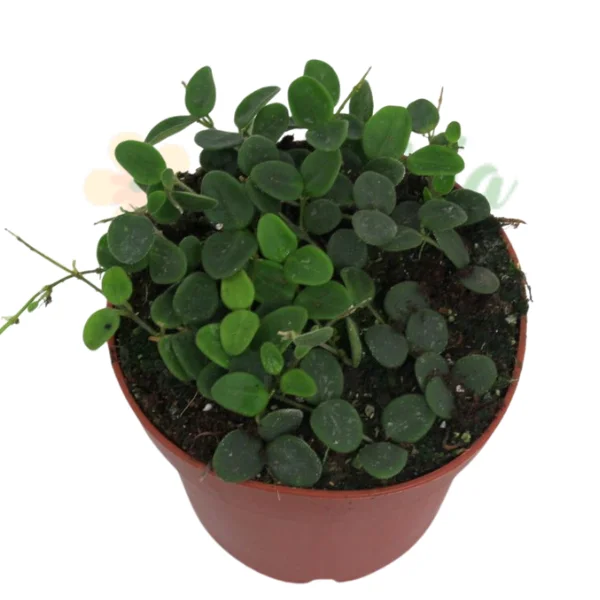
Hoya finlaysonii Ø10.5cm
![Hoya finlaysonii [0]](https://gomagcdn.ro/domains2/eufloria.ro/files/product/medium/hoya-finlaysonii-d10-5-795801.webp "Hoya finlaysonii [0]")
![Hoya finlaysonii [1]](https://gomagcdn.ro/domains2/eufloria.ro/files/product/medium/hoya-finlaysonii-d10-5-786547.webp "Hoya finlaysonii [1]")
![Hoya finlaysonii [1]](https://gomagcdn.ro/domains2/eufloria.ro/files/product/original/hoya-finlaysonii-d10-5-795801.webp "Hoya finlaysonii [1]")
![Hoya finlaysonii [2]](https://gomagcdn.ro/domains2/eufloria.ro/files/product/original/hoya-finlaysonii-d10-5-786547.webp "Hoya finlaysonii [2]")
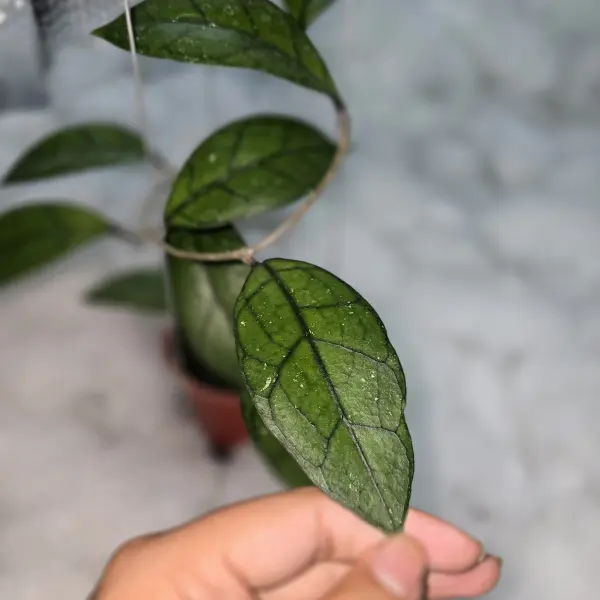
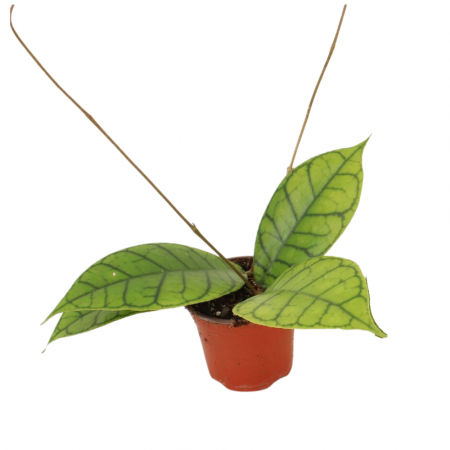
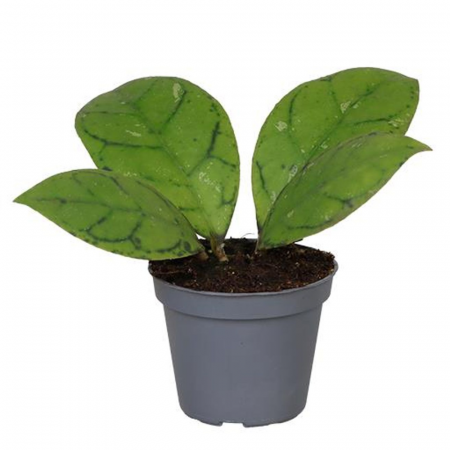
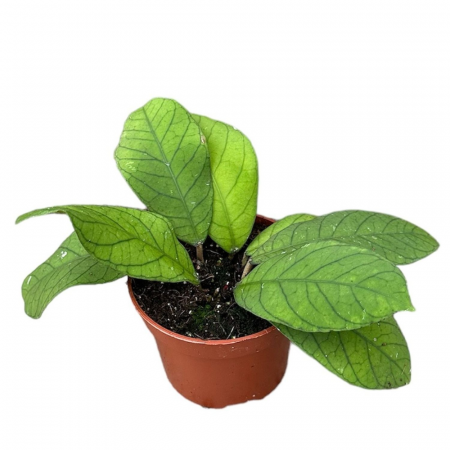
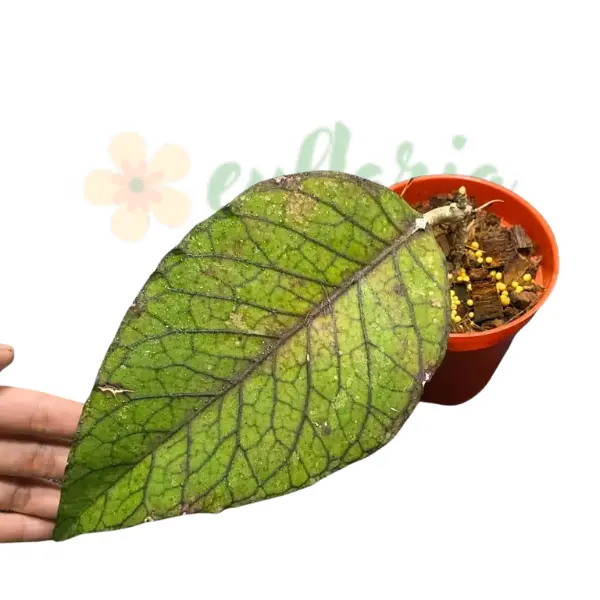
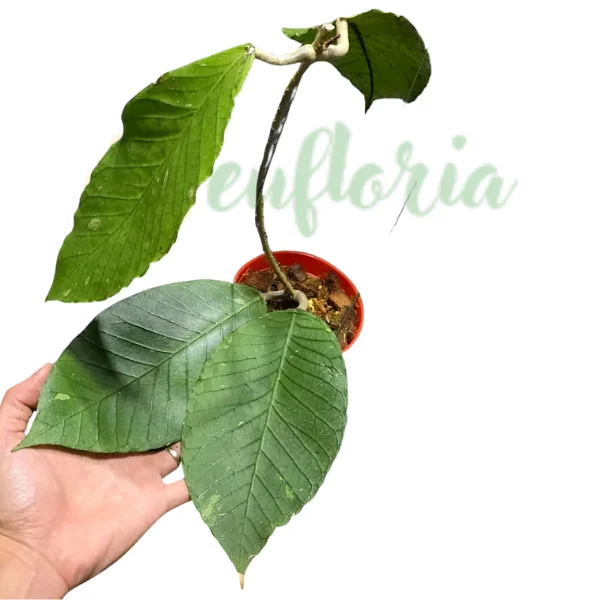
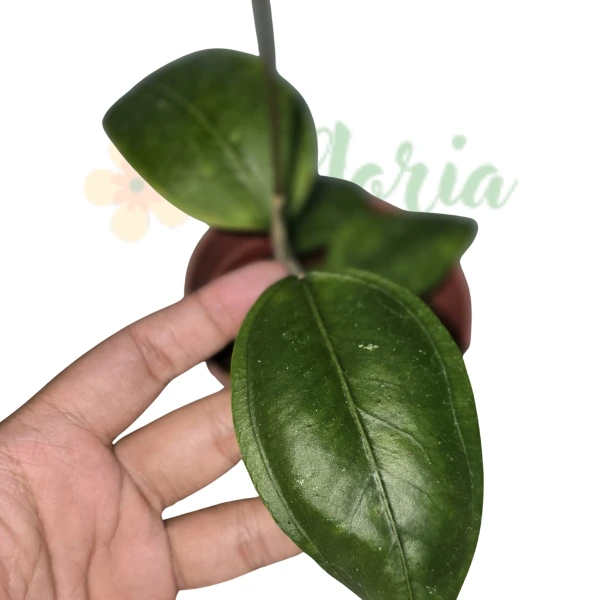
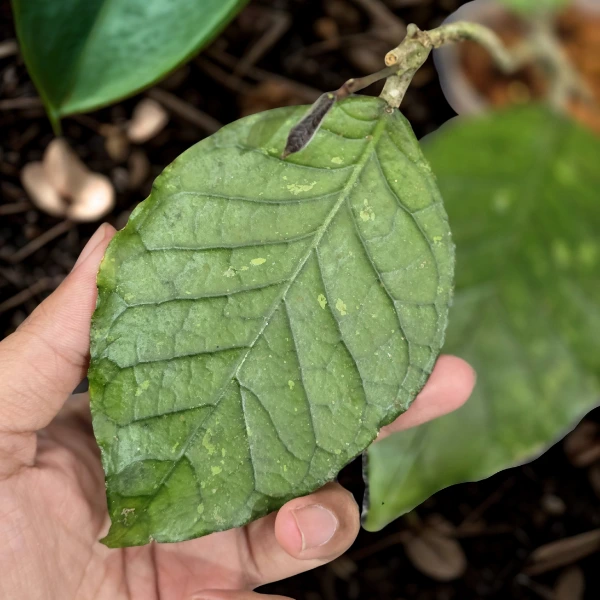
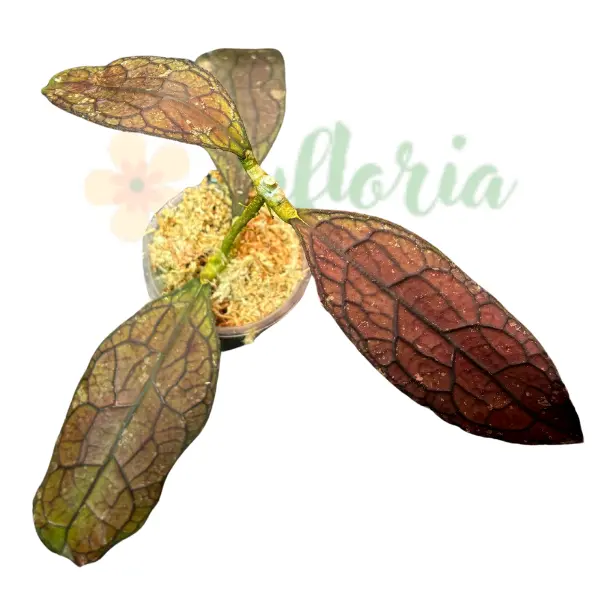
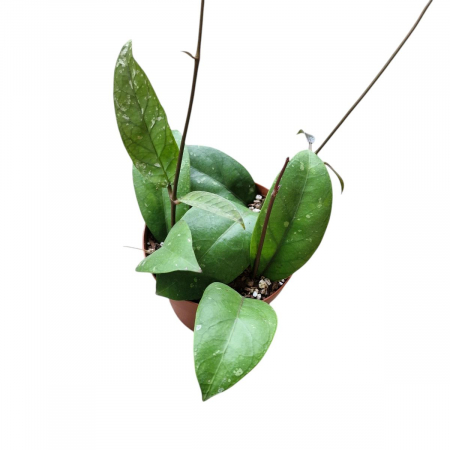
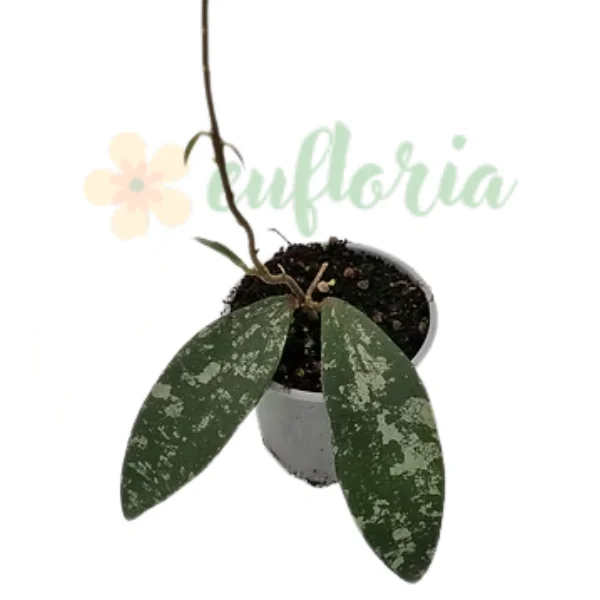
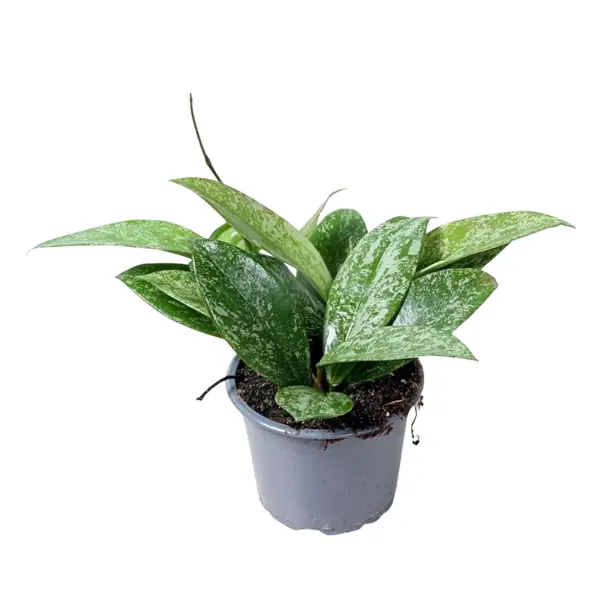
Hoya finlaysonii – spectacular species with large, textured leaves resembling crocodile skin. Fragrant creamy-white star-shaped flowers. Climbing epiphyte from the Apocynaceae family. Prefers bright indirect light and well-drained substrate. Non-toxic plant.
Approx height (including pot): 15 cm
Flowering state: No flowers
Country of origin: Netherlands
- Description
- Characteristics
- Reviews (0)
- FAQ
🌿 Hoya finlaysonii – Impressive Leaves with Crocodile Skin Texture
Hoya finlaysonii is one of the most spectacular species in the Hoya genus, remarkable for its large, elongated, and deeply textured leaves that resemble crocodile skin. Native to the tropical forests of Southeast Asia, this epiphytic plant from the Apocynaceae family is highly prized by collectors for its dramatic appearance and fragrant flowers.
🌍 Origins and Botanical History
Hoya finlaysonii grows naturally in tropical forests across Thailand, Malaysia, and Indonesia, where it clings to tree trunks and branches as an epiphyte. It was first described in the 19th century and bears the name of botanist George Finlayson. Several forms and varieties exist in cultivation, including forms with longer or shorter leaves, but all share the characteristic leaf texture.
🌿 Leaves – Spectacular Textures and Tropical Vigor
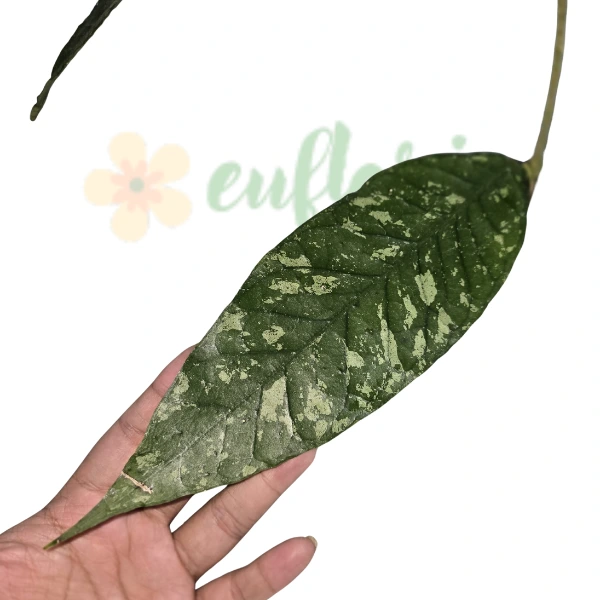
The leaves are the main attraction of this species. They are large, elongated, 10-20 cm in length, with a deeply embossed texture that creates a unique reptilian skin appearance. The coloring ranges from light green to dark green, often with lighter visible veins. The leaves are thick and leathery, adapted for water storage in their natural environment.
🌸 Flowers – Fragrant Star Bouquets
Hoya finlaysonii flowers are grouped in globular umbels, composed of small star-shaped flowers in creamy white with pink or red centers. They emit a sweet fragrance, more intense at night, to attract pollinators. Flowering can be abundant in mature specimens grown under optimal light conditions.
🌱 Growth Habit and Care
Hoya finlaysonii is a climbing plant that benefits from a support structure to climb on. It prefers bright indirect light, a well-drained substrate based on bark and perlite, and moderate watering – the substrate should partially dry between waterings. High humidity (above 60%) promotes optimal growth. Ideal temperatures are between 18-30°C (64-86°F), avoiding temperatures below 15°C (59°F).
Lungime: 10 cm
Greutate (kg): 0.25 Kg
Denumire: Hoya
Diametru: 10.5 cm
Cerințe lumină: Partial umbra
Tip plantă: Decorative
Utilizare: Interior
Tip suport: Ghiveci
Material Suport: Plastic
What is the difference between Hoya finlaysonii and Hoya callistophylla?
Although both species have green leaves with prominent dark veins and are often confused, there are clear differences between them. Hoya callistophylla has much more prominent, thickened and contrasting veins, almost in relief, which create an even more dramatic pattern than finlaysonii. The leaves of callistophylla are usually shorter and wider, and the veins tend to be more reddish or burgundy. Hoya finlaysonii has more elongated, thinner leaves, with dark green to almost black veins, but more flattened in texture. The flowers are also different: callistophylla produces larger flowers with a stronger fragrance.
How fast does Hoya finlaysonii grow and how long does it take to bloom?
Hoya finlaysonii has a moderate growth rate under optimal conditions, producing 3-5 new leaves per shoot during the growing season (spring-summer). In the first year you can expect a growth of 20-40 cm in length, then the plant accelerates as it matures. Flowering is a test of patience - the plant usually takes 2-3 years to reach maturity and produce its first flowers, starting from a young cutting. After the first flowering, the plant will bloom annually or even 2-3 times a year if the light, humidity and temperature requirements are met. The keys to flowering are: consistent bright light, leaving the plant slightly root-bound (tied in the pot), and never cutting off the old flower stalks.
What type of substrate is ideal for Hoya finlaysonii?
As an epiphyte, Hoya finlaysonii requires an extremely well-drained, aerated substrate that does not retain too much water but maintains light moisture around the roots. The ideal mix contains about 50% chunky organic components (pine bark chips, horticultural charcoal, coconut fiber, sphagnum) and 50% drainage components (perlite, pumice, sphagnum). Avoid standard universal soil which is too dense and retains too much moisture. Some successful growers grow this plant even in soilless substrate, only made of coconut fiber and coconut chips. The substrate should allow the roots to breathe and have access to air, simulating the conditions on the bark of trees in their natural habitat.
Why do Hoya finlaysonii leaves develop purple or reddish spots?
Spots, streaks or reddish-purple hues on Hoya finlaysonii leaves are a natural and healthy response to exposure to intense light, a phenomenon known as "sun stress". This is completely normal and even indicative of the plant receiving the right amount of light for optimal growth. Anthocyanin pigments develop as a protective mechanism against intense light, similar to a natural tan. Some leaves may become almost completely purple in certain areas. These colorations do not affect the health of the plant and in fact add an additional decorative element. If you want to minimize this coloration, move the plant to an area with slightly less light, but not too little as the plant needs bright light to grow healthily.
How often should Hoya finlaysonii be watered compared to other Hoyas?
Hoya finlaysonii requires a slightly different approach to watering than many other Hoya species with very succulent leaves. Due to its thinner and less succulent leaves, this plant prefers more consistent moisture around the roots, without allowing the soil to dry out completely between waterings. During the growing season (spring-summer), water when the top 3-5 cm of the substrate has dried out - about once a week depending on temperature and humidity conditions. In winter, reduce the frequency to once every 2-3 weeks, allowing the substrate to dry out more. The key is to never let the plant sit in stagnant water or completely saturated substrate, as the roots will quickly rot. A smaller pot helps to naturally control the amount of water available.
Can I grow Hoya finlaysonii on a support or is it better as a hanging plant?
Hoya finlaysonii is extremely versatile and looks spectacular in both styles of cultivation. As a hanging plant in a hanging basket or on a high shelf, it creates elegant cascades of decorative foliage that allow the venation pattern to be admired from a distance. As a plant on a vertical support (trellis, hoop, coconut pole), you can create more compact and sculptural compositions, guiding the shoots into artistic shapes. In its natural habitat, the plant climbs trees, so both approaches are natural for it. Choose according to the space available: hanging baskets for high spaces, vertical supports for corners or tables. The plant does not use aggressive aerial roots to cling to itself, so you will need to attach the shoots to the support with delicate clips or soft ribbon as they grow.
Why do Hoya finlaysonii flowers fall before they fully open?
Flower bud or young flower drop in Hoya finlaysonii is usually caused by environmental stress during flower formation or opening. Common factors include: sudden changes in temperature or cold drafts, moving the plant during bud formation, inconsistent watering (either too much or too little), too low air humidity (below 50%), or exposure to ethylene gas from nearby ripening fruit. To prevent this, once you notice flower buds forming, maintain stable conditions - do not move the plant, keep the same watering schedule, maintain air humidity at 60-80%, and avoid exposure to drafts or temperatures below 18°C. Fertilizing with a phosphorus-rich product during the bud formation period can also help support flowering.
How do I care for a Hoya plant?
Hoya plants prefer bright indirect light, moderate watering (allow the soil to dry between waterings) and temperatures between 18-27°C (65-80°F). Provide well-draining substrate and higher humidity for optimal growth.
When does Hoya bloom?
Hoya typically blooms in spring and summer, producing waxy, fragrant flowers. Do not cut the peduncles after flowering, as the plant will bloom again from the same stalks.
How often should I water my Hoya?
Water your Hoya when the top layer of soil (2-3 cm) has dried completely. In summer, this usually means once a week, and in winter every 2-3 weeks. Avoid overwatering.
Is Hoya toxic to pets?
Hoya is generally considered non-toxic to dogs and cats. However, ingestion of any plant may cause mild gastric discomfort, so it is recommended to keep the plant away from pets.
How do I propagate Hoya?
Hoya can be propagated through stem cuttings with 2-3 nodes. Place the cuttings in water or moist substrate and wait 2-6 weeks for rooting. Higher humidity helps the process.
Recommendations
Ai nevoie și de un ghiveci decorativ?