EN/
EN/ Romana
Hoya bella 'Lida Buis' Ø6cm
![Hoya bella Lida Buis lance-shaped leaves and pendent umbel of white flowers with magenta centres [1]](https://gomagcdn.ro/domains2/eufloria.ro/files/product/original/hoya-bella-lida-buis-d12cm-701473.jpg "Hoya bella Lida Buis lance-shaped leaves and pendent umbel of white flowers with magenta centres [1]")
Hoya bella 'Lida Buis' is an elegant Dutch cultivar of the beloved small Hoya, with lance-shaped green leaves and pendent umbels of star-shaped white flowers with intense red-magenta centres. Fragrant vanilla-almond blooms, perfect for small hanging baskets.
Note: Product images are for guidance only. Due to different batches of imported products, there may be differences between the images on the website and the actual appearance of the products.
Approx height (including pot): 15 cm
Flowering state: No flowers
- Description
- Characteristics
- Reviews (0)
- FAQ
Hoya bella 'Lida Buis' — The Miniature Elegance of the Himalayas in Your Pot
Among Hoyas, there is a special category: the pendulous, delicate ones, with thin stems and small leaves — almost a botanical jewel. Hoya bella 'Lida Buis' is one of the most charming selections in this category, a rare cultivar selected in the Netherlands for its perfectly symmetrical foliage and abundant flowering. Native to the mountain forests of India and Myanmar, the species Hoya bella is often called „the miniature wax queen” for its umbels of crystal-white fragrant flowers with magenta centers.
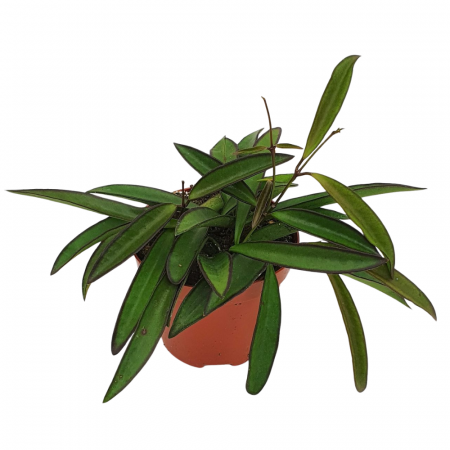
The 'Lida Buis' variant stands out with slightly longer and narrower leaves than the species form, in a medium green with silky reflections. It is a cascade plant — it looks spectacular in hanging baskets or on tall stands, where the vines can flow freely and spread in the air.
Origin and Botanical History
Hoya bella was first described by William Hooker in 1848, based on specimens collected in northern India. The specific name „bella” means „beautiful” in Latin — a direct reference to its elegant morphology. The species is part of the Apocynaceae family, subfamily Asclepiadoideae, which includes over 500 species of Hoya distributed from India to Australia and Polynesia.
The 'Lida Buis' cultivar was selected by Dutch nurseryman Jan Buis in the early 2000s and named in honor of his wife, Lida. The cultivar quickly spread through European collections thanks to its combination of vigor, early flowering, and stable form — qualities sought after by advanced collectors.
Plant Characteristics on Eufloria.ro
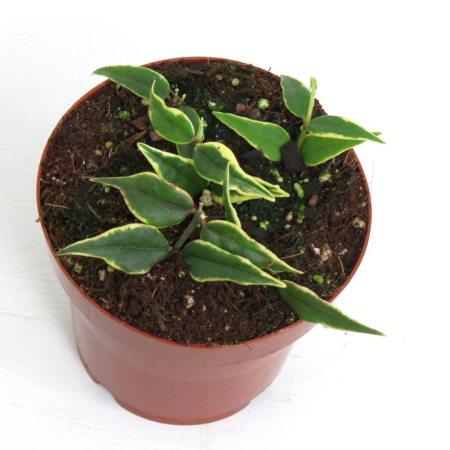
The specimen offered on Eufloria.ro comes in a Ø6cm pot, with total vine length of approximately 15–20cm. The plant is stabilized in Hoya-specific airy substrate and features:
- Small, elongated leaves: 2–4cm long and 0.8–1.2cm wide, narrowing to the tip, medium green with matte reflections;
- Thin and flexible stems: pendulous growth that naturally falls over the edge of the pot;
- Compact habit: branches easily, creates a rich and full appearance even in small pots;
- Flowers: umbels of 6–12 crystal white flowers with magenta-purple centers, intensely fragrant in the evening.
Unlike many other Hoyas, Hoya bella flowers relatively quickly — usually in the second year after rooting, if it receives sufficient light and is kept slightly root-bound.
Care Guide for Hoya bella 'Lida Buis'
Light
Bright indirect light — essential for flowering. An east or west-facing window is ideal. It can receive 1–2 hours of morning sun, but avoid direct midday sun. In insufficient light, the plant survives but does not bloom — a LED grow light in winter keeps it in shape.
Watering
Moderate watering, following the „dry between waterings” principle. In warm season: every 7–10 days. In cool season: every 14–20 days. Hoya bella is more sensitive to overwatering than other Hoyas because of its thin roots — perfect drainage and airy substrate are mandatory.
Temperature and Humidity
Optimal: 18–26°C. Winter: never below 15°C. Ideal humidity: 55–70%. In dry indoor air, group it with other plants or use a humidifier to provide the necessary microclimate.
Fertilization
Every 3–4 weeks during the active season, with balanced liquid fertilizer diluted to half strength. In the flowering preparation phase (February–April), switch to a phosphorus-rich NPK (type 5–10–10).
Repotting
Every 2–3 years, in a pot only 2cm larger. Ideal substrate: fine pine bark (50%), perlite (25%), sphagnum moss or coconut fiber (25%). The thin roots of 'bella' don't tolerate heavy or too-wet substrates.
Why Choose Hoya bella 'Lida Buis' from Eufloria
The 'Lida Buis' cultivar is currently still hard to find in ordinary commercial nurseries. Eufloria works with specialized Dutch nurseries that guarantee the varietal identity and phytosanitary health of each specimen. Before shipping, we check:
- Typical leaf shape (length, proportion);
- Healthy, compact roots in the pot;
- Complete absence of pests (spider mites, thrips, mealybugs);
- Uniform color, without spots or discoloration.
We deliver across the EU with thermal-insulated packaging, so the Hoya arrives in perfect condition even in winter. For collectors who already have large Hoyas and want an elegant, miniature Hoya for a hanging basket, 'Lida Buis' is the natural choice — pure tropical delicacy.
Common Problems and How to Solve Them
Yellow and soft leaves: overwatering or substrate too compact. Repot in airy substrate and let it dry between waterings.
Plant doesn't bloom: insufficient light, pot too large, or nitrogen fertilization. Correct all three factors.
Black spots on leaves: red spider mites — treat with insecticidal soap and increase humidity.
Frequently Asked Questions about Hoya bella 'Lida Buis'
What's the difference between standard Hoya bella and 'Lida Buis'?
'Lida Buis' has leaves 15–20% longer and narrower than the species form. Coloring and flowers are similar, but the leaf proportion is visibly different. It's a Dutch-selected cultivar, genetically stable.
Is it suitable for a beginner collector?
Yes, provided you offer bright indirect light and avoid overwatering. 'Lida Buis' is slightly more tolerant than the typical form.
How long do the flowers last?
A flower umbel lasts 5–7 days. The same peduncle can produce multiple waves of flowers in the same spring/summer — NEVER cut it!
Is it toxic to pets?
No — all Hoyas are non-toxic according to ASPCA. See the safety section below.
Propagation and Multiplication
Hoya bella 'Lida Buis' propagates easily through stem cuttings with 2–3 pairs of leaves. Cut just below a node, let the cut dry for 24 hours, then place in water or directly in moist sphagnum moss. Roots appear in 3–4 weeks at temperatures above 22°C. Optimal period for propagation: Apr–Jun, when the plant is actively growing.
An advanced technique is propagation in an airtight box with moist perlite — high humidity and constant temperature shorten the process to 10–14 days. After rooting, transplant into a small pot with Hoya-specific substrate.
Decor and Styling
Due to its pendulous habit and compact size, Hoya bella 'Lida Buis' fits perfectly in:
- Macrame hanging baskets: cascade green effect, next to large windows;
- High shelves: let the vines fall over the edge of the shelf, creating vertical dynamics;
- Open terrarium: in a tall glass vessel, combine with moss and bark for a miniature tropical ecosystem.
It's an ideal plant for bright interiors with high ceilings — offices, living rooms, libraries. The combination of delicate leaves and fragrant flowers (in season) transforms it into a visual and olfactory point of interest.
Lungime: 12 cm
Greutate (kg): 1 Kg
Denumire: Hoya
Diametru: 12 cm
Cerințe lumină: Strong, indirect light
Tip plantă: Decorative
Utilizare: Interior
Tip suport: Ghiveci
Material Suport: Plastic
How often should I water Hoya bella 'Lida Buis'?
Hoya bella ‘Lida Buis’ prefers to dry out slightly between waterings. Water approximately once every 7–10 days during the warm season and every 14–21 days in winter. Always check the top 2–3 cm of substrate — if dry, it is time to water. Overwatering is the main cause of problems with this species.
Is Hoya bella 'Lida Buis' toxic to pets?
No, Hoya bella ‘Lida Buis’ is considered non-toxic to dogs, cats and other pets. The Hoya genus does not contain dangerous substances. However, it is recommended to avoid leaf ingestion, as any plant may cause mild digestive discomfort if consumed in large quantities.
What is the best substrate for Hoya bella 'Lida Buis'?
Hoya bella ‘Lida Buis’ requires a very well-draining and aerated substrate. An ideal mix contains pine bark (40%), perlite (30%) and peat or coco coir (30%). The substrate must allow the roots to breathe and not retain excess water, as the epiphytic roots of this species are sensitive to rot.
When does Hoya bella 'Lida Buis' bloom indoors?
Hoya bella ‘Lida Buis’ can bloom indoors usually between spring and summer (May–August), after the plant has reached maturity (typically after 2–3 years). The flowers are small, white with a pink-purple centre, clustered in fragrant umbels. To encourage blooming, provide bright indirect light and a winter rest period with reduced watering.
How do I propagate Hoya bella 'Lida Buis'?
Hoya bella ‘Lida Buis’ is most easily propagated by stem cuttings. Cut a stem section of 8–12 cm with at least 2–3 nodes and a few leaves. Let the cut dry for 1–2 hours, then place the cutting in moist sphagnum moss or perlite. Maintain high humidity and a temperature of 22–26°C. Rooting typically takes 3–6 weeks.
How does it differ from standard Hoya bella?
The 'Lida Buis' cultivar has more oval leaves and more orderly growth. Flowers and fragrance are identical to standard Hoya bella — white stars with burgundy centers.
How to care for it?
Bright indirect light, humidity 60-80%, temperatures 18-26°C (cool at night for flowering), airy substrate. Moderate watering. Tolerant to variations.
Is it toxic?
No, Hoya bella 'Lida Buis' is not toxic to cats, dogs or children. The Apocynaceae family is safe, but the milky sap may irritate sensitive skin.
Is it beginner-friendly?
Yes, like standard Hoya bella, 'Lida Buis' is one of the most recommended hoyas for beginners. Tolerant and blooms abundantly even in apartment conditions.
How to propagate?
Stem cuttings with 2-3 nodes in water or moist sphagnum moss. Roots appear in 2-4 weeks. Very easy and fast propagation.
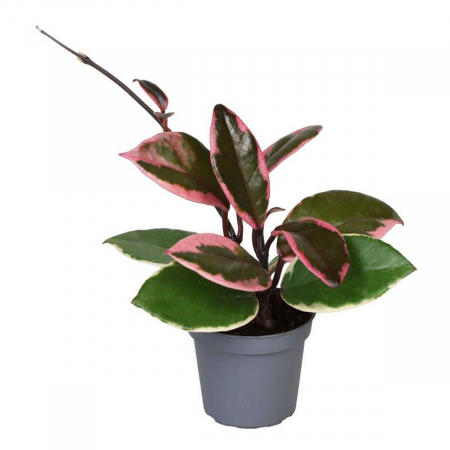
Ai nevoie și de un ghiveci decorativ?