EN/
EN/ Romana
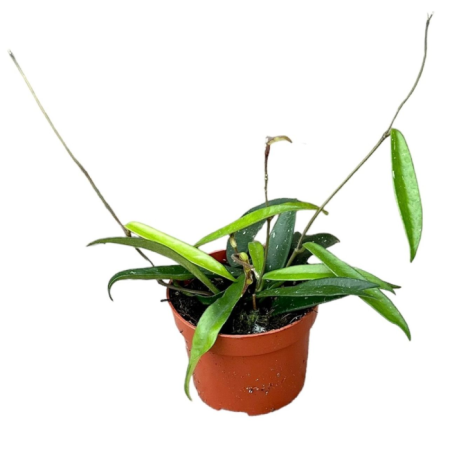
Hoya guppyi Ø6cm
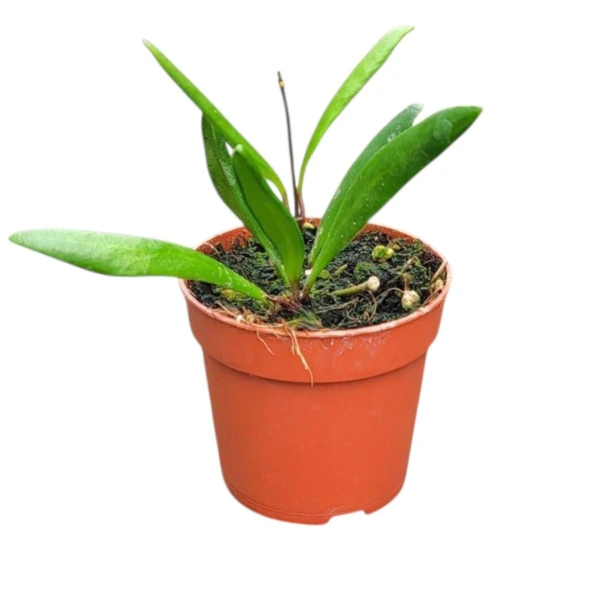
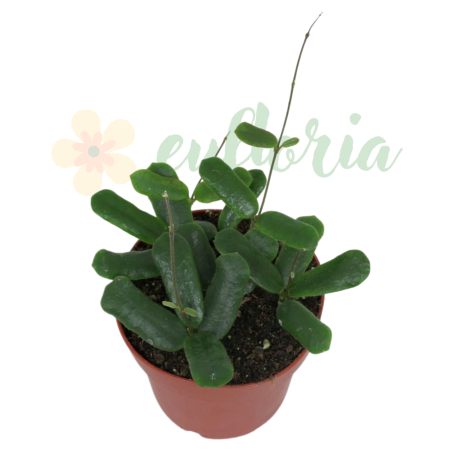
![Hoya guppyi — rare epiphytic vine from the Solomon Islands with deep-green waxy foliage and fragrant flowers [0]](https://gomagcdn.ro/domains2/eufloria.ro/files/product/medium/hoya-guppyi-d6cm-762806.png "Hoya guppyi — rare epiphytic vine from the Solomon Islands with deep-green waxy foliage and fragrant flowers [0]")
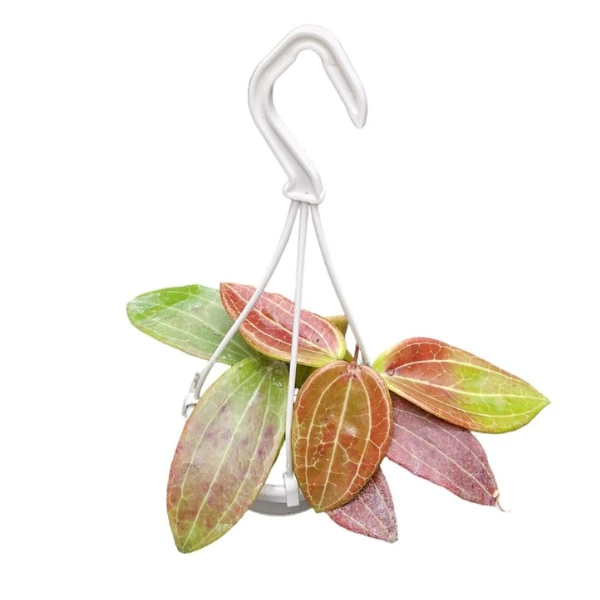
![Hoya guppyi — rare epiphytic vine from the Solomon Islands with deep-green waxy foliage and fragrant flowers [1]](https://gomagcdn.ro/domains2/eufloria.ro/files/product/medium/hoya-guppyi-d6cm-472108.png "Hoya guppyi — rare epiphytic vine from the Solomon Islands with deep-green waxy foliage and fragrant flowers [1]")
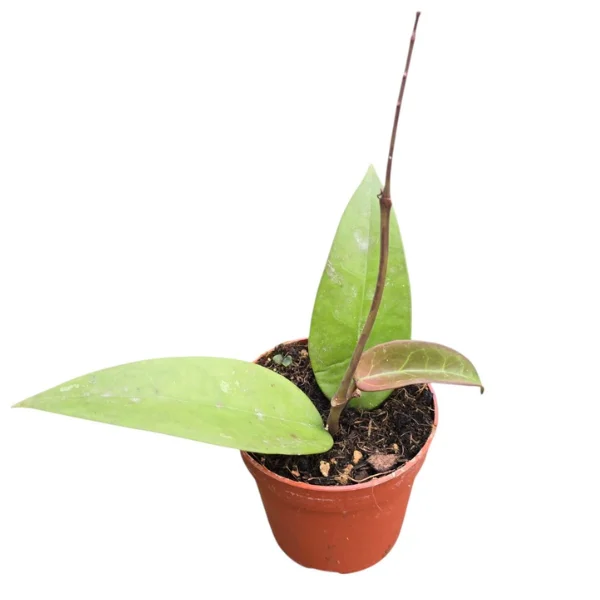
![Hoya guppyi — rare epiphytic vine from the Solomon Islands with deep-green waxy foliage and fragrant flowers [2]](https://gomagcdn.ro/domains2/eufloria.ro/files/product/medium/hoya-guppyi-d6cm-022741.png "Hoya guppyi — rare epiphytic vine from the Solomon Islands with deep-green waxy foliage and fragrant flowers [2]")
![Hoya guppyi — rare epiphytic vine from the Solomon Islands with deep-green waxy foliage and fragrant flowers [1]](https://gomagcdn.ro/domains2/eufloria.ro/files/product/original/hoya-guppyi-d6cm-762806.png "Hoya guppyi — rare epiphytic vine from the Solomon Islands with deep-green waxy foliage and fragrant flowers [1]")
![Hoya guppyi — rare epiphytic vine from the Solomon Islands with deep-green waxy foliage and fragrant flowers [2]](https://gomagcdn.ro/domains2/eufloria.ro/files/product/original/hoya-guppyi-d6cm-472108.png "Hoya guppyi — rare epiphytic vine from the Solomon Islands with deep-green waxy foliage and fragrant flowers [2]")
![Hoya guppyi — rare epiphytic vine from the Solomon Islands with deep-green waxy foliage and fragrant flowers [3]](https://gomagcdn.ro/domains2/eufloria.ro/files/product/original/hoya-guppyi-d6cm-022741.png "Hoya guppyi — rare epiphytic vine from the Solomon Islands with deep-green waxy foliage and fragrant flowers [3]")
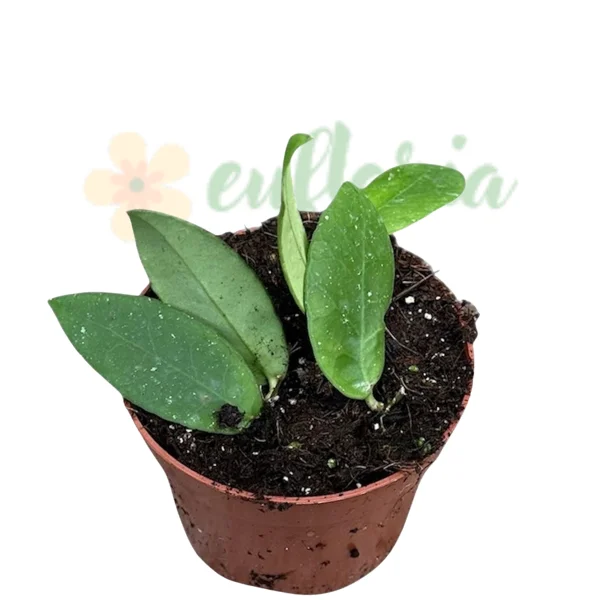
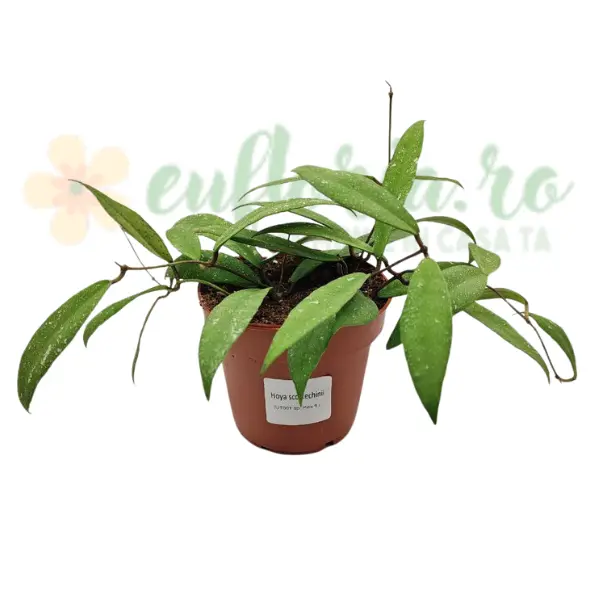
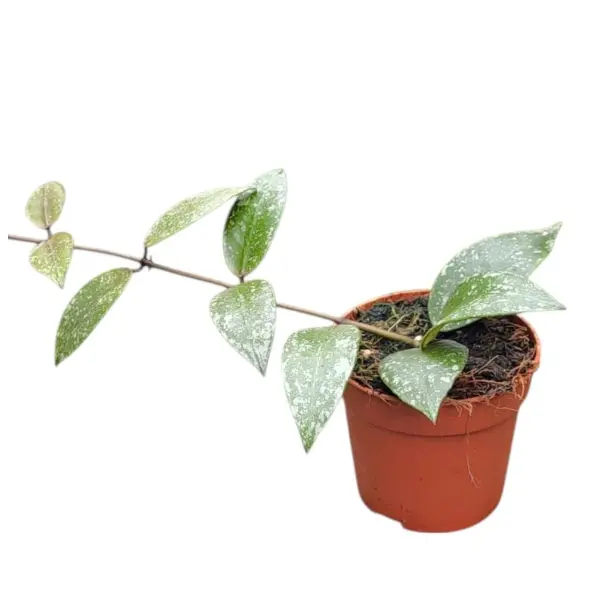
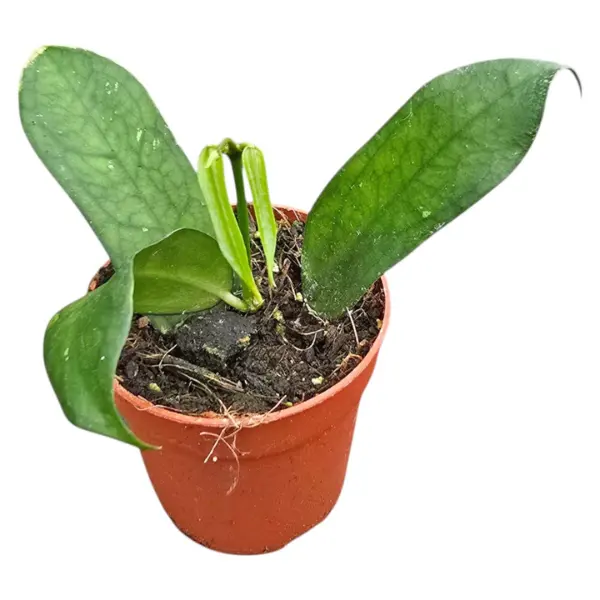
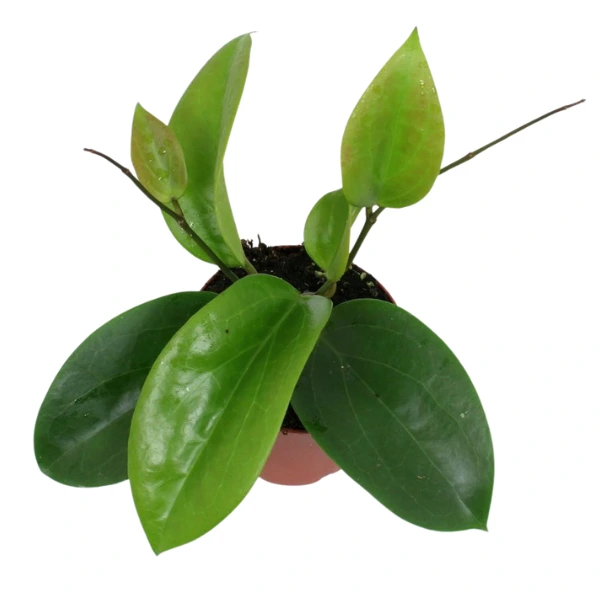
Hoya guppyi is a rare species from the Apocynaceae family, native to the Solomon Islands, prized for its waxy, deep-green foliage with fine veins and a solid texture. Its flowers, clustered in spherical umbels, are creamy white with a reddish centre and sweet fragrance, more intense in the evening. This collector's Hoya grows epiphytically, developing flexible stems that can be trained on a support or left to descend from a hanging pot.
Note: Product images are for guidance only. Due to different batches of imported products, there may be differences between the images on the website and the actual appearance of the products.
Approx height (including pot): 15 cm
Flowering state: No flowers
- Description
- Characteristics
- Reviews (0)
- FAQ
🌿 Hoya guppyi — The Rare Treasure of the Solomon Islands
Among the hundreds of Hoya species, those discovered on small tropical archipelagos remain the most mysterious and hardest to find in cultivation. Hoya guppyi is one of them — an epiphytic vine first described by British botanist Henry Brougham Guppy in the late 19th century, collected from the Bougainville and Guadalcanal islands of the Solomon archipelago. The species bears the name of the explorer who gathered it while on island biogeography expeditions through these tropical rainforests at medium altitude.
Like all Hoya species, it belongs to the Apocynaceae family — the same family as plumeria and oleander — and is listed among the rare collector plants on Eufloria.ro. Unlike Hoya carnosa, the most common variety of the genus, H. guppyi features narrower leaves with a more pronounced waxy texture, and its floral umbels carry a striking chromatic contrast between cream-white corolla and coral-red inner corona.
It is a non-toxic species — part of our pet-friendly plants collection — perfect for households with curious cats and dogs. On Eufloria.ro we offer it in a Ø6cm pot, a vigorous young plant ready to root in and begin pushing out new vines within a few months of planting.
🌍 Origin and Botanical History
Hoya guppyi is endemic to the Solomon Islands, a volcanic archipelago in the South-Western Pacific, east of Papua New Guinea. Its natural habitat sits between 200 and 800 m elevation in humid tropical rainforests, where it grows epiphytically on tree branches receiving filtered light through the canopy and constant high humidity from oceanic air.
According to the World Checklist of Selected Plant Families maintained by Kew Gardens, the species was officially described by Charles Baron Clarke in 1883, based on specimens collected by Guppy. The common English name among islanders is "Waxvine" — referring to the pronounced waxy texture of its leaves.
In cultivation it remained a rarity for decades — its popularity began to grow in the 2010s alongside the international boom of Hoya collectors, spread through specialized groups like the International Hoya Association. Today it is especially valued for the combination of stable growth, year-round decorative foliage and the ability to bloom even in apartment conditions.
🌱 The Foliage — Green Wax and Visible Venation
Hoya guppyi leaves are ovate-lanceolate, 5-8 cm long and 2-3 cm wide, arranged oppositely on the stems. To the touch they feel thick, fleshy, almost succulent — this thickness allows them to store water and tolerate humidity fluctuations typical of their mountainous native habitat.
The leaf surface is distinctive: deep green, almost emerald, with a waxy sheen that reflects light in a metallic way. The central and secondary veins are slightly incised, giving subtle relief that becomes more pronounced on mature plants. In contrast to Hoya linearis (with thread-like, pubescent leaves), H. guppyi offers a clean, geometric, almost minimalist texture.
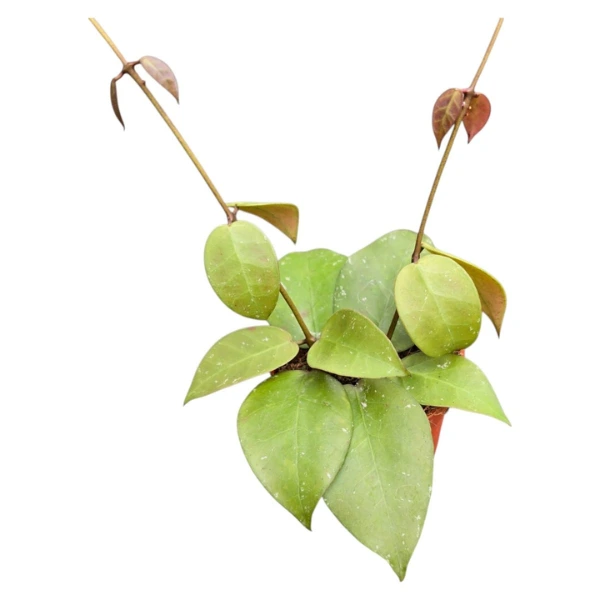
Young shoots have lighter leaves with a delicate bronze-pink tint. As they develop and reach maturity, the hue stabilizes in the characteristic deep green of the species. This chromatic gradient between new and old leaves adds visual depth to an otherwise monochrome plant — a detail collectors particularly appreciate.
🌸 The Flowers — Fragrant Umbels of Solomon Nights
Blooming in Hoya guppyi is the event that transforms it from a beautiful plant into a collector's treasure. Floral umbels appear on persistent peduncles (do not cut them after blooming — they will produce new flowers year after year!), carrying 15-30 individual flowers per inflorescence.
Each flower measures approximately 10-12 mm in diameter, with five star-arranged cream-white petals, while the inner corona (the characteristic Hoya feature) is coral-red or bright pink. The fragrance is sweet, with honey and caramel notes, more intense in the evening and early night — an olfactory rhythm typical of plants pollinated by bats and moths in their native habitat.
The plant reaches reproductive maturity in 2-3 years. To initiate blooming it needs sufficient light, a period of relative substrate drying (mild stress triggers flower initiation) and a fixed location — frequent moves or cutting the peduncles will block the cycle. It is part of our flowering plants — one of the few apartment species that gives you fragrant flowers year after year without complicated care.
🌱 Growth and Development
Hoya guppyi is a vine with moderate-slow growth — approximately 15-25 cm of new vine per year under optimal light and humidity. Its growth habit is trailing when placed in hanging pots or on high shelves, or climbing when given a support (moss pole, bamboo stake, small trellis).
It needs the same aerated substrate as other Hoyas in our catalog — well-drained mix with large components (pine bark, perlite, sphagnum) allowing epiphytic roots to receive oxygen. It is more sensitive to standing water at the roots than other Hoya species, due to its humid but always-aerated montane habitat.
- Light: bright, indirect (east or west window; tolerates 1-2 hours of morning sun)
- Temperature: 18-25°C by day, minimum 15°C at night. Below 12°C it drastically slows down
- Watering: moderate — let substrate dry 60-70% between waterings. In active season (spring-summer) every 7-10 days; winter every 14-21 days
- Humidity: 60-70% ideal; below 50% leaves may start curling at the margins
- Substrate: aerated for epiphytes — 40% pine bark, 30% perlite, 20% sphagnum, 10% horticultural charcoal; pH 5.5-6.5
- Fertilization: diluted fertilizer (1/4 strength) every 3-4 weeks in growing season; pause in winter
- Propagation: stem cuttings with 2-3 nodes, in lightly moist perlite and sphagnum (1:1). Roots appear in 3-5 weeks at 22-25°C and 70-80% humidity
For beginner collectors, Hoya guppyi can be surprisingly generous — prioritize the conditions (good light, excellent drainage, measured watering) and it will reward you with steady growth and eventual blooming. It is a teaching plant: it shows you directly when it is happy (glossy leaves, new shoots) or stressed (soft or wrinkled leaves). By listening to these signals, you gain experience that transfers to any other Hoya in your collection. Eufloria delivers across the EU with specialized packaging for live plants.
An important detail: Hoya guppyi tolerates periods of relative drying better than highly humidity-dependent species such as Hoya linearis or Hoya imbricata. If you travel for 7-10 days, water it well beforehand and leave it in a place with stable light — it survives without issues. The beauty of this species lies in subtlety: year-round calm green presence with waxy reflections, and when it blooms, honey-sweet fragrance that transforms an entire room.
Lungime: 12 cm
Greutate (kg): 1 Kg
Denumire: Hoya
Diametru: 12 cm
Cerințe lumină: Strong, indirect light
Tip plantă: Decorative
Utilizare: Interior
Tip suport: Ghiveci
Material Suport: Plastic
How often should I water Hoya guppyi?
Is Hoya guppyi toxic to cats or dogs?
What substrate do you recommend for Hoya guppyi?
When does Hoya guppyi bloom?
How is Hoya guppyi propagated?
Recommendations
Ai nevoie și de un ghiveci decorativ?