EN/
EN/ Romana
Sansevieria 'Swan Dancer' D6
![Sansevieria 'Swan Dancer' — Rare Thai Hybrid with Graceful Arching Leaves [0]](https://gomagcdn.ro/domains2/eufloria.ro/files/product/medium/sansevieria-swan-dancer-d6-875985.webp "Sansevieria 'Swan Dancer' — Rare Thai Hybrid with Graceful Arching Leaves [0]")
![Sansevieria 'Swan Dancer' — Rare Thai Hybrid with Graceful Arching Leaves [1]](https://gomagcdn.ro/domains2/eufloria.ro/files/product/medium/sansevieria-swan-dancer-d6-738309.webp "Sansevieria 'Swan Dancer' — Rare Thai Hybrid with Graceful Arching Leaves [1]")
![Sansevieria 'Swan Dancer' — Rare Thai Hybrid with Graceful Arching Leaves [2]](https://gomagcdn.ro/domains2/eufloria.ro/files/product/medium/sansevieria-swan-dancer-d6-760652.webp "Sansevieria 'Swan Dancer' — Rare Thai Hybrid with Graceful Arching Leaves [2]")
![Sansevieria 'Swan Dancer' — Rare Thai Hybrid with Graceful Arching Leaves [1]](https://gomagcdn.ro/domains2/eufloria.ro/files/product/original/sansevieria-swan-dancer-d6-875985.webp "Sansevieria 'Swan Dancer' — Rare Thai Hybrid with Graceful Arching Leaves [1]")
![Sansevieria 'Swan Dancer' — Rare Thai Hybrid with Graceful Arching Leaves [2]](https://gomagcdn.ro/domains2/eufloria.ro/files/product/original/sansevieria-swan-dancer-d6-738309.webp "Sansevieria 'Swan Dancer' — Rare Thai Hybrid with Graceful Arching Leaves [2]")
![Sansevieria 'Swan Dancer' — Rare Thai Hybrid with Graceful Arching Leaves [3]](https://gomagcdn.ro/domains2/eufloria.ro/files/product/original/sansevieria-swan-dancer-d6-760652.webp "Sansevieria 'Swan Dancer' — Rare Thai Hybrid with Graceful Arching Leaves [3]")
Approx height (including pot): 10 cm
Pot diameter: 6 cm
- Description
- Characteristics
- Reviews (0)
- FAQ
🦢 Grace in Motion — A Rare Thai Hybrid
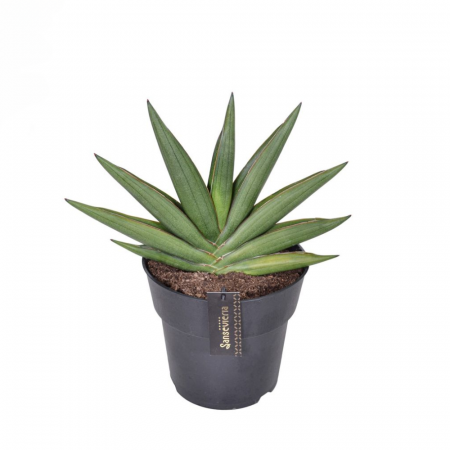
Sansevieria 'Swan Dancer' is a rare and elegant Thai hybrid that captures the graceful movement of its namesake bird in living form. Where most Sansevierias present rigid, upright military precision, the Swan Dancer offers something altogether different: leaves that curve and arch with the fluid elegance of a swan gliding across still water. This is a collector's plant — sought after by Sansevieria enthusiasts worldwide for its distinctive growth habit and refined beauty. Available through specialist nurseries like FlorAccess and kaktus.id in Indonesia, it represents the best of Southeast Asian Sansevieria hybridization — plants bred not just for hardiness, but for genuine aesthetic distinction. For collectors seeking something beyond the ordinary snake plant, the Swan Dancer delivers grace, movement, and sculptural beauty in one compact, easy-care package.
🌏 Origins & Hybrid Heritage
Sansevieria 'Swan Dancer' emerges from the vibrant Sansevieria hybridization culture of Thailand and Indonesia — regions that have become global centres for developing rare and distinctive snake plant cultivars. FlorAccess lists it among their specialty Sansevieria collection alongside other sought-after varieties like 'Marsha Anjani', 'Pagoda Dark', and 'Tower Blue'. Indonesian specialist nursery kaktus.id categorizes it as a "Sansevieria hybrid thailand," confirming its Southeast Asian breeding heritage. While specific parentage documentation for this cultivar remains limited (as is common with many Thai hybrids), the Swan Dancer clearly belongs to the tradition of selecting and breeding Sansevierias for exceptional form and visual appeal. The evocative name reflects the plant's distinctive growth habit — leaves that curve gracefully rather than standing stiffly upright, creating an impression of fluid movement that collectors find irresistible.
🍃 Foliage — Graceful, Arching & Distinctive
The leaves of Sansevieria 'Swan Dancer' are the plant's defining glory. Unlike the rigid, sword-like foliage of common snake plants, the Swan Dancer produces leaves that curve and arch gracefully — creating an elegant, flowing silhouette that evokes the namesake bird's fluid movements. The foliage emerges from a compact rosette base, with each leaf gently sweeping outward and upward before arching gracefully at the tips. Leaves are firm yet flexible, with the characteristic succulent thickness of the Sansevieria genus but without the stiffness typical of varieties like trifasciata or cylindrica. Colouration typically features green tones with subtle banding or striations — the exact pattern varying between individual plants, as is common with hybrid Sansevierias. The overall effect is sculptural and refined, bringing movement and grace to spaces where most snake plants offer only static vertical lines.
🌸 Flowers
Like all Sansevierias, 'Swan Dancer' can produce flowers under optimal conditions, though flowering indoors is relatively uncommon. Iowa State University Extension notes that "it is rare for sansevieria to flower when grown as a houseplant" but when conditions allow — typically with abundant light and some degree of stress — "flowers form along a long stalk that arises from the base of the rosette." Sansevieria flowers are generally small, tubular, and often fragrant, with cream to greenish-white colouration. However, most collectors grow this variety primarily for its exceptional architectural foliage rather than its blooms — the graceful, arching leaves provide year-round visual interest that far exceeds what occasional flowering might offer.
🌱 Growth Habit & Development
Growth habit is compact and rosette-forming, with the characteristic arching leaves creating a graceful, flowing silhouette. FlorAccess lists specimens at approximately 15 cm height (pot included) for 8 cm pot sizes, indicating this is a relatively compact cultivar — perfect for desktops, shelves, and small spaces where larger Sansevierias might overwhelm. Growth rate is slow to moderate, typical of the genus. The plant grows from rhizomes and will eventually produce offsets or "pups" around the mother plant, though this can take considerable time with slower-growing hybrid varieties. The compact habit and distinctive arching form make this an excellent specimen plant — one that draws the eye and serves as a focal point rather than blending into the background.
Care Requirements:
- Light: Adaptable to various light conditions. Iowa State University Extension advises that "Sansevieria prefers bright, indirect light. This is light bright enough to cast a shadow but not directly in the sun's rays. Plants tolerate low light levels very well, although this can lead to muted leaf coloration and patterns." Bright indirect light is ideal for maintaining the best leaf colour and promoting healthy growth, but this plant will survive in lower light — just with slower growth and less vibrant colouration.
- Water: Allow soil to dry completely between waterings. Iowa State University Extension emphasizes: "Water plants only after the soil has completely dried out. The quickest (and sometimes the only) way to kill a sansevieria is to overwater it. Plants can go weeks, sometimes months, without water." Bloomscape confirms: "Water your Sansevieria only when the soil is completely dry." This drought tolerance is one of the genus's greatest virtues — these plants handle neglect far better than over-attention.
- Soil: Fast-draining substrate is essential. Iowa State University Extension recommends "a well-drained potting soil, such as cactus mix or potting soil amended with perlite." Good drainage prevents the root rot that is the primary killer of Sansevierias — soggy soil is far more dangerous than dry soil for this genus.
- Temperature: Average home temperatures between 15-29°C (60-85°F) are ideal. Bloomscape notes that Sansevierias "prefer temperatures on the warmer end of that spectrum." Protect from cold drafts and temperatures below 10°C (50°F), which can cause cold damage.
- Humidity: Average household humidity is perfectly adequate. These plants do not require misting and actually prefer drier conditions. High humidity combined with poor air circulation can invite fungal problems.
- Feeding: Very light feeder. Feed sparingly — once or twice per year during the growing season is sufficient. Bloomscape suggests feeding "once every six months with a liquid fertilizer for indoor plants." Over-fertilizing can damage roots and cause weak, leggy growth.
Botanical Info: Family: Asparagaceae (subfamily Nolinoideae) | Genus: Sansevieria (now included in Dracaena) | Cultivar: 'Swan Dancer' (Thai hybrid) | Common Names: Swan Dancer Snake Plant, Bowstring Hemp, Dagger Plant | Type: Succulent Perennial from Rhizomes | Origin: Thai hybrid (cultivated) | Zone: USDA 10-12 (indoor cultivation in temperate climates) | Size: Compact, rosette-forming with arching leaves | Growth Rate: Slow to Moderate
Lungime: 10 cm
Greutate (kg): 0.25 Kg
Denumire: Sansevieria
Diametru: 6 cm
Cerințe lumină: Partial umbra
Tip plantă: Decorative
Utilizare: Interior
Tip suport: Ghiveci
Material Suport: Plastic
Is Sansevieria 'Swan Dancer' toxic to cats and dogs?
Yes, Sansevieria 'Swan Dancer' is moderately toxic to cats, dogs, and other household pets. All Sansevieria species contain saponins, which Iowa State University Extension notes "cause nausea, vomiting, diarrhea and gastrointestinal discomfort" when ingested. The ASPCA confirms toxicity to both cats and dogs. While the toxicity is generally mild to moderate and rarely life-threatening, it causes significant discomfort. If your pet ingests any part of this plant, contact your veterinarian immediately. For households with curious pets, consider pet-safe alternatives like Hoya species, or place the plant securely out of reach.
What makes Sansevieria 'Swan Dancer' different from other snake plants?
Sansevieria 'Swan Dancer' is distinguished by its graceful, arching leaf habit — a marked contrast to the rigid, upright growth typical of common snake plants. While most Sansevierias have stiff, sword-like leaves that stand at attention, the Swan Dancer's leaves curve and sweep gracefully outward and upward, creating a flowing, sculptural silhouette that evokes its namesake bird. This rare Thai hybrid is sought after by collectors specifically for this distinctive growth pattern, which brings movement and fluidity to a genus more typically known for static vertical lines. It's a snake plant bred for beauty, not just durability.
How often should I water Sansevieria 'Swan Dancer'?
Water only when the soil is completely dry — typically every 2-4 weeks depending on conditions. Iowa State University Extension emphasizes: "The quickest (and sometimes the only) way to kill a sansevieria is to overwater it. Plants can go weeks, sometimes months, without water." Allow the soil to dry thoroughly between waterings, then water deeply until water drains from the bottom. In winter or in lower light conditions, reduce watering frequency even further. These plants handle drought far better than wet conditions — when in doubt, wait longer before watering.
Where does Sansevieria 'Swan Dancer' come from?
Sansevieria 'Swan Dancer' is a Thai hybrid — part of the vibrant Sansevieria hybridization culture that has developed in Thailand and Indonesia. These regions have become global centres for breeding rare and distinctive snake plant cultivars. Indonesian specialist nursery kaktus.id categorizes it as a "Sansevieria hybrid thailand," while European wholesaler FlorAccess lists it among their specialty collection. Like many Thai hybrids, specific parentage documentation is limited, but the plant clearly represents the tradition of selecting and breeding Sansevierias for exceptional form and visual appeal that has made Southeast Asia a destination for collectors worldwide.
Can Sansevieria 'Swan Dancer' grow in low light?
Yes, like all Sansevierias, 'Swan Dancer' tolerates low light conditions remarkably well. Iowa State University Extension confirms: "Plants tolerate low light levels very well, although this can lead to muted leaf coloration and patterns." While bright indirect light is ideal for optimal growth and the best leaf colour, this plant can survive in darker corners where most houseplants would struggle. Just expect slower growth and potentially less vibrant colouration in low light. This adaptability is one of the genus's greatest strengths, making Sansevierias excellent choices for offices, bedrooms, and spaces with limited natural light.
Does Sansevieria 'Swan Dancer' purify air?
Yes, like all Sansevierias, 'Swan Dancer' is known for its air-purifying properties. Mississippi State University Extension notes: "Sansevierias are known for their air-purifying qualities. They absorb common household toxins and improve overall air quality." What makes Sansevierias particularly interesting is that, unlike most plants, "Sansevierias release oxygen at night, unlike many other plants that do this primarily during the day." This makes them especially beneficial in bedrooms and offices where clean air is appreciated. While one plant won't dramatically transform your air quality, it does contribute to a healthier indoor environment.
What soil?
Drained substrate, cactus/succulent + perlite.
Low light?
Yes, very low-light tolerant.
Recommendations
Ai nevoie și de un ghiveci decorativ?