EN/
EN/ Romana
Hoya krohniana 'Black Leaves' Ø9-Ø12cm
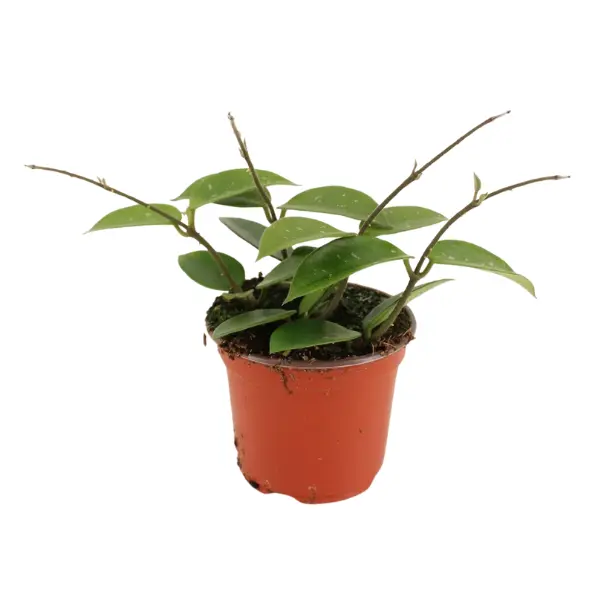
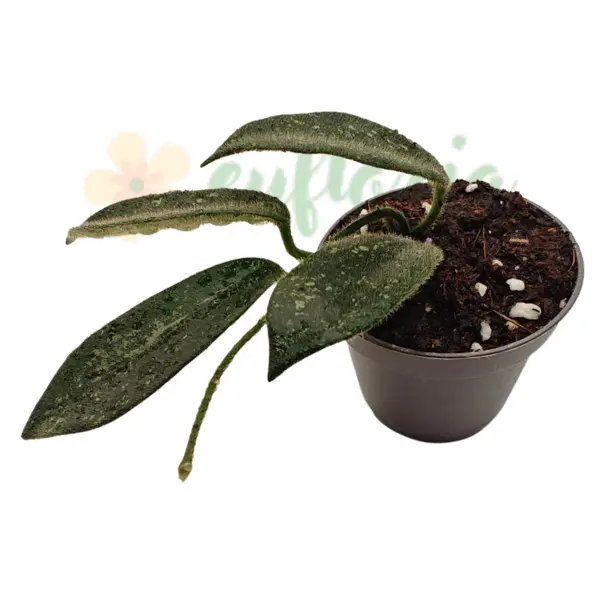
![Hoya krohniana 'Black Leaves' — rare Philippine species with small elongated heart-shaped leaves of extremely dark gothic green-black color with coppery reflections in strong light [1]](https://gomagcdn.ro/domains2/eufloria.ro/files/product/original/hoya-krohniana-black-leaves-492754.png "Hoya krohniana 'Black Leaves' — rare Philippine species with small elongated heart-shaped leaves of extremely dark gothic green-black color with coppery reflections in strong light [1]")
Hoya krohniana 'Black Leaves' is a rare species from the Philippines (Apocynaceae family), selected for extreme pigmentation — small elongated heart-shaped leaves, gothic green-black, nearly the darkest pigmentation among Hoyas. Cream-white star-shaped flowers with pink-purple center, dramatic contrast with foliage.
Approx height (including pot): 15 cm
Flowering state: No flowers
Country of origin: Netherlands
- Description
- Characteristics
- Reviews (0)
- FAQ
🌿 Hoya krohniana 'Black Leaves' — Hoya with Gothic Foliage, Dark as Night
Hoya krohniana 'Black Leaves' is a rare and spectacular species, selected for its unusually dark foliage — green-black, almost gothic, with discrete veins glimpsed in strong light. This 'Black Leaves' variant presents much more intense pigmentation than the typical form of the species, creating dramatic visual impact in any Hoya collection.
Leaves are elongated heart-shaped, with medium dimensions (3-6 cm), thick and waxy, arranged in opposite pairs on delicate vining stems. The distinctive color — dark green-black — is stable, maturing dramatically as the plant grows. Under bright indirect light, edges may develop coppery or purple reflections.
Offered in two sizes: Ø9cm (young-mature) and Ø12cm (mature with developed stems). Collector plant for Hoya enthusiasts who appreciate rarity and gothic aesthetics.
🌍 Origin and Botanical History
Hoya krohniana is native to the Philippines. Species scientifically described in 2005 by Kloppenburg & Siar. The 'Black Leaves' cultivar is a horticultural selection for extreme pigmentation. Apocynaceae family.
🌱 Gothic Foliage
Leaves 3-6 cm, elongated heart-shaped, thick, waxy. Dark green-black color — practically the darkest pigmentation among Hoyas. Smooth, slightly glossy texture. Stems are thin, delicate, arranged in cascades.
🌸 The Flowers
Spherical umbels of 15-25 small cream-white star-shaped flowers with pink-purple center. Delicate sweet fragrance. Dramatic contrast with dark foliage. Flower on mature plants (2-3 years).
🌱 Care
- Light: bright indirect (accentuates dark pigmentation).
- Temperature: 18-28°C.
- Watering: moderate; let substrate dry almost completely.
- Humidity: 50-70%.
- Substrate: airy, for epiphytes.
- Fertilization: every 3-4 weeks.
- Propagation: cuttings 2-3 nodes.
🌿 Non-toxic
Hoya genus non-toxic. Sap may cause minor irritation.
🌸 Why 'Black Leaves'
Extremely dark pigmentation (green-black) is rare among Hoyas — creates distinctive gothic look. Dramatic contrast with white flowers at blooming. Premium investment for rare Hoya collections.
🌱 How to Intensify Pigmentation
Bright indirect light accentuates leaf darkness. In shade, leaves may appear greener. Edges may develop coppery reflections in intense light — sign of optimal pigmentation.
🌱 Common Problems
Greener leaves: insufficient light. Burns: direct sun. Yellow leaves: overwatering.
Lungime: 30 cm
Greutate (kg): 0.25 Kg
Denumire: Hoya
Diametru: 9 cm
Cerințe lumină: Partial umbra
Tip plantă: Decorative
Utilizare: Interior
Tip suport: Ghiveci
Material Suport: Plastic
Is Hoya krohniana Black Leaves toxic to pets?
Why are the leaves so dark?
How often should I water Hoya krohniana Black Leaves?
Does Hoya krohniana Black Leaves bloom?
What experience level does Hoya krohniana Black Leaves require?
Why are the leaves so dark?
How do I maintain the dark color?
How to water?
Is it toxic?
What do the flowers look like?
Ai nevoie și de un ghiveci decorativ?