EN/
EN/ Romana
Monstera minima D19cm - Eufloria
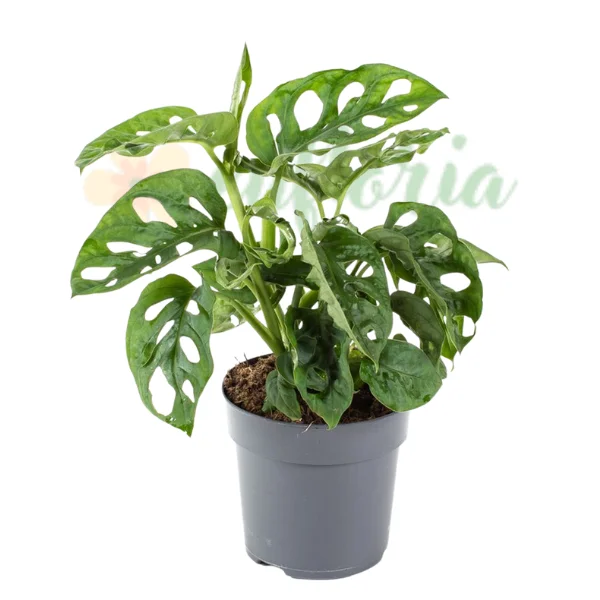
![Monstera minima - Mini Monstera - Eufloria [1]](https://gomagcdn.ro/domains2/eufloria.ro/files/product/original/monstera-minima-d19cm-eufloria-976931.jpg "Monstera minima - Mini Monstera - Eufloria [1]")
Monstera minima (Rhaphidophora tetrasperma) – Tropical climbing plant with elegant fenestrated leaves, similar to the famous Monstera deliciosa but in a compact format. Fast-growing, easy to care for and perfect for modern interiors. Native to Thailand and Malaysia. Instantly brings an exotic tropical atmosphere to any space.
Approx height (including pot): 90 cm
This plant will be imported after you order. It has a minim mandatory quantity.: If you want to order fewer quantities, contact us for a personalized offer
Pot diameter: 19 cm
Delivery date: 1-2 weeks
- Description
- Characteristics
- Reviews (0)
- FAQ
🌿 Monstera minima – Tropical Elegance with Fenestrated Leaves
Monstera minima (Rhaphidophora tetrasperma), also known as the "Mini Monstera", is a spectacular tropical climbing plant that captivates with its elegant, fenestrated leaves reminiscent of the famous Monstera deliciosa, but in a more compact and manageable form. Native to Thailand and Malaysia, this fast-growing plant instantly brings an exotic tropical atmosphere to any indoor space.
🌍 Origin and Botanical Classification
Although commonly known as "Mini Monstera", Rhaphidophora tetrasperma is not actually a Monstera but belongs to the genus Rhaphidophora in the Araceae family. It was first described by British botanist Joseph Dalton Hooker in 1893. The plant grows naturally in humid tropical forests of southern Thailand and Malaysia, where it climbs tree trunks using aerial roots. Its striking resemblance to Monstera deliciosa earned it the nickname "Mini Monstera" or "Monstera Ginnie".
🍃 Foliage – The Perfect Miniature
The leaves of Monstera minima are what make this plant so popular. Oval in shape, with deep fenestrations creating a spectacular "Swiss cheese" effect, the leaves have a glossy texture and an intense green color. Unlike Monstera deliciosa, the leaves remain relatively small (10-15 cm), but compensate with abundance and elegance. Fenestrations appear from an early age, giving the plant its distinctive tropical look from a young age.
🌱 Growth Habit and Development
Monstera minima is a vigorous climbing plant with rapid growth – it can add 30-60 cm per year under optimal conditions. Provided with a climbing support (moss pole or trellis), the plant will develop increasingly larger and more impressive leaves. It can also be grown as a trailing plant, creating cascades of tropical foliage.
Care Requirements:
- Light: Bright indirect light is ideal. Tolerates medium light but grows slower. Avoid strong direct sunlight which can burn the leaves.
- Water: Water when the top layer of soil has dried out (2-3 cm). Usually every 5-7 days in summer and every 10-14 days in winter. Do not let the plant sit in standing water.
- Soil: Well-draining substrate, rich in organic matter. A mix of peat, perlite and bark works excellently.
- Temperature: Prefers temperatures between 18-29°C. Does not tolerate temperatures below 12°C.
- Humidity: Prefers high humidity (60-80%), but adapts well to normal indoor conditions. Regular misting is beneficial.
- Fertilizing: Balanced liquid fertilizer at half strength, once a month during the growing season (spring-summer).
Botanical Information: Family: Araceae | Genus: Rhaphidophora | Species: Rhaphidophora tetrasperma Hook.f. (1893) | Common Names: Mini Monstera, Monstera Ginnie, Philodendron Ginnie | Type: Evergreen Perennial Climbing Plant | Native Range: Thailand, Malaysia | Zone: USDA 11-12 | Growth Rate: Fast
Lungime: 40 cm
Greutate (kg): 10 kg
Denumire: Monstera
Diametru: 19 cm
Cerințe lumină: Partial umbra
Tip plantă: Decorative
Utilizare: Interior
Tip suport: Ghiveci
Material Suport: Plastic
Diametru Ghiveci: 19 cm
Is Monstera minima toxic to pets?
Yes, Monstera minima is toxic to cats, dogs and other pets. The plant contains calcium oxalate crystals that can cause oral irritation, excessive salivation and digestive upset if ingested. Keep the plant away from curious pets.
How often should I water Monstera minima?
Water Monstera minima when the top 2-3 cm of soil has dried out – usually once a week during the growing season and every 10-14 days in winter. As a tropical climbing plant, it prefers consistently slightly moist but not waterlogged soil. Overwatering can cause root rot, while allowing the soil to dry out completely will cause yellowing and dropping of leaves. Use room-temperature water and ensure the pot has adequate drainage. Always check soil moisture before watering – if the soil still feels damp to the touch, wait another day or two.
What type of light does Monstera minima prefer?
Monstera minima prefers bright to medium indirect light, similar to the understory conditions of the tropical forest where it grows naturally. Position the plant near a bright window but away from direct sunlight, which can scorch the delicate leaves. The plant also tolerates lower light, though growth will be slower and the characteristic leaf fenestrations may be less pronounced. Avoid prolonged direct sun exposure, especially during summer months. A location with light filtered through curtains or 1-2 meters from an east or west-facing window is ideal.
Does Monstera minima need climbing support?
Yes, Monstera minima is a natural climbing plant that benefits greatly from vertical support. In its natural habitat in the tropical forests of Thailand and Malaysia, the plant climbs tree trunks using its aerial roots. Indoors, you can provide a moss pole, coconut coir pole, trellis, or wooden support. When given adequate support, the plant produces larger and more beautifully fenestrated leaves. Without support, Monstera minima will grow in a trailing or hanging manner, which also makes it suitable for hanging pots or allowing it to cascade from a shelf.
How can I propagate Monstera minima?
Monstera minima is most easily propagated through stem cuttings. Choose a stem section with at least one node (the point where leaves and aerial roots grow) and cut below the node with a sharp, sterilized knife or scissors. The cutting can be rooted in water or directly in moist substrate. In water, change the water every few days and wait until roots reach 3-5 cm before planting in soil. The ideal time for propagation is spring or summer when the plant is actively growing. Cuttings with aerial roots already formed have the highest chance of success.
What is the difference between Monstera minima and Monstera deliciosa?
While both are popular tropical plants with fenestrated leaves, Monstera minima (Rhaphidophora tetrasperma) is not actually a Monstera – it belongs to the genus Rhaphidophora in the Araceae family. The popular name "Mini Monstera" comes from its visual resemblance to Monstera deliciosa, but in a much more compact format. Monstera deliciosa has leaves that can reach 60-90 cm, while Monstera minima leaves usually stay between 10-20 cm. Monstera minima grows much faster, is easier to manage in small spaces, and has a more delicate, climbing habit. Both plants are mildly toxic to pets and prefer similar conditions of indirect light and humidity.
Recommendations