EN/
EN/ Romana
Hoya callistophylla
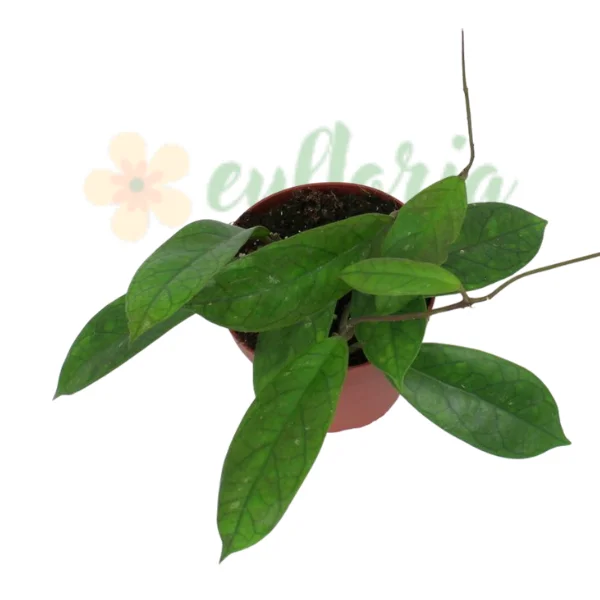
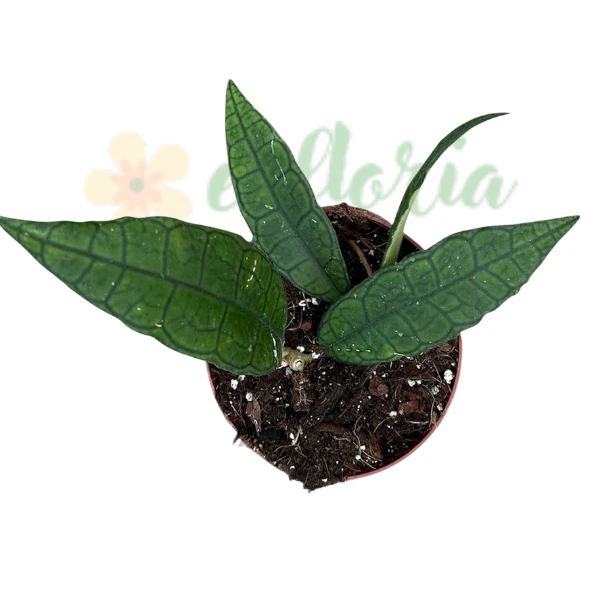
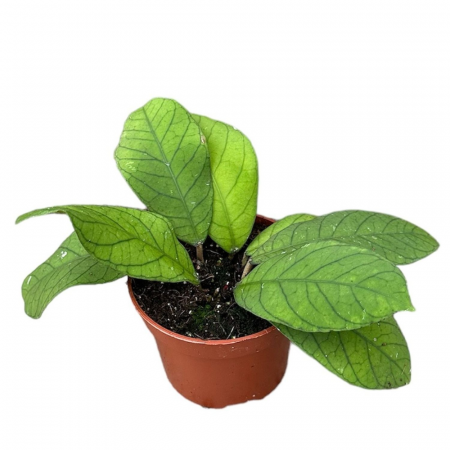
![Hoya callistophylla — elliptical green leaves with graphic dark green veins, Eufloria [0]](https://gomagcdn.ro/domains2/eufloria.ro/files/product/medium/hoya-callistophylla-026322.png "Hoya callistophylla — elliptical green leaves with graphic dark green veins, Eufloria [0]")
![Hoya callistophylla — elliptical green leaves with graphic dark green veins, Eufloria [1]](https://gomagcdn.ro/domains2/eufloria.ro/files/product/medium/hoya-callistophylla-d6-866691.webp "Hoya callistophylla — elliptical green leaves with graphic dark green veins, Eufloria [1]")
![Hoya callistophylla — elliptical green leaves with graphic dark green veins, Eufloria [1]](https://gomagcdn.ro/domains2/eufloria.ro/files/product/original/hoya-callistophylla-026322.png "Hoya callistophylla — elliptical green leaves with graphic dark green veins, Eufloria [1]")
![Hoya callistophylla — elliptical green leaves with graphic dark green veins, Eufloria [2]](https://gomagcdn.ro/domains2/eufloria.ro/files/product/original/hoya-callistophylla-d6-866691.webp "Hoya callistophylla — elliptical green leaves with graphic dark green veins, Eufloria [2]")
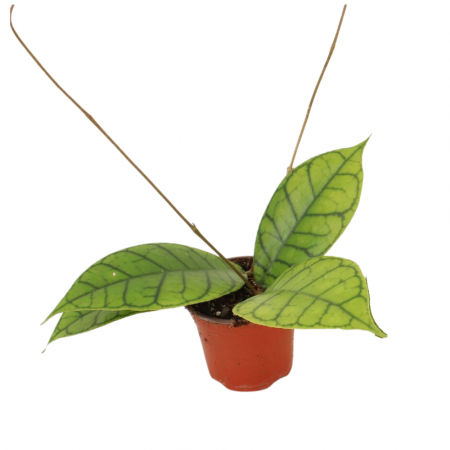
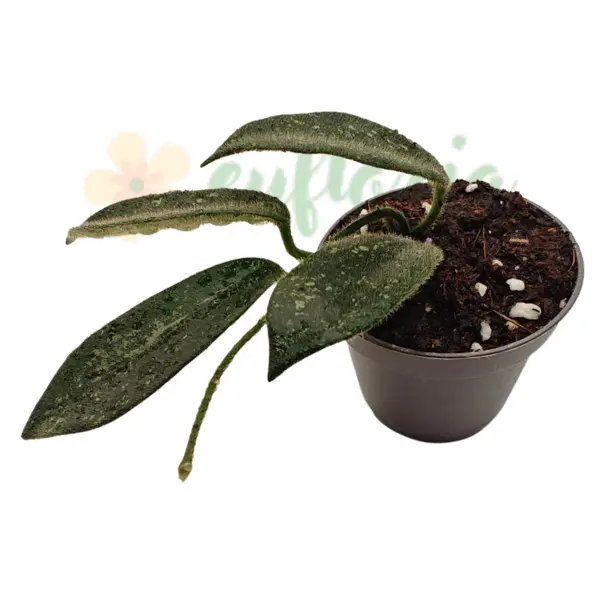
Hoya callistophylla — Bornean hoya with elliptical green leaves and dark green/black major veins creating spectacular graphic pattern. Fragrant cream-yellow star flowers. Humidity 70-85%, indirect light, 18-28°C.
Approx height (including pot): 15 cm
Flowering state: No flowers
- Description
- Characteristics
- Reviews (0)
- FAQ
🌿 Nature's Calligraphy on a Living Leaf — Dark Veins Like a Map Drawn in Ink
Hoya callistophylla is a species that fully deserves its name — "callistophylla" means, in ancient Greek, "with beautiful leaves", and the leaves of this plant are, without exaggeration, among the most spectacular in the entire Hoya world. Over a fresh green background unfolds a network of dark, almost black veins that furrow the leaf like a mysterious calligraphy or the map of a river with countless tributaries. Each leaf seems drawn in ink by a patient hand.
This dramatic venation, which intensifies as the leaves mature and with good light, transforms an otherwise discreet plant into a true collector's jewel. Unlike Hoyas grown for their flowers, callistophylla is loved first and foremost for its graphic foliage, although at maturity it also offers umbels of star-shaped flowers, fragrant and velvety.
Offered in several pot sizes, it is a plant suited both to those beginning their Hoya collection and to enthusiasts seeking a species with special foliage. As an epiphytic vine, it will grow over time, developing long stems that can be trained on a support or left to hang gracefully.
For the plant lover who appreciates the beauty of detail, texture and the natural graphics of a leaf, Hoya callistophylla is a living treasure — a plant that rewards the attentive eye with an ever-new spectacle of lines and shades.
🌍 Origin and Botanical History
Hoya callistophylla belongs to the Apocynaceae family, the great family of latex-bearing plants, and to the genus Hoya, which includes hundreds of species of epiphytic climbing plants spread through the tropical forests of South-East Asia and Oceania. This species is native to Borneo, the great tropical island shared between Malaysia, Indonesia and Brunei, where it grows epiphytically on tree trunks in the humid forests.
The genus Hoya was named in honour of the English gardener Thomas Hoy, who worked in the eighteenth century for the Duke of Northumberland. The plants of this genus are popularly known as "wax plants", because of the waxy, glossy texture of their leaves and flowers, which look sculpted from wax or porcelain.
The epithet "callistophylla" combines the Greek words "kallistos" (most beautiful) and "phyllon" (leaf), a direct recognition of its exceptional foliage, considered among the most decorative in the entire genus. In its natural habitat, as an epiphyte, the plant is not parasitic — it uses trees only as a support, drawing its water and nourishment from the air, the rain and the plant debris accumulated around its roots.
Its origin as an epiphyte of the humid tropical forest explains all its needs: a preference for warmth, high humidity, bright indirect light and a very airy substrate that imitates the bark of the trees on which it grows in nature.
🌱 The Foliage
The foliage is, without doubt, the absolute star of this plant. The leaves are large, elongated and firm, of a thick, slightly succulent consistency typical of wax plants. Their surface is a fresh to medium green, but the real magic lies in the veins: a dense network of dark veins, deep green to almost black, branching from the central vein toward the margins, drawing on the leaf a reticulated pattern of rare elegance.
This contrast between the light background and the dark veins is what inspired the name "beautiful leaf" and makes callistophylla such a prized plant. The pattern intensifies as the leaves mature and benefit from good light — in bright but filtered light, the contrast becomes stronger and more dramatic. Here and there, young leaves may have a more reddish or bronzed tint before settling into their green-and-black palette.
The waxy texture of the leaves is not only beautiful but functional: the waxy layer reduces water loss and gives the surface an elegant, matte sheen. The leaves are carried in pairs, on either side of the climbing stems, and orient themselves toward the light, creating over time a cascade or living column of graphic leaves.
This combination of generous size, firm texture and spectacular venation makes callistophylla a plant especially prized by collectors, a species that impresses through its foliage even when not in flower.
🌸 The Flowers
Like all plants of the Hoya genus, callistophylla can produce, at maturity and in good conditions, the characteristic flowers that earned the genus the name "wax plant". The flowers are grouped in round, hemispherical umbels formed of numerous small, five-pointed star-shaped flowers, of a velvety or waxy texture, in shades ranging from yellow and cream to orange, often with a more intensely coloured central crown.
These flowers emit a sweet fragrance, more pronounced in the evening and at night, and secrete tiny droplets of sweet nectar that glisten like dew. Flowering appears on well-established plants, from special stalks called spurs, which should never be removed, because the flowers will appear from them season after season.
Even though, in callistophylla, the foliage remains the main attraction, an umbel of fragrant flowers is a wonderful reward for patient care — a precious bonus that crowns a plant already spectacular for its leaves.
🌱 Growth and Development
Hoya callistophylla is an epiphytic vine of moderate growth that develops long, climbing stems bearing paired leaves. It can be grown trained on a support, a hoop or a trellis, in which case it displays its foliage beautifully, or left to hang from a hanging pot as a trailing plant. Like all Hoyas, it enjoys a slightly snug pot and should not be repotted too often.
It is a grateful, long-lived plant, perfectly safe around pets, being non-toxic. It needs good light, warmth and a very well-draining substrate, but once these conditions are met, it becomes one of the most rewarding collector's plants, offering ever more beautiful leaves year after year.
- Light: bright, indirect, abundant light — essential for intensifying the dark venation; it tolerates a few hours of gentle morning sun, but shield it from strong direct midday sun.
- Temperature: prefers 18–28 °C and constant warmth; keep it away from cold below 12 °C and from cold draughts.
- Watering: water thoroughly, then let the substrate dry out for the most part between waterings; the succulent leaves store water, so it tolerates drying better than excess water.
- Humidity: enjoys high humidity; misting, grouping with other plants or a humidifier keep its foliage healthy and glossy.
- Substrate: a very airy, well-draining, epiphytic-type mix with pine bark, perlite and a little substrate, imitating the bark of the trees on which it grows in nature.
- Fertilising: feed every 3–4 weeks in the warm growing season with a balanced, diluted fertiliser; during flowering you can use one richer in phosphorus.
- Propagation: easy from stem cuttings that include one or two nodes, rooted in water, in moist sphagnum or directly in an airy substrate.
As a collector's plant, Hoya callistophylla looks superb alongside other Hoya species and epiphytic plants with similar needs, together creating a corner of tropical jungle full of textures and graphic foliage.
Lungime: 15 cm
Greutate (kg): 0.25 Kg
Denumire: Hoya
Cerințe lumină: Partial umbra
Tip plantă: Decorative
Utilizare: Interior
Tip suport: Ghiveci
Material Suport: Plastic
How do I care for Hoya callistophylla?
Is Hoya callistophylla toxic to pets?
What do Hoya callistophylla flowers look like?
Why does Hoya callistophylla have such prominent veining?
Why should I not cut peduncles on Hoya callistophylla?
What makes callistophylla special?
Where is it from?
What humidity does it need?
How does it flower?
How to propagate?
Recommendations
Ai nevoie și de un ghiveci decorativ?