EN/
EN/ Romana
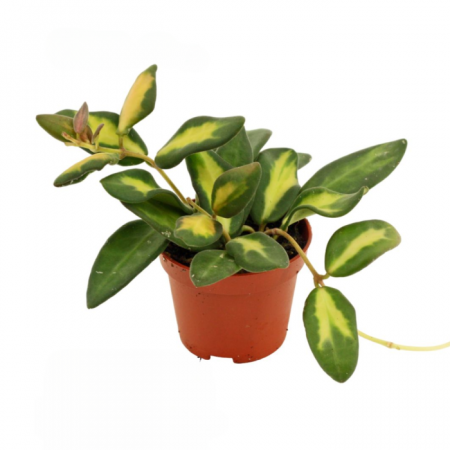
Hoya wibergiae Ø6cm
![Hoya Wibergiae în ghiveci - frunze cerate, plantă curgătoare [0]](https://gomagcdn.ro/domains2/eufloria.ro/files/product/medium/hoya-wibergiae-d6-933851.png "Hoya Wibergiae în ghiveci - frunze cerate, plantă curgătoare [0]")
![Hoya Wibergiae în ghiveci - frunze cerate, plantă curgătoare [1]](https://gomagcdn.ro/domains2/eufloria.ro/files/product/medium/hoya-wibergiae-d6-154550.png "Hoya Wibergiae în ghiveci - frunze cerate, plantă curgătoare [1]")
![Hoya Wibergiae în ghiveci - frunze cerate, plantă curgătoare [2]](https://gomagcdn.ro/domains2/eufloria.ro/files/product/medium/hoya-wibergiae-d6-306726.png "Hoya Wibergiae în ghiveci - frunze cerate, plantă curgătoare [2]")
![Hoya Wibergiae în ghiveci - frunze cerate, plantă curgătoare [1]](https://gomagcdn.ro/domains2/eufloria.ro/files/product/original/hoya-wibergiae-d6-933851.png "Hoya Wibergiae în ghiveci - frunze cerate, plantă curgătoare [1]")
![Hoya Wibergiae în ghiveci - frunze cerate, plantă curgătoare [2]](https://gomagcdn.ro/domains2/eufloria.ro/files/product/original/hoya-wibergiae-d6-154550.png "Hoya Wibergiae în ghiveci - frunze cerate, plantă curgătoare [2]")
![Hoya Wibergiae în ghiveci - frunze cerate, plantă curgătoare [3]](https://gomagcdn.ro/domains2/eufloria.ro/files/product/original/hoya-wibergiae-d6-306726.png "Hoya Wibergiae în ghiveci - frunze cerate, plantă curgătoare [3]")
Approx height (including pot): 10 cm
Flowering state: No flowers
- Description
- Characteristics
- Reviews (0)
- FAQ
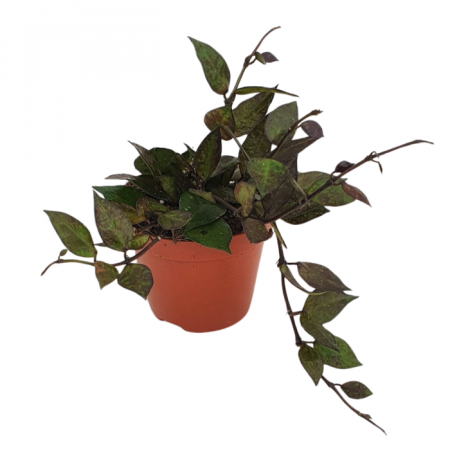
🌿 Hoya wibergiae — rare trailing species with thin waxy leaves
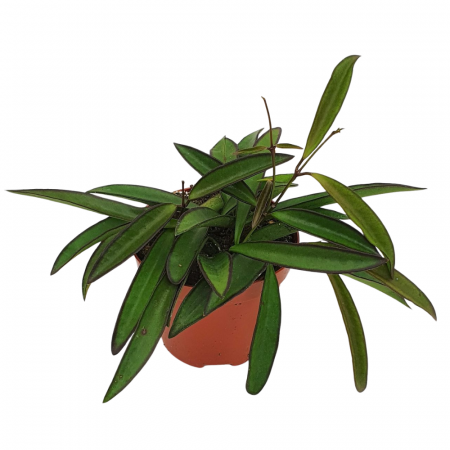
Hoya wibergiae is a rare species, particularly prized by collectors for its long, thin leaves growing in whorls (multiple leaves around the same node), creating an airy and unique look. It is an IML 1618 variety, also known as Hoya verticillata, only recently described scientifically. Its growth is predominantly trailing, perfect for hanging baskets or trellises where the long stems can drape elegantly.
Its star-shaped, fragrant flowers are one of the most desired features of the species. They appear in small clusters of 8-15 waxy flowers, with creamy white or pale pink tones and a darker centre. The fragrance is sweet, similar to honey and vanilla, intensifying in the evening and at night. For Hoya enthusiasts, wibergiae is one of those species that is worth the wait and careful care.
🌍 Origin and natural habitat
Hoya wibergiae is a tropical epiphytic species, native to the humid forests of Southeast Asia, particularly the Philippines and parts of Indonesia. It naturally grows on the trunks of large trees, at heights where it receives light filtered through the canopy and high humidity. Its habitat is characterised by steady temperatures between 22-28°C, humidity between 70-90% and almost daily rainfall.
The species was discovered and classified relatively recently, which makes it still quite rare in European collections. The name "IML 1618" refers to its code in the cataloguing system of collector Iris Marie Liddle, who has documented many Hoya species in recent years. Hoya wibergiae was initially confused with Hoya verticillata, which is why in some sources it is still listed under that name.
🌱 Airy foliage and trailing stems
Hoya wibergiae leaves are thin and long, measuring 6-10 cm in length and only 1-2 cm in width — a ratio that gives it a graceful look, totally different from Hoyas with round or elliptical leaves. They are arranged in whorls, with several leaves growing around the same node, creating a decorative spiral pattern. The colour is medium green, with a thin waxy layer that reflects light.
The stems are thin, flexible and can reach 1-2 metres within a few years. They are perfectly adapted for trailing growth and for clinging to small trellises. Thanks to the small distance between nodes and the thin leaves, the plant does not become heavy and can be kept in relatively small pots even at maturity. Growth is moderate, with a few new nodes per month in the active season.
🌸 Fragrant flowers and blooming
Hoya wibergiae flowers appear in small clusters (umbels) of 8-15 star-shaped, waxy flowers with five pointed petals. The colour ranges from creamy white to pale pink, with the centre (corona) in a darker pink or red. Each flower measures 0.8-1.2 cm and releases a sweet fragrance similar to honey, more intense in the evening and at night. The flowers last 7-10 days, after which they wilt but the peduncle remains to produce new flowers in the future.
This is one of the most important rules for any Hoya, including wibergiae: never cut the peduncles (spurs). The same point will produce flowers year after year, sometimes several times in the same season. Triggers for flowering include bright indirect light, a drier period in the cool season and temperatures above 20°C in the active season.
For those who want to expand their collection of rare Hoyas, wibergiae goes well alongside other epiphytic species with similar needs: Hoya linearis (with even thinner leaves and a very similar honey-like fragrance), Hoya retusa (with unique tubular leaves) or Hoya bella (with fragrant flowers and compact growth). All these species have similar requirements and can be grown together on the same shelf.
An important recommendation: do not move Hoya wibergiae unnecessarily. This species tends to orient its leaves and growth according to the light source, and abrupt moves can slow growth for several weeks. In addition, if it already has flower buds forming, moves can lead to them dropping before flowering. Try to find the ideal location and keep it there long-term.
Common problems with Hoya wibergiae include leaves with dry tips (a sign of low humidity or insufficient watering), yellow leaves (usually overwatering) and lack of blooming (most often linked to too little light). This species is relatively pest-resistant, but spider mites can appear in very dry air conditions — increase humidity and inspect the underside of leaves regularly.
As a collector species, Hoya wibergiae is also an investment for the future. Mature plants with well-developed roots and multiple peduncles become more and more valuable over time and are highly sought after by collectors. With proper care and patience, your plant can in a few years produce spectacular blooms and become the focal point of your Hoya collection.
If you are looking to display Hoya wibergiae at its best, consider hanging it from a ceiling hook in a bright corner where the trailing stems can fully drape down. The vertical plane allows the whorled leaves to be appreciated from multiple angles. Alternatively, mounted on a moss pole, the plant can grow upwards and develop a more vertical habit. Both methods are valid and depend on the available space and personal aesthetic preferences.
The blooming sequence of Hoya wibergiae is fascinating to observe: the buds slowly enlarge over 2-3 weeks, then open one evening into a perfect star cluster. The flowers will continue to release nectar droplets and fragrance for the entire week they remain open. After they fade, do not be tempted to remove the bare peduncle — within months, new buds will begin to form from the same point, and the cycle will repeat. With time, a single peduncle may bear several generations of blooms.
🌱 Complete care and recommendations
Hoya wibergiae prefers bright indirect light — a protected east or south-east window is ideal. The substrate must be very airy: fine pine bark (50%), perlite (30%), sphagnum (15%) and a little activated charcoal (5%). Water only when the substrate is almost completely dry — the thin leaves of this species are more sensitive to overwatering than to under-watering.
In the warm season, water every 7-10 days; in winter, reduce to 14-21 days and keep the temperature above 16°C. Ideal atmospheric humidity is 50-70%. Fertilise with fertiliser diluted to half strength once a month in spring and summer. Repot rarely, only every 3 years, preferring slightly larger pots. Propagation is simple by stem cuttings with 2-3 nodes, rooted in damp sphagnum or in water. Delivery across the EU.
Hoya wibergiae is one of those species that rewards careful care and patience but can intimidate beginners. If this is your first Hoya, understand that growth is slow and the first bloom may take 1-2 years. However, once you understand its rhythm, it becomes a faithful plant that will bloom year after year, offering you its sweet fragrance every summer evening.
To maximise blooming, give it a cooler rest period (15-18°C) for 4-6 weeks in winter, followed by resuming watering and fertilising as temperatures rise. This simulation of the dry season in its natural habitat triggers budding and can double the number of blooms per season. Embrace its tropical origin in your care — and it will reward you with memorable floral displays.
Lungime: 6 cm
Greutate (kg): 0.15 Kg
Denumire: Hoya
Diametru: 6 cm
Cerințe lumină: Strong, indirect light
Tip plantă: Decorative
Utilizare: Interior
Tip suport: Ghiveci
Material Suport: Plastic
What light does Hoya wibergiae need?
It prefers moderate to bright indirect light. An east or west window is ideal. Avoid direct sunlight which can burn the thin leaves.
Is Hoya wibergiae toxic to pets?
No, according to ASPCA, Hoya wibergiae is considered non-toxic to dogs and cats. It is a safe choice for households with pets.
How often should you water Hoya wibergiae?
Water when the substrate has dried 70–80%, typically every 7–10 days in summer and 14–21 days in winter. Avoid overwatering which causes root rot.
How do you propagate Hoya wibergiae?
Through stem cuttings with 2–3 nodes, planted in moist sphagnum at 22–26°C. Rooting takes 3–6 weeks. Water propagation is a viable alternative.
Can it be grown in a hanging basket?
Yes, Hoya wibergiae is ideal for hanging baskets. Its natural trailing habit creates a beautifully decorative green cascade effect.
Ai nevoie și de un ghiveci decorativ?