EN/
EN/ Romana
Hoya finlaysonii 'Sukirin' D6
![Hoya finlaysonii 'Sukirin' – Rare Thai Form with Spectacular Leaves [0]](https://gomagcdn.ro/domains2/eufloria.ro/files/product/medium/hoya-finlaysonii-sukirin-d6-436131.webp "Hoya finlaysonii 'Sukirin' – Rare Thai Form with Spectacular Leaves [0]")
![Hoya finlaysonii 'Sukirin' – Rare Thai Form with Spectacular Leaves [1]](https://gomagcdn.ro/domains2/eufloria.ro/files/product/medium/hoya-finlaysonii-sukirin-d6-738305.webp "Hoya finlaysonii 'Sukirin' – Rare Thai Form with Spectacular Leaves [1]")
![Hoya finlaysonii 'Sukirin' – Rare Thai Form with Spectacular Leaves [1]](https://gomagcdn.ro/domains2/eufloria.ro/files/product/original/hoya-finlaysonii-sukirin-d6-436131.webp "Hoya finlaysonii 'Sukirin' – Rare Thai Form with Spectacular Leaves [1]")
![Hoya finlaysonii 'Sukirin' – Rare Thai Form with Spectacular Leaves [2]](https://gomagcdn.ro/domains2/eufloria.ro/files/product/original/hoya-finlaysonii-sukirin-d6-738305.webp "Hoya finlaysonii 'Sukirin' – Rare Thai Form with Spectacular Leaves [2]")
Approx height (including pot): 15 cm
Flowering state: No flowers
- Description
- Characteristics
- Reviews (0)
- FAQ
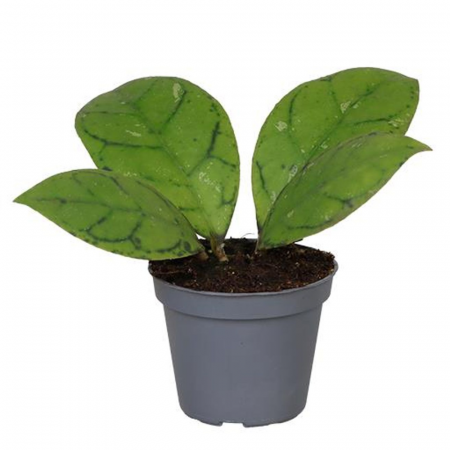
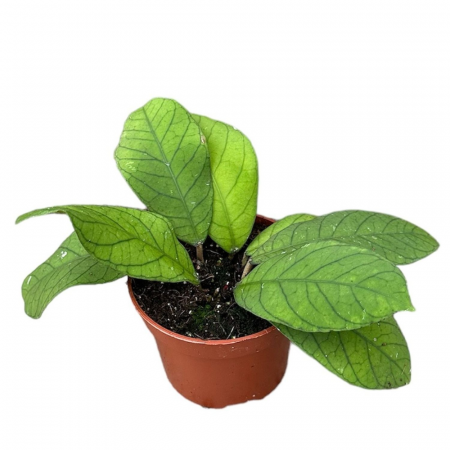
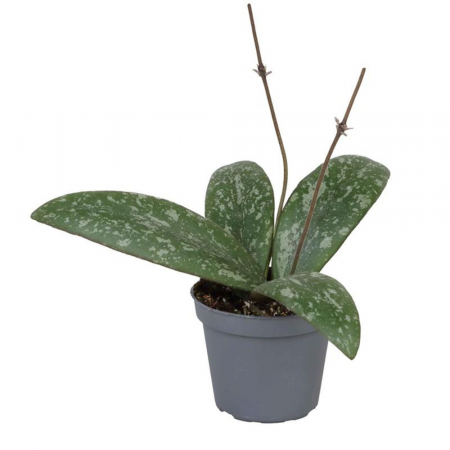
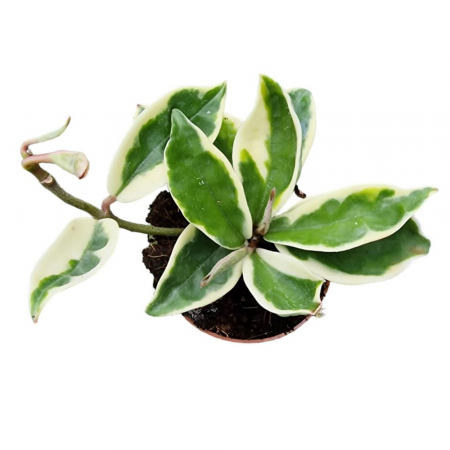
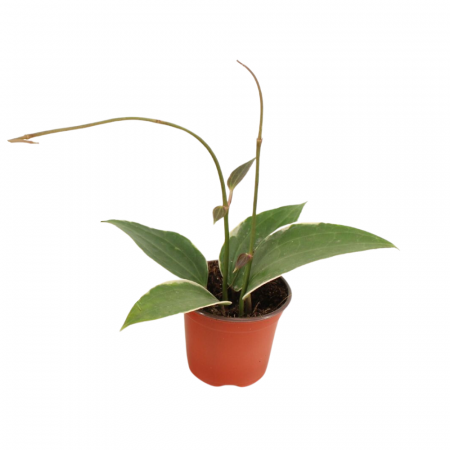
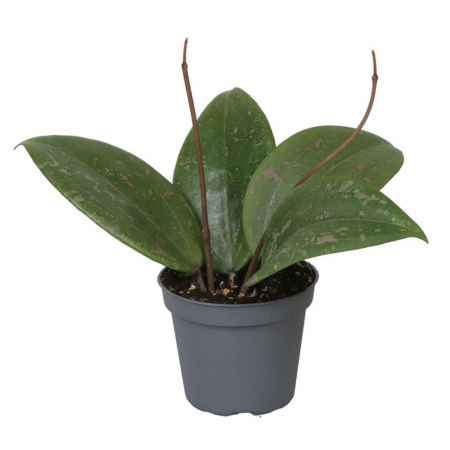
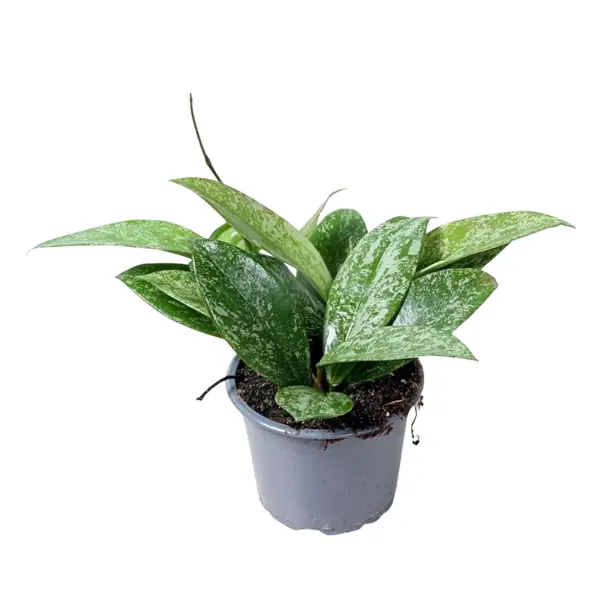
Hoya finlaysonii 'Sukirin' is a regional form of one of the most stunning foliage Hoyas in cultivation – a plant grown not primarily for its flowers, but for leaves so architecturally beautiful and texturally unique that Vermont Hoyas declares it "can be grown only for the spectacular leaves." The 'Sukirin' form, collected from the humid montane forests of Sukhirin district in southern Thailand, distinguishes itself within the species with particularly pronounced silver splash markings across its already extraordinary veined foliage. This is a Hoya for collectors who understand that great leaves can be just as rewarding as great flowers.
The species Hoya finlaysonii was described by Robert Wight and honours George Finlayson (1790–1823), a Scottish naturalist, traveller, and one of the original collectors of this species on Penang Island in Malaysia. The species is native to Thailand, Malaysia, and Indonesia (including Borneo), where it grows as a climbing epiphyte along rivers and streams in lowland tropical forests and at clearing edges. The 'Sukirin' form takes its name from the Sukhirin district in Narathiwat province, Thailand's southernmost region – a remote area on the Malay Peninsula bordering Malaysia, embraced by mountains and curtains of fog year-round. The name "Sukhirin" itself means "beautiful lush greenery" in Thai, a fitting origin for a plant of such visual richness.
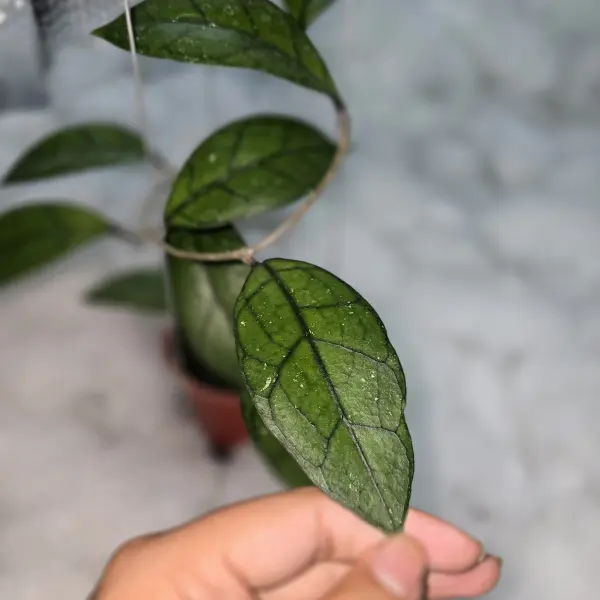
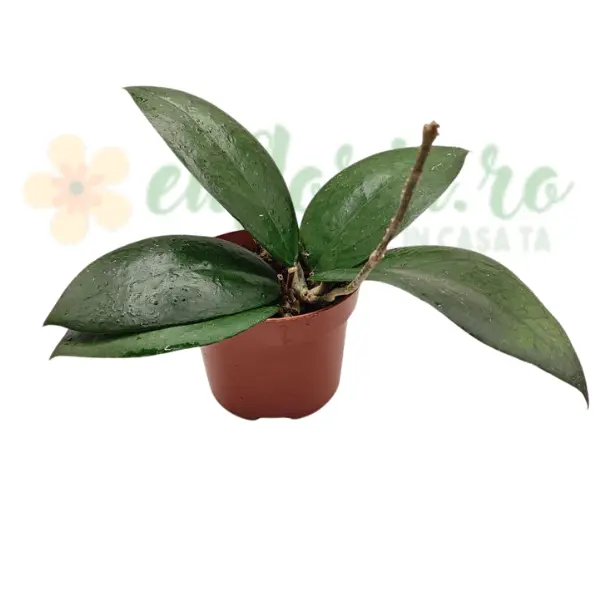
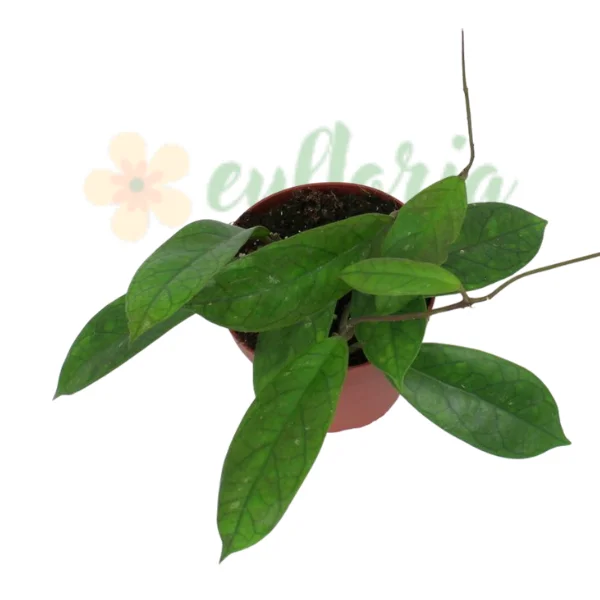
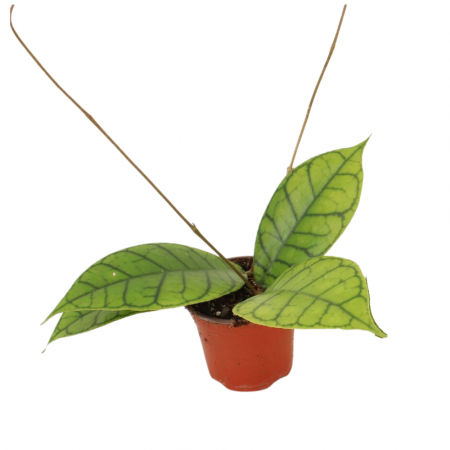
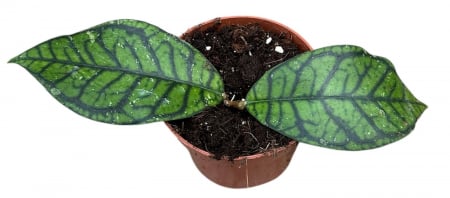
The leaves are the centrepiece, and what leaves they are. The 'Sukirin' form produces wide, oval to elliptical leaves – broader than the narrow, classic type form – with a matte light green base surface, thick, leathery, and remarkably hard when mature. World of Succulents documents the species' leaves at up to 15 cm long and 5 cm wide, with a texture likened to stiff cardboard. Against this pale green canvas, a bold network of prominent dark green to near-black veins creates an intricate, high-contrast pattern that looks almost hand-drawn or etched into the surface. The venation is the defining aesthetic of every Hoya finlaysonii, but the 'Sukirin' form adds another layer: shimmering silver speckles and splash markings scattered across the leaf surface, giving each leaf a luminous, sparkling quality that the plain-leaved classic form lacks. The leaf margins are slightly rough or semi-serrated – what Steve's Leaves describes as "crisp edges" with a "jagged" quality. The deep green leaf margins frame the lighter centre beautifully. New leaves emerge softer and lighter before hardening into their mature, rigid texture. The overall visual effect is sculptural: part botanical specimen, part living artwork.
The growth habit is slow-vining and compact, with relatively short internodes that produce a well-furnished, dense appearance. Vines can reach 1.5-2 metres with appropriate support, and the plant can be trained to climb on a trellis, moss pole, or hoop, or left to trail from a shelf or hanging basket. Stems are green when young but gradually turn dull yellow as they mature, reaching approximately 0.8 cm in diameter.
The flowers, while secondary to the foliage in this species, are genuinely lovely. Hoya finlaysonii produces small umbels of up to 35-40 reflexed, star-shaped flowers. The corolla is creamy-white to bone-white at the base, transitioning to brown-maroon or purple at the tips of the petals. The corona is porcelain white. The fragrance is subtle and distinctive – variously described as mild citrus by Tropics@Home and light cinnamon by Gabriella Plants. Flowers are notably short-lived compared to many Hoyas: World of Succulents documents a lifespan of approximately 3 days per cluster. Vermont Hoyas confirms this brevity, noting that first flowering occurred approximately 3 years from cutting. Tropics@Home states the species is easy to flower and may bloom throughout the year under ideal conditions. As with all Hoyas, never remove old peduncles – the same flower stalks will produce new blooms in subsequent seasons.
Care Requirements:
- Light: Bright, indirect light is essential – this species needs good light to develop its signature veining contrast and maintain compact growth. Tolerates some filtered morning sun, but protect from harsh midday rays that can scorch the leaves. In lower light, growth becomes weak, leggy, and the beautiful leaf patterning can be less defined. Supplementary grow lights (10-12 hours daily) are strongly recommended during northern European winters. The bright indirect light also promotes more frequent flowering on established plants.
- Water: Vermont Hoyas grows this species "very wet" – an important distinction from the standard Hoya advice of "let it dry completely." While the substrate must drain freely, Hoya finlaysonii appreciates consistent moisture during active growth. Allow the top 2-3 cm to dry between waterings, then water thoroughly. Do not let the root zone dry out completely for extended periods. Despite the thick, rigid leaves, this is not a drought-tolerant species in the same way as succulent-leaved Hoyas. Reduce watering in winter but maintain light moisture. Overwatering remains dangerous – if the plant sits in soggy, airless substrate, root rot can develop rapidly. The key is consistent, moderate moisture with excellent drainage.
- Soil: Well-draining, airy, chunky substrate. A mix of orchid bark, perlite, and coco coir or coconut chips provides the right balance. The epiphytic root system needs excellent aeration. Some growers add horticultural charcoal for additional drainage and disease prevention. As an epiphyte with a shallow root system, this plant does not need a deep pot and prefers to be slightly rootbound.
- Temperature: 18-28°C is the ideal range. This is a warm-growing species from near-equatorial tropical forests. Vermont Hoyas emphasises "warm" conditions as a key requirement. Avoid temperatures below 10°C. Protect from cold drafts, draughty windows, and radiators. Consistent warmth year-round produces the best growth and the most frequent flowering.
- Humidity: High humidity (60-80%) is strongly recommended. Vermont Hoyas specifically grows this species under "warm and humid" conditions. The 'Sukirin' form originates from a mountainous Thai district described as "embraced by mountains and curtains of fog all year" – a naturally high-humidity environment. Average household humidity (40-50%) is tolerated but may slow growth and reduce the silver splash expression. A humidifier, greenhouse cabinet, or terrarium setup makes a significant difference. Good air circulation must accompany high humidity to prevent fungal issues. Misting with rainwater can provide foliar nutrition, as recommended by Plantophiles.
- Feeding: Half-strength balanced liquid fertilizer every 2-4 weeks during the growing season (spring-summer). A high-potassium formula can encourage flowering on established plants. Avoid overfeeding – the slow growth rate means the plant processes nutrients gradually. Stop fertilizing in autumn and winter.
Botanical Info: Family: Apocynaceae | Genus: Hoya | Species: Hoya finlaysonii Wight | Form: 'Sukirin' (regional collection from Sukhirin, Narathiwat, Thailand) | Common Names: Finlayson's Wax Plant | Type: Epiphytic Climbing Vine | Origin: Sukhirin district, Narathiwat province, southern Thailand (species range: Thailand, Malaysia, Indonesia) | Zone: USDA 10-11 (indoor cultivation in temperate climates) | Flowering: Reflexed, white/cream base with maroon-purple tips, white corona, up to 35-40 per umbel, mild citrus-cinnamon fragrance, short-lived (approx. 3 days), spring-summer | Growth Rate: Slow to moderate
Lungime: 10 cm
Greutate (kg): 0.25 Kg
Denumire: Hoya
Diametru: 6 cm
Cerințe lumină: Partial umbra
Tip plantă: Decorative
Utilizare: Interior
Tip suport: Ghiveci
Material Suport: Plastic
Why are the leaves of my Hoya finlaysonii 'Sukirin' so hard and stiff?
This is completely normal and is actually one of the defining characteristics of the species. Hoya finlaysonii produces leaves with a remarkably thick, rigid, cardboard-like texture when mature – much harder and stiffer than most other Hoya species. New leaves emerge softer and somewhat flexible, but as they mature, they develop their characteristic rigidity. This extreme firmness is an adaptation to the plant's natural epiphytic habitat in tropical forests, where thick, tough leaves help retain moisture and resist mechanical damage from wind and animal contact. The hard texture is a sign of a healthy, well-developed leaf – not a problem. If leaves feel unusually soft, bendable, or flimsy, this may indicate underwatering, insufficient light, or root issues. Healthy mature leaves should be almost impossible to bend without damage.
What is the difference between Hoya finlaysonii and Hoya callistophylla?
These two species are among the most frequently confused Hoyas in cultivation because both feature prominently veined foliage with dark-on-light patterning. However, there are reliable differences. Hoya finlaysonii (including the 'Sukirin' form) typically has: slightly less contrasting veins than callistophylla (though the difference can be subtle); thicker, harder, more cardboard-like leaf texture; random silver flecks or splash markings on the leaf surface (especially pronounced in the 'Sukirin' form); slightly rougher or semi-serrated leaf margins; and a deep green leaf edge framing the lighter centre. Hoya callistophylla generally has: more evenly defined, lighter-coloured veining; smoother, less rigid leaf texture; occasionally bronze-tinted leaf undersides; and broader leaves with smoother margins. The growth habit also differs slightly, with finlaysonii tending toward a more managed, compact form. Both produce similar-looking veined foliage, but side-by-side comparison reveals distinct differences in texture, splash, and venation intensity.
How do I get Hoya finlaysonii 'Sukirin' to flower?
Patience and consistency are the two essential requirements. Vermont Hoyas reports that first flowering occurred approximately 3 years from cutting – this is a plant that needs time to mature before blooming. Tropics@Home notes that the species is actually easy to flower and can bloom throughout the year once established. To encourage flowering: provide consistently bright indirect light (the most critical factor – prolonged light exposure and a long growing season help induce blooms); keep the plant warm and humid (Vermont Hoyas emphasises "very wet and warm and humid" growing conditions); allow the plant to become slightly rootbound; feed with a high-potassium fertilizer during the growing season; and never remove old peduncles – the same flower stalks produce new blooms year after year. One honest note: the flowers are short-lived (approximately 3 days per cluster), so they arrive as a brief, beautiful event. Most growers cultivate this species primarily for the spectacular foliage, with flowers as a welcome bonus.
What is the difference between Hoya finlaysonii 'Sukirin' and regular Hoya finlaysonii?
Hoya finlaysonii exists in several regional forms, each collected from different locations across its natural range in Thailand, Malaysia, and Indonesia. The 'Sukirin' (also spelled 'Sukhirin') form was collected from the Sukhirin district in Thailand's Narathiwat province, near the Malaysian border. Compared to the "Classic" form (typically associated with Penang, Malaysia), the 'Sukirin' form is distinguished by: wider, more broadly oval leaves (rather than narrower, more elongated); more prominent silver splash markings and speckles across the leaf surface, giving a shimmering quality; compact internodes that produce a denser, more tightly furnished growth habit; and a slightly more matte leaf surface. The overall veining pattern – dark green to near-black veins on a lighter green base – is shared across all forms, but the intensity, leaf shape, silver expression, and growth habit vary by regional origin. Other notable forms include the 'Sarawak' form from Borneo (rounded leaves with near-black venation) and the 'Round Leaf' cultivar.
Is Hoya finlaysonii 'Sukirin' toxic to cats and dogs?
No. Hoya finlaysonii, including the 'Sukirin' form, is classified as non-toxic to cats, dogs, and other household pets. World of Succulents confirms this species is "considered non-toxic, so having it around kids and pets is safe." The Hoya genus is not listed among toxic plant families by the ASPCA. While ingesting large quantities of any plant material can cause mild gastrointestinal discomfort, this species poses no serious toxic risk. The milky latex sap released when stems are cut can cause minor skin irritation in sensitive individuals – use gloves when pruning. The remarkably hard, rigid leaves of this species are naturally unappealing to chewing pets, which provides an additional practical layer of protection.
Recommendations