EN/
EN/ Romana
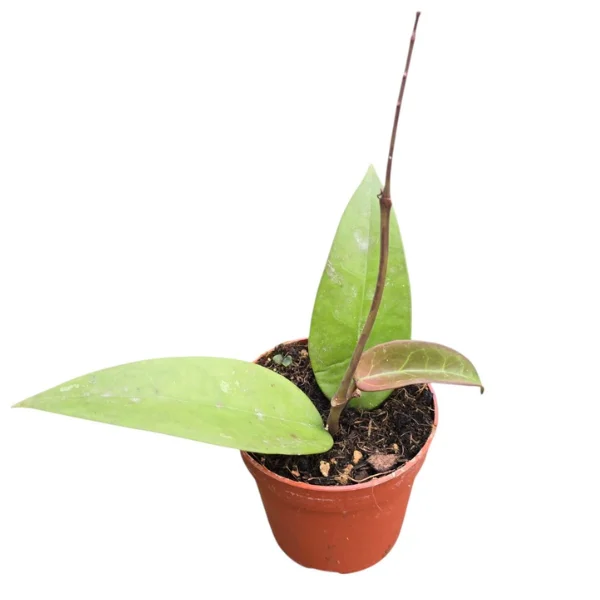
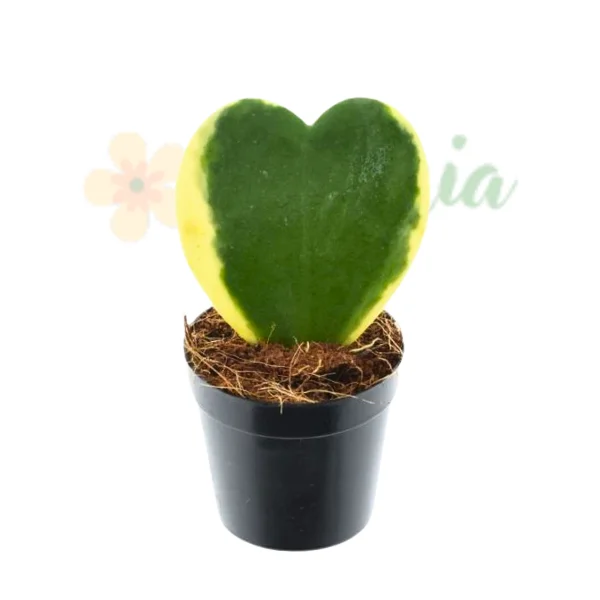
Hoya parasitica 'Heart Leaf Silver' Ø7cm
![Hoya parasitica 'Heart Leaf Silver' — Silver-Splashed Hearts & Fragrant Flowers [0]](https://gomagcdn.ro/domains2/eufloria.ro/files/product/medium/hoya-parasitica-heart-leaf-silver-d7-724717.webp "Hoya parasitica 'Heart Leaf Silver' — Silver-Splashed Hearts & Fragrant Flowers [0]")
![Hoya parasitica 'Heart Leaf Silver' — Silver-Splashed Hearts & Fragrant Flowers [1]](https://gomagcdn.ro/domains2/eufloria.ro/files/product/medium/hoya-parasitica-heart-leaf-silver-d7-123058.webp "Hoya parasitica 'Heart Leaf Silver' — Silver-Splashed Hearts & Fragrant Flowers [1]")
![Hoya parasitica 'Heart Leaf Silver' — Silver-Splashed Hearts & Fragrant Flowers [2]](https://gomagcdn.ro/domains2/eufloria.ro/files/product/medium/hoya-parasitica-heart-leaf-silver-d7-444335.webp "Hoya parasitica 'Heart Leaf Silver' — Silver-Splashed Hearts & Fragrant Flowers [2]")
![Hoya parasitica 'Heart Leaf Silver' — Silver-Splashed Hearts & Fragrant Flowers [1]](https://gomagcdn.ro/domains2/eufloria.ro/files/product/original/hoya-parasitica-heart-leaf-silver-d7-724717.webp "Hoya parasitica 'Heart Leaf Silver' — Silver-Splashed Hearts & Fragrant Flowers [1]")
![Hoya parasitica 'Heart Leaf Silver' — Silver-Splashed Hearts & Fragrant Flowers [2]](https://gomagcdn.ro/domains2/eufloria.ro/files/product/original/hoya-parasitica-heart-leaf-silver-d7-123058.webp "Hoya parasitica 'Heart Leaf Silver' — Silver-Splashed Hearts & Fragrant Flowers [2]")
![Hoya parasitica 'Heart Leaf Silver' — Silver-Splashed Hearts & Fragrant Flowers [3]](https://gomagcdn.ro/domains2/eufloria.ro/files/product/original/hoya-parasitica-heart-leaf-silver-d7-444335.webp "Hoya parasitica 'Heart Leaf Silver' — Silver-Splashed Hearts & Fragrant Flowers [3]")
Approx height (including pot): 10 cm
Flowering state: No flowers
- Description
- Characteristics
- Reviews (0)
- FAQ
💚 Silver-Splashed Hearts from the Forests of Asia
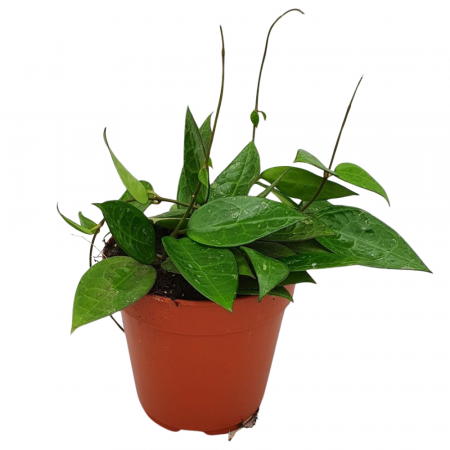
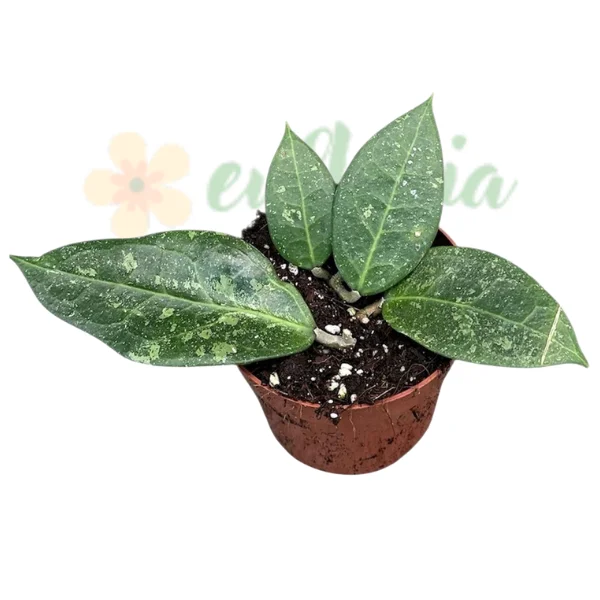
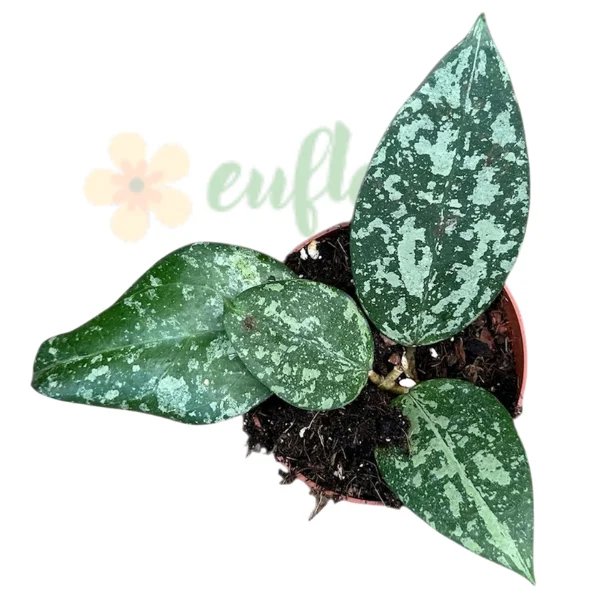
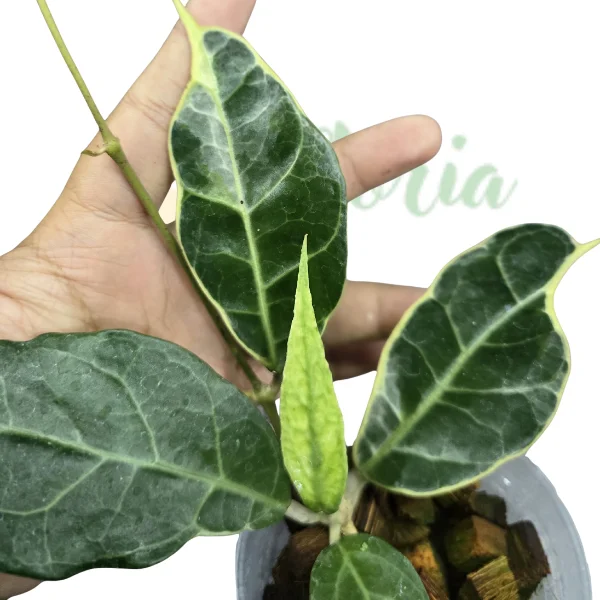
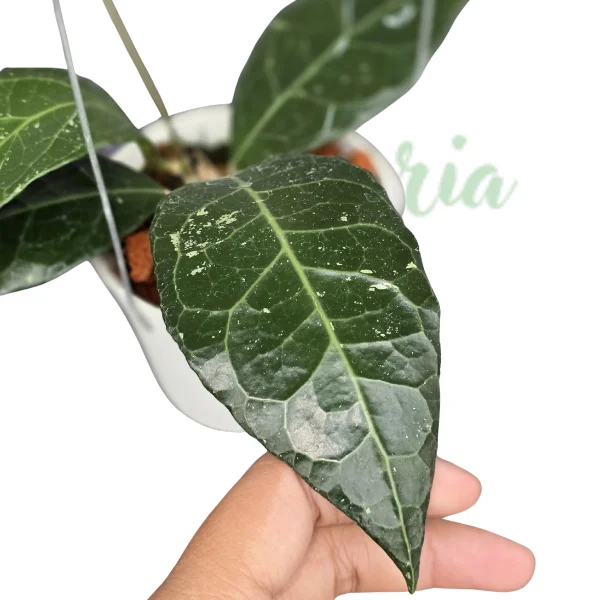
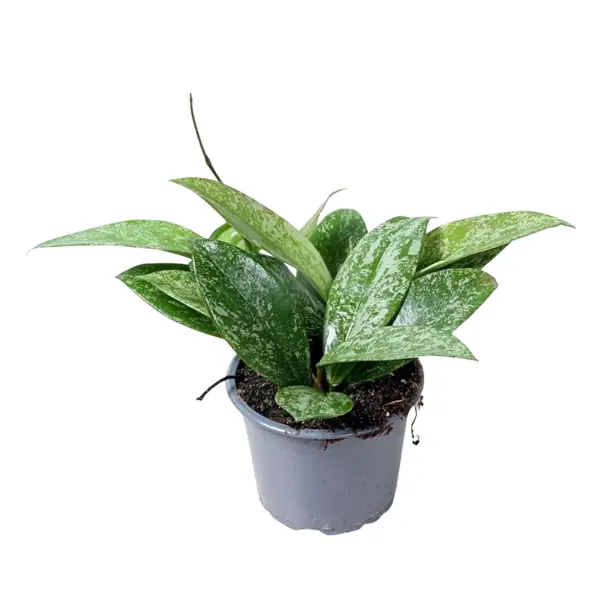
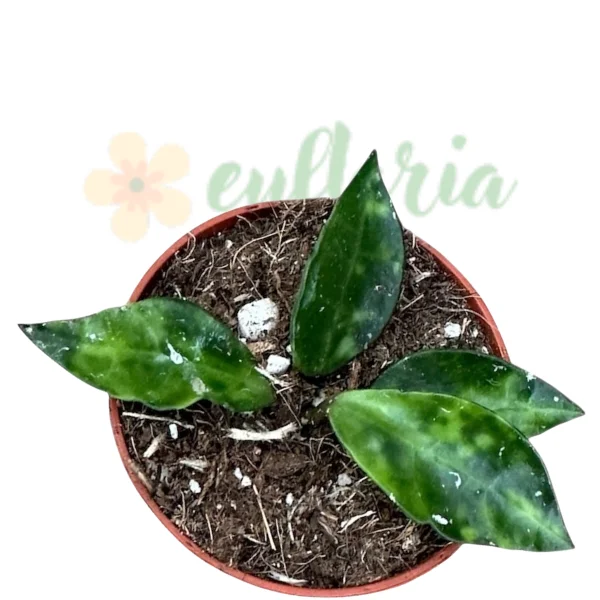
Hoya parasitica 'Heart Leaf Silver' is a charming cultivar that combines two of the most appealing features any houseplant can offer: romantic heart-shaped leaves and shimmering silver variegation. Each leaf emerges like a botanical valentine — thick, waxy, and shaped like a perfect heart — then covered in generous splashes of silver that look like dewdrops frozen in time across an emerald canvas. When the flowers arrive, they complete the picture: clusters of creamy-white reflexed stars with pink-purple centres, releasing a sweet, spicy fragrance that perfumes the room. This is a Hoya that appeals to collectors for its beauty and to beginners for its forgiving nature — one of the easier species in the genus, adapting readily to a range of indoor conditions while rewarding patient growers with prolific blooms.
🌏 Origins & Botanical History
The taxonomy of this species has been remarkably complex, and collectors may encounter it under several names. The plant was originally described as Asclepias parasitica by Nathaniel Wallich ex Hornemann in 1819, then transferred to the genus Hoya by Robert Wight in 1834 as Hoya parasitica. However, Kew's Plants of the World Online now recognises the accepted name as Hoya verticillata var. verticillata (Vahl) G.Don, originally described by Martin Vahl in 1810 as Sperlingia verticillata. In the trade, you will commonly see this plant sold as Hoya parasitica, Hoya verticillata, or Hoya acuta — all referring to the same highly variable species complex. The 'Heart Leaf Silver' (also sold as 'Heart Leaf Splash') is a selected form prized for its pronounced heart-shaped leaves with generous silver speckling. Native range is exceptionally broad: from the Indian subcontinent (including the Andaman and Nicobar Islands, Assam, Bangladesh) through Southeast Asia (Thailand, Vietnam, Cambodia, Laos, Myanmar, Malaysia, Singapore, Indonesia) to southern China (including Hainan and Taiwan), the Philippines, and even Borneo and Sulawesi. In nature, this adaptable species grows epiphytically on trees in tropical rainforests, coastal forests, mangroves, and even peat swamps — explaining its remarkable tolerance for varied growing conditions in cultivation.
🍃 Foliage — Hearts Dusted with Silver
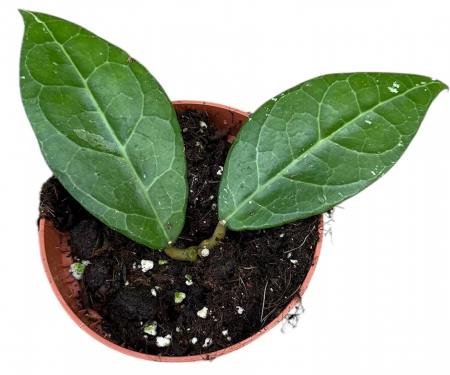
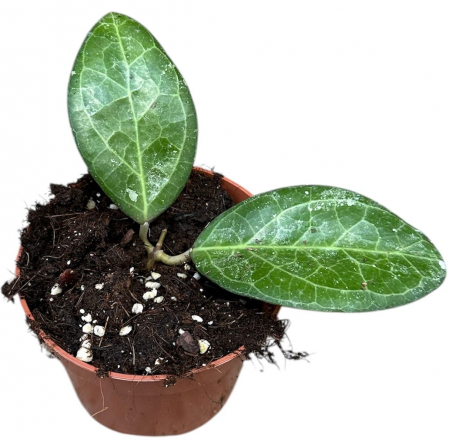
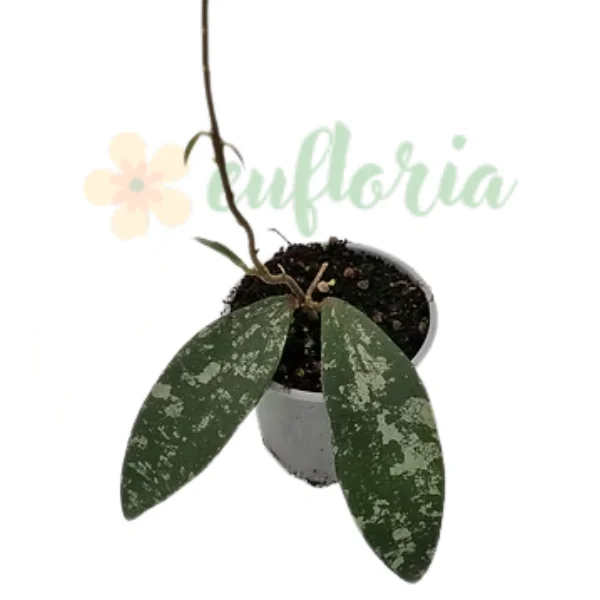
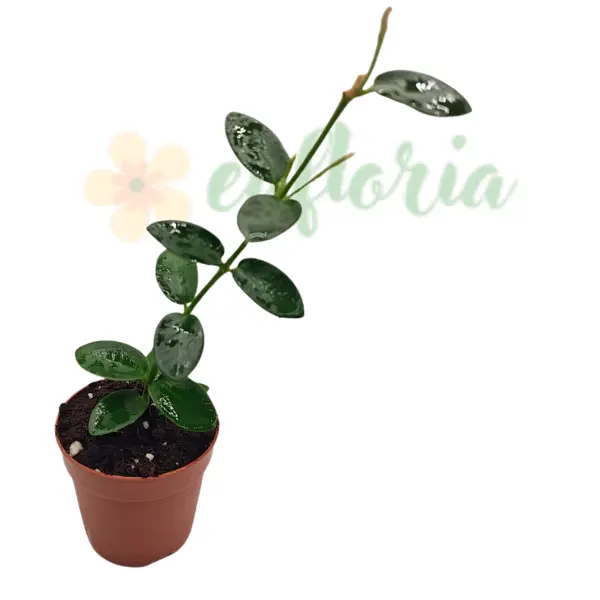
The leaves are the defining feature of the 'Heart Leaf Silver' form. They are distinctly heart-shaped (cordate), medium-sized, measuring approximately 8-12 cm long and 4-6 cm wide, with a thick, succulent, waxy texture typical of Hoyas. The surface is deep emerald green with prominent venation (triplinerved — three main veins visible from the base), glossy and ribbed with a structured appearance. What makes this cultivar special is the abundant silver variegation: irregular splashes and speckles of silvery-white scattered across the leaf surface, creating an effect that has been compared to "paint spatters" or "frozen dewdrops." The intensity of silver marking can vary between leaves and is generally more pronounced in brighter light conditions. New leaves may emerge with subtle pink or bronze tones before maturing to green with silver overlay. The foliage grows on twining vines that can reach 2-3 metres under cultivation, making the plant excellent for hanging baskets, trellises, or as a mounted specimen.
🌸 Flowers — Spicy-Sweet & Star-Shaped
The flowers are reflexed (petals curve backward), star-shaped, and typically creamy-white to white with pink to purple-red centres — the classic "porcelain flower" appearance that gives Hoyas their common name. Individual blooms measure approximately 10-15 mm across and appear in rounded umbels containing up to 40 flowers per cluster. Hoya Store Australia describes them as having a "pink-centred white corona" with "beautiful spicy fragrance." The scent is notable — sweet, spicy, and pleasantly strong — adding another dimension to this plant's appeal. Flowers last approximately 5-7 days per umbel and can appear multiple times throughout the growing season (primarily spring through autumn) once the plant reaches maturity. As with all Hoyas, never remove the peduncles (flower stalks) after blooming, as the plant will produce new flowers from the same spurs repeatedly. Root Houseplants notes that "umbels bear up to 70 flowers" in particularly robust specimens, though 15-40 is more typical.
🌿 Growth Habit & Development
Growth habit is climbing/trailing, with twining vines that will wrap around supports or cascade from hanging containers. This species is described by multiple sources as a "fast grower" compared to many other Hoyas, making it more rewarding for impatient growers. Sunnyjenni describes it as "easy plant to grow and another fast growing hoya." The species is noted for its adaptability — in the wild, it thrives in environments ranging from dense rainforests to coastal mangroves and even exposed sites, suggesting excellent tolerance for varying light and humidity levels. Tropics @Home describes the species as one "with highly variable leaves, but most clones are compact growing with thick leaves. It does best in a bright location and flowers well as an adult plant." Cuttings root easily, though the plant may take time to establish before showing vigorous growth or flowering. Once mature and comfortable, it is a reliable bloomer.
Care Requirements:
- Light: Bright, indirect light is ideal and essential for maintaining the silver splash pattern. JOMO Studio notes the plant "should not be in a position to see the sun directly, although early morning or late evening sun is fine." In lower light, the silver variegation may become less pronounced and flowering will be reduced. Some filtered direct sunlight enhances leaf colour and encourages blooming. Avoid harsh midday sun, which can scorch leaves. The species is adaptable and will tolerate medium light, but thrives in bright conditions.
- Water: Allow the soil to dry almost completely between waterings. This species is drought-tolerant thanks to its succulent, water-storing leaves. Mybageecha emphasises: "Water the Hoya only when the soil is completely dry. If it is moist you can let it be for a couple of days before checking on it again. It is better to under water than over water your Hoya plant!" Overwatering is the most common cause of problems — avoid consistently wet soil, which leads to root rot. Reduce watering significantly in winter when growth slows.
- Soil: Fast-draining, aerated substrate is essential. Use a chunky mix of orchid bark, perlite, and coco coir, or a quality orchid medium. The roots need airflow — as an epiphyte, this plant naturally grows with exposed roots in well-aerated conditions. Avoid dense, water-retentive soils. Some growers use LECA or semi-hydroponics successfully.
- Temperature: 18-29°C is the ideal range, with optimal growth between 20-27°C. Minimum tolerance is approximately 10-14°C — Greenboog specifies "not lower than 14 degree C (57F)" while Tropics @Home lists "does not tolerate temperatures below 10°C (50°F)." Protect from cold drafts and sudden temperature changes. This is a tropical species that does not tolerate cold.
- Humidity: 40-70% humidity is acceptable, with higher humidity (60-70%) promoting faster growth and lush foliage. Gabriella Plants notes that "for the best growth it is recommended to provide higher levels of humidity." However, the species is adaptable and tolerates average household humidity reasonably well. Good air circulation is important to prevent fungal issues in high-humidity environments.
- Feeding: Apply a balanced or low-nitrogen fertilizer at half-strength monthly during the growing season (spring-summer). Gabriella Plants recommends "a low nitrogen fertilizer containing sufficient amounts of phosphorous and potassium" to encourage flowering. Sunnyjenni warns: "Make sure to feed half strength fertiliser because full strength is too strong and might burn plant." Stop fertilizing in winter.
Botanical Info: Family: Apocynaceae (subfamily Asclepiadoideae) | Genus: Hoya | Species: Hoya verticillata var. verticillata (Vahl) G.Don — syn. Hoya parasitica (Wall. ex Hornem.) Wight, Hoya acuta Haw. | Cultivar: 'Heart Leaf Silver' (also sold as 'Heart Leaf Splash') | Common Names: Wax Plant, Porcelain Flower, Wax Vine | Type: Epiphytic Climbing Vine | Native Range: Indian Subcontinent to Southern China, Southeast Asia, Indonesia, Philippines (extremely wide distribution) | Zone: USDA 11-13 (indoor cultivation in temperate climates) | Flowering: Cream-white reflexed stars with pink-purple centres, up to 40 per umbel, spicy-sweet fragrance, 5-7 days per umbel, spring-autumn | Growth Rate: Moderate to Fast
Lungime: 10 cm
Greutate (kg): 0.25 Kg
Denumire: Hoya
Diametru: 7 cm
Cerințe lumină: Partial umbra
Tip plantă: Decorative
Utilizare: Interior
Tip suport: Ghiveci
Material Suport: Plastic
What does Hoya parasitica 'Heart Leaf Silver' smell like?
The fragrance of Hoya parasitica flowers is described as sweet and spicy. Hoya Store Australia characterises it as a "beautiful spicy fragrance," while Secret Garden describes it as "pleasantly scented." The scent is moderate in intensity — noticeable and pleasant but not overwhelming like some Hoyas (such as H. lacunosa with its intense cinnamon fragrance). The fragrance is typically strongest during the day when the flowers are fresh. Individual blooms last approximately 5-7 days, with the scent present throughout the flowering period. Most growers find the fragrance pleasant and consider it one of the plant's attractions.
Is Hoya parasitica 'Heart Leaf Silver' a good beginner Hoya?
Yes — Hoya parasitica is widely regarded as one of the easier Hoyas to grow. Multiple sources describe it as a "fast grower" and "easy plant to grow." The species' enormous natural distribution across diverse habitats (from rainforests to mangroves to coastal scrub) reflects its remarkable adaptability. It tolerates a wider range of light conditions, humidity levels, and watering schedules than many fussier Hoyas. It is more forgiving of occasional neglect and recovers well from minor care mistakes. For anyone new to Hoyas who wants something beautiful, reliable, and not overly demanding, the 'Heart Leaf Silver' is an excellent choice that rewards with both stunning foliage and fragrant flowers.
Why is my Hoya parasitica 'Heart Leaf Silver' losing its silver markings?
The silver splash variegation on Hoya parasitica 'Heart Leaf Silver' is most pronounced under bright, indirect light conditions. If the silver markings are fading or becoming less visible, the most likely cause is insufficient light. Move the plant to a brighter location — near a window with filtered light, or supplement with a grow light. Avoid harsh direct sun, which can scorch leaves, but ensure the plant receives adequate brightness. Other factors that can affect leaf appearance include inconsistent watering (both over and under-watering can stress the plant) and low humidity. The silver marking is genetic and will not disappear entirely, but optimal conditions bring out its full beauty on new growth.
How do I get my Hoya parasitica 'Heart Leaf Silver' to bloom?
Hoya parasitica is considered a reliable bloomer once mature. To encourage flowering: provide bright, indirect light — inadequate light is the most common reason for failure to bloom. Allow the plant to become somewhat root-bound, as Hoyas flower more prolifically when slightly pot-bound. Maintain consistent care without major environmental changes. Never remove old flower stalks (peduncles) after blooming — the plant will produce new flowers from the same spurs repeatedly. Use a low-nitrogen, bloom-boosting fertilizer during the growing season. Be patient — cuttings may take 2-3 years to reach flowering maturity. Once established, this species produces multiple flower clusters per stem throughout the growing season.
What is the difference between Hoya parasitica, Hoya verticillata, and Hoya acuta?
These names all refer to the same species complex — one of the most taxonomically confusing groups in the Hoya genus. According to Kew's Plants of the World Online, the currently accepted name is Hoya verticillata var. verticillata (Vahl) G.Don, originally described in 1810. Hoya parasitica and Hoya acuta are both synonyms that have been used historically and remain common in the plant trade. The species is highly variable across its enormous natural range (from India to the Philippines), which has led to many regional forms being described under different names. For collectors, the practical implication is simple: if you see a plant labelled Hoya parasitica, Hoya verticillata, or Hoya acuta with similar characteristics, it is likely the same species. Care requirements are identical regardless of which name is used.
Is Hoya parasitica 'Heart Leaf Silver' toxic to cats and dogs?
No, Hoya parasitica 'Heart Leaf Silver' is not toxic to cats, dogs, or other household pets. The ASPCA confirms that Hoya plants are non-toxic to cats, dogs, and horses. The species does not contain compounds known to be poisonous to animals. As with any plant, eating large amounts of foliage might cause mild stomach upset simply because pets are not designed to digest plant material — but this is not a toxic reaction. The milky latex sap released when stems are cut can cause minor mouth or skin irritation but is not dangerous. This makes Hoya parasitica 'Heart Leaf Silver' an excellent choice for pet-friendly households where safety is a priority.
How to care for Hoya?
Bright indirect light, moderate watering, drained substrate. 18-27°C.
Does Hoya bloom?
Yes, waxy flowers. Don't cut old peduncles.
How often to water?
When dry. Weekly summer, 2-3 weeks winter.
Propagation?
Cuttings 2-3 nodes water/sphagnum. 2-6 weeks.
Recommendations
Ai nevoie și de un ghiveci decorativ?