EN/
EN/ Romana
Hoya verticillata 'Nganjuk' Ø7cm
![Hoya verticillata 'Nganjuk' — Silver Splash & Dark Margins [0]](https://gomagcdn.ro/domains2/eufloria.ro/files/product/medium/hoya-verticillata-nganjuk-d7-202064.webp "Hoya verticillata 'Nganjuk' — Silver Splash & Dark Margins [0]")
![Hoya verticillata 'Nganjuk' — Silver Splash & Dark Margins [1]](https://gomagcdn.ro/domains2/eufloria.ro/files/product/medium/hoya-verticillata-nganjuk-d7-045950.webp "Hoya verticillata 'Nganjuk' — Silver Splash & Dark Margins [1]")
![Hoya verticillata 'Nganjuk' — Silver Splash & Dark Margins [1]](https://gomagcdn.ro/domains2/eufloria.ro/files/product/original/hoya-verticillata-nganjuk-d7-202064.webp "Hoya verticillata 'Nganjuk' — Silver Splash & Dark Margins [1]")
![Hoya verticillata 'Nganjuk' — Silver Splash & Dark Margins [2]](https://gomagcdn.ro/domains2/eufloria.ro/files/product/original/hoya-verticillata-nganjuk-d7-045950.webp "Hoya verticillata 'Nganjuk' — Silver Splash & Dark Margins [2]")
Approx height (including pot): 10 cm
Flowering state: No flowers
- Description
- Characteristics
- Reviews (0)
- FAQ
🏔️ A Mountain Treasure from Java's Volcanic Slopes
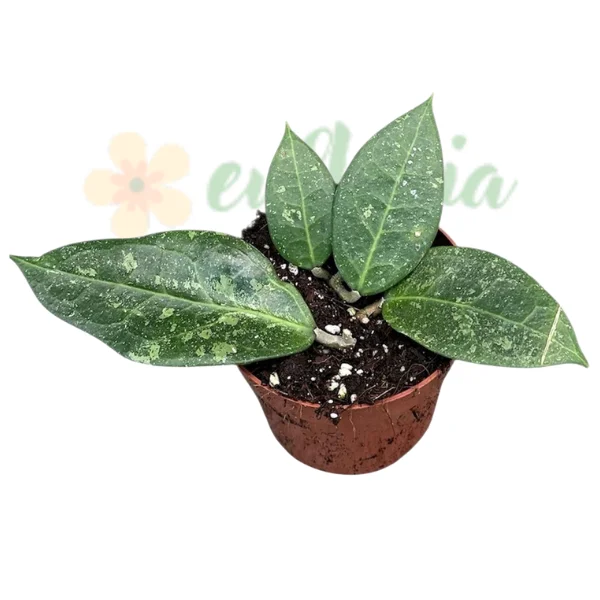
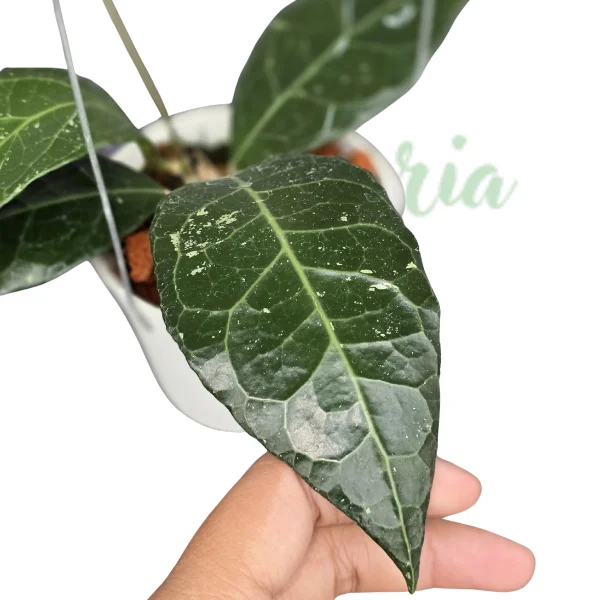
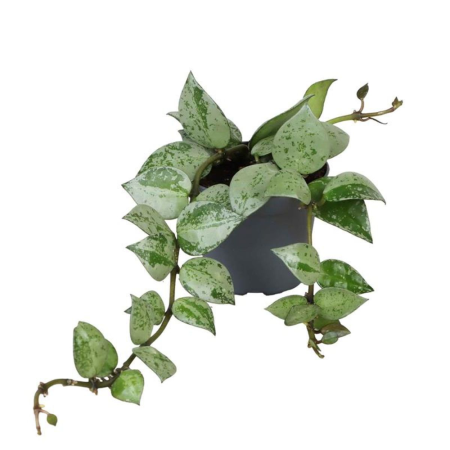
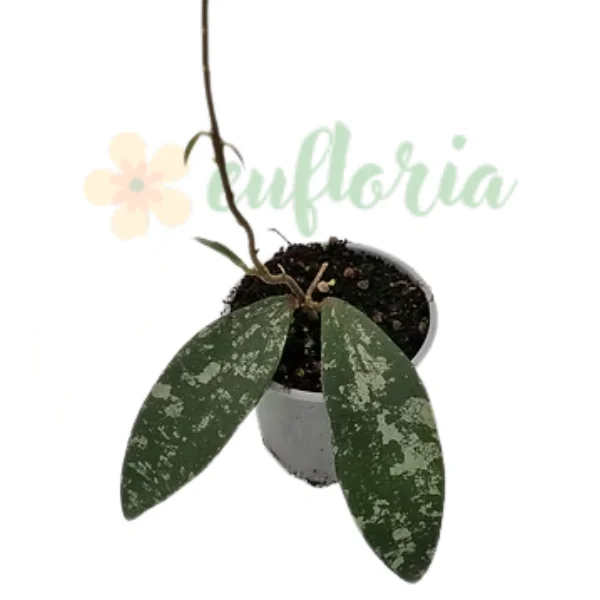
Hoya verticillata 'Nganjuk' is a striking regional variety of Hoya verticillata that hails from the Nganjuk region in East Java, Indonesia — a land of ancient temples, tropical forests, and the volcanic slopes of Mount Wilis. This locality form has captured collectors' attention with its large, impressive leaves featuring prominent raised veins, silver splash patterns, and the distinctive dark margins that have earned it the alternative name "Black Margin." Urban Jungle describes it as "a beautiful and rare variety of the Hoya genus that impresses with its unique leaves and easy-care nature." Where standard Hoya verticillata is already admired for its fragrant flowers and adaptability, the Nganjuk form adds dramatic foliage that makes a statement even when the plant is not in bloom. This is a Hoya that combines geographical specificity with genuine visual impact.
🌏 Origins & Botanical History
The species Hoya verticillata was first described by George Don in 1837 and is native to an enormous range across South and Southeast Asia. According to Kew's Plants of the World Online (POWO), the distribution spans from the Indian Subcontinent through Southern China to Western and Central Malesia. The 'Nganjuk' form comes specifically from the Nganjuk Regency in East Java Province, Indonesia. Unsolicited Plant Talks notes: "Hoya verticillata (Nganjuk) is native to the tropical rainforests near the Wilis Mountains in East Java." Mount Wilis is a solitary volcanic massif rising to 2,563 metres, surrounded by pristine forests that harbour protected flora including orchids and colourful edelweiss. The Nganjuk region itself lies on the mountain's slopes, an area rich in Majapahit-era temple ruins and ancient inscriptions — a fitting origin for a plant with such distinguished presence. The name "verticillata" refers to the whorled leaf arrangement characteristic of the species, from the Latin "verticillatus" meaning arranged in whorls.
🍃 Foliage — Silver Splash & Dark Margins
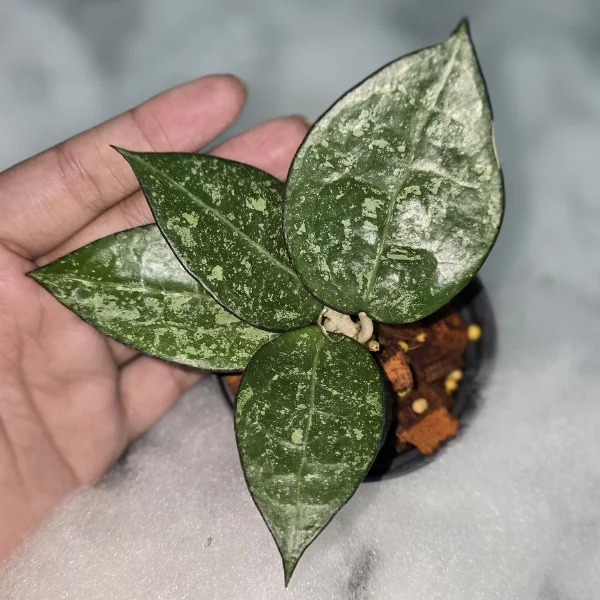
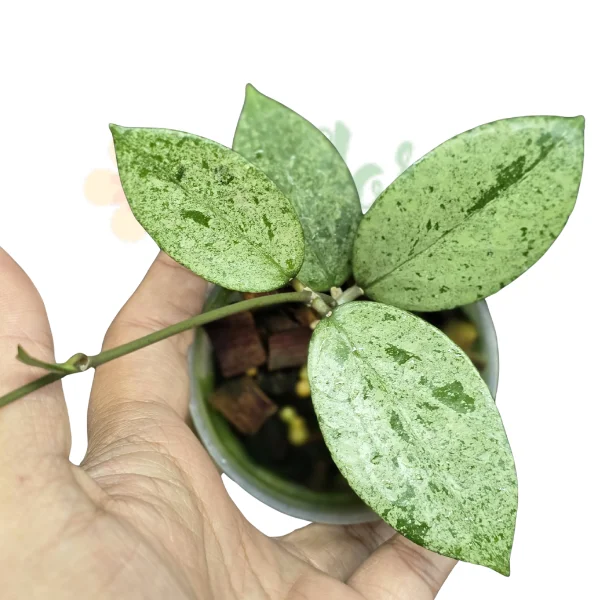
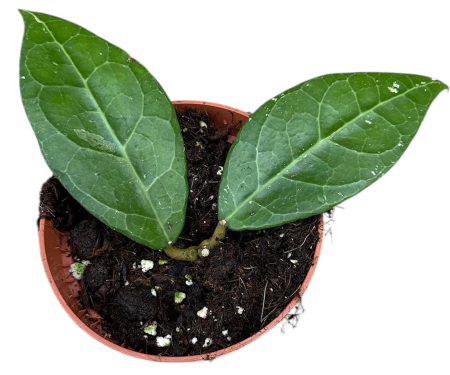
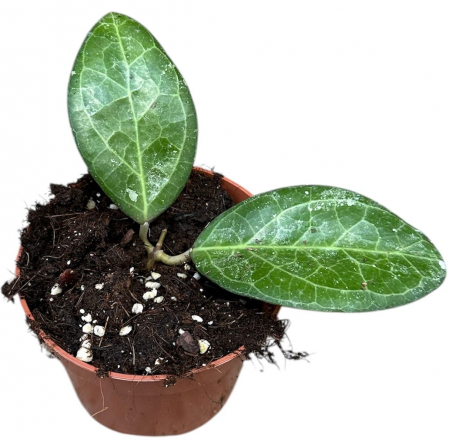
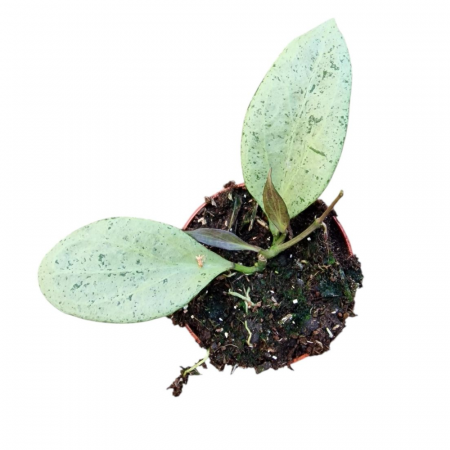
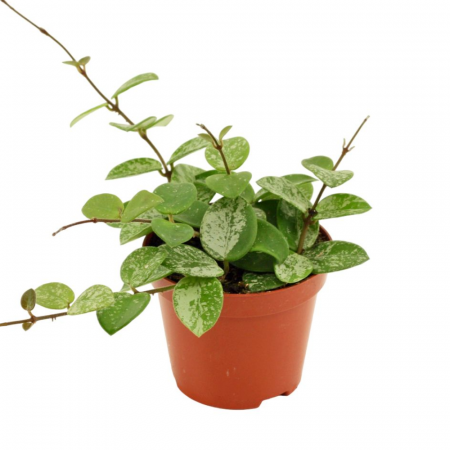
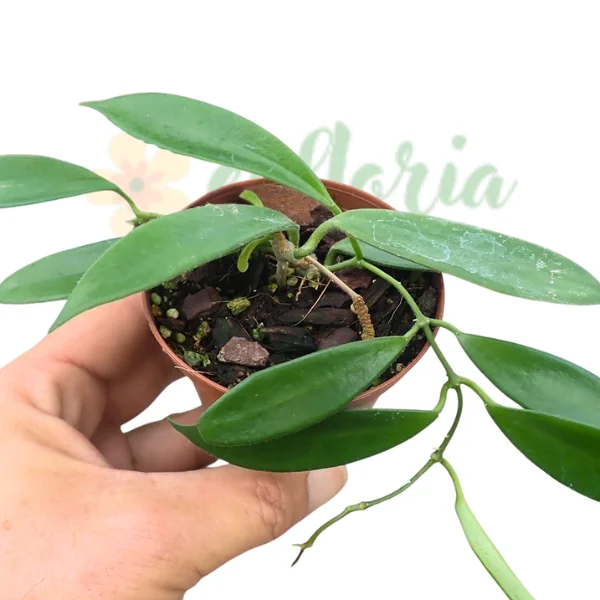
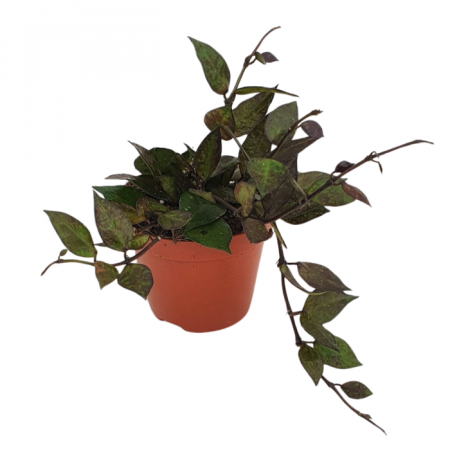
The leaves of the Nganjuk form are notably large, thick, and leathery — typical of Hoya verticillata but with distinctive characteristics that set this locality form apart. Urban Jungle describes them: "The leaves are large, thick and leathery... oval to elongated and have a dark green base colour that is covered with silvery-grey speckles. These speckles, which make the leaf appear almost covered in dewdrops, give the plant its characteristic 'splash' effect." Unsolicited Plant Talks adds that the variety is "admired for its large, tapered leaves with prominent, raised veins, often featuring a splash pattern that adds to its visual appeal." The defining characteristic that distinguishes the Nganjuk form is the tendency to develop dark margins around the leaf edges — hence its alternative name "Hoya verticillata 'Black Margin'." Bolang Plant Garden notes: "It has leaf veins that look strong and the black edges around it add to the perfect beauty of the leaves." Each leaf is unique in its splash pattern, creating visual interest throughout the plant.
🌸 Flowers — Fragrant Stars in Dense Clusters
Like all Hoya verticillata forms, the Nganjuk variety produces the species' characteristic fragrant, star-shaped flowers. Urban Jungle describes them: "Under optimal conditions, the plant develops beautiful, star-shaped flowers in dense umbels. These flowers are usually creamy white to slightly pink and exude a pleasant, sweet fragrance that intensifies in the evening." The species can produce up to 40 strongly perfumed flowers per umbel according to Tropics@Home. Monaco Nature Encyclopedia notes that umbel inflorescences can contain "even 70 flowers" in well-grown specimens, each bloom lasting approximately 5 days. The fragrance is notable — sweet and intensifying after dusk, evolved to attract nocturnal pollinators in the plant's native rainforest habitat. The plant re-blooms from persistent peduncles (flower stalks), which should never be removed after flowering.
🌿 Growth Habit & Development
Growth habit is that of a climbing or trailing epiphyte, typical of the species. Urban Jungle notes: "The leaves grow on strong, climbing stems that allow the plant to twine along climbing supports or other plants. This makes the Hoya Verticillata sp. Nganjuk Splash particularly suitable for hanging pots or climbing supports." Unsolicited Plant Talks describes the growth as "slow but steady," noting that this "unique appearance makes it a highly desirable variety among collectors." In its native habitat near the Wilis Mountains, the plant grows as an epiphyte, attaching itself to trees and absorbing nutrients from the air in warm, humid forest conditions. This adaptable growth habit translates well to indoor cultivation, where the plant can be displayed in hanging baskets, allowed to trail from shelves, or trained up supports.
Care Requirements:
- Light: Bright, indirect light is essential for healthy growth and to maintain the vibrant splash patterns. Urban Jungle advises: "It prefers a bright location with plenty of indirect light. Direct sunlight should be avoided as it can burn the leaves." For flowering, bright conditions are important — Hoyas bloom best with adequate light. A position near an east or west-facing window with filtered light is ideal.
- Water: Moderate watering, allowing substrate to dry between waterings. Urban Jungle explains: "It has succulent properties, meaning its leaves store water, allowing it to withstand shorter dry periods. It is advisable to water the plant only when the top layer of the substrate has dried out slightly." The species is sensitive to overwatering — avoid waterlogging at all costs as it leads to root rot. Approximately once per week is typically sufficient.
- Soil: Well-draining substrate is essential. Urban Jungle recommends "a mixture of potting soil, perlite and orchid substrate" to ensure excess water drains easily and roots remain aerated. Tropics@Home emphasises: "Hoya hates clogged soil!" Good drainage prevents the root rot that is the most common cause of problems with this species.
- Temperature: Warm temperatures typical of tropical origins. The species does not tolerate cold — Tropics@Home notes it "does not tolerate temperatures below 10°C (50°F)." Indoor temperatures of 18-28°C are ideal. Protect from cold drafts and sudden temperature drops.
- Humidity: High humidity is preferred, reflecting its tropical rainforest origins. Urban Jungle states: "A humidity level of at least 60 percent is ideal to promote the growth and health of the plant." In dry indoor conditions, regular misting or use of a humidifier is beneficial, especially during winter months.
- Feeding: During the growing season (spring-summer), feed every 2-4 weeks with a mild liquid fertilizer for indoor plants. Urban Jungle notes this "supports growth and promotes flower formation." Reduce or stop feeding in winter when growth slows.
Botanical Info: Family: Apocynaceae (subfamily Asclepiadoideae) | Genus: Hoya | Species: Hoya verticillata (Vahl) G.Don (1837) | Variety/Form: 'Nganjuk' (locality form from East Java, also known as 'Black Margin') | Synonyms: Hoya acuta Haw., Hoya parasitica (Wall. ex Hornem.) Wight | Common Names: Wax Plant, Wax Flower, Porcelain Flower, Black Margin Hoya | Type: Epiphytic Climbing/Trailing Vine | Native Range: Nganjuk Regency, East Java, Indonesia (near Mount Wilis); species range extends from Indian Subcontinent to S. China and W. & Central Malesia | Zone: USDA 10-12 (indoor cultivation in temperate climates) | Flowering: Creamy white to pale pink, star-shaped, up to 40-70 flowers per umbel, strongly fragrant (sweet, intensifying in evening), spring-summer | Growth Rate: Slow to Moderate
Lungime: 10 cm
Greutate (kg): 0.1 Kg
Denumire: Hoya
Diametru: 6 cm
Cerințe lumină: Partial umbra
Tip plantă: Decorative
Utilizare: Interior
Tip suport: Ghiveci
Is Hoya verticillata the same as Hoya parasitica or Hoya acuta?
Kew's Plants of the World Online lists Hoya acuta and Hoya parasitica among over 30 synonyms for Hoya verticillata. The taxonomic confusion arose because this highly variable species was described multiple times by different botanists across its vast geographic range — from India through Southeast Asia to the Philippines. The accepted name today is Hoya verticillata (Vahl) G.Don. Regional forms like 'Nganjuk' are locality-specific variants within this widespread species, prized by collectors for their distinctive characteristics and documented geographic origin.
What is the difference between Hoya verticillata 'Nganjuk' and other verticillata varieties?
Hoya verticillata is highly variable with many regional forms and cultivars. The Nganjuk form is distinguished by: (1) Large, thick leaves with prominent raised veins, (2) Silver splash patterns across the leaf surface, and (3) The distinctive dark margins that give it the alternative name "Black Margin." Other verticillata varieties include 'Splash' (silver speckles without dark margins), 'Albomarginata' (white-edged leaves), 'Variegata' (yellow/cream variegation), 'Lampung' (from Sumatra, with purple-tinged flowers), and 'Lavia' (another rare cultivar). All share the species' characteristic fragrant flowers, whorled leaf arrangement, and similar care requirements, but differ in leaf appearance and regional origin.
How do I get my Hoya verticillata 'Nganjuk' to bloom?
To encourage flowering: provide bright, indirect light — this is the most important factor for Hoya flowering. Keep the plant somewhat root-bound, as Hoyas flower more readily when roots are constrained. Maintain warm temperatures (above 15°C) and adequate humidity. Never remove old flower stalks (peduncles) — the plant re-blooms from the same spurs year after year. During spring and summer, feed every 2-4 weeks with a balanced or bloom-boosting fertilizer. Unsolicited Plant Talks notes the Nganjuk form has "slow but steady growth" — patience is required, but the reward is clusters of up to 40-70 fragrant flowers per umbel.
How do I encourage the silver splash pattern on my Hoya verticillata 'Nganjuk'?
The silver splash pattern is most vibrant under proper lighting conditions. Urban Jungle recommends "a bright location with plenty of indirect light" to maintain the decorative speckles. Inadequate light can cause the splash pattern to appear less pronounced. Ensure consistent care: stable humidity around 60%, proper watering (allowing substrate to dry slightly between waterings), and regular feeding during the growing season. The splash pattern is genetic and will be present in all leaves, but optimal conditions bring out its full beauty. Each leaf will have a unique splash pattern — this variation is normal and adds to the plant's appeal.
Where does Hoya verticillata 'Nganjuk' come from and why is it called 'Black Margin'?
This locality form comes from the Nganjuk Regency in East Java Province, Indonesia. Unsolicited Plant Talks notes it is "native to the tropical rainforests near the Wilis Mountains in East Java." Mount Wilis is a volcanic massif reaching 2,563 metres, surrounded by pristine forests. The alternative name "Black Margin" refers to the tendency of this form to develop dark edges around the leaves under certain growing conditions. Bolang Plant Garden describes it: "It has leaf veins that look strong and the black edges around it add to the perfect beauty of the leaves." This dark margin characteristic distinguishes the Nganjuk form from other verticillata varieties.
Is Hoya verticillata 'Nganjuk' toxic to cats and dogs?
No, Hoya verticillata 'Nganjuk' is not toxic to cats, dogs, or other household pets. The ASPCA confirms that Hoya plants are non-toxic to cats, dogs, and horses. Urban Jungle lists this plant among their non-toxic houseplants. As with any plant, eating large quantities might cause mild stomach upset simply because pets aren't designed to digest plant material — but this is not a toxic reaction. The milky latex sap may cause minor irritation if contacted, but is not dangerous. This makes it suitable for pet-friendly households.
How to care for Hoya?
Bright indirect light, moderate watering, drained substrate. 18-27°C.
Does Hoya bloom?
Yes, fragrant waxy flowers. Don't cut old peduncles.
How often to water?
When dry. Weekly summer, 2-3 weeks winter.
Propagation?
Cuttings 2-3 nodes in water/sphagnum. 2-6 weeks.
Recommendations
Ai nevoie și de un ghiveci decorativ?