EN/
EN/ Romana
Sansevieria cylindrica 'Spaghetti' Ø6cm
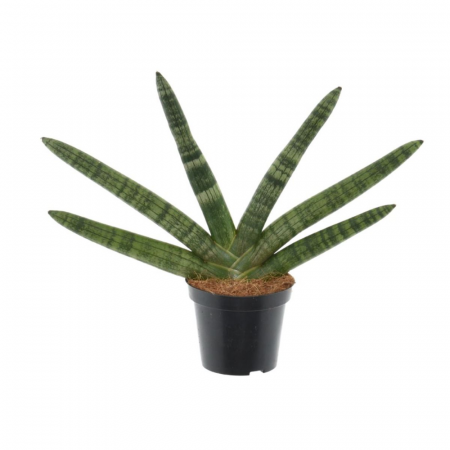
![Sansevieria 'Spaghetti' – Delicate African Spear with Slender Leaves [1]](https://gomagcdn.ro/domains2/eufloria.ro/files/product/original/sansevieria-cylindrica-spaghetti-d6-336977.webp "Sansevieria 'Spaghetti' – Delicate African Spear with Slender Leaves [1]")
Approx height (including pot): 18 cm
Pot diameter: 6 cm
- Description
- Characteristics
- Reviews (0)
- FAQ
🌿 Delicate Elegance in Slender Green Strands
Sansevieria cylindrica 'Spaghetti' is a captivating cultivar that takes the architectural beauty of the African Spear and refines it into something altogether more delicate and graceful. Where the standard Sansevieria cylindrica offers bold, robust spears up to 3 cm thick, the 'Spaghetti' form produces remarkably slender, rod-like leaves that truly resemble strands of pasta – hence its playful culinary name. These thin, upright leaves create an airy, almost ethereal effect that brings a unique texture to any plant collection. It's the same indestructible nature, the same tolerance for neglect, the same sculptural presence – but reimagined in a finer, more delicate form that collectors prize for its rarity and distinctive appearance.
🌍 Origins & Botanical Background
Sansevieria cylindrica 'Spaghetti' is a selected cultivar of Sansevieria cylindrica, a species native to Angola in southern tropical Africa. The parent species was first described in 1837 by Czech naturalist Wenceslas Bojer and grows in dry, rocky habitats where it spreads through underground rhizomes. The 'Spaghetti' cultivar emerged through selective cultivation, prized for its unusually thin leaves that distinguish it from the standard form. Like all Sansevieria species, it was reclassified into the genus Dracaena in 2018 following molecular phylogenetic studies (making the technical name Dracaena angolensis 'Spaghetti'), though the Sansevieria nomenclature remains dominant in horticulture. The cultivar name 'Spaghetti' is a wonderfully descriptive choice – one look at those thin, cylindrical leaves and you immediately understand why someone thought of Italian pasta.
🍃 Foliage – Slim Strands of Living Art
The defining characteristic of the 'Spaghetti' cultivar is its remarkably slender leaves. While standard Sansevieria cylindrica produces leaves approximately 3 cm in diameter, the 'Spaghetti' form features leaves that are significantly thinner – creating that distinctive pasta-like appearance. Each leaf is stiff, upright, and tapers to a sharp point, with a ribbed or grooved texture along its length. The colouration is a sophisticated grey-green to dark green, decorated with subtle darker horizontal banding or striping that creates visual interest along the leaf surface. The leaves emerge in a fan-shaped arrangement from creeping rhizomes, growing in dense clusters that create an architectural, almost fountain-like display. Under optimal conditions, leaves can reach heights of up to 1 metre, though indoor specimens typically remain more compact. The slender form means the plant has a lighter, more airy presence than its robust parent species – perfect for spaces where you want sculptural interest without visual heaviness.
🌸 Flowers – A Rare Fragrant Bonus
Like the parent species, Sansevieria cylindrica 'Spaghetti' can produce flowers, though this is relatively rare indoors and typically occurs only on mature, well-established plants. When flowering does occur, an erect spike emerges from the base of the leaves, bearing clusters of small, tubular flowers approximately 3 cm long. The blooms are greenish-white, often tinged with pink, and while not particularly showy, they offer a pleasant surprise: a sweet fragrance that perfumes the air, particularly in the evening hours. After flowering, plants may produce small, spherical orange-red berries. Flowering is more likely when the plant is somewhat pot-bound and exposed to bright light – but even under ideal conditions, most indoor specimens never bloom. Consider flowers a delightful bonus rather than an expectation.
🌱 Growth Habit & Development
Sansevieria cylindrica 'Spaghetti' is a slow-growing evergreen perennial that forms dense clusters over time, spreading via underground rhizomes. The growth habit is upright and fan-shaped, with new leaves emerging from the central growing point. Compared to the standard form, the 'Spaghetti' cultivar tends to remain more compact due to its thinner leaves, making it particularly well-suited to smaller spaces and tabletop displays. Expect the plant to add just a few new leaves per year – but those leaves will persist for years, gradually building into an impressive display. Plants are exceptionally long-lived when properly cared for. The slow growth rate means repotting is rarely needed – every 2-3 years is typically sufficient, and only when roots visibly crowd the container. Like all Sansevieria, this cultivar prefers to be somewhat root-bound.
Care Requirements:
- Light: Bright, indirect light is ideal for optimal growth and the most vibrant leaf colouration. However, this cultivar inherits the remarkable adaptability of its parent species and tolerates a wide range of light conditions – from bright direct sun to low light corners. In low light, growth will be slower and colours may become muted, but the plant will survive. For the best results and strongest leaf development, position near a bright window with filtered light. Can tolerate direct morning sun; protect from harsh afternoon sun which may cause leaf scorching.
- Water: Water thoroughly when the soil is completely dry – typically every 2-3 weeks during the growing season, and once a month or less during winter. The cylindrical leaves store water efficiently, making this plant exceptionally drought-tolerant. Overwatering is the primary cause of problems; consistently soggy soil leads to root rot. The thinner leaves of the 'Spaghetti' cultivar may be slightly less drought-tolerant than the robust standard form, but still far more forgiving than most houseplants. When in doubt, wait longer before watering.
- Soil: Fast-draining soil is essential. Use a cactus or succulent potting mix, or create your own by combining regular potting soil with generous additions of perlite, coarse sand, or pumice (a 1:1 ratio works well). Excellent drainage is critical – these are plants that evolved in rocky, sandy African soils. Always use a pot with drainage holes.
- Temperature: Prefers warm conditions between 18-29°C, with optimal growth around 21-27°C. Tolerates brief temperature fluctuations but is not cold-hardy – avoid temperatures below 10-13°C, which can cause leaf damage. Keep away from cold drafts and frosty windows in winter.
- Humidity: Thrives in average household humidity (around 40%) and tolerates dry air exceptionally well – no misting required. Excessive humidity can be problematic, potentially encouraging fungal issues. Perfect for heated homes in winter and air-conditioned spaces in summer.
- Feeding: Light feeder. Apply a balanced liquid fertilizer at half-strength once a month during spring and summer. Avoid fertilizing in autumn and winter. Over-fertilizing can cause leaf damage – with this plant, less is definitely more.
Botanical Info: Family: Asparagaceae | Genus: Sansevieria / Dracaena | Species: Sansevieria cylindrica Bojer ex Hook.f. | Cultivar: 'Spaghetti' | Accepted Name: Dracaena angolensis (Welw. ex Carrière) Byng & Christenh. | Common Names: Spaghetti Snake Plant, Thin-Leaf African Spear, Cylindrical Snake Plant 'Spaghetti' | Type: Evergreen Succulent Perennial | Native Range: Angola (species); Cultivar of horticultural origin | Zone: USDA 10-11 (indoor cultivation in temperate climates) | Flowering: Greenish-white tubular flowers tinged with pink, fragrant, rare indoors | Growth Rate: Slow
Lungime: 6 cm
Greutate (kg): 0.25 Kg
Denumire: Sansevieria
Diametru: 6 cm
Cerințe lumină: Partial umbra
Tip plantă: Suculente
Utilizare: Interior
Tip suport: Ghiveci
Material Suport: Plastic
What is the difference between Sansevieria cylindrica and Sansevieria cylindrica 'Spaghetti'?
The key difference is leaf thickness. Standard Sansevieria cylindrica produces robust, cylindrical leaves approximately 3 cm in diameter – bold, thick spears that make a dramatic statement. The 'Spaghetti' cultivar, by contrast, features significantly thinner, rod-like leaves that resemble strands of pasta – hence the playful name. This creates an entirely different visual effect: where the standard form is bold and substantial, 'Spaghetti' is airy, delicate, and graceful. The 'Spaghetti' cultivar also tends to grow more compactly, making it better suited to smaller spaces and tabletop displays. Both share the same grey-green colouration with horizontal banding, the same care requirements, and the same remarkable tolerance for neglect – but the aesthetic is quite different. 'Spaghetti' is considered rarer and more sought-after by collectors specifically because of its unusual thin-leaved form.
How often should I water my Sansevieria cylindrica 'Spaghetti'?
Water your 'Spaghetti' only when the soil is completely dry – typically every 2-3 weeks during spring and summer, and once a month or less during autumn and winter. Like all Sansevieria, this cultivar is highly drought-tolerant; its cylindrical leaves store water efficiently, allowing it to survive extended periods without moisture. The thinner leaves of the 'Spaghetti' form may be marginally less drought-tolerant than the robust standard species, but it's still far more forgiving than most houseplants. Overwatering is the most common cause of problems – soggy soil leads to root rot, which can kill the plant. When you do water, water thoroughly and allow excess to drain completely. Never let the plant sit in standing water. If you're unsure whether to water, wait a few more days.
Is Sansevieria cylindrica 'Spaghetti' rare?
Yes, Sansevieria cylindrica 'Spaghetti' is considered rarer than the standard species and is sought after by collectors. While the parent species Sansevieria cylindrica is widely available in garden centres and plant shops (often sold in braided form), the thin-leaved 'Spaghetti' cultivar is less commonly found. Its rarity stems from two factors: first, it's a selected cultivar rather than the typical species form, meaning not all nurseries produce it; second, its slow growth rate means specimens take longer to reach sellable size. Other cultivars of Sansevieria cylindrica include 'Boncel' (short, fat leaves spreading outward), 'Patula' (leaves that arch downward), and 'Skyline' (tall, sculptural form). Among these, 'Spaghetti' is particularly valued for its unusual slender-leaved appearance that sets it apart from all other forms.
Can Sansevieria cylindrica 'Spaghetti' survive in low light?
Yes, like its parent species, Sansevieria cylindrica 'Spaghetti' is remarkably tolerant of low light conditions. It will survive in dark corners, windowless offices, and spaces where other plants would struggle. However, "survive" and "thrive" are different things: in low light, growth will be very slow, and the leaf colouration may become somewhat muted. For optimal growth, the strongest leaf development, and the most attractive appearance, bright indirect light is ideal. The plant can also handle some direct sun, particularly morning light – just avoid harsh afternoon sun which may cause leaf scorching. If you want your 'Spaghetti' to grow and produce new leaves at a reasonable pace, give it the brightest spot you can manage.
Why are the leaves of my Sansevieria cylindrica 'Spaghetti' so thin compared to other snake plants?
The thin leaves are the defining characteristic of this cultivar – it's exactly what makes 'Spaghetti' special and why collectors seek it out. This isn't a sign of problems or poor health; it's the natural growth form of this selected variety. While standard Sansevieria cylindrica produces thick leaves approximately 3 cm in diameter, the 'Spaghetti' cultivar was specifically selected and propagated for its unusually slender, rod-like leaves that resemble strands of pasta. If your plant has thin leaves, congratulations – you have a genuine 'Spaghetti' cultivar! The thin form creates a more delicate, airy aesthetic compared to the bold, robust appearance of the standard species. Care requirements are identical regardless of leaf thickness.
Does Sansevieria cylindrica 'Spaghetti' purify indoor air?
Sansevieria species, including cultivars like 'Spaghetti', were included in NASA's 1989 Clean Air Study, which found that snake plants can remove indoor air pollutants such as formaldehyde, benzene, xylene, toluene, and trichloroethylene. Additionally, snake plants perform CAM (Crassulacean Acid Metabolism) photosynthesis, absorbing carbon dioxide and releasing oxygen at night – making them suitable bedroom plants. However, it's important to have realistic expectations: subsequent research has shown that in typical home settings with normal air exchange, you would need an impractically large number of plants to achieve significant air purification. The air-cleaning benefits are real but modest; enjoy your 'Spaghetti' primarily for its unique beauty and easy care rather than as a replacement for proper ventilation.
Toxic to pets?
Yes, mildly toxic to dogs/cats. Can cause nausea, vomiting and diarrhea.
What soil does it prefer?
Well-draining substrate - cactus/succulent mix with perlite. Excellent drainage essential.
Does it tolerate low light?
Yes, one of the most low-light tolerant plants. Grows even in offices without natural light.
Recommendations
Ai nevoie și de un ghiveci decorativ?