EN/
EN/ Romana
Hoya bilobata Ø7cm
![Hoya bilobata — small dark green leaves and red star-shaped flowers, trailing plant [1]](https://gomagcdn.ro/domains2/eufloria.ro/files/product/original/hoya-bilobata-935767.png "Hoya bilobata — small dark green leaves and red star-shaped flowers, trailing plant [1]")
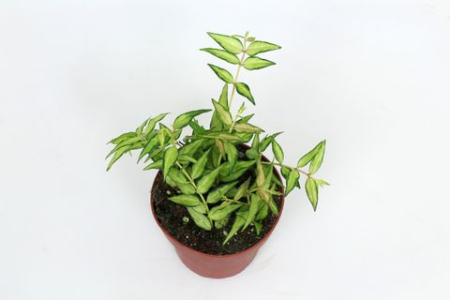
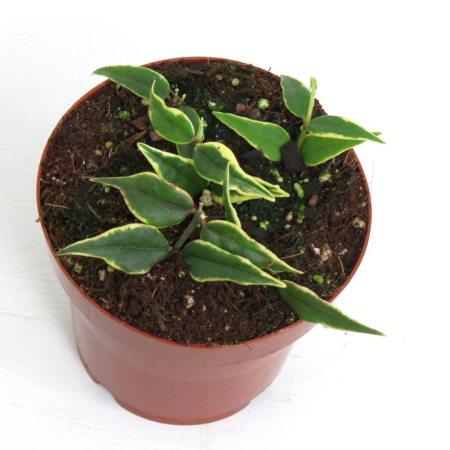
Hoya bilobata is a miniature collector trailing plant from the Apocynaceae family, native to the Philippines, prized for its small, oval, dark green leaves with slightly notched tips (hence the name "bilobata"). Compact and graceful, it blooms in umbels of waxy, fragrant red-cherry star flowers with a yellow centre. Non-toxic, it is a jewel for any Hoya collection.
Approx height (including pot): 15 cm
Flowering state: No flowers
Pot diameter: 7 cm
- Description
- Characteristics
- Reviews (0)
- FAQ
🌿 Hoya bilobata — the Miniature Jewel with Red Stars
Hoya bilobata is one of the most charming small-sized Hoyas. Its oval, glossy dark green little leaves, no bigger than a fingernail, have slightly notched tips split into two lobes — the detail that gave it the name "bilobata". Compact and dense, it forms a small, graceful bush that, at maturity, turns into a delicate cascade of little leaves dotted with flowers.
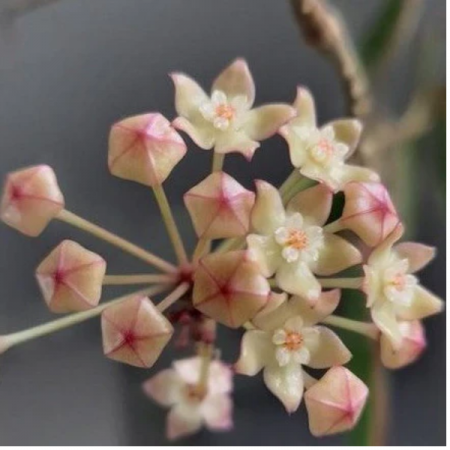
But the true star of this plant is its flowers: round umbels of star-shaped little flowers, of an intense red-cherry with a yellow centre, waxy and fragrant, which appear generously on a mature, healthy plant. Hoya bilobata is, in fact, one of the most prolific Hoyas for flowering, which makes it especially satisfying for those who dream of a flowering wax plant.
Beyond its beauty, it has a precious advantage: it is non-toxic, which makes it a safe choice for homes with cats, dogs or curious children. It belongs to the fascinating world of Hoya plants, prized for their waxy foliage and their fragrant, star-shaped flowers, and is perfect for a small hanging pot.
🌍 Origin and Botanical History
Hoya bilobata belongs to the Apocynaceae family and is native to the Philippines, where it grows epiphytically, clinging to tree bark in humid tropical forests. As an epiphytic plant, it has no roots in the soil but anchors itself to bark and takes its moisture from the air and rain — an adaptation that explains why it needs a very airy substrate and why it will not tolerate standing water at the roots.
The genus Hoya includes over 500 species spread from India to Australia and the Pacific islands, popularly called "wax plants" for their glossy, wax-like flowers. These plants were named in honour of Thomas Hoy, head gardener to the Duke of Northumberland in the early 19th century.
The species name, bilobata, refers to the notched tip of the leaves, split into two small lobes — a distinctive trait that sets it apart from other small-leaved Hoyas. It is a compact species, ideal for small spaces, and one of the most recommended Hoyas for beginners who want a flowering wax plant without high demands. Hoya is non-toxic — a rare quality that sets it apart from many houseplants. Discover other Hoya species in our collection too.
🌱 The Foliage
The leaves are small, oval, only 1.5–3 cm long, of a glossy dark green, with slightly notched tips split into two lobes. They are semi-succulent, thick and waxy, able to store water — an adaptation to epiphytic life that makes them surprisingly resilient to the occasional lapse. In very good light, the leaf margins can take on a slight reddish tint, which adds extra charm.
The stems are thin but firm, and branch to form a dense bush of little leaves. Growth is compact and tidy, and the plant fills out nicely over time. Unlike velvety leaves, the waxy leaves of Hoya can be wiped easily with a soft damp cloth to keep their shine.
The habit is compact and climbing/trailing, ideal for a small hanging pot or a high shelf, from where the stems can hang delicately. Like other trailing plants such as Hoya carnosa, it looks superb at eye level, where the detail of the little leaves and flowers can be admired up close.
🌸 The Flowers
Hoya bilobata blooms in round umbels of 10–20 small, star-shaped little flowers, of an intense, almost maroon red-cherry, with a golden-yellow centre. The flowers are waxy, glossy, as if moulded from wax, and give off a sweet scent that is stronger in the evening and at night, when the plant attracts its natural pollinators. It is one of the most prolific Hoyas for flowering — a healthy plant can produce numerous umbels throughout the warm season.
An essential detail for any Hoya grower: the flowers appear on perennial peduncles called "spurs", which must NOT be cut, as they rebloom year after year from the same spot. With good light, Hoya bilobata flowers relatively easily and from a young age, which makes it one of the most rewarding Hoyas for those just discovering this fascinating genus.
🌱 Growth, Care and Who It Is Perfect For
Hoya bilobata grows moderately with a compact, climbing habit. As a semi-succulent, it is surprisingly tolerant of the occasional lapse — it prefers to be watered less rather than too often, being far more sensitive to excess water than to lack of it. It is a grateful plant, ideal both for the beginner who wants a beautiful, flowering, pet-safe Hoya and for the collector who appreciates compact species.
- Light: bright, indirect light — essential for flowering. It tolerates a little gentle morning sun too, which intensifies the reddish tint of the leaves.
- Temperature: 18–28°C; avoid drops below 13°C.
- Watering: let the substrate dry almost completely between waterings; being semi-succulent, it suffers more from excess water (rot) than from lack. In summer water every 7–10 days, in winter much less often.
- Humidity: 50–60%; it tolerates apartment air but appreciates occasional misting.
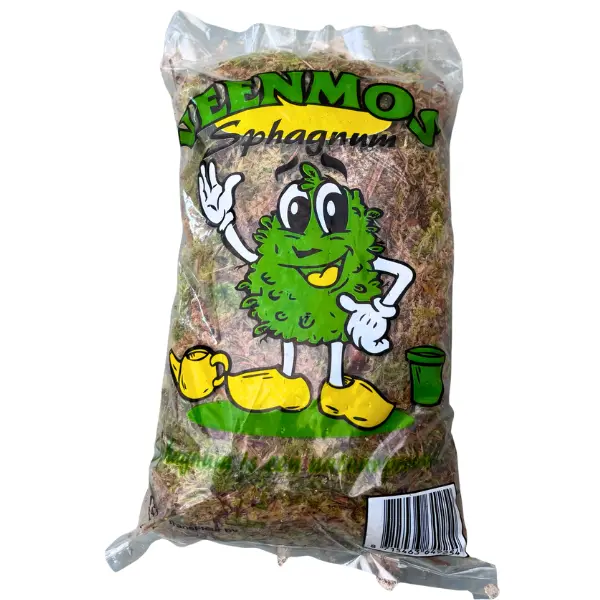
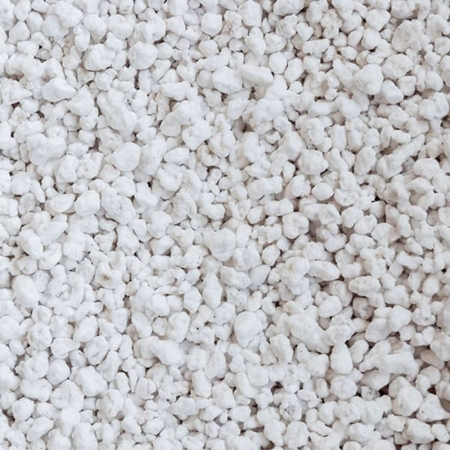
- Substrate: very airy and well-drained — a Hoya mix with pine bark, perlite and sphagnum. Excellent drainage is vital.
- Fertilising: diluted fertiliser for flowering plants, every 3–4 weeks during the growing season, to encourage flowering.
- Propagation: stem cuttings with 1–2 nodes, rooted in water, sphagnum or perlite.
Common problems: wrinkled, soft leaves usually indicate root rot from excess water — check the roots and reduce watering. Soft yellow leaves: overwatering. Lack of flowering: insufficient light — provide good light and never cut the flower spurs. Dry tips: air that is too dry. Hoya is rarely attacked by pests but can attract mealybugs in dry air.
In conclusion, Hoya bilobata is the ideal choice for lovers of small, detailed plants who want an easy-flowering, pet-safe Hoya. Non-toxic, forgiving and prolific in bloom, it thrives in a small hanging pot or on a bright shelf. Place it alongside other Hoya plants and you will have a miniature jewel that delights with its red stars, year after year.
Lungime: 15 cm
Greutate (kg): 0.25 Kg
Denumire: Hoya
Diametru: 7 cm
Cerințe lumină: Partial umbra
Tip plantă: Decorative
Utilizare: Interior
Tip suport: Ghiveci
Material Suport: Plastic
What does bilobata mean?
What flowers?
Light?
Toxic?
Propagation?
Recommendations
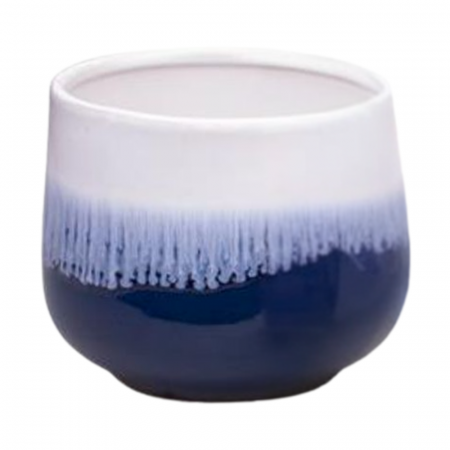
Ai nevoie și de un ghiveci decorativ?