EN/
EN/ Romana
Hoya 'Butterfly'
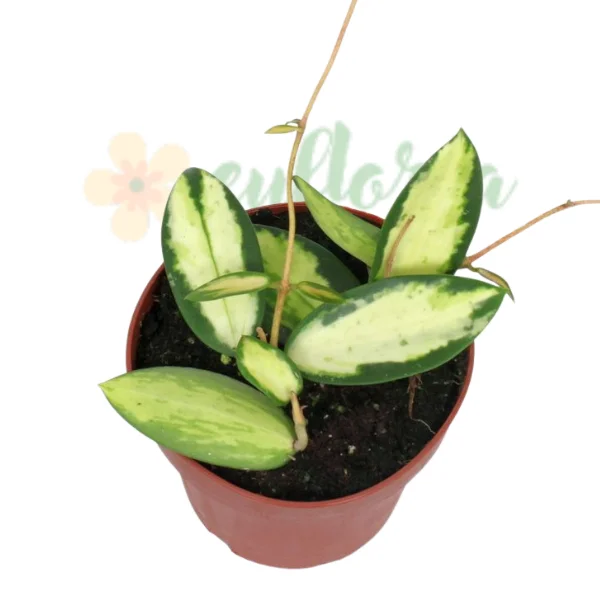
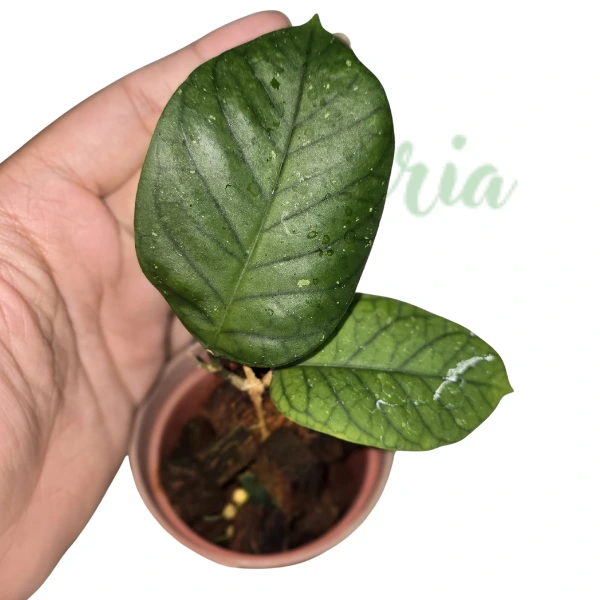
![Hoya Butterfly with butterfly-shaped leaves [1]](https://gomagcdn.ro/domains2/eufloria.ro/files/product/original/hoya-butterfly-281318.png "Hoya Butterfly with butterfly-shaped leaves [1]")
Hoya 'Butterfly' — cultivar with butterfly-shaped leaves and fragrant pale pink star flowers with golden centers.
Pot diameter: (no pot)
- Description
- Reviews (0)
- FAQ
🌿 Hoya 'Butterfly' — The Butterfly-Leaved Cultivar
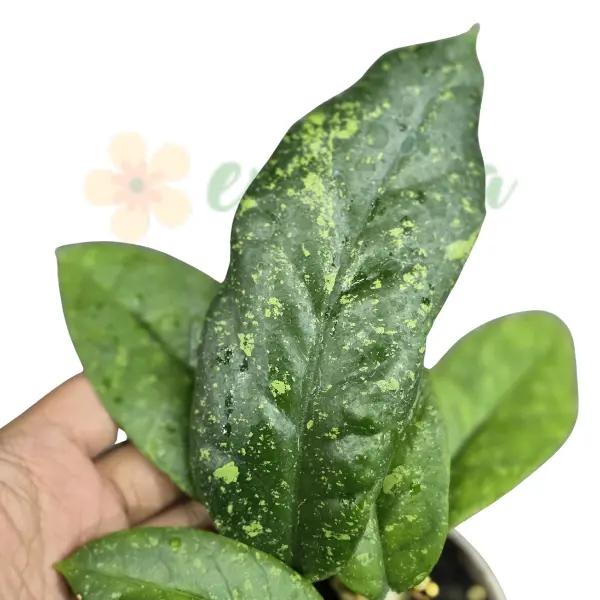
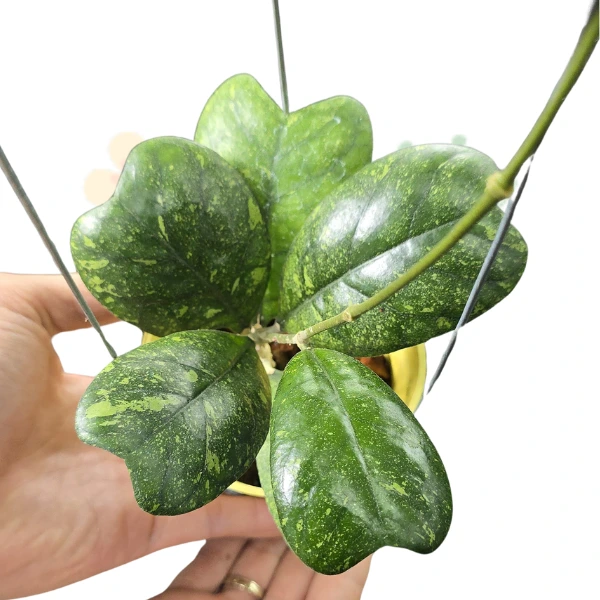
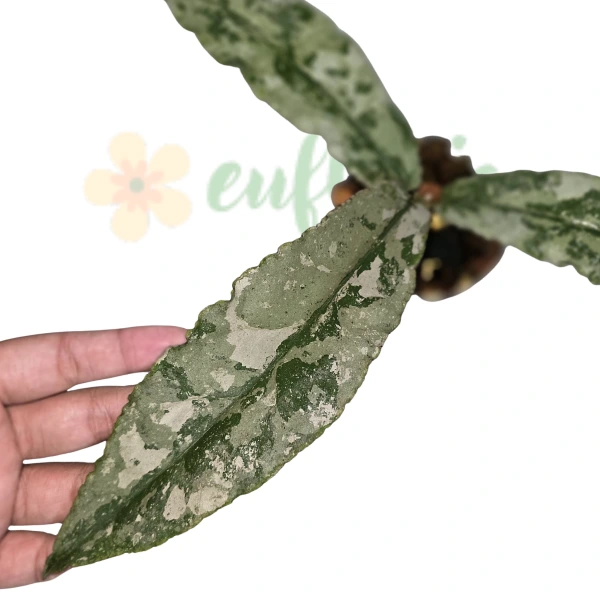
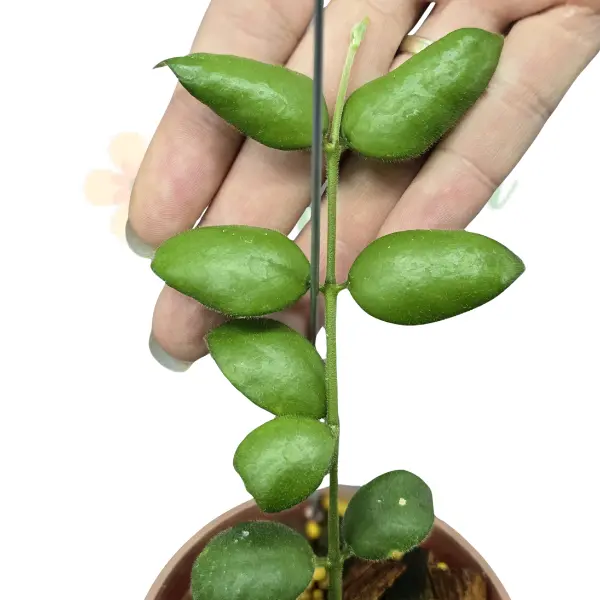
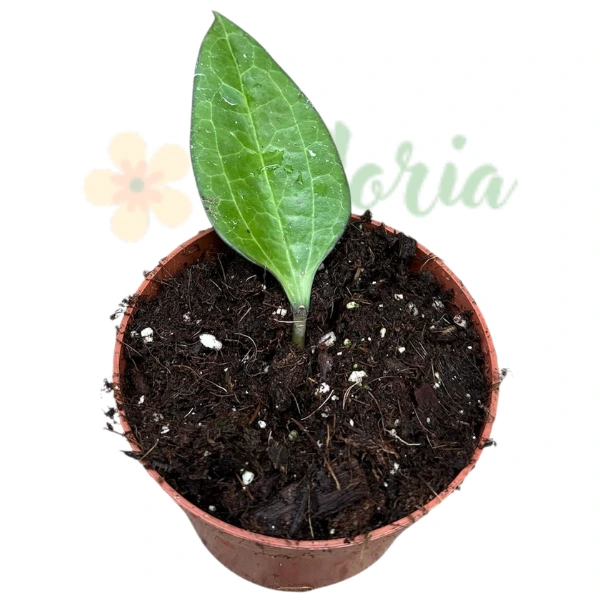
Hoya 'Butterfly' is a refined cultivar from the vast Hoya family, distinguished by its remarkably symmetrical leaves that recall, both in outline and venation, the delicate wings of a butterfly captured in mid-flight. Each leaf preserves the same near-mathematical geometry: two perfectly mirrored halves, slightly curved outward, ending in sharply pointed tips, with a prominent central vein that divides the blade like a slender spine. The leaf surface has a fine texture, waxy to the touch, and when light strikes it obliquely, silvery reflections appear that intensify the visual effect of outstretched wings.
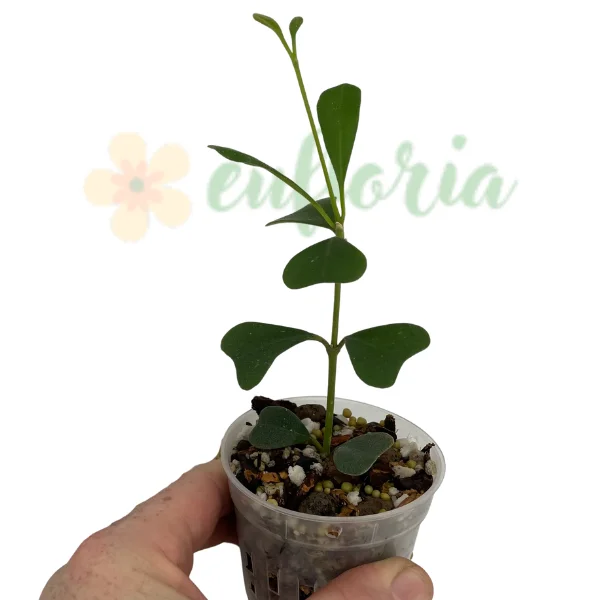
Hoya enthusiasts regard this cultivar as one of the most elegant additions to contemporary collections. The rare leaf shape places it in a distinct category, alongside hoyas such as 'Mathilde' or 'Sunrise', yet with an unmistakable personality of its own. The stems remain thin and flexible, growing moderately and forming, over time, ornamental cascades ideally suited for hanging pots or indoor macrame displays. The steady but non-aggressive growth makes Hoya 'Butterfly' a perfect choice for smaller spaces, where each individual leaf can be admired up close.
In European and American collections, Hoya 'Butterfly' has quickly earned the status of a sought-after piece, frequently included in lists of cultivars with the most striking foliage morphology. For collectors, it represents not only an aesthetic acquisition but also an invitation to contemplation: looking carefully at a single leaf can offer entire minutes of discovery — the way veins branch out, how light slides over the waxy surface, the subtle difference in tone between the upper and lower side of the blade.
🌍 Origin and Botanical History
Hoya 'Butterfly' belongs to the vast Hoya genus, first described by Scottish botanist Robert Brown in 1810, honoring the English horticulturist Thomas Hoy. The genus today comprises more than 500 officially recognized species, along with numerous cultivars and hybrid forms developed through horticultural selection. Hoyas are epiphytic plants native to the tropical forests of Southeast Asia, Australia, and the Western Pacific islands, where they grow clinging to the bark of tall trees, benefiting from the constant humidity of the canopy and the filtered light passing through the dense foliage above.
This particular cultivar emerged through careful selection by horticulturists specializing in Hoyas, from a lineage of Asian species with elongated leaves. The name 'Butterfly' is a descriptive commercial designation, adopted informally to emphasize the distinctive shape of the leaf blade. Unlike strictly wild species, Hoya cultivars often benefit from increased vigor and greater adaptability to indoor conditions, without losing the original morphological beauty that makes them desirable.
From a taxonomic standpoint, Hoya 'Butterfly' belongs to the Apocynaceae family, subfamily Asclepiadoideae, alongside well-known plants such as Stapelia, Ceropegia, and Dischidia. This relationship explains the presence of the characteristic milky sap, the five-petaled star-shaped flowers, and the elongated pod-like fruits — all common traits of the group. In their natural habitat, similar hoyas grow at altitudes ranging from 200 to 1500 meters, in conditions of high humidity, filtered light, and stable temperatures, and successful indoor cultivation reproduces these conditions as faithfully as possible.
🌱 How to Care for Hoya 'Butterfly'
Caring for a Hoya 'Butterfly' is essentially an exercise in patience and observation. This plant rewards quiet attention far more than frequent intervention. Light is the most important factor: it requires bright indirect light, ideally near an east-facing or southwest-facing window, with a sheer curtain to diffuse the direct midday sun. Light that is too weak slows growth and prevents blooming, while prolonged direct exposure can scorch the delicate leaves, leaving irreversible brown patches on their surface.
Optimal temperatures range between 20 and 28°C during the active growing period in spring and summer. In winter, the plant tolerates cooler temperatures around 16-18°C, which can even stimulate the formation of flower buds the following spring. Avoid cold drafts, sudden temperature changes, and proximity to heat sources such as radiators or stoves, which dry out the air and quickly stress the foliage tissues.
Air humidity plays a significant role: levels around 60-80% are ideal, and this can be achieved relatively easily by using a humidifier, grouping the plant with other houseplants, or placing the pot on a tray with pebbles and water. Direct misting on the leaves is less recommended over the long term, as it may encourage fungal growth on the waxy leaf surface.
The substrate must be extremely airy and well-draining, simulating as closely as possible the epiphytic conditions of the natural habitat. An optimal mix contains medium-grade pine bark, perlite, and sphagnum moss, in proportions that ensure a porous structure and relatively quick drying between waterings. Watering should be moderate: wait until the substrate is nearly dry, but not completely dehydrated, before watering again. Excess water is the primary cause of failure when cultivating hoyas, leading to root rot and leaf drop.
Fertilizing is done with a balanced fertilizer for tropical plants, diluted to half the recommended dose, applied once every two weeks during the growing season. In autumn and winter, fertilization is reduced considerably or stopped entirely, allowing the plant to enter a period of relative rest before resuming active growth.
🌸 Flowering and Fragrance
The flowering of a Hoya 'Butterfly' is the most anticipated moment for any grower. The flowers appear in compact umbels of 10-15 individual inflorescences, each displaying the classic five-petaled star shape with slightly recurved petals. The dominant color is a delicate pale pink, while the center of each flower reveals a small corona in golden or yellow-orange hues, creating a subtle and extremely elegant visual contrast. The diameter of each flower ranges between 8 and 12 mm, and the petal surface has the same slightly waxy texture as the leaves, amplifying the impression of refined delicacy.
The fragrance is a memorable feature: sweet, lightly honeyed, with fine floral notes that intensify toward evening and throughout the night. This pattern of olfactory release reflects the natural strategy of hoyas to attract nocturnal pollinators, particularly moths and night butterflies. In a quiet room, a single mature umbel can discreetly perfume the entire space without becoming overwhelming or invasive to other surrounding scents.
To stimulate flowering, it is essential for the plant to reach maturity — generally after 2-3 years of stable growth. Buds appear on stems called spurs, which must never be cut, since on the same structure new umbels will bloom year after year. Cutting the spurs is one of the most common mistakes made by beginners and can delay flowering by entire seasons.
🌿 Safety and Recommendations for Collectors
Hoya 'Butterfly' is considered a safe plant for households with pets and children. The Apocynaceae family includes both toxic and non-toxic plants, and hoyas fall on the safer side of this spectrum. The leaves and flowers do not pose a significant toxicity risk in case of accidental ingestion, although the milky sap that appears when stems are cut may cause mild skin irritation in sensitive individuals. Washing hands after handling is recommended as a general precaution, especially when pruning or propagating the plant.
For collectors, this hoya represents a valuable addition: easy to care for compared to rare exotic species, yet distinctive enough to attract attention. It is relatively easy to propagate through cuttings with at least one node, placed in moist sphagnum or in water, until a substantial root system develops. The process generally takes 4-8 weeks, and the young plants preserve the morphological characteristics of the mother plant.
Purchased from Eufloria, every Hoya 'Butterfly' plant is individually cared for, acclimatized under controlled conditions, and shipped with maximum care to arrive safely to its new owner. Delivery is available across the European Union, with specialized packaging that protects both the foliage and the root system throughout transport. For those taking their first steps into the world of hoyas, or for experienced collectors looking for a piece with strong visual identity, Hoya 'Butterfly' is a choice that does not disappoint.
How do I care for Hoya butterfly?
How often does Hoya butterfly bloom?
Is Hoya butterfly toxic to pets?
What substrate is suitable for Hoya butterfly?
How fast does Hoya butterfly grow?
Why is it called 'Butterfly'?
How to care for it?
How does it flower?
Is it toxic?
How to propagate?


Ai nevoie și de un ghiveci decorativ?