EN/
EN/ Romana
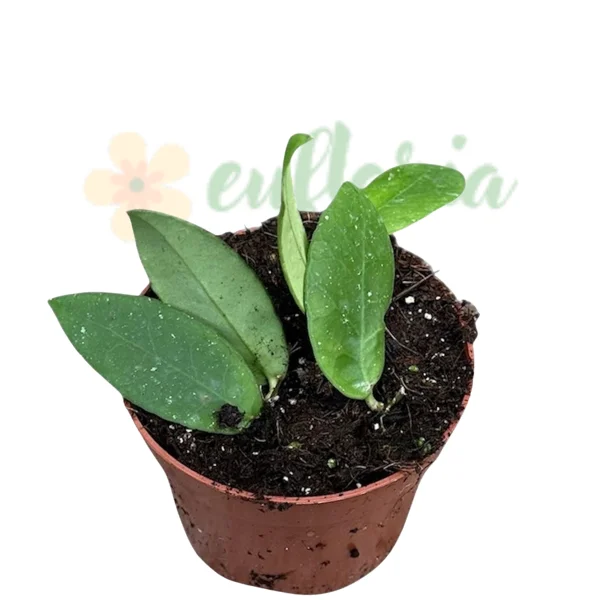
Hoya latifolia sp. Sarawak 'Cream' Ø10.5cm
![Hoya latifolia sp. Sarawak 'Cream' [0]](https://gomagcdn.ro/domains2/eufloria.ro/files/product/medium/hoya-latifolia-sp-sarawak-cream-d10-5-886240.webp "Hoya latifolia sp. Sarawak 'Cream' [0]")
![Hoya latifolia sp. Sarawak 'Cream' [1]](https://gomagcdn.ro/domains2/eufloria.ro/files/product/medium/hoya-latifolia-sp-sarawak-cream-d10-5-920083.webp "Hoya latifolia sp. Sarawak 'Cream' [1]")
![Hoya latifolia sp. Sarawak 'Cream' [1]](https://gomagcdn.ro/domains2/eufloria.ro/files/product/original/hoya-latifolia-sp-sarawak-cream-d10-5-886240.webp "Hoya latifolia sp. Sarawak 'Cream' [1]")
![Hoya latifolia sp. Sarawak 'Cream' [2]](https://gomagcdn.ro/domains2/eufloria.ro/files/product/original/hoya-latifolia-sp-sarawak-cream-d10-5-920083.webp "Hoya latifolia sp. Sarawak 'Cream' [2]")
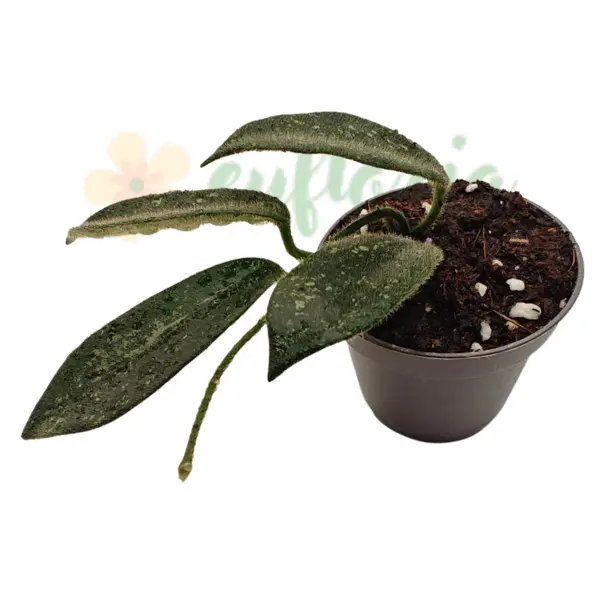
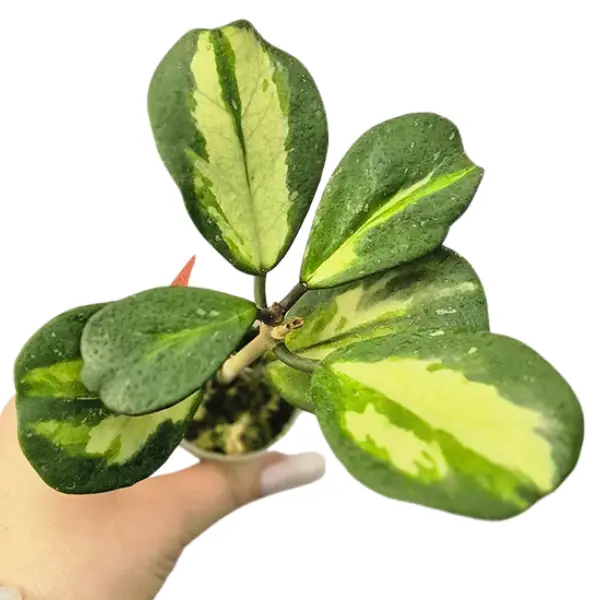
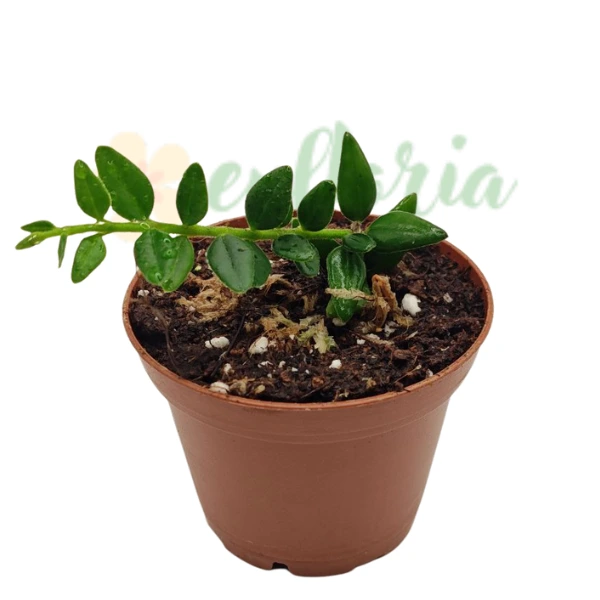
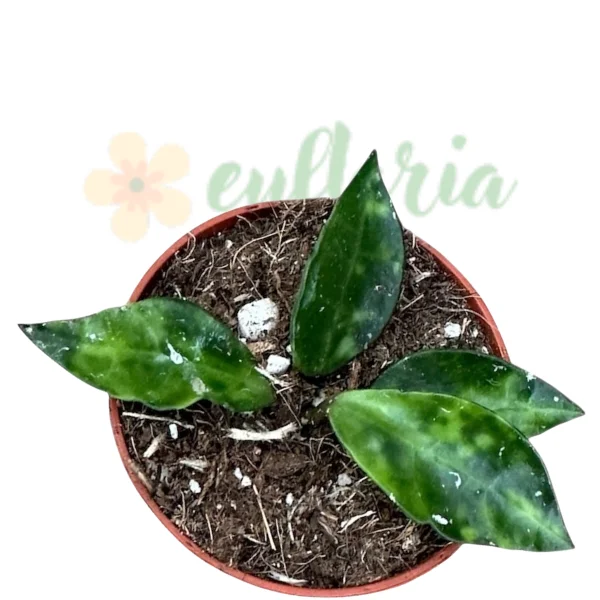
Hoya latifloia sp. Sarawak (cream) is a fascinating houseplant that brings a touch of tropical elegance to any space. With its creamy, fragrant flowers and healthy, thick leaves, it is perfect for hanging pots or shelves, offering both beauty and ease of care. This rare hoya will quickly become a centerpiece in your plant collection!
Approx height (including pot): 20 cm
Flowering state: No flowers
- Description
- Characteristics
- Reviews (0)
- FAQ
Hoya latifolia sp. 'Sarawak Cream' – A show of tropical elegance and majestic foliage
About names and identification
Hoya 'Sarawak Cream' is known by several names in the international plant trade, which can be confusing. The full and correct botanical name is Hoya latifolia sp. Sarawak (cream flower), but you will frequently encounter the abbreviated variants: Hoya Sarawak Cream, Hoya latifolia Sarawak, or simply Hoya Sarawak.
In specialized cataloging systems, this plant is identified by the code GPS 10073 (Gerard Paul Shirley – famous Dutch collector of Hoya) – and sometimes by IML (International Multilocation) codes used for the geographical tracking of botanical collections. The name "Sarawak" comes from the Sarawak region, located – in the northwest of the island of Borneo, Malaysia – the place of origin of this spectacular plant.
The distinction 'Cream' is essential: it refers to the creamy-white flower color with pale pink hues, unlike the Hoya latifolia sp. Sarawak 'Pink' which has more intense pink flowers. Recently, many Hoyas have been reclassified under the Hoya latifolia umbrella, but growers and collectors continue to use the name 'Sarawak' to differentiate this subspecies with distinctively rounded leaves. heart-shaped, compared to the classic Hoya latifolia which has more elongated and narrow leaves with sharp tips.
Botanical description and characteristics
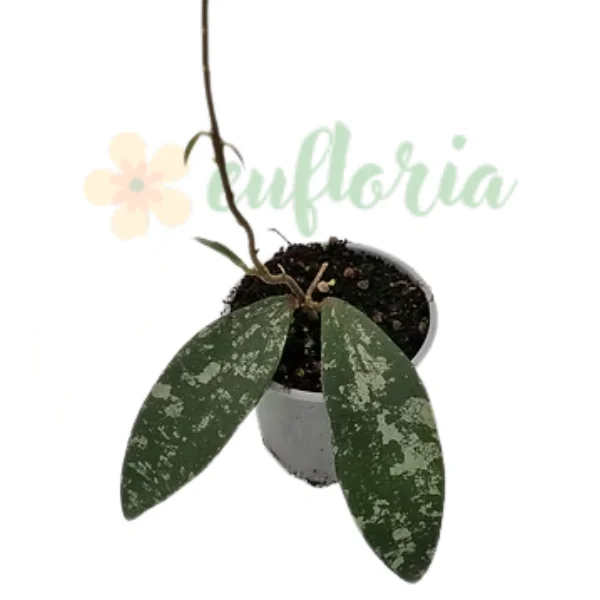
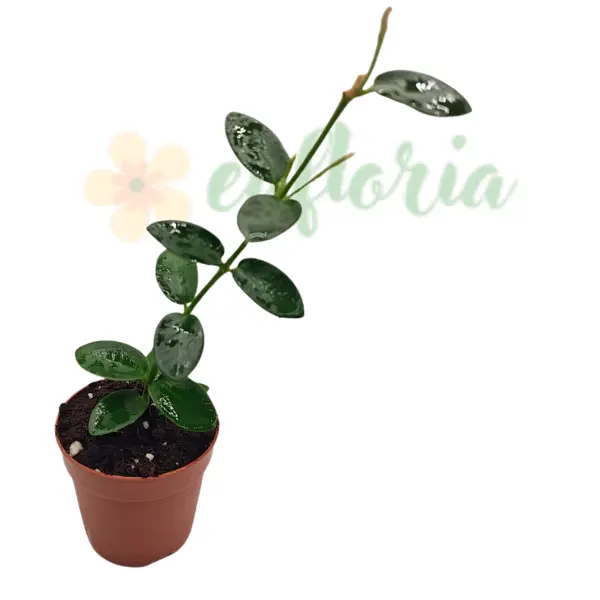
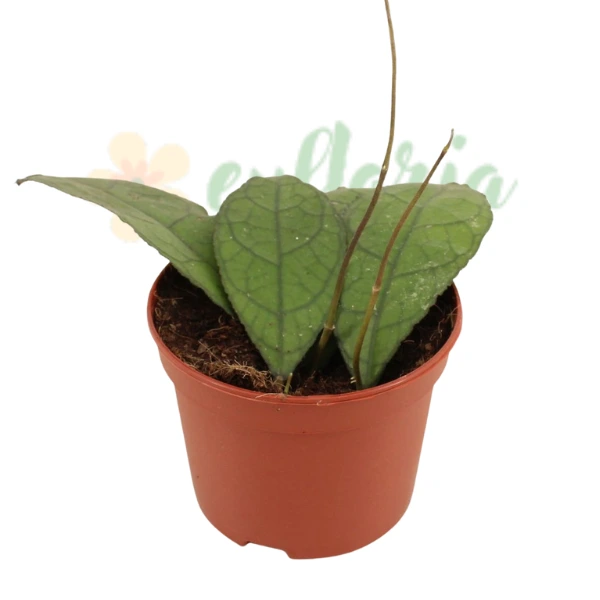
Hoya latifolia sp. 'Sarawak Cream' is a rare and extremely decorative tropical epiphytic plant from the Apocynaceae family, immediately recognizable by its large, thick, perfectly rounded heart-shaped leaves. The spectacular leaves can reach 10-20 cm in length, have a vibrant deep green color and a thick, waxy texture, with a glossy surface that reflects light, giving the plant a lush and permanent appearance.
What makes this Hoya truly remarkable is the prominent venation of the leaves - the midrib and the secondary veins form a distinct decorative pattern, often accentuated by fine silvery-pink droplets that add visual depth. The leaves have a stiff, almost succulent texture, giving the plant a sculpted, artistic presence in any space.
The blooms are a fragrant, ephemeral spectacle
The flowers are one of the main attractions of this spectacular Hoya. The mature plant produces dense, spherical umbels of 15-35 small, waxy, pearly flowers. Each flower has creamy-white corollas (outer petals) that fade to a deep purple. gradually towards the tips in shades of pale pink or delicate lavender, while the corollas (floral center) are pearly creamy white. The flowers have a perfect, symmetrical structure, characteristic of the Hoya genus, with five reflexed petals that create a charming three-dimensional effect.
The fragrance is memorable: the flowers emit a sweet, intense aroma, with notes of vanilla, honey and subtle spices, more pronounced in the evening and at night. Flowering usually occurs in late spring and summer (April-August) on mature 2-3 year old plants. A special feature is the abundant nectar production - the flowers literally drip sweet nectar, so they protect furniture and surrounding surfaces during the flowering period!
Growth habit and decorative use
Hoya latifolia sp. 'Sarawak Cream' has semi-woody, flexible stems that tend to It spreads and climbs, reaching 1-3 meters in length in optimal conditions. This characteristic makes it ideal for:
- Hanging baskets – where the stems form dramatic cascades of spectacular foliage
- Vertical supports – trellises, hoops, coconut poles, where it can be guided to create sculptural compositions
- High shelves – leaving it alone
Lungime: 15 cm
Greutate (kg): 0.5 Kg
Denumire: Hoya
Diametru: 10.5 cm
Cerințe lumină: Partial umbra
Tip plantă: Decorative
Utilizare: Interior
Tip suport: Ghiveci
Material Suport: Plastic
What is the difference between the classic Hoya latifolia and the Hoya latifolia sp. Sarawak?
Although both belong to the same botanical species, there are clear visual differences that set them apart. The classic Hoya latifolia has more elongated, narrow leaves with pointed tips and veins that run parallel down the length of the leaf creating a narrower appearance. Hoya latifolia sp. Sarawak has distinctively rounded leaves in a perfect heart shape, with broad, rounded tips, and the veins tend to bulge outwards, creating a rounder, wider appearance. Sarawak leaves are also larger (10-20 cm) and have that spectacular prominent veining with silvery-pink drops. Essentially, Sarawak is a distinct subspecies or geographical variety, named after the Sarawak region of Borneo where it was discovered.
Why does Hoya Sarawak Cream require more frequent repotting than other Hoyas?
Hoya latifolia sp. Sarawak Cream develops an exceptionally strong, thick and fleshy root system that grows aggressively and quickly takes up all available space in the pot. Unlike many other Hoya species that prefer to stay in the same pot for years, Sarawak forms thick roots that expand rapidly and can become completely wrapped around the pot in just 12-18 months. When the roots become too crowded, the plant may show signs of stress: slowed growth, smaller leaves, difficulty absorbing water. Repot every 1-2 years in spring, using a pot only 2-3 cm larger, as the plant still prefers to be slightly cramped in the pot for optimal flowering.
How can I encourage Hoya Sarawak Cream to bloom and how long does it take until the first bloom?
Hoya latifolia sp. Sarawak Cream usually takes 2-3 years to reach maturity and produce its first flowers, starting from a young cutting. To encourage flowering, observe the following conditions: consistent bright indirect light (minimum 6-8 hours daily), stable warm temperatures between 21-28°C, keep the plant lightly root-bound (do not repot too often or in too large pots), fertilize monthly with a fertilizer rich in phosphorus and potassium during the growing season, maintain high air humidity (60-80%), and never cut off the stiff flower stalks that appear on the stem - these will produce flowers repeatedly from the same points for years. Once the plant blooms for the first time, it will continue to bloom annually or even 2-3 times a year in optimal conditions, especially in late spring and summer.
Why do Hoya Sarawak Cream leaves develop purple or pinkish hues on the edges?
The appearance of purple, pink or burgundy hues on the edges and surface of the leaves is a natural phenomenon called "sun stress" that occurs when the plant receives adequate bright light. This is actually a positive and healthy reaction – the plant produces anthocyanin pigments as a natural protection against intense light, similar to a tan. This is completely normal and even desirable, as it indicates that the plant is receiving enough light for vigorous growth and flowering. The colors add an additional decorative element to the already spectacular foliage. If you want to intensify these hues, expose the plant to slightly more intense light (but never direct sunlight during the day). If you prefer completely green leaves, move the plant to an area with slightly more diffused light.
How do I manage the abundant nectar dripping from Hoya Sarawak flowers?
Hoya latifolia sp. Sarawak Cream is known to be a massive nectar producer – the flowers literally produce and drip drops of sweet, sticky nectar during flowering. This is completely normal and natural, as it is the plant’s way of attracting pollinators in its natural habitat. To protect your furniture, floors and surrounding surfaces, take the following preventative measures: place a plate, tray or protective mat under the pot during flowering, temporarily move the plant to an area where the nectar will not cause problems (for example, on a separate stand or in the bathroom where it can be easily cleaned), or place a piece of absorbent paper or fabric under the flowers to absorb the drops. The nectar is easily wiped off with warm soapy water. It is not harmful and does not indicate a problem – on the contrary, abundant nectar production is a sign of a healthy and vigorous plant.
Is slow growth of Hoya Sarawak Cream normal and how can I speed it up?
Yes, Hoya latifolia sp. Sarawak Cream has a moderate to slow growth rate, especially in the first 1-2 years when it is developing its root system. Don't expect explosive growth - under optimal conditions, the plant will produce 4-8 new leaves per shoot per year, with an increase of about 30-60 cm in stem length. Growth is most active in spring and summer, and in winter the plant enters a dormant period and grows minimally or not at all. To optimize growth: provide consistent bright light (the most important factor), maintain stable warm temperatures of 21-28°C, fertilize monthly during the active season, provide high air humidity, and avoid stress from frequent moving or changing conditions. Once the plant matures and develops a strong root system, the growth rate accelerates noticeably.
Can I grow Hoya Sarawak Cream in a self-watering pot or semi-hydroponic system?
Yes, Hoya latifolia sp. Sarawak Cream can successfully adapt to self-watering or semi-hydroponic systems, but it requires attention to detail to avoid root rot. In self-watering pots, make sure there is a thick layer of drainage substrate (minimum 5-7 cm) between the water reservoir and the roots, and use a very chunky, aerated substrate. Never fill the tank completely – let it drain completely between refills to allow the roots to breathe. In semi-hydroponic systems (LECA, lecă), the transition should be made gradually: completely wash all roots of soil, cut off damaged roots, place in LECA and keep the water level at ¼ of the height of the pot. Many growers report excellent success with Sarawak in LECA once the plant has adapted, as the system allows for perfect aeration and precise humidity control.
Why do stiff flower stalks appear all over the stem and can they be cut off?
The appearance of stiff, woody flower stalks from multiple points on the stem is a specific and normal characteristic of Hoya latifolia sp. Sarawak. These stalks are actually the permanent flower stalks from which the flower umbels will emerge. Unlike other plants where the stalks are temporary, in Sarawak these remain active for years and will produce flowers repeatedly from the same point – sometimes even 3-4 successive blooms from the same flower stalk. For this reason, it is essential to NEVER cut these stalks, even if they appear unsightly or stiff when not in bloom. Many plants produce numerous stalks, creating a slightly “spiky” appearance on the stems – this is perfectly normal. If you cut them off, the plant will expend energy producing new ones, delaying flowering. Accept them as part of its natural flowering cycle and you will be rewarded with more frequent and abundant blooms.
Is Hoya Sarawak Cream suitable for beginners or does it require advanced experience?
Hoya latifolia sp. Sarawak Cream is at the intermediate to advanced level of difficulty and is best suited to growers with previous experience with Hoyas or tropical plants. It is not the most difficult Hoya, but it is not the most forgiving for beginners. The main challenges include: sensitivity to overwatering (a common cause of root rot in beginners), requires consistent bright light (more than many other houseplants), prefers constant high humidity (can be difficult to maintain in dry homes), requires a very specific, well-drained substrate (standard all-purpose soil will not work), and has a slow growth rate that can be daunting. However, if you understand and follow these basic requirements, the plant can also thrive for careful intermediate growers. For absolute beginners, we recommend starting with Hoya carnosa, kerrii, or publicalyx before moving on to Sarawak.
Ai nevoie și de un ghiveci decorativ?