EN/
EN/ Romana
Alocasia 'Dragon Scale' D12cm
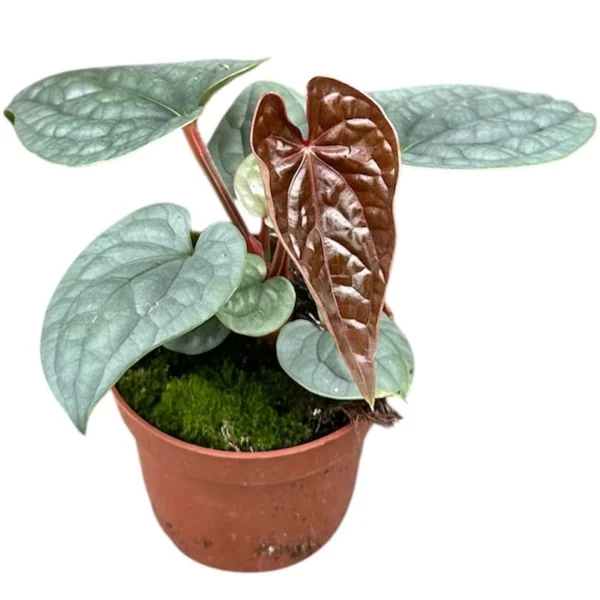
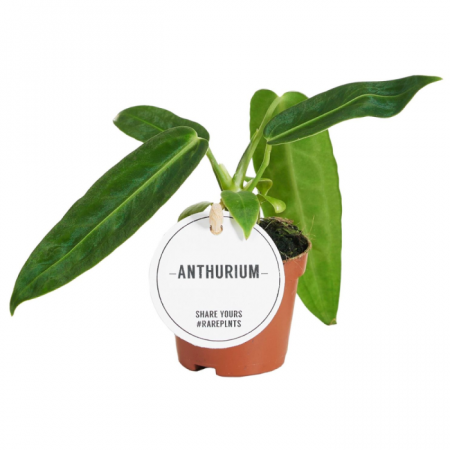
![Alocasia 'Dragon Scale' (A. baginda) — rigid bullate jade-green leaves with brown venation, Ø6cm pot | Eufloria [1]](https://gomagcdn.ro/domains2/eufloria.ro/files/product/original/alocasia-dragon-scale-d12-334552.jpg "Alocasia 'Dragon Scale' (A. baginda) — rigid bullate jade-green leaves with brown venation, Ø6cm pot | Eufloria [1]")
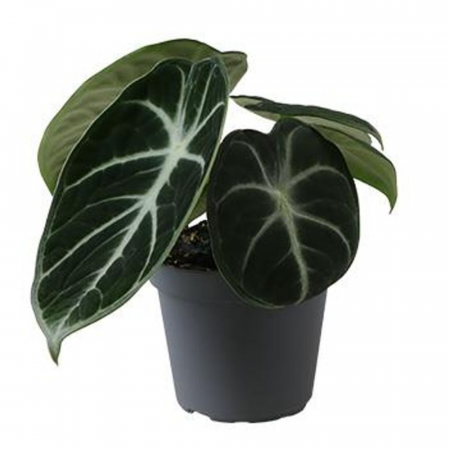
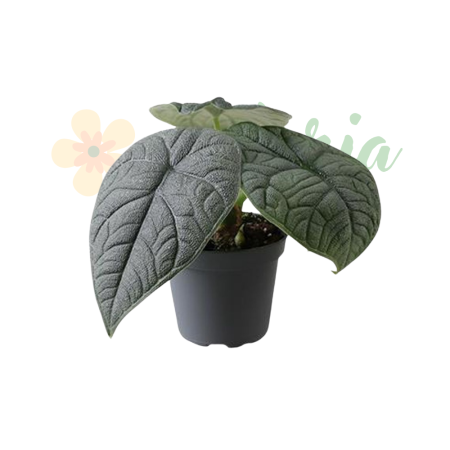
Alocasia 'Dragon Scale' (A. baginda) — Borneo cultivar with rigid bullate metallic jade-green leaves with brown-burgundy venation (dragon-scale pattern). 30-40 cm leaves. ⚠️ Toxic (calcium oxalate) — keep away from cats/dogs/children. Ø6cm pot.
Approx height (including pot): 20 cm
Country of origin: Netherlands
- Description
- Characteristics
- Reviews (0)
- FAQ
🌿 Alocasia 'Dragon Scale' — dragon scales from a tropical jewel
Alocasia 'Dragon Scale' is one of the most appreciated cultivars of the species Alocasia baginda Kurniawan & P.C.Boyce, Araceae family, officially described in 2011 as a new species from East Kalimantan, Indonesian Borneo. The name baginda means "Majesty" in Indonesian — a fitting reference for this "jewel Alocasia" with rigid, bullate leaves that evoke the impressed pixels of a mythical dragon's scales. It is part of our rare collector plants and is one of the most sculptural Araceae available at Eufloria.
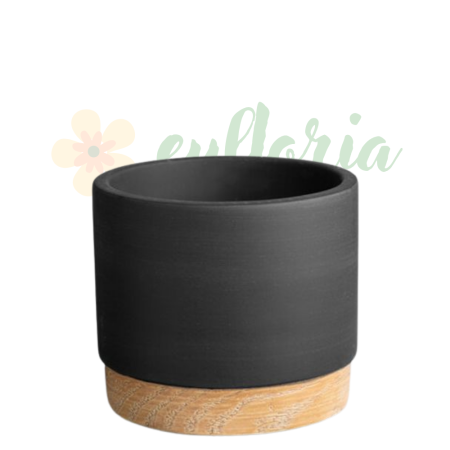
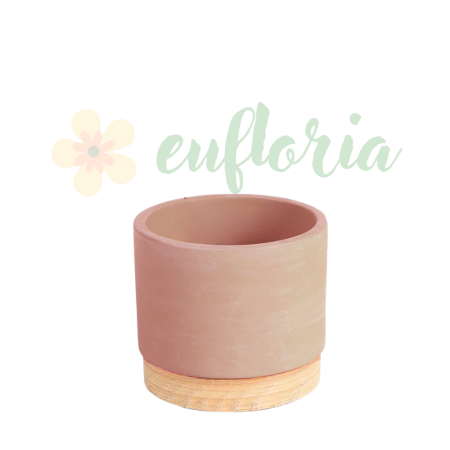
Our specimen comes in a Ø6cm nursery pot, perfect to be moved into a decorative ceramic pot of the same size.
🌍 Origin and taxonomic history
Alocasia baginda was first described in 2011 by Wisnu H. Kurniawan and P.C. Boyce in a published study on Alocasia from Borneo. The species is endemic to East Kalimantan (Borneo, Indonesia), naturally adapted to the limestone regions of the humid tropical jungle. Natural climate: 23-32°C, rainfall 3300-4600 mm/year — a much more humid environment than standard apartments, which is why the plant requires attention to humidity in indoor cultivation.
The cultivars 'Dragon Scale', 'Silver Dragon', and 'Green Dragon' all belong to the same species (A. baginda) — differing only in the dominant shade: 'Dragon Scale' has jade-green tints with prominent brown-burgundy venation, while 'Silver Dragon' is more silvery. Note however Alocasia reginula ('Black Velvet') — it is a completely different species, with black velvety leaves and white veins. Also different is Alocasia melo, with a much rougher texture.
🌱 Foliage — dragon scales in three dimensions
The dominant visual feature of the 'Dragon Scale' cultivar are the scutiform to cordiform leaves, deeply bullate: the surface between the veins is raised and wrinkled, creating a three-dimensional scale-like texture that gives the cultivar its name. At maturity, the leaves reach 30-40 cm in length, with thick, rigid, leathery texture. The base colour is silver-jade green, darkening toward the leaf centre, with a metallic sheen that varies between jade and silver depending on the light angle.
On the underside, the leaves show a deep green to charcoal hue, with strongly prominent brown-burgundy venation — a beautiful secondary trait visible when the plant is viewed from below. The habit is rhizomatous: the plant grows vertically from a compact underground rhizome, producing leaves one by one. Typical indoor height: 50-90 cm.
🌸 Inflorescences — spadix and spathe, rare indoors
Like all genera in the Araceae family, Alocasia produces an inflorescence of spadix wrapped in a spathe — a typical floral structure of the genus. However, flowering is rare in indoor cultivation; the plant invests energy primarily in producing new scutiform leaves. When it does appear, the spathe is usually pale green or cream, surrounding the cylindrical spadix.
⚠️ Toxicity — IMPORTANT for homes with animals or children
Alocasia contains calcium oxalate crystals (raphides) in all parts of the plant — leaves, stems, petioles, rhizome. According to the ASPCA database, the entire Alocasia genus is toxic to cats, dogs, horses, and children. Ingestion causes severe oral irritation, pain and inflammation of the mouth/tongue/lips, excessive salivation, vomiting, and difficulty swallowing. In severe (rare) cases: convulsions, kidney failure, coma.
Keep the plant away from curious children and pets. Use gloves when repotting — the sap can cause skin irritation. This plant is NOT among our child- and pet-friendly plants — for pet-safe options consult that category.
🌞 Care Requirements — Complete Guide
- Light: bright indirect — the metallic intensity of the leaves is accentuated under strong filtered light. 1-2 m from an east/west window or behind a curtain on a south-facing window. Avoid direct sun, which burns the rigid lamina.
- Temperature: optimal 20-30°C. Avoid exposure below 16°C — tropical species sensitive to cold.
- Watering: moderate, let the substrate dry partially between waterings — the rhizome is sensitive to rot. Summer every 7-10 days, winter every 14-20 days.
- Humidity: high, ideally above 60% (60-80%) — in its natural habitat it receives abundant rainfall. Dry winter apartments affect leaf appearance — use a humidifier or grouping with other tropical plants.
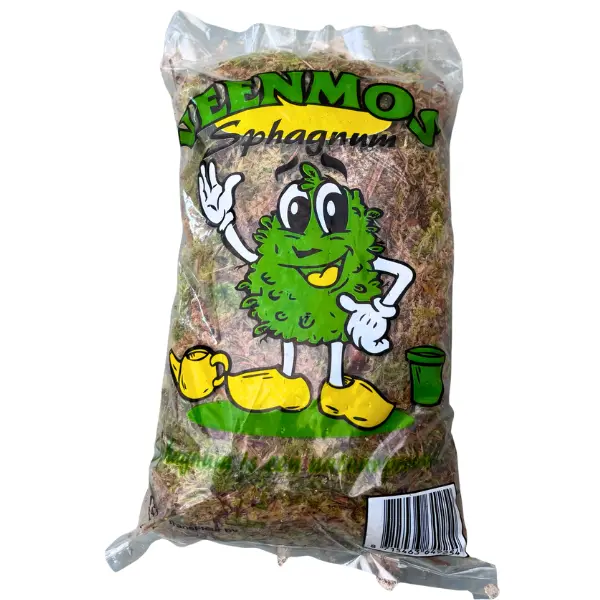
- Substrate: very airy and well-drained — a mix of medium pine bark (40%), natural sphagnum (20%), perlite (30%), and a drainage layer of Vulkaponic at the pot base (10%). Avoid compact universal substrate.
- Fertilising: monthly spring-summer with a mild balanced formula (NPK 5-5-5 or similar).
- Propagation: by rhizome division or by separating offsets (small corm-nodules appearing near the main rhizome). The procedure requires care — use gloves.
- Winter rest: Alocasia may enter dormancy in winter — yellowed and fallen leaves. Continue minimal watering; the rhizome survives and produces new leaves in spring.
🎓 Why Choose Alocasia 'Dragon Scale'
It is a "jewel Alocasia" — a class of collector plants with unique sculptural presence. The dragon scale pattern on the silver-jade lamina with metallic sheen is one of the most distinctive in Araceae, offering constant visual interest even without flowering. The species was described recently (2011), and commercial circulation is relatively new — each specimen has added value as a botanical object with clear history. It integrates beautifully into the special plants collection and complements other Araceae species with similar humidity requirements.
Lungime: 6 cm
Greutate (kg): 0.15 Kg
Denumire: Alocasia
Diametru: 6 cm
Cerințe lumină: Strong, indirect light
Tip plantă: Decorative
Utilizare: Interior
Tip suport: Ghiveci
Material Suport: Plastic
What is the difference between "Dragon Scale" and "Silver Dragon"?
Is Alocasia 'Dragon Scale' toxic to cats and dogs?
Why the "dragon scale" pattern on the leaves?
What humidity does it need?
The leaves fall in winter — is the plant dead?
Recommendations
Ai nevoie și de un ghiveci decorativ?