EN/
EN/ Romana
Monstera obliqua 'Peru' Ø6cm
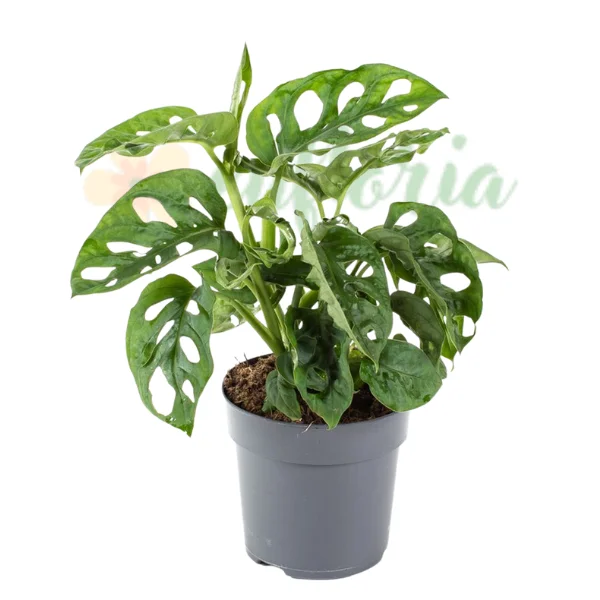
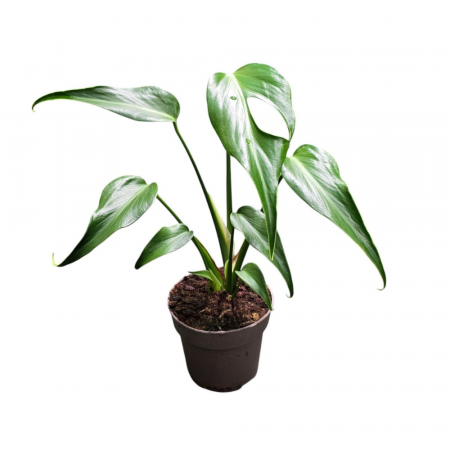
![Monstera obliqua 'Peru' — thin lace-perforated leaves, Eufloria [1]](https://gomagcdn.ro/domains2/eufloria.ro/files/product/original/monstera-obliqua-peru-051075.png "Monstera obliqua 'Peru' — thin lace-perforated leaves, Eufloria [1]")
Monstera obliqua 'Peru' — extremely rare with thin lace-perforated leaves (up to 90% holes). Humidity 70-90%, indirect light, 18-27°C. For advanced collectors.
Note: Product images are for guidance only. Due to different batches of imported products, there may be differences between the images on the website and the actual appearance of the products.
Approx height (including pot): 20 cm
Country of origin: Netherlands
- Description
- Characteristics
- Reviews (0)
- FAQ
🌿 Quilted, Glossy Emerald — an Unusual Monstera With Leaves Like Textured Leather
Monstera 'Peru' is a Monstera variety completely different from the classic image of the holey plant: instead of large, perforated leaves, it offers smaller, thick, firm leaves with a deeply quilted, puckered texture, like glossy leather clenched between the veins. Their intense emerald-green surface has an almost metallic, iridescent sheen that catches the light spectacularly and makes each leaf seem sculpted from a precious material.
This unusual texture — stiff, raised leaves with deeply sunken veins — gives the plant a special graphic, tactile character, very different from that of other Monsteras. It is a plant for those who appreciate rich textures and deep green, a refined and less common choice for an aroid collection.
Offered in several pot sizes, it is a climbing vine that, with the right support, will climb, developing ever longer stems and ever more leaves. It grows relatively vigorously in good conditions and adapts easily to indoor life.
For the plant lover seeking an unusual Monstera with textured, glossy foliage, 'Peru' is an inspired choice — a plant with a strong character that brings a touch of sculptural tropical jungle to any space.
🌍 Origin and Botanical History
Monstera belongs to the Araceae family, the great aroid family that includes philodendrons, anthurium and syngonium. The species of the genus are native to the tropical forests of Central and South America, where they grow as epiphytic vines, climbing the trunks of tall trees with the help of aerial roots, in search of light filtered by the canopy.
The genus name "Monstera" comes from the Latin "monstrum" (something astonishing, out of the everyday), a reference to the unusual leaves of many species in the genus. The variety known in the trade as Monstera 'Peru' comes from northern South America and is distinguished by its thick, quilted, hole-free leaves — an interesting exception to the classic image of the perforated Monstera.
In the trade, this plant circulates under several names, which can create confusion, but its unmistakable feature remains the puckered texture and the intense sheen of its leaves. It is a relatively recent plant in popularity, quickly becoming a favourite among collectors seeking a Monstera with a different, more sculptural look.
Its origin as a tropical forest vine explains all the plant's needs: a preference for constant warmth, high humidity, bright indirect light and a support to climb, imitating the tree trunk of its natural habitat.
🌱 The Foliage
The foliage is, without doubt, the whole magic of this plant. The leaves are relatively small, oval to elongated, thick and firm to the touch, with an almost rigid consistency. Their distinctive feature is the texture: the leaf surface is not smooth but deeply quilted, puckered between the veins, with the main veins deeply sunken, creating a pronounced relief, like textured leather or a stamped sheet of metal.
The colour is an intense, deep emerald green, and the surface has a remarkable sheen, almost metallic and iridescent, which catches the light and makes the leaves shine when touched by the gentle rays of morning. This play of light on the quilted surface is one of the most beautiful features of the plant.
The leaves are carried on firm petioles, along climbing stems that develop aerial roots. As the plant climbs a support, the leaves tend to become larger and more pronouncedly textured, accentuating the plant's sculptural character.
This combination of thick, quilted, glossy emerald-green leaves makes 'Peru' a particularly decorative and tactile plant, impressing through its texture and its special sheen, offering a rich, sculptural look wherever it is placed.
🌸 The Flowers
Like all aroids, Monstera 'Peru' can produce, at full maturity, the family's typical inflorescence: a central spadix wrapped in a spathe. In apartment culture, however, flowering is extremely rare, appearing only on very mature, well-established specimens, and has the value of a botanical curiosity rather than a decorative one.
For the plant lover, flowering is by no means the goal — this plant is grown exclusively for its textured, glossy foliage, which offers a permanent spectacle regardless of the season. The flowers, when they appear, remain a curiosity, not the main reason we love Monstera 'Peru'.
The entire ornamental value of this plant therefore lies in its quilted, shimmering leaves, which do not fade or pass but multiply year after year, each new leaf adding a new textured surface to the plant's silhouette.
🌱 Growth and Development
Monstera 'Peru' is a climbing vine of relatively vigorous growth in good conditions. To develop beautifully, it needs a support to climb — a moss pole, a trellis or a board — which it grips with its aerial roots. It can also be grown as a trailing plant, but on a support the leaves become larger and the plant grows more vigorously.
It is a grateful and relatively easy-care plant, suitable both for beginners and for collectors, as long as it is given warmth, humidity and the right light. Regular pinching keeps it dense, and a support helps it grow vigorously.
- Light: bright, indirect light; shield the plant from strong direct sun, which can scorch its leaves; the sheen and colour show best in generous light.
- Temperature: prefers 18–27 °C and constant warmth; keep it away from cold below 15 °C and from cold draughts.
- Watering: water when the top layer (2–3 cm) of substrate has dried, maintaining balanced moisture; avoid both complete drying and standing water at the roots.
- Humidity: enjoys high humidity; misting, grouping with other plants or a humidifier keep its foliage healthy and glossy.
- Substrate: an airy, very well-draining aroid mix with pine bark, perlite and coco fibre, imitating the loose soil of the tropical forest.
- Fertilising: feed monthly in the warm growing season with a balanced, diluted foliage-plant fertiliser; reduce in winter.
- Propagation: very easy from stem cuttings that include a node with an aerial root, rooted in water or directly in warm, moist substrate.
Thanks to its textured, glossy foliage, Monstera 'Peru' looks superb alongside other climbing aroids and foliage plants with similar needs, together creating a corner of tropical jungle rich in textures and shades of green.
Because its thick leaves store some moisture, Monstera 'Peru' forgives the occasional missed watering more readily than many tropical climbers, which makes it a reassuring choice for those still building confidence with aroids — a textured, glossy green column that asks little to look its best.
Lungime: 10 cm
Greutate (kg): 0.15 Kg
Denumire: Monstera
Diametru: 6 cm
Cerințe lumină: Strong, indirect light
Tip plantă: Decorative
Utilizare: Interior
Tip suport: Ghiveci
Material Suport: Plastic
Difference from adansonii?
Humidity?
Light?
Toxic?
Propagation?
Recommendations
Ai nevoie și de un ghiveci decorativ?