EN/
EN/ Romana
Philodendron 'Jose Buono' Ø6cm
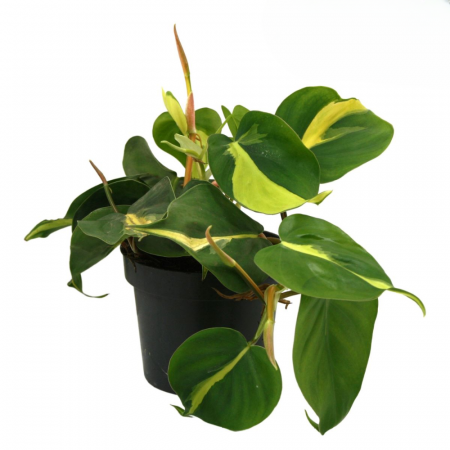
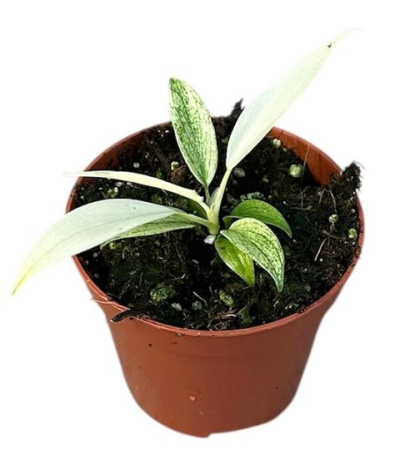
![Philodendron 'Jose Buono' — rare variegated cultivar with large heart-shaped leaves splashed in cream-white on deep green, tropical collector's plant [1]](https://gomagcdn.ro/domains2/eufloria.ro/files/product/original/philodendron-jose-buono-212780.png "Philodendron 'Jose Buono' — rare variegated cultivar with large heart-shaped leaves splashed in cream-white on deep green, tropical collector's plant [1]")
Philodendron 'Jose Buono' is a rare cultivar from the Araceae family, prized for its spectacular variegation in large cream-white patches and stripes over a deep-green background, with surprising stability for a variegated Philodendron. The elongated heart-shaped leaves can reach 60cm at maturity, each unique, impossible to reproduce identically. A hemi-epiphytic tropical plant, perfect for collectors and variegated plant enthusiasts.
Approx height (including pot): 15 cm
Pot diameter: 6 cm
- Description
- Characteristics
- Reviews (0)
- FAQ
🌿 Philodendron 'Jose Buono' — A Living Painting from the Tropical Forests
Philodendron 'Jose Buono' is one of the most sought-after variegated collector Philodendrons, a botanical jewel with large, elongated heart-shaped leaves splashed with broad patches and stripes of cream-white on a deep-green background. Each leaf is a unique creation — nature itself becomes the painter, distributing variegation in unpredictable patterns, from delicate splashes to half-white halves, turning the plant into a painting in constant motion.
It is a plant that simply transforms your room. Its presence brings a lush tropical energy, and as it matures, the leaves grow larger and bolder, with ever more spectacular variegation. Unlike many unstable variegated Philodendrons that gradually lose their pigmentation, 'Jose Buono' retains its unique pattern with surprising constancy, making it a safe investment for any serious collector.
At the offered size — Ø6cm pot — the plant is young, juvenile, with 3–5 leaves already formed and the promise of spectacular development ahead. It is the ideal moment to introduce it into a collection and watch it grow, leaf after leaf, each with its own variegated personality.
🌍 Origin and Botanical History
Philodendron 'Jose Buono' is an ornamental cultivar from the Araceae family, one of the most diverse tropical plant families in the world, which also includes Monstera, Alocasia, Anthurium and Spathiphyllum. The genus name Philodendron derives from Ancient Greek — philo ("love") and dendron ("tree") — a poetic reference to the epiphytic habit of many species, which climb and embrace tree trunks in American tropical forests.
The Philodendron genus was first described in 1829 by the Austrian botanist Heinrich Wilhelm Schott, the reference specialist of the Araceae family, and today comprises over 480 recognized species, all native to the humid tropical forests of Central and South America, from Mexico and the Caribbean to Brazil and Argentina.
The 'Jose Buono' cultivar is a collector's hybrid, selected for its unusually stable sector/splash variegation — a rarity in the world of variegated Philodendrons, where most varieties lose their pigmentation or undergo reversions (return to pure green) over time. Originating from horticultural crosses, it is often compared to Philodendron giganteum or Philodendron 'Paraiso Verde', but distinguishes itself through its distinct variegation, in large, well-defined whitish patches.
🌱 The Foliage
The leaves are the true spectacle of this cultivar. Oval to elongated in shape — sometimes slightly heart-shaped in young specimens — they grow between 20 and 60 centimeters long at maturity, with a fine, semi-glossy texture, and a fine paper-like consistency. The base color is a deep, rich green, over which the variegation draws dramatic patterns: large whitish patches, irregular stripes, completely pale-cream zones or pointillist splashes, each leaf following its own rule of unpredictability.
The main venation is pronounced, slightly sunken on the upper surface, creating a play of light and shadow that accentuates the beauty of the variegation. When you look at the plant in the natural morning light, the whitish zones seem to emit their own luminescence, while the green becomes more intense by contrast, offering a visual spectacle worthy of the finest botanical illustrations.
A fascinating detail: variegation is not uniform between individual leaves, which means each new leaf is a surprise. Some will be 80% white, others only lightly splashed with cream, and others almost completely green — this variability is exactly what makes 'Jose Buono' so appreciated by collectors, each specimen being unique, impossible to reproduce identically.
🌿 Growth Habit and Development
Philodendron 'Jose Buono' is a plant with hemi-epiphytic habit — it can grow upright at small sizes, but as it matures it develops a tendency to climb, to send its stems vertically, especially if provided with a moss pole or coco stake. Aerial roots appear naturally and help the plant anchor itself, and plants trained on supports develop considerably larger leaves than those left free.
Growth is moderate — not as fast as Monstera deliciosa, but much more vigorous than Anthurium or velvet-leaved Philodendrons. In the growing season (spring-summer), a new leaf can appear every 3–4 weeks on well-cared-for specimens, each new formation adding a new surprising element to the overall silhouette.
To thrive in indoor cultivation, follow these requirements:
- Light: bright indirect light, essential for maintaining variegation — the more good-quality light the plant receives, the more pronounced the variegation remains. Avoid direct midday sun, but filtered morning or late-afternoon light is ideal.
- Temperature: optimal range 20–28°C; does not tolerate below 15°C. It is an authentic tropical plant, which quickly feels cold and cold air drafts.
- Watering: moderate; water when the top layer of the substrate (first 2–3 cm) has dried. About once a week in summer, every 10–14 days in winter. Excess water quickly leads to root rot.
- Humidity: 60–80% ideal; above 50% acceptable. Misting the leaves, placing on a tray with pebbles and water, or a humidifier are very beneficial, especially in winter when the air becomes dry.
- Substrate: airy and well-drained mix — peat + perlite + pine bark + activated charcoal; specialized aroid mix is ideal. Roots should never sit in standing water.
- Fertilization: during the growing season, balanced liquid fertilizer at half dose, once every 3–4 weeks. Avoid fertilizing in winter or when the plant shows signs of stress.
- Propagation: via stem cuttings with at least one node, one leaf and an aerial root; root in water, moist sphagnum or perlite. Caution: variegation is inherited unpredictably, and some cuttings may produce less variegated or completely green leaves.
🌸 Why Choose 'Jose Buono' for Your Collection
Philodendron 'Jose Buono' is not just a plant — it is a statement of style, a living work of art that grows and changes with your space. Its stable variegation makes it a safe investment for enthusiasts, and its relatively tolerant behavior in cultivation makes it accessible even to those without extensive experience with variegated plants. It is a plant that rewards attention with spectacular leaves and reminds you, with every new leaf, why it is worth cultivating plants — for the small unexpected joys, for that moment when you discover a new splash leaf and remain silent for a second, admiring the unique pattern nature has just painted for you.
🌿 Common Problems and Practical Solutions
Although it is a relatively sturdy plant for a variegated cultivar, Philodendron 'Jose Buono' communicates quite clearly when something is not to its liking. Careful observation of the leaves provides valuable clues about the plant's condition and allows you to intervene in time, before a minor problem turns into a major one.
Loss of variegation (reversions): if new leaves appear increasingly green, with fewer whitish patches, the problem is almost always lack of light. Move the plant to a brighter location with bright indirect light, and after 2–3 new leaves the variegation should return. If a stem consistently produces entirely green leaves, cut just above a variegated node to redirect the plant's energy toward variegated buds.
Yellow leaves: the most common sign of overwatering; check the pot's drainage and watering frequency. If the substrate stays wet for more than 5–7 days, roots begin to suffer. Gently remove the plant from the pot, check the roots — if they are soft and dark, repot with fresh, well-drained substrate.
Brown, dry tips: usually caused by too low humidity or water with too much chlorine. Mist the leaves with still or rainwater and place the plant on a tray with pebbles and water to increase ambient humidity. If you have very dry air in winter, a humidifier is an investment that quickly pays off in the health of tropical plants.
Pests — scale insects, mealybugs: check the underside of leaves and the base of petioles periodically. At the first sign, wipe with cotton soaked in 70% isopropyl alcohol and apply insecticidal soap or neem oil every 7 days until complete elimination.
Lungime: 20 cm
Greutate (kg): 0.25 Kg
Denumire: Philodendron
Diametru: 6 cm
Cerințe lumină: Lumina indirectă
Tip plantă: Plantă agățătoare
Utilizare: Interior
Tip suport: Ghiveci
Material Suport: Plastic
What makes Philodendron 'Jose Buono' so special?
How much light does it need to maintain its variegation?
How often should it be watered?
Is it toxic to cats, dogs or children?
How does it propagate and how is variegation inherited?
Ai nevoie și de un ghiveci decorativ?