EN/
EN/ Romana
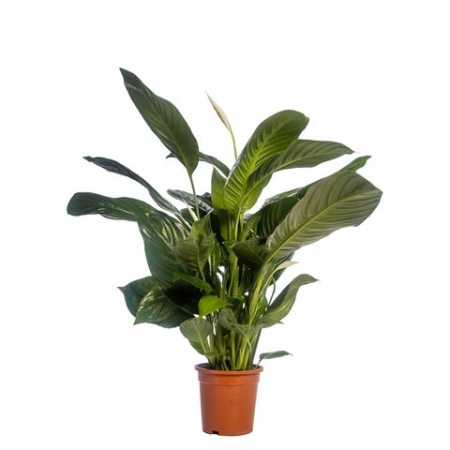
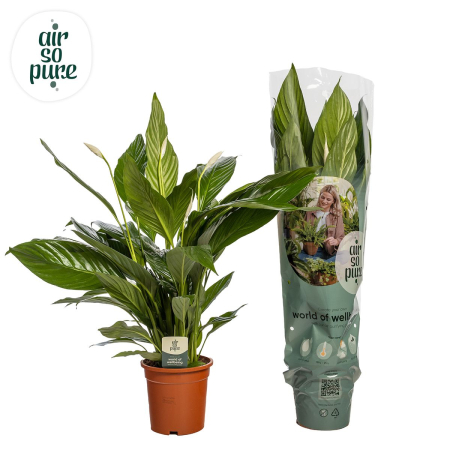
Spathiphyllum 'Vivaldi' Ø17cm
![Spathiphyllum Vivaldi - Peace Lily [1]](https://gomagcdn.ro/domains2/eufloria.ro/files/product/original/spathiphyllum-vivaldi-d17cm-026492.jpg "Spathiphyllum Vivaldi - Peace Lily [1]")
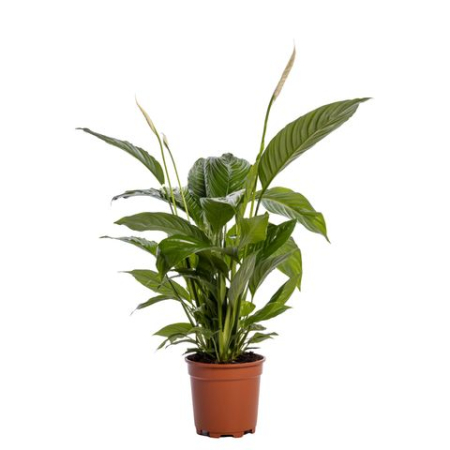
Spathiphyllum ‘Vivaldi’ (peace lily) – an elegant indoor plant with white flowers and glossy dark green foliage. Blooms abundantly, purifies air, and tolerates low light. Compact habit, ideal for any room. Note: toxic to pets and children if ingested.
Approx height (including pot): 80 cm
This plant will be imported after you order. It has a minim mandatory quantity.: If you want to order fewer quantities, contact us for a personalized offer
Pot diameter: 17 cm
Delivery date: 1-2 weeks
- Description
- Characteristics
- Reviews (0)
- FAQ
🌿 Spathiphyllum ‘Vivaldi’ – The Peace Lily That Brings Harmony Home
Spathiphyllum ‘Vivaldi’, popularly known as the peace lily, is an indoor plant prized both for its glossy dark green foliage and for its elegant white flowers that rise gracefully above the leaves. The ‘Vivaldi’ variety stands out for its compact, harmonious habit with wider leaves and generous blooms that flower abundantly even in moderate light. It is a plant that combines beauty with functionality – NASA included Spathiphyllum on its list of air-purifying plants.
🌍 Origins & Botanical History
The genus Spathiphyllum comprises approximately 47 species in the Araceae family, originating from the tropical regions of Central and South America and Southeast Asia. The name comes from Greek: “spathe” (sheath) and “phyllon” (leaf), referring to the white spathe surrounding the floral spadix. In its natural habitat, it grows on the floors of humid tropical forests in partial shade. It is one of the most popular houseplants in the world, cultivated on a large scale since the 1870s.
🌺 Flowers – White Sails of Pure Elegance
The flowers are one of the peace lily’s main assets. The white spathe, resembling a sail or a flag of peace, elegantly surrounds the cream-coloured spadix. The flowers rise on long stems above the foliage, creating a delicate visual contrast. Spathiphyllum ‘Vivaldi’ blooms abundantly, often with multiple flowers simultaneously, and blooming can last for weeks. After wilting, the spathe takes on a pale green hue.
🌿 Foliage – Glossy Green Full of Vigour
The leaves are large, oval-lanceolate, of an intense dark green with a glossy surface that reflects light. The texture is firm yet flexible, with prominent veins. The leaves grow in dense rosettes, creating a full, healthy appearance. The ‘Vivaldi’ variety produces slightly wider leaves than other cultivars, giving it a particularly lush look.
🌱 Growth Habit & Development
Spathiphyllum ‘Vivaldi’ has a compact habit, reaching 40–60 cm in height. Growth is moderate, with the plant constantly producing new leaves and flowers. It prefers moderate indirect light (tolerates low light but blooms less), temperatures of 18–26°C, and soil kept slightly moist. It is a plant that “communicates” – when it needs water, the leaves droop slightly, recovering quickly after watering.
Lungime: 30 cm
Greutate (kg): 5 kg
Diametru: 17 cm
Cerințe lumină: Partial umbra
Tip plantă: Decorative
Tip suport: Ghiveci
Is Spathiphyllum Vivaldi toxic to pets?
Yes, Spathiphyllum Vivaldi contains calcium oxalate crystals that are toxic to dogs, cats and other pets. Ingestion can cause mouth irritation, excessive drooling and difficulty swallowing. It is recommended to place the plant in a location inaccessible to animals.
How to properly water Spathiphyllum Vivaldi?
Spathiphyllum Vivaldi prefers slightly moist soil but not waterlogged. Water when the top layer of soil is dry to the touch. A useful indicator is the slight drooping of leaves, a sign the plant needs water. Avoid water accumulation in the saucer to prevent root rot.
What light does Spathiphyllum Vivaldi need?
Spathiphyllum Vivaldi thrives in medium to bright indirect light. It can also tolerate low light conditions, but flowering will be less abundant. Avoid direct sun exposure, which can burn the leaves. A spot near a north or east-facing window is ideal.
Is Spathiphyllum Vivaldi suitable for the office?
Yes, Spathiphyllum Vivaldi is an excellent choice for the office. The plant purifies the air by removing harmful substances such as formaldehyde and benzene, tolerates artificial light well and does not require complex care. Its compact size makes it perfect for desks and workspaces.
When and how to repot Spathiphyllum Vivaldi?
Repotting is recommended every 1-2 years, preferably in spring. Choose a pot 2-3 cm larger in diameter and use a mix of peat, perlite and universal soil. Ensure good drainage at the base of the pot to prevent water stagnation and root rot.
Does Spathiphyllum purify the air?
Yes, Spathiphyllum is one of the most effective air-purifying plants, according to NASA studies. It removes formaldehyde, benzene, trichloroethylene and ammonia.
Why doesn't my Spathiphyllum bloom?
Lack of blooming may be caused by insufficient light. Move the plant to a spot with bright indirect light. Regular fertilizing during the growing season encourages blooming.
Why does Spathiphyllum have brown leaf tips?
Brown tips are caused by low humidity, chlorinated water, or over-fertilizing. Use filtered water, mist the leaves, and reduce fertilization.
Recommendations
Ai nevoie și de un ghiveci decorativ?