EN/
EN/ Romana
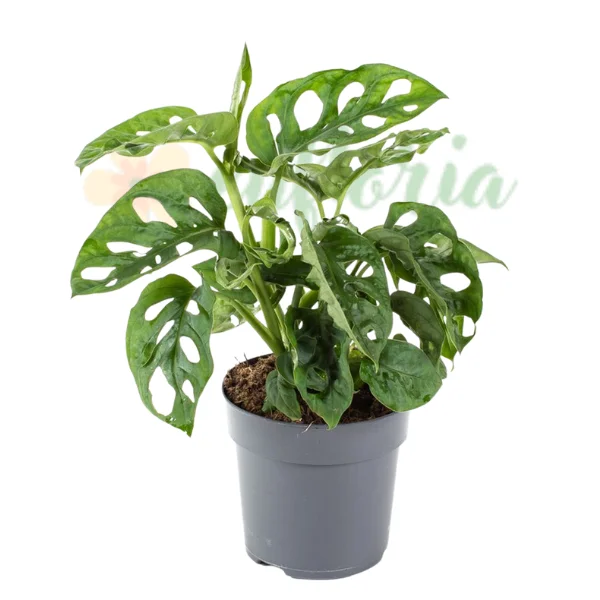
Monstera minima Ø19cm
![Monstera minima - Mini Monstera - Eufloria [1]](https://gomagcdn.ro/domains2/eufloria.ro/files/product/original/monstera-minima-d19cm-eufloria-976931.jpg "Monstera minima - Mini Monstera - Eufloria [1]")
Monstera minima (Rhaphidophora tetrasperma) – a tropical climbing plant with fenestrated leaves in a compact format. Fast-growing, ideal for spaces needing a tropical accent without the size of a Monstera deliciosa. Prefers bright indirect light and temperatures of 18–27°C. Note: toxic to pets if ingested.
Approx height (including pot): 90 cm
This plant will be imported after you order. It has a minim mandatory quantity.: If you want to order fewer quantities, contact us for a personalized offer
Pot diameter: 19 cm
Delivery date: 1-2 weeks
- Description
- Characteristics
- Reviews (0)
- FAQ
🌿 Monstera minima — Mini Monstera, tropical charm in a compact format
Monstera minima (Rhaphidophora tetrasperma) is a tropical climbing plant that has rapidly won the hearts of plant enthusiasts worldwide. Although not a true Monstera botanically, its miniature fenestrated leaves perfectly mimic the look of the famous Monstera deliciosa, but in a far more compact and manageable format.
Its glossy green leaves with deep, symmetrical perforations grow on slender, flexible stems that eagerly climb any support or cascade gracefully downward. Its growth is remarkably fast — in optimal conditions, it can produce a new leaf weekly during the growing season, offering visible and immediate satisfaction to its caretaker.
🌍 Origin and natural habitat
Rhaphidophora tetrasperma originates from the humid tropical forests of Thailand and Malaysia, where it grows as an epiphytic vine, climbing tall tree trunks in search of light. In its native habitat, it develops in conditions of filtered light, high humidity and constant temperatures.
It was discovered relatively recently by Western plant enthusiasts and quickly became one of the most sought-after houseplants, thanks to its spectacular tropical appearance and vigorous growth. The popular name “Mini Monstera” reflects its striking resemblance to Monstera deliciosa, although the two species belong to different genera.
🌱 Care guide
Light: Prefers bright indirect light, which stimulates rapid growth and the development of pronounced fenestrations. Adapts to moderate light, but growth will be slower. Avoid intense direct sunlight.
Watering: Moderate — allow the top 2-3cm of soil to dry between waterings. Prefers moist but well-drained soil. Avoid waterlogging at the roots.
Temperature: Thrives between 18-27°C. Does not tolerate temperatures below 12°C. Avoid cold draughts.
Humidity: Appreciates high humidity (50-70%) but adapts to normal household conditions. Regular leaf misting stimulates growth.
Support: As a climbing plant, it develops best on a moss pole, stake or trellis. Without support, the stems will trail downward, creating a cascade effect.
Soil: Well-draining, airy substrate. A mix of peat, perlite and bark is ideal.
Fertilising: Apply a balanced liquid fertiliser twice monthly during the growing season to sustain its rapid development.
🌸 Benefits and decorative use
Monstera minima is an extremely versatile plant decoratively. On a moss pole, it creates an impressive vertical tropical effect. Left to trail freely from a shelf or hanging pot, it forms cascades of fenestrated leaves of exceptional beauty.
It contributes to air purification and brings an urban jungle note to any space. Thanks to the compact size of its leaves, it fits perfectly in smaller spaces where a Monstera deliciosa would be too voluminous.
🌱 Product specifications
Pot diameter: 19cm
Approximate height: 80-100cm (including pot)
Care level: Easy — fast-growing, undemanding
Toxicity: Toxic if ingested (contains calcium oxalate)
Position: Bright indirect light
Lungime: 40 cm
Greutate (kg): 10 kg
Denumire: Monstera
Diametru: 19 cm
Cerințe lumină: Partial umbra
Tip plantă: Decorative
Utilizare: Interior
Tip suport: Ghiveci
Material Suport: Plastic
Is Monstera minima toxic to pets?
Yes, Monstera minima is toxic to cats, dogs and other pets. The plant contains calcium oxalate crystals that can cause oral irritation, excessive salivation and digestive upset if ingested. Keep the plant away from curious pets.
How often should I water Monstera minima?
Water Monstera minima when the top 2-3 cm of soil has dried out – usually once a week during the growing season and every 10-14 days in winter. As a tropical climbing plant, it prefers consistently slightly moist but not waterlogged soil. Overwatering can cause root rot, while allowing the soil to dry out completely will cause yellowing and dropping of leaves. Use room-temperature water and ensure the pot has adequate drainage. Always check soil moisture before watering – if the soil still feels damp to the touch, wait another day or two.
What type of light does Monstera minima prefer?
Monstera minima prefers bright to medium indirect light, similar to the understory conditions of the tropical forest where it grows naturally. Position the plant near a bright window but away from direct sunlight, which can scorch the delicate leaves. The plant also tolerates lower light, though growth will be slower and the characteristic leaf fenestrations may be less pronounced. Avoid prolonged direct sun exposure, especially during summer months. A location with light filtered through curtains or 1-2 meters from an east or west-facing window is ideal.
Does Monstera minima need climbing support?
Yes, Monstera minima is a natural climbing plant that benefits greatly from vertical support. In its natural habitat in the tropical forests of Thailand and Malaysia, the plant climbs tree trunks using its aerial roots. Indoors, you can provide a moss pole, coconut coir pole, trellis, or wooden support. When given adequate support, the plant produces larger and more beautifully fenestrated leaves. Without support, Monstera minima will grow in a trailing or hanging manner, which also makes it suitable for hanging pots or allowing it to cascade from a shelf.
How can I propagate Monstera minima?
Monstera minima is most easily propagated through stem cuttings. Choose a stem section with at least one node (the point where leaves and aerial roots grow) and cut below the node with a sharp, sterilized knife or scissors. The cutting can be rooted in water or directly in moist substrate. In water, change the water every few days and wait until roots reach 3-5 cm before planting in soil. The ideal time for propagation is spring or summer when the plant is actively growing. Cuttings with aerial roots already formed have the highest chance of success.
What is the difference between Monstera minima and Monstera deliciosa?
While both are popular tropical plants with fenestrated leaves, Monstera minima (Rhaphidophora tetrasperma) is not actually a Monstera – it belongs to the genus Rhaphidophora in the Araceae family. The popular name "Mini Monstera" comes from its visual resemblance to Monstera deliciosa, but in a much more compact format. Monstera deliciosa has leaves that can reach 60-90 cm, while Monstera minima leaves usually stay between 10-20 cm. Monstera minima grows much faster, is easier to manage in small spaces, and has a more delicate, climbing habit. Both plants are mildly toxic to pets and prefer similar conditions of indirect light and humidity.
How do you care for Monstera minima?
Monstera minima (Rhaphidophora tetrasperma) prefers indirect light, well-drained soil and regular watering when the top layer dries. Provide a climbing support. Ideal temperature is 18-27°C.
What is the difference between Monstera minima and Monstera deliciosa?
Monstera minima is actually Rhaphidophora tetrasperma, a different species with smaller leaves and faster growth. Leaves have similar fenestrations but are much more compact, ideal for small spaces.
How fast does Monstera minima grow?
Monstera minima grows quickly, producing multiple leaves per month in optimal light and humidity conditions. It can grow over 1 m per year with adequate support.
Recommendations
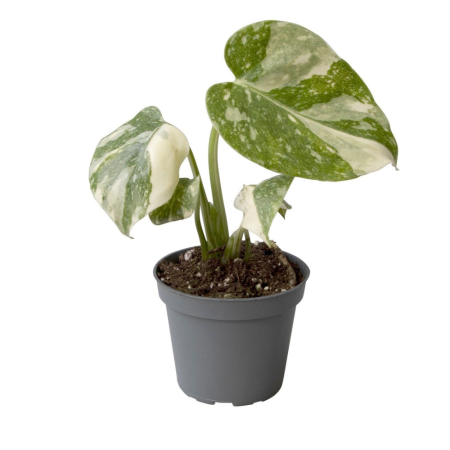
Ai nevoie și de un ghiveci decorativ?