EN/
EN/ Romana
Monstera obliqua 'Peru' Ø6cm
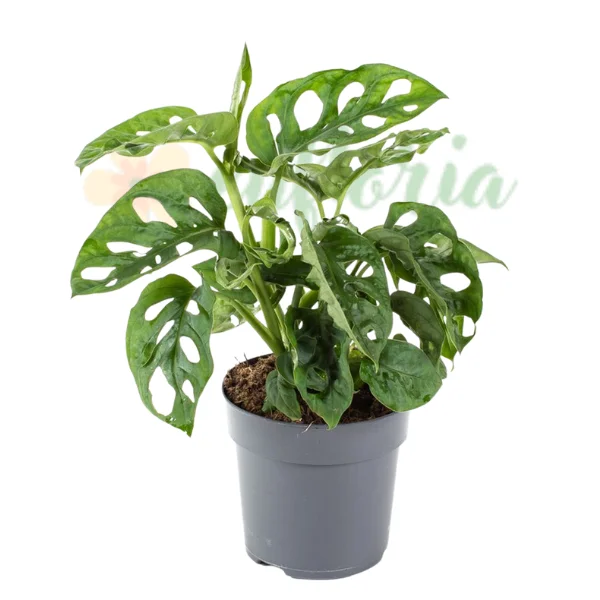
![Monstera obliqua 'Peru' — thin lace-perforated leaves, Eufloria [1]](https://gomagcdn.ro/domains2/eufloria.ro/files/product/original/monstera-obliqua-peru-051075.png "Monstera obliqua 'Peru' — thin lace-perforated leaves, Eufloria [1]")
Monstera obliqua 'Peru' — extremely rare with thin lace-perforated leaves (up to 90% holes). Humidity 70-90%, indirect light, 18-27°C. For advanced collectors.
Note: Product images are for guidance only. Due to different batches of imported products, there may be differences between the images on the website and the actual appearance of the products.
Approx height (including pot): 20 cm
Country of origin: Netherlands
- Description
- Characteristics
- Reviews (0)
- FAQ
🌿 Monstera obliqua 'Peru' — The Vegetal Lace of the Peruvian Jungle
The leaves of Monstera obliqua 'Peru' have more holes than green tissue — fenestrations occupy 60-85% of surface. These are the thinnest leaves in the Monstera genus (0.5-1 mm).
Important: True Monstera obliqua is one of the rarest aroids in the world — most plants sold as "obliqua" are actually Monstera adansonii. The 'Peru' clone is one of the few authentic varieties in European collections.
🌍 Origin and Botanical History
Species described in 1854 by Heinrich Wilhelm Schott. The name "obliqua" means "asymmetric." The 'Peru' clone comes from humid forests east of the Peruvian Andes at elevations of 200-1000 m. Hemi-epiphytic species, growing in extremely humid (>85%) and constantly warm climate.
🌱 The Foliage
Asymmetrically oval leaves, 15-25 cm at maturity, with extreme fenestrations. Almost papery texture. In indirect light, the leaf appears almost transparent. Young leaves emerge small (5-8 cm) without fenestrations — as the plant climbs toward light, they grow larger and more fenestrated.
🌸 The Flowers
Short spadix (3-5 cm) surrounded by cream-white spathe. Flowering extremely rare in cultivation. The decorative value lies exclusively in the unique fenestrated foliage.
🌱 Growth and Care
Very slow growth (2-5 new leaves/year). Climbing plant — offer it a moss pole. Difficult propagation (40-60% success) via cuttings at 85%+ humidity.
- Light: Moderate indirect, 5,000-12,000 lux. NEVER direct sun.
- Temperature: 18-25°C constant.
- Watering: 4-5 days summer. Substrate consistently lightly moist.
- Humidity: 80-95% — essential. Terrarium MANDATORY.
- Substrate: Very airy: 35% pine bark, 25% perlite, 15% sphagnum, 15% coco.
On Eufloria, part of rare Monstera. Use aroid substrate. Toxic (calcium oxalate) — non-toxic alternatives.
Lungime: 10 cm
Greutate (kg): 0.15 Kg
Denumire: Monstera
Diametru: 6 cm
Cerințe lumină: Strong, indirect light
Tip plantă: Decorative
Utilizare: Interior
Tip suport: Ghiveci
Material Suport: Plastic
Difference from adansonii?
Humidity?
Light?
Toxic?
Propagation?
Recommendations
Ai nevoie și de un ghiveci decorativ?