EN/
EN/ Romana
Codonanthe Crassifolia Ø14cm
![Codonanthe crassifolia epiphytic plant with waxy leaves and tubular white flowers [0]](https://gomagcdn.ro/domains2/eufloria.ro/files/product/medium/codonanthe-crassifolia-d14cm-685841.png "Codonanthe crassifolia epiphytic plant with waxy leaves and tubular white flowers [0]")
![Codonanthe crassifolia epiphytic plant with waxy leaves and tubular white flowers [1]](https://gomagcdn.ro/domains2/eufloria.ro/files/product/medium/codonanthe-crassifolia-d14cm-789203.webp "Codonanthe crassifolia epiphytic plant with waxy leaves and tubular white flowers [1]")
![Codonanthe crassifolia epiphytic plant with waxy leaves and tubular white flowers [1]](https://gomagcdn.ro/domains2/eufloria.ro/files/product/original/codonanthe-crassifolia-d14cm-685841.png "Codonanthe crassifolia epiphytic plant with waxy leaves and tubular white flowers [1]")
![Codonanthe crassifolia epiphytic plant with waxy leaves and tubular white flowers [2]](https://gomagcdn.ro/domains2/eufloria.ro/files/product/original/codonanthe-crassifolia-d14cm-789203.webp "Codonanthe crassifolia epiphytic plant with waxy leaves and tubular white flowers [2]")
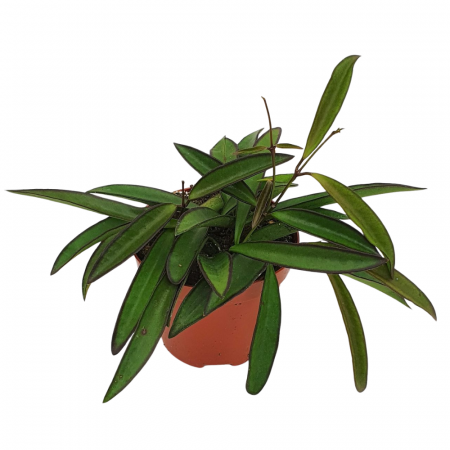
Codonanthe crassifolia is a rare epiphytic plant with small, glossy, waxy leaves and tubular white flowers that are fragrant in the evening. Native to the tropical rainforests of Central and South America, it stands out through its elegant trailing growth and surprising resilience. A perfect pick for hanging baskets, open terrariums, or Gesneriaceae collections.
Pot diameter: 14 cm
- Description
- Reviews (0)
- FAQ
🌿 Plant Characteristics
Codonanthe crassifolia is an epiphytic plant from the Gesneriaceae family (related to African violets and begonia-violets), native to tropical forests of Central and South America. It is characterized by small, thick, glossy dark green leaves arranged on trailing stems that can reach 50–80 cm in length. The semi-succulent texture of the leaves makes it a relatively tolerant plant to occasional watering neglect.
The leaves are oval or slightly elongated in shape, generally measuring 1.5–2.5 cm in length and 1–1.5 cm in width. The upper surface is smooth and glossy, with barely visible fine veins, and the underside is slightly paler. Flexible stems drape naturally from the pot, making the plant ideal for hanging baskets or tall pots. Growth is moderate, with active expansion periods in spring and summer.
Flowers appear in small groups at stem tips or in leaf axils — small cream-white trumpets with a slightly flared mouth, 1.5–2 cm long. After flowering, the plant frequently produces small fruits (berries) of pink-orange color, which add an additional decorative element and can persist on the plant for weeks. Flowering can occur at any time of year in optimal light and humidity conditions.
☀️ Light Requirements
Codonanthe crassifolia prefers bright to moderate indirect light. Place it 1–2 meters from an east or south-facing window, with light filtered through light curtains. In its natural habitat, it grows as an epiphyte in the understory of tropical forests, benefiting from diffused light penetrating through the canopy.
Avoid direct exposure to strong summer sun — intense UV rays can bleach leaves and cause irreversible burns. On the other hand, insufficient light leads to elongated stems, paler leaves, and sporadic flowering. An indicator of adequate light: leaves maintain intense green color and new stems emerge with normal internode distances (2–4 cm).
In apartments with low light, supplement with LED grow lamps (full spectrum, 15–25W) positioned 30–50 cm above the plant and on for 12–14 hours daily. In winter, when day length decreases, move the plant closer to the window or extend the artificial lighting period. Rotate the pot every 2–3 weeks for uniform growth and to prevent leaning toward the light source.
💧 Care and Watering
Codonanthe crassifolia tolerates short drought periods thanks to its semi-succulent leaves. In the growing season (spring-summer), water every 5–7 days, letting the top 2–3 cm of substrate dry between waterings. In winter, reduce frequency to 10–14 days, allowing the substrate to dry more deeply, but not completely.
Use room-temperature water, preferably rainwater or water left standing for 24 hours. Codonanthe is sensitive to tap water salts, which can cause dry leaf edges over time. Water adequately (until water exits through drainage holes) and remove excess from the saucer after 10–15 minutes to prevent root rot.
Optimal ambient humidity is 55–70%. In apartments with dry air (winter), use a humidifier or pebble tray. Foliar misting is beneficial, but avoid watering flowers. Fertilize every 2–3 weeks in spring-summer with balanced NPK 20-20-20 fertilizer diluted to half the recommended dose. To stimulate flowering, use a higher phosphorus fertilizer (10-30-20) once monthly.
🌡️ Temperature and Climate
Optimal temperature for Codonanthe crassifolia is 20–27°C (68–81°F) in the growing season and 16–18°C (61–64°F) in winter. This slight seasonal cooling helps stimulate flowering in the following spring. Minimum tolerated temperature is 13–14°C for short periods; prolonged exposure below 12°C causes cellular damage and rot risk.
Avoid cold air drafts — windows open in winter, balcony doors, air conditioners. These cause bud drop and visible stress through leaf yellowing. Also avoid direct placement near radiators or stoves — dry heat reduces local humidity and can cause accelerated water loss from leaves.
Natural daily variations (3–5°C between day and night) are beneficial and simulate tropical conditions. In summer, the plant can be placed on a balcony in a shaded location to benefit from natural humidity and fresh air. Bring it back indoors when night temperatures drop below 15°C in autumn. Avoid sudden location changes — make the transition gradual over 7–10 days.
🪴 Pot and Substrate
Codonanthe crassifolia grows optimally in a small pot with multiple drainage holes. Roots prefer limited space that simulates natural epiphytic conditions. A pot 2 cm larger than the root ball is ideal at transplant. Hanging baskets with coconut liner or tall pots are excellent choices for allowing stems to drape naturally.
Optimal substrate: 35% quality peat, 25% perlite, 20% fine pine bark, 15% sphagnum moss, 5% activated charcoal. This mix provides excellent aeration (essential for epiphytic roots), rapid drainage, and adequate moisture retention. Standard garden mixes are too dense and suffocate the roots.
Transplant every 2–3 years in spring, when you notice roots emerging through drainage holes. Completely replace old substrate, inspect the roots, and carefully remove rotten parts. After transplant, wait 5–7 days before first watering to allow root wounds to heal. During this interval, maintain high humidity in the air to reduce transplant stress.
🌿 Curiosities and Special Details
Codonanthe crassifolia is part of the Gesneriaceae family, which includes over 3000 species including popular African violets (Saintpaulia), gloxinias, and streptocarpus. The genus name comes from Greek "kodon" (bell) and "anthos" (flower), referring to the characteristic shape of the flowers. Unlike its terrestrial relatives, Codonanthe has adapted to epiphytic life in tropical forests.
In its natural habitat, this species lives in mutualistic symbiosis with certain ant species — a phenomenon called myrmecophily. Ants disperse the plant's seeds in exchange for shelter provided by its special structures. This fascinating ecological adaptation has contributed to the species' spread in tropical forests of Costa Rica, Panama, and Colombia.
Propagation is easily done through stem cuttings with 2–4 pairs of leaves, rooted in moist perlite or directly in water. Success rate is 85–95% after 3–4 weeks at 22–25°C. This makes Codonanthe one of the easiest species to propagate from the Gesneriaceae family. Cuttings can be transplanted into definitive substrate immediately after forming 2–3 cm roots.
The pink-orange fruits are not just decorative — they play an important role in the natural reproductive cycle. In nature, birds and insects consume them and disperse seeds to other locations. In indoor cultivation, fruits can be left on the plant for decorative effect or removed to stimulate new flower production. If you want to try propagation from seeds, let the fruits mature completely before harvesting.
Research conducted at botanical gardens in Costa Rica and Brazil has documented that Codonanthe crassifolia has developed unique physiological adaptations for epiphytic life, including specialized roots that extract water and nutrients directly from air humidity and organic debris accumulated on host tree bark. These adaptations make it particularly suitable for cultivation on cork bark mounts or living moss poles for advanced collectors.
In the international houseplant community, Codonanthe crassifolia is gaining popularity due to its compact growth habit, attractive trailing form, and relative ease of care compared to other tropical epiphytes. The combination of glossy foliage, delicate white flowers, and colorful persistent fruits makes it a unique addition to any indoor plant collection, offering visual interest throughout the year without requiring specialized greenhouse conditions.
A lesser-known aspect of this species is its ability to produce aerial roots at the nodes of long stems, which in the natural habitat cling to tree bark for support and additional nutrient absorption from ambient humidity. In indoor cultivation, these roots can be observed especially in conditions of high humidity (above 70%) and can be guided toward a sphagnum moss pole to stimulate vertical growth.
For advanced growers, Codonanthe crassifolia can be mounted on cork bark or sphagnum moss poles, completely simulating natural epiphytic conditions. This method offers maximum root aeration and allows natural ascending growth, but requires more frequent watering (every 3–5 days) and constant humidity above 75%. It is ideal for orchid terrariums or specialized display cases with humidity control.
Recent research from botanical gardens in Costa Rica has documented unique physiological adaptations in Codonanthe crassifolia, including the ability to use partial CAM metabolism (Crassulacean Acid Metabolism) during drought periods — a rare adaptation for plants in the Gesneriaceae family. This phenomenon allows the plant to reduce transpiration by up to 60% and survive prolonged periods of reduced humidity, making it more resistant in indoor cultivation than other related species.
In the international houseplant collector community, Codonanthe crassifolia is increasingly appreciated for its compact form, attractive trailing habit, and rewarding flowering pattern. Unlike many tropical epiphytes that require complex greenhouse setups, this species adapts well to typical apartment conditions when basic requirements are met — making it an ideal gateway plant for those interested in exploring the fascinating world of tropical epiphytes without major infrastructure investments.
Experienced growers often note that Codonanthe crassifolia benefits from occasional cold treatments (bringing the plant to 15–16°C for 2–3 weeks in late autumn) to induce abundant flowering in the following season. This natural seasonal cycle simulates climatic variations from the native habitat and triggers specific hormonal responses that increase flower production by up to 50% compared to plants kept at constant temperatures throughout the year.
If you love Codonanthe crassifolia, explore more trailing houseplants on Eufloria: Senecio rowleyanus (cascading habit), Hoya wayetii or Hoya guppyi — all thrive beside your Codonanthe in a hanging basket.
What is Codonanthe Crassifolia and where does it come from?
Codonanthe Crassifolia is an epiphytic vine from the Gesneriaceae family (the same family as African violets and Streptocarpus), originating from tropical forests of Central and South America — especially Mexico, Panama, Colombia, Venezuela, Ecuador, and Brazil. It grows naturally on tree trunks at altitudes of 0–1000 m, in symbiosis with ants that build nests among its roots and, in exchange, protect and fertilize the plant.
What light does Codonanthe Crassifolia need?
It prefers bright filtered indirect light — similar to that of the tropical forest canopy. Equivalent: 10,000–20,000 lux. East- or west-facing windows are ideal; south-facing works with a sheer curtain. Direct midday sun can burn the waxy leaves. In low light (below 5,000 lux), growth slows and flowering disappears — the plant will not produce flowers in poorly lit rooms.
How do I water it and what humidity does it prefer?
As an epiphyte, Codonanthe Crassifolia does not tolerate permanently wet substrate. Water when the top 2 cm of substrate has dried, typically every 5–7 days in summer and 10–14 days in winter. Use filtered or rainwater at room temperature. Optimal atmospheric humidity is 60–80%. Below 50% humidity, leaf margins may become dry. A humidifier or pebble tray helps in dry apartments.
When and how does Codonanthe Crassifolia bloom?
Codonanthe Crassifolia blooms in spring–summer, producing small white tubular flowers with slightly reddish edges, 1–2 cm long. Flowers appear at leaf axils and are followed by small decorative pink-red fruits that can persist for months. To induce flowering: bright indirect light, regular watering, monthly fertilization with half-diluted balanced product, and a brief cooler period in winter (15–18°C).
Is Codonanthe Crassifolia toxic to pets and children?
Codonanthe Crassifolia is not on the ASPCA list of plants toxic to dogs, cats, or horses. The entire Gesneriaceae family (which includes African violets) is considered non-toxic, safe for homes with pets and young children. However, accidental leaf ingestion in large quantities may cause mild gastric irritation. The small pink-red fruits may attract children — placement out of reach is recommended.
Recommendations
Ai nevoie și de un ghiveci decorativ?