EN/
EN/ Romana
Alocasia 'Jacklyn' Ø6cm
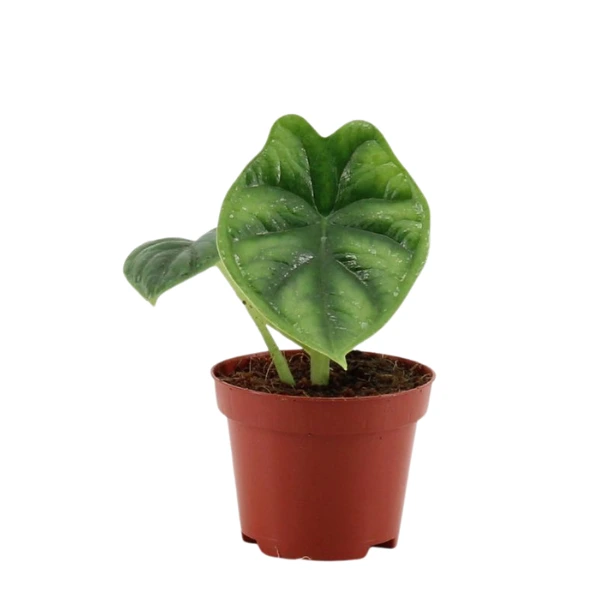
![Alocasia 'Jacklyn' — deep green lobed leaves with zebra petioles, Ø6cm pot Eufloria [0]](https://gomagcdn.ro/domains2/eufloria.ro/files/product/medium/alocasia-jacklyn-014671.png "Alocasia 'Jacklyn' — deep green lobed leaves with zebra petioles, Ø6cm pot Eufloria [0]")
![Alocasia 'Jacklyn' — deep green lobed leaves with zebra petioles, Ø6cm pot Eufloria [1]](https://gomagcdn.ro/domains2/eufloria.ro/files/product/medium/alocasia-jacklyn-099311.png "Alocasia 'Jacklyn' — deep green lobed leaves with zebra petioles, Ø6cm pot Eufloria [1]")
![Alocasia 'Jacklyn' — deep green lobed leaves with zebra petioles, Ø6cm pot Eufloria [2]](https://gomagcdn.ro/domains2/eufloria.ro/files/product/medium/alocasia-jacklyn-d6-114457.jpg "Alocasia 'Jacklyn' — deep green lobed leaves with zebra petioles, Ø6cm pot Eufloria [2]")
![Alocasia 'Jacklyn' — deep green lobed leaves with zebra petioles, Ø6cm pot Eufloria [3]](https://gomagcdn.ro/domains2/eufloria.ro/files/product/medium/alocasia-jacklyn-d6-513198.png "Alocasia 'Jacklyn' — deep green lobed leaves with zebra petioles, Ø6cm pot Eufloria [3]")
![Alocasia 'Jacklyn' — deep green lobed leaves with zebra petioles, Ø6cm pot Eufloria [1]](https://gomagcdn.ro/domains2/eufloria.ro/files/product/original/alocasia-jacklyn-014671.png "Alocasia 'Jacklyn' — deep green lobed leaves with zebra petioles, Ø6cm pot Eufloria [1]")
![Alocasia 'Jacklyn' — deep green lobed leaves with zebra petioles, Ø6cm pot Eufloria [2]](https://gomagcdn.ro/domains2/eufloria.ro/files/product/original/alocasia-jacklyn-099311.png "Alocasia 'Jacklyn' — deep green lobed leaves with zebra petioles, Ø6cm pot Eufloria [2]")
![Alocasia 'Jacklyn' — deep green lobed leaves with zebra petioles, Ø6cm pot Eufloria [3]](https://gomagcdn.ro/domains2/eufloria.ro/files/product/original/alocasia-jacklyn-d6-114457.jpg "Alocasia 'Jacklyn' — deep green lobed leaves with zebra petioles, Ø6cm pot Eufloria [3]")
![Alocasia 'Jacklyn' — deep green lobed leaves with zebra petioles, Ø6cm pot Eufloria [4]](https://gomagcdn.ro/domains2/eufloria.ro/files/product/original/alocasia-jacklyn-d6-513198.png "Alocasia 'Jacklyn' — deep green lobed leaves with zebra petioles, Ø6cm pot Eufloria [4]")
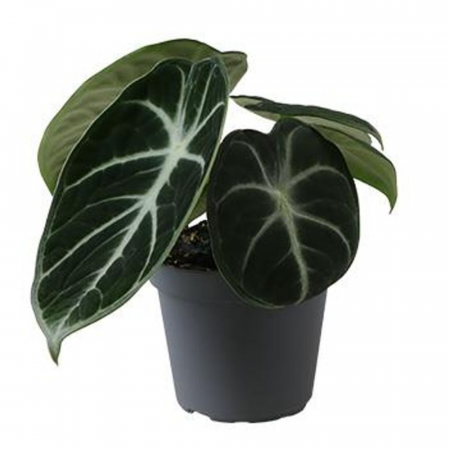
Alocasia 'Jacklyn' is a rare cultivar of the Araceae family, discovered in Indonesian nurseries around 2020, prized for its deeply lobed sculptural foliage and petioles marbled with zebra stripes on a cream background. The plant develops semi-rigid leaves of 15-35 cm, deep green, with pale veins that trace a perfectly symmetrical organic geometry. A collector's Alocasia for experienced enthusiasts, 'Jacklyn' thrives in bright indirect light, 70-90% humidity, and temperatures of 20-28°C, becoming over the years the emblematic specimen of a real botanical collection.
Approx height (including pot): 15 cm
Country of origin: Netherlands
Pot diameter: 6 cm
- Description
- Characteristics
- Reviews (0)
- FAQ
🌿 Alocasia 'Jacklyn' — The Living Sculpture of the Tropical Jungle
Alocasia 'Jacklyn' is one of the most enigmatic and sought-after cultivars discovered in the past decade — a plant that looks as if it stepped out of a baroque botanical illustration, with sculptural, deeply notched leaves rising on zebra-striped petioles like vegetal trophies. First identified in Indonesian nurseries and introduced to the collector market around 2020, this Alocasia quickly rose to become one of the absolute stars of the rare aroid world, alongside siblings such as 'Dragon Scale', 'Silver Dragon', and 'Frydek Variegata'.
What makes 'Jacklyn' so extraordinary is the rare combination of heavily lobed, almost palmate foliage — with margins that appear geometrically carved — and petioles marbled with dark stripes on a cream-green background. This is a plant that does not imitate anyone. Although long assumed to be a form of Alocasia tandurusa, recent DNA research suggests an incompletely resolved lineage, lending 'Jacklyn' an additional aura of botanical mystery. For collectors, 'Jacklyn' is the natural next step after mastering Alocasia amazonica, zebrina, or 'Polly' — a move into specimens with real personality.
Indoors, the plant develops like living architecture: every new leaf is an event, slowly unfurling from the growth tube, revealing fresh emerald shades before maturing into a deep, saturated green crossed by pale veins that trace the map of an organic geometry. It is a plant for attentive eyes, for those who understand that true beauty is measured in details.
🌍 Origin and Botanical History
The genus Alocasia belongs to the Araceae family, the same family that includes Philodendron, Monstera, Anthurium, and Colocasia. The genus was first described by Scottish botanist George Don in 1839 and now comprises over 90 accepted species, distributed across the tropical forests of Southeast Asia, northeastern Australia, and the islands of the western Pacific. Most species grow in the shaded understory of humid forests, along stream edges or in valleys with high atmospheric humidity.
Alocasia 'Jacklyn' is a commercial cultivar with clear geographic origins in Indonesia — the first specimens are believed to have been propagated by a grower named Jacklyn in Bali, from whom the popular name derives. The plant entered the rare plant market through specialist aroid nurseries and quickly became a favorite among European and American collectors. It is likely a natural hybrid or a sport (spontaneous mutation) of a parent species from the Alocasia longiloba or Alocasia portei complex, though definitive taxonomic placement remains open.
According to the Royal Horticultural Society, the Alocasia genus thrives in humid tropical zones with annual rainfall exceeding 2000 mm and average temperatures of 22-28°C. The genus name derives from the Greek "a" (without) and "Colocasia" — roughly translated as "similar to, but different from, Colocasia" — reflecting its close kinship with relatives cultivated for edible tubers (taro). Unlike those, 'Jacklyn' is prized exclusively for its ornamental foliage value.
🌱 Foliage — The Living Geometry of the Jungle
The leaves of Alocasia 'Jacklyn' are the plant's defining trait. Each mature leaf reaches between 15 and 35 cm in length on apartment-grown specimens, and under optimal greenhouse or grow-cabinet conditions, it can exceed 50 cm. The shape is deeply lobed, almost digitate — with 3 to 7 deep lobes separated by sharp incisions that extend nearly to the central vein. This sculptural form, with lacy margins and sharp points, recalls the leaf of a giant fern or the architecture of a Gothic cathedral.
The leaf texture is firm and semi-rigid, with a subtly glossy surface — not glassy like Ficus elastica, but with a satin sheen that reflects light softly. The base color is a medium to deep green, with primary and secondary veins highlighted in a lighter, almost yellow-green tone, mapping a perfectly symmetrical vascular pattern. The underside of the leaf is paler, sometimes with cream-purple tones in younger specimens.
The petioles — the stems that support the leaves — are the second identifying feature of 'Jacklyn': long, slender, marbled with irregular stripes and blotches of dark green, brown, and cream, recalling the markings of albino zebras. This zebra pattern varies from specimen to specimen and becomes more pronounced as the plant matures. Petioles can reach 30-40 cm in length, holding the leaves raised toward the light in a dramatic pose.
🌸 Flowering — A Rare and Discreet Display
Like all members of the Araceae family, Alocasia 'Jacklyn' produces spadix-type inflorescences protected by a spathe — the same floral structure found in Spathiphyllum, Anthurium, or calla lilies (Zantedeschia). The inflorescence consists of a pale green to cream-yellow spathe, 10-15 cm long, partially wrapping a spadix densely packed with small yellow-green flowers.
In apartment cultivation, flowering is rare — it occurs only on very mature, well-cared-for specimens, typically after 3-5 years of continuous growth. The flowers are not notably fragrant and serve more as a botanical curiosity than a primary ornamental feature. It is advisable to remove the inflorescence in the first few days after it appears, as the flowering process consumes significant energy from the tuber and may weaken the plant at the expense of producing new leaves — the true decorative value of the species.
🌱 Growth and Development
Alocasia 'Jacklyn' has moderate growth typical of medium-sized tropical aroids — between 3 and 5 new leaves per year in apartment conditions, with an accelerated rhythm in spring and summer and a period of semi-dormancy in autumn and winter. A stemless plant with an underground rhizome/tuber from which the petioles emerge, 'Jacklyn' does not develop a visible aerial stem — all growth occurs from a central point, giving it a compact, elegant appearance ideal for indoor spaces with limited surface area.
The final size of a mature plant grown in an apartment is 50-80 cm in total height, with a similar spread for the foliage. With age, the plant produces small lateral tubers (offsets) that can be separated and replanted — an effective propagation method that preserves the cultivar's genetics.
- Light: bright indirect; an east or west-facing window is ideal. Tolerates north exposure if strong and unfiltered. Avoid direct summer midday sun, which scorches the delicate leaves.
- Temperature: 20-28°C. The absolute minimum tolerable is 15°C; below 12°C, the plant enters severe stress and may drop leaves. Avoid cold drafts and sudden shifts.
- Watering: moderate, only when the top 2-3 cm of substrate has dried. Typical frequency — every 5-7 days in summer, every 10-14 days in winter. Use room-temperature water, preferably filtered or rainwater.
- Humidity: 70-90% for optimal growth, minimum 60%. Below 50%, leaves may lose their sheen and growth slows. Use a humidifier, a pebble tray, or place the plant in a specialized aroid cabinet.
- Substrate: airy, very well-drained mix — 40% pine bark (5-15 mm), 30% perlite, 20% coco fiber or peat, 10% horticultural charcoal. Optimal pH 5.5-6.5.
- Fertilization: balanced fertilizer diluted to half the recommended dose, applied every 2-3 weeks during the growing season (April-September). Stop fertilizing in winter.
- Propagation: by dividing secondary tubers in spring during repotting. Carefully separate offsets that have their own roots and leaves, plant them in fresh substrate, and keep them under high humidity until established.
🌿 Why Alocasia 'Jacklyn' Is a Collector's Choice
Alocasia 'Jacklyn' is not a plant for beginners, nor a plant for those in a hurry — it is a plant for those who understand that patience and careful observation are the essential ingredients of a real botanical collection. Every new leaf is a small event that rewards the caregiver; every detail — from the zebra petiole to the geometric leaf shape — transforms the plant into an object of botanical contemplation.
For enthusiasts of rare aroids, 'Jacklyn' represents a natural step in the exploration of the Alocasia genus, a cultivar that combines rarity with an utterly distinctive aesthetic, difficult to confuse with any other species. It is the ideal plant for the filtered-light corner of a minimalist living room, for the serious collector's cabinet, or for the office where attention to detail matters. Offered on Eufloria.ro in a D6cm pot, the plant is prepared for gradual adaptation to its new environment, with the potential to become, over the coming years, the emblematic specimen of your collection.
Lungime: 6 cm
Greutate (kg): 0.15 Kg
Denumire: Alocasia
Diametru: 6 cm
Cerințe lumină: Strong, indirect light
Tip plantă: Decorative
Utilizare: Interior
Tip suport: Ghiveci
Material Suport: Plastic
How much light does Alocasia Jacklyn need?
How often should I water Alocasia Jacklyn?
Is Alocasia Jacklyn toxic to cats and dogs?
Why does Alocasia Jacklyn lose leaves in winter?
How do you propagate Alocasia Jacklyn?
Humidity?
Light?
Toxic?
Propagation?
Water?
How often should I water Alocasia 'Jacklyn'?
Is Alocasia 'Jacklyn' toxic to pets?
What humidity and temperature does Alocasia 'Jacklyn' prefer?
What is the ideal substrate for Alocasia 'Jacklyn'?
How do I propagate Alocasia 'Jacklyn'?
Why are Alocasia 'Jacklyn' leaves turning yellow?
Recommendations
Ai nevoie și de un ghiveci decorativ?