EN/
EN/ Romana
Sansevieria 'Marsha Anjani' D8
![Sansevieria 'Marsha Anjani' D8 [0]](https://gomagcdn.ro/domains2/eufloria.ro/files/product/medium/sansevieria-marsha-anjani-d8-550418.webp "Sansevieria 'Marsha Anjani' D8 [0]")
![Sansevieria 'Marsha Anjani' D8 [1]](https://gomagcdn.ro/domains2/eufloria.ro/files/product/medium/sansevieria-marsha-anjani-d8-296682.webp "Sansevieria 'Marsha Anjani' D8 [1]")
![Sansevieria 'Marsha Anjani' D8 [2]](https://gomagcdn.ro/domains2/eufloria.ro/files/product/medium/sansevieria-marsha-anjani-d8-482721.webp "Sansevieria 'Marsha Anjani' D8 [2]")
![Sansevieria 'Marsha Anjani' D8 [1]](https://gomagcdn.ro/domains2/eufloria.ro/files/product/original/sansevieria-marsha-anjani-d8-550418.webp "Sansevieria 'Marsha Anjani' D8 [1]")
![Sansevieria 'Marsha Anjani' D8 [2]](https://gomagcdn.ro/domains2/eufloria.ro/files/product/original/sansevieria-marsha-anjani-d8-296682.webp "Sansevieria 'Marsha Anjani' D8 [2]")
![Sansevieria 'Marsha Anjani' D8 [3]](https://gomagcdn.ro/domains2/eufloria.ro/files/product/original/sansevieria-marsha-anjani-d8-482721.webp "Sansevieria 'Marsha Anjani' D8 [3]")
Approx height (including pot): 15 cm
Pot diameter: 8 cm
- Description
- Characteristics
- Reviews (0)
- FAQ
🏆 An Award-Winning Indonesian Hybrid
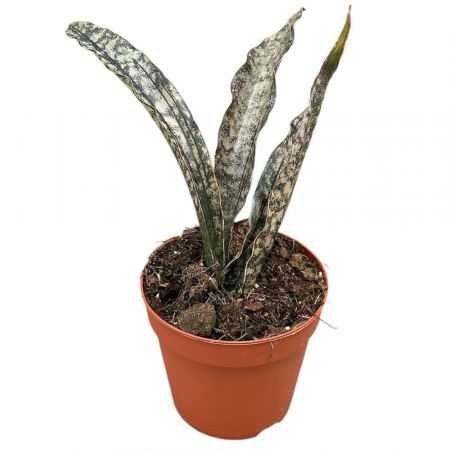
Sansevieria 'Marsha Anjani' is a remarkable Indonesian hybrid that has earned its place in the spotlight — quite literally, having won a Sansevieria competition in Indonesia. This semi-dwarf cultivar combines the best traits of two striking parent species, Sansevieria pearsonii and Sansevieria hallii, resulting in a plant that is both sculptural and elegant. Ted Lare Design & Build describes it as "a semi-dwarf variety with unique, fan-shaped leaves that have a curved blade-like look to them." The result is a compact, architectural specimen that brings a touch of exotic sophistication to any collection. For Sansevieria enthusiasts seeking something beyond the ordinary, 'Marsha Anjani' offers a distinctive silhouette that stands apart from the typical sword-leaved varieties.
🌏 Origins & Hybrid Heritage
Sansevieria 'Marsha Anjani' is an Indonesian hybrid, created through the crossing of two notable species. According to specialist sellers, the parentage is Sansevieria pearsonii × Sansevieria hallii — a combination that brings together two of the more unusual members of the Sansevieria genus. The first parent, S. pearsonii (Pearson's Snake Plant), is native to the drier regions of southern and tropical Africa, from South Africa through Namibia to Tanzania. LLIFLE describes it as "a stemless fibrous perennial leaf-succulent forming large colonies from a creeping rhizome" with "5-9 opposite very tough, sharply pointed, cylindrical leaves with a narrow groove on the inside." The second parent, S. hallii, is known in cultivation as the "Baseball Bat" Sansevieria due to the bat-like appearance of its emerging leaves. It was originally collected in East Zimbabwe in 1957 and is described by LLIFLE as having "1-3 per shoot, erect, recurved leaves, 60-90 cm long, cylindrical with a deep groove on the upper face, dark grey-green with numerous longitudinal lines." The hybrid 'Marsha Anjani' inherits characteristics from both parents: the structured, fan-shaped growth habit and the substantial, blade-like leaves that have made it a competition winner in its Indonesian homeland. Note: Modern botanical classification has reclassified Sansevieria into the genus Dracaena following molecular phylogenetic studies, though the name Sansevieria remains widely used in horticulture.
🍃 Foliage — Sculptural & Fan-Shaped
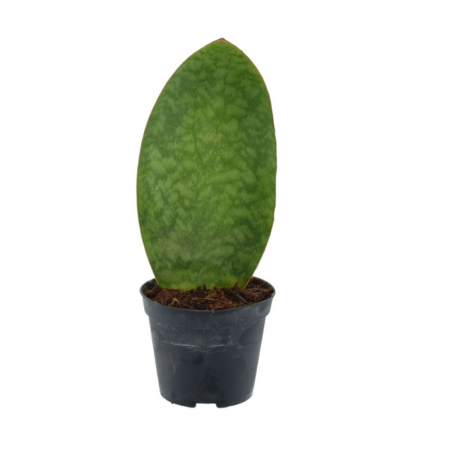
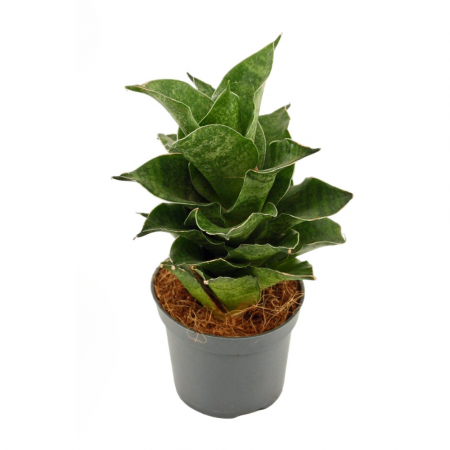
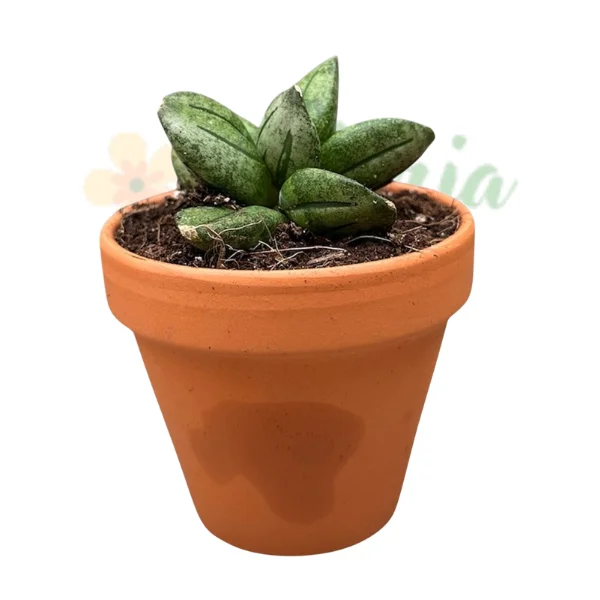
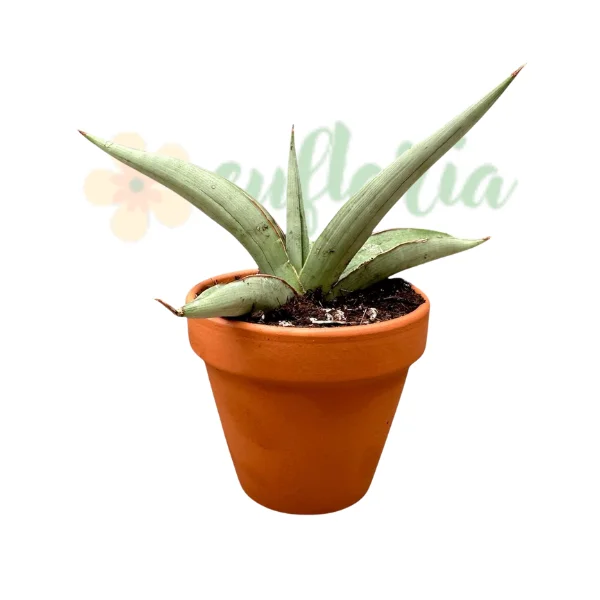
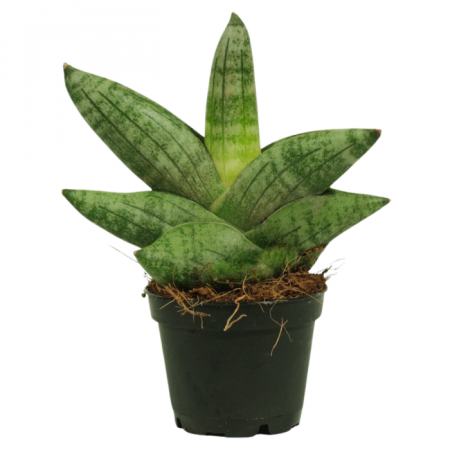
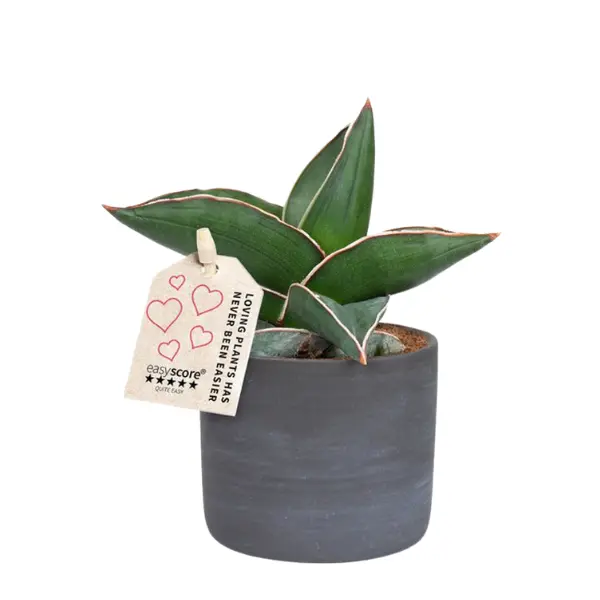
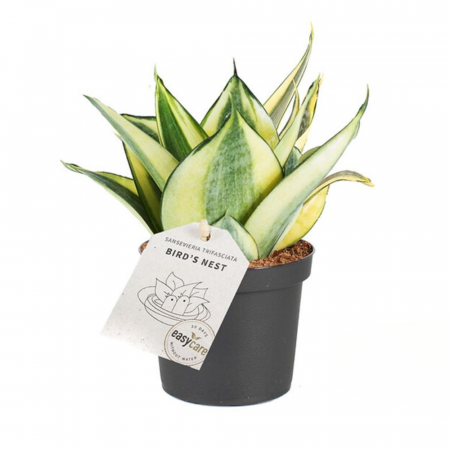
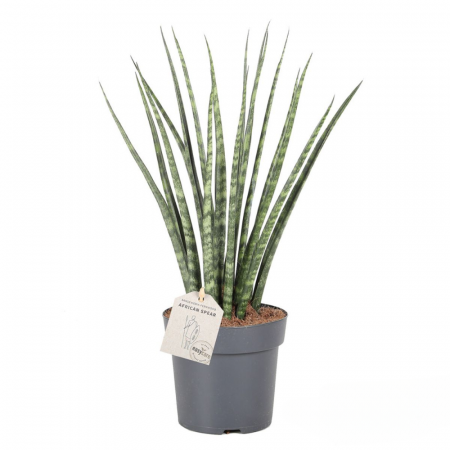
The defining feature of 'Marsha Anjani' is its distinctive foliage architecture. The leaves are long and narrow, growing in a unique fan-shaped arrangement that creates an elegant, almost sculptural appearance. Ted Lare describes the leaves as having "a curved blade-like look" — not the rigid, upright swords of typical Sansevierias, but something more graceful and flowing. The leaf colour features an attractive pattern of green tones, often with yellow or light margins that add contrast and visual interest. The pointed shape of the leaves gives it an elegant appearance that sets it apart from more common varieties. This semi-dwarf variety remains compact, typically reaching 20-25 cm in height and similar spread, making it ideal for tabletop displays, small spaces, and mixed succulent arrangements. The substantial, fleshy leaves reflect its hybrid heritage from the thick-leaved species pearsonii and hallii.
🌸 Flowers
Like all Sansevierias, 'Marsha Anjani' can produce flowers under optimal conditions, though flowering is uncommon in indoor cultivation. When they do appear, Sansevieria flowers are typically held in a dense inflorescence and emit a delicate, sweet fragrance. The flowers of the parent species are white tinged with pink or purple. For most growers, this plant is cultivated primarily for its striking architectural foliage rather than its blooms.
🌱 Growth Habit & Development
Growth habit is compact and fan-shaped, with leaves emerging from a central point to create a sculptural rosette. As a semi-dwarf variety, 'Marsha Anjani' remains relatively small compared to many Sansevieria species, making it well-suited to indoor cultivation where space is limited. The plant grows from rhizomes (underground stems) and will gradually produce offsets or "pups" around the base of the mother plant. Growth rate is slow to moderate — this is not a plant that will outgrow its pot quickly. Pacific Horticulture notes that Sansevierias in general "colonize a wide range of natural habitats in the tropics, from deeply shaded forest floor to rocks exposed to strong sun," reflecting their remarkable adaptability.
Care Requirements:
- Light: Sansevierias are famously adaptable to a wide range of light conditions. 'Marsha Anjani' will thrive in bright, indirect light, which is ideal for maintaining good colour and compact growth. However, it will also tolerate lower light conditions — Bloomscape notes that Sansevierias "can maintain in low light" though they grow best with more light. Ted Lare confirms: "These easy-care houseplants can withstand full sun and handle low light, although they will do best in indirect sunlight." Avoid prolonged direct midday sun, which can scorch the leaves, but morning sun is generally well-tolerated.
- Water: This is a drought-tolerant succulent that stores water in its thick leaves. Overwatering is the most common cause of problems. Bloomscape advises: "Water when the soil volume is 100% dry. Water thoroughly until it flows out of the drainage hole." Joyus Garden notes that watering frequency varies from "every 2-6 weeks, depending on humidity, light, time of year, and pot size." In winter, water even less frequently. Always err on the side of underwatering — these plants handle drought far better than wet feet.
- Soil: Fast-draining, gritty substrate is essential. Estabrook's recommends "a well-draining soil mix" consisting of regular potting mix with added perlite, sand, or pumice. Cactus and succulent mix works excellently. The roots must never sit in soggy soil, or root rot will quickly follow.
- Temperature: Bloomscape gives the range as "55-85°F" (13-29°C), noting that "they prefer warmer temperatures." Leafy Life suggests optimal temperatures between 21-32°C (70-90°F) but confirms they "can withstand temperatures as low as 10°C" (50°F). Protect from cold drafts, air conditioning vents, and temperatures below 10°C.
- Humidity: Average household humidity is perfectly adequate. Healthy Houseplants notes that Sansevieria "prefers lower humidity levels, thriving in 35 to 50% humidity, which is typical for most homes." No misting or humidity supplementation is needed — in fact, these plants prefer drier conditions.
- Feeding: These are not heavy feeders. Healthy Houseplants recommends fertilizing "twice a year, in early spring and early summer, with an all-purpose organic fertilizer." Urban Tropicals advises to "fertilize sparingly a few inches away from the base" and warns that "heavy salts in cheaper fertilizers will damage the roots." Avoid fertilizing in winter.
Botanical Info: Family: Asparagaceae (subfamily Nolinoideae) | Genus: Sansevieria (now included in Dracaena) | Hybrid: Sansevieria pearsonii × Sansevieria hallii | Cultivar: 'Marsha Anjani' | Origin: Indonesian hybrid | Common Names: Snake Plant, Mother-in-Law's Tongue (genus) | Type: Succulent Perennial from Rhizomes | Parent Native Range: Southern and Tropical Africa (S. pearsonii), East Zimbabwe (S. hallii) | Zone: USDA 10-12 (indoor cultivation in temperate climates) | Size: Semi-dwarf, approximately 20-25 cm height and width | Growth Rate: Slow to Moderate
Lungime: 10 cm
Greutate (kg): 1 Kg
Denumire: Sansevieria
Diametru: 8 cm
Cerințe lumină: Partial umbra
Tip plantă: Suculente
Utilizare: Interior
Tip suport: Ghiveci
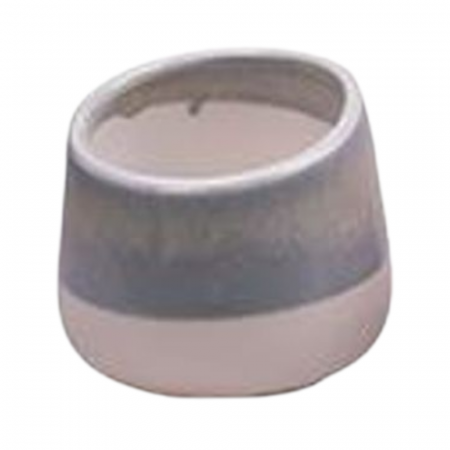
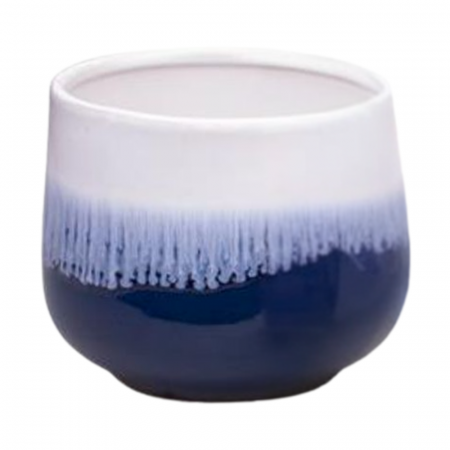
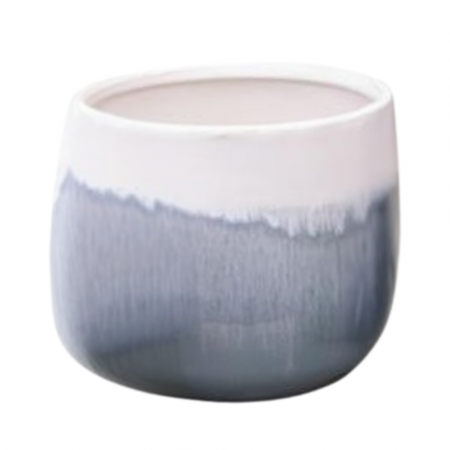
Material Suport: Ceramica
Is Sansevieria 'Marsha Anjani' toxic to cats and dogs?
Yes, Sansevieria 'Marsha Anjani' is toxic to cats, dogs, and other household pets. The ASPCA confirms that all Sansevieria species contain saponins, which can cause gastrointestinal symptoms including nausea, vomiting, diarrhea, and excessive drooling when ingested. While the toxicity is generally mild to moderate and rarely life-threatening, it causes significant discomfort. If your pet ingests any part of this plant, contact your veterinarian or animal poison control helpline immediately. For households with curious pets, consider pet-safe alternatives such as Hoya species, or place the plant well out of reach.
What are the parent species of Sansevieria 'Marsha Anjani'?
Sansevieria 'Marsha Anjani' is a hybrid of Sansevieria pearsonii and Sansevieria hallii. Sansevieria pearsonii (Pearson's Snake Plant) is native to the drier regions of southern and tropical Africa, known for its cylindrical, sharply pointed leaves growing from a creeping rhizome. Sansevieria hallii, commonly called the "Baseball Bat" Sansevieria, was originally collected in East Zimbabwe and is named for the bat-like appearance of its emerging leaves. The hybrid combines characteristics from both parents: substantial, fleshy leaves with the compact, fan-shaped growth habit that won it recognition in Indonesian Sansevieria competitions.
How often should I water Sansevieria 'Marsha Anjani'?
Water only when the soil is completely dry — typically every 2-6 weeks depending on your conditions. Bloomscape advises: "Water when the soil volume is 100% dry. Water thoroughly until it flows out of the drainage hole." Overwatering is the number one killer of Sansevierias, leading to root rot. These succulent plants store water in their thick leaves and handle drought far better than wet conditions. In winter, reduce watering frequency further as the plant's growth slows. When in doubt, wait longer between waterings. A moisture meter can help you determine when the soil has dried completely.
Can Sansevieria 'Marsha Anjani' grow in low light?
Yes, Sansevieria 'Marsha Anjani' tolerates low light conditions, though it will grow best in bright, indirect light. Ted Lare notes that Sansevierias "can withstand full sun and handle low light, although they will do best in indirect sunlight." In low light, the plant will survive but may grow more slowly and the colours may be less vibrant. Pacific Horticulture confirms that Sansevierias "colonize a wide range of natural habitats in the tropics, from deeply shaded forest floor to rocks exposed to strong sun" — demonstrating their remarkable adaptability. For best results, provide bright indirect light, but this plant is forgiving if conditions are less than ideal.
Why did Sansevieria 'Marsha Anjani' win a competition?
Sansevieria 'Marsha Anjani' won a Sansevieria competition in Indonesia, where the breeding and collecting of rare snake plant hybrids has become a passionate horticultural pursuit. The cultivar stood out for its unique combination of traits: the fan-shaped leaf arrangement, the curved, blade-like foliage, the compact semi-dwarf form, and the attractive coloration with light margins. Indonesian hybridizers have created numerous award-winning Sansevieria cultivars by crossing unusual species, and 'Marsha Anjani' — with its pearsonii × hallii parentage — represents this tradition of innovative breeding that produces forms quite distinct from typical commercial snake plants.
Is Sansevieria now classified as Dracaena?
Yes, molecular phylogenetic studies have led botanists to reclassify Sansevieria as part of the genus Dracaena. Pacific Horticulture explains that "due to advancements in genetic research, botanists have reclassified Sansevieria as Dracaena, a genus native mostly to tropical Africa and southern Asia." However, the name Sansevieria remains widely used in horticulture, nurseries, and among collectors — and most people still refer to these plants as Sansevierias or snake plants. You may encounter this plant labelled as either Sansevieria 'Marsha Anjani' or Dracaena 'Marsha Anjani' depending on the source. The care requirements remain identical regardless of which name is used.
Recommendations