EN/
EN/ Romana
Philodendron 'Pink Princess' Ø6cm
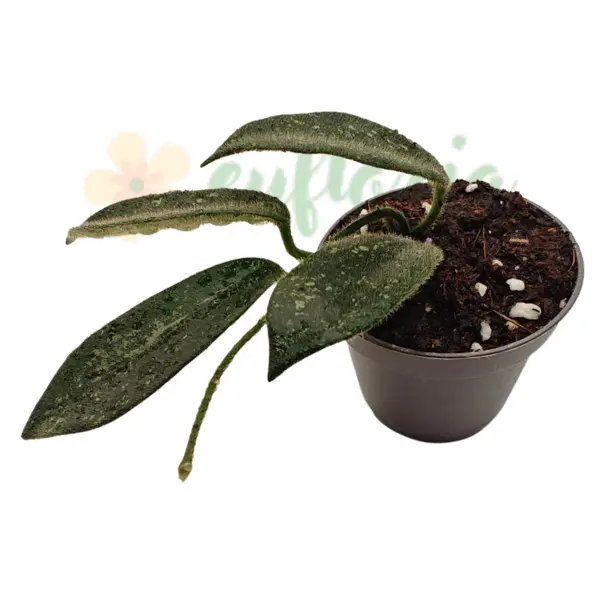
![Philodendron 'Pink Princess' — variegated pink leaves on burgundy dark green, Ø6cm pot Eufloria [0]](https://gomagcdn.ro/domains2/eufloria.ro/files/product/medium/philodendron-pink-princess-741769.png "Philodendron 'Pink Princess' — variegated pink leaves on burgundy dark green, Ø6cm pot Eufloria [0]")
![Philodendron 'Pink Princess' — variegated pink leaves on burgundy dark green, Ø6cm pot Eufloria [1]](https://gomagcdn.ro/domains2/eufloria.ro/files/product/medium/planta-naturala-de-interior-philodendron-pink-princess-d6-153559.png "Philodendron 'Pink Princess' — variegated pink leaves on burgundy dark green, Ø6cm pot Eufloria [1]")
![Philodendron 'Pink Princess' — variegated pink leaves on burgundy dark green, Ø6cm pot Eufloria [1]](https://gomagcdn.ro/domains2/eufloria.ro/files/product/original/philodendron-pink-princess-741769.png "Philodendron 'Pink Princess' — variegated pink leaves on burgundy dark green, Ø6cm pot Eufloria [1]")
![Philodendron 'Pink Princess' — variegated pink leaves on burgundy dark green, Ø6cm pot Eufloria [2]](https://gomagcdn.ro/domains2/eufloria.ro/files/product/original/planta-naturala-de-interior-philodendron-pink-princess-d6-153559.png "Philodendron 'Pink Princess' — variegated pink leaves on burgundy dark green, Ø6cm pot Eufloria [2]")
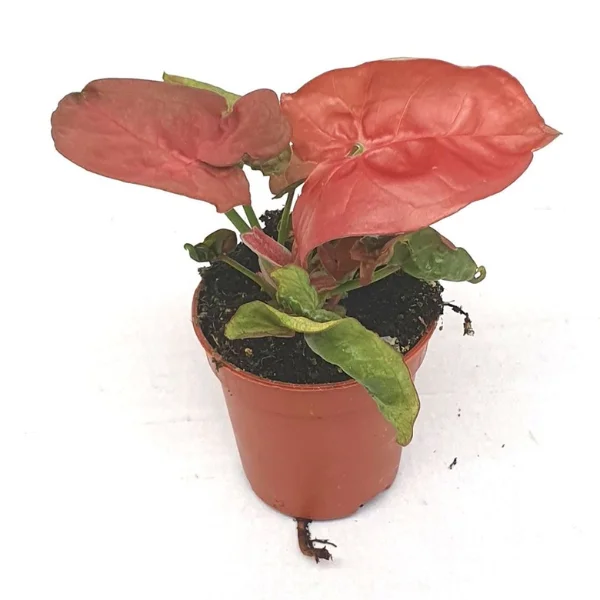
Philodendron 'Pink Princess' — PPP, iconic hybrid cultivar with unique variegated leaves in candy pink on burgundy dark green. Climbing plant for moss pole. Bright indirect light essential for variegation. Humidity 60-80%, 18-27°C. Collector plant with extraordinary visual statement.
Approx height (including pot): 15 cm
Country of origin: Netherlands
Pot diameter: 6 cm
- Description
- Characteristics
- Reviews (0)
- FAQ
🌿 Philodendron 'Pink Princess' — the pink princess of passionate collectors
Philodendron 'Pink Princess', affectionately known as "PPP" in the enthusiast community, is undoubtedly one of the most sought-after and coveted plants in the entire botanical world. With its variegated leaves in spectacular shades of candy pink, dark green and burgundy, this extraordinary plant transforms every new leaf appearance into an emotional event — because you never know what pink pattern the plant will reveal this time.
Its variegation is completely unique — no two leaves are identical, each bearing a personal pink pattern on a dark green background with metallic burgundy reflections. Some leaves appear almost completely pink, others have just small splashes, and still others bear half pink and half green, creating the "half moon" effect extremely appreciated by collectors. This unpredictability makes each plant a unique piece of botanical collection.
Philodendron 'Pink Princess' is a moderately demanding climbing plant that rewards careful care with its magical foliage. As the plant matures and receives sufficient light, the pink variegation intensifies, and the plant becomes increasingly spectacular. It's an exciting cultivation journey, a unique opportunity to have one of the most famous plants in the world in your own home.
🌍 Botanical origin and history
Philodendron 'Pink Princess' is a hybrid cultivar developed in American horticultural laboratories in the 1970s, resulting from complex crosses between Philodendron erubescens and other Philodendrons from Central and South America. The official name of the cultivar includes "Pink Princess", a reference to its spectacular pink variegation.
The Araceae family, to which the Philodendron genus belongs, comprises over 3,700 species distributed predominantly in tropical areas. The Philodendron genus includes approximately 500 species native to Central and South America. The name "Philodendron" derives from ancient Greek — "philo" (love) and "dendron" (tree).
The characteristic 'Pink Princess' variegation is a chimerism — a rare genetic mutation in which the plant's cells produce pink pigments (anthocyanins) in the absence of chlorophyll, creating the distinctive pink on green pattern. This trait is unstable and can regress — meaning the plant can lose the variegation if it doesn't receive optimal conditions, or can generate completely pink leaves but without chlorophyll which do not survive long.
🌱 The magical pink foliage
The foliage of Philodendron 'Pink Princess' is the absolute main attraction. The leaves are medium-sized, 15-25 cm long, elongated heart-shaped, with slightly leathery texture and glossy surface. The background is an intense dark green, almost burgundy in certain areas, and on this background unfolds the unique pink pattern of each leaf.
The pink variegation can appear in various forms: fine scattered splashes (sugar pattern), concentrated large spots (bloom pattern), entire pink sector (half moon), or marbled patterns (marbling). The pink is intense, candy-like, with slight silver or purple tones, and the contrast with the dark green is absolutely spectacular. The glossy surface reflects light in a way that intensifies chromatic contrasts.
It is important to mention that variegation is unstable — it cannot be completely controlled. To stimulate pink variegation development, the plant needs very good indirect light. New leaves may also appear with more green and less pink if the plant does not receive sufficient light. Strategic cutting of sections without variegation can stimulate the plant to produce pinker leaves.
🌸 The flowers
Philodendron 'Pink Princess' blooms very rarely in indoor culture, only on very mature plants. The flowers are typical of the Araceae family — a cylindrical spadix of small flowers, wrapped in a spathe (modified leaf) of cream-greenish or slightly reddish color. They are not fragrant and appear only under optimal conditions.
For collectors, the absence of flowers is unimportant — the unique beauty of the variegated foliage completely compensates. All the plant's energy is directed towards the development of leaves with increasingly spectacular variegation.
Pollination in the wild is carried out by specialized beetles, but this system does not reproduce in apartment culture. Reproduction is exclusively by cuttings to preserve the variegation pattern.
🌱 Growth habit and care
Philodendron 'Pink Princess' is a moderately demanding plant that requires some experience to obtain the best results. Growth is moderate, with new leaves every 4-6 weeks. The plant is a climber and BENEFITS from a moss pole for developing larger leaves and more intense variegation.
Essential requirements for optimal variegation:
- Light: BRIGHT indirect — the key to intense variegation. East or south-east windowsill. Light too weak makes leaves appear predominantly green, without pink. Avoid direct sun which burns the delicate leaves.
- Temperature: 18-27°C optimal; does not tolerate below 13°C.
- Watering: moderate — when the top 3-4 cm are dry. Every 7-10 days in summer, every 10-14 days in winter.
- Humidity: 60-80% ideal — humidifier recommended.
- Substrate: well-drained, airy — universal substrate + perlite (25%) + pine bark (15%).
- Support: moss pole essential for optimal results.
- Fertilization: every 3-4 weeks during growing season with balanced fertilizer diluted by half.
- Pruning: to stimulate variegation, cut completely green portions above a node with variegation.
🌿 Why choose Philodendron 'Pink Princess'
It is the desired choice of every rare and variegated plant collector. Its unique, incredibly spectacular pink variegation transforms the plant into a statement element that attracts immediate admiration. Perfect for enthusiasts who want to have one of the most famous plants in the world in their collection and who accept the challenge of maintaining optimal variegation. An exciting cultivation experience with extraordinary visual satisfactions.
Lungime: 15 cm
Greutate (kg): 0.25 Kg
Denumire: Philodendron
Diametru: 6 cm
Cerințe lumină: Partial umbra
Tip plantă: Decorative
Utilizare: Interior
Tip suport: Ghiveci
Material Suport: Plastic
Why does Pink Princess have pink leaves?
How to stimulate more pink variegation?
Why do new leaves appear completely green?
Is Philodendron Pink Princess toxic?
How to propagate Pink Princess?
Ai nevoie și de un ghiveci decorativ?