EN/
EN/ Romana
Hoya 'Zambales' Ø6cm
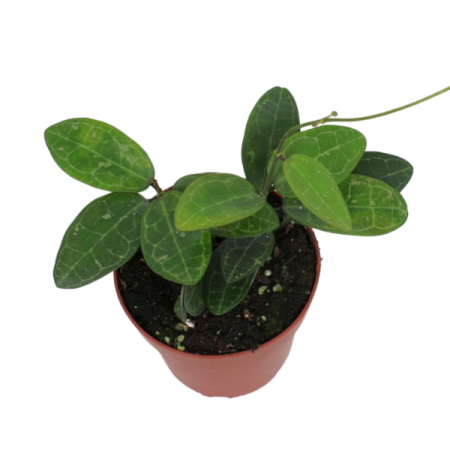
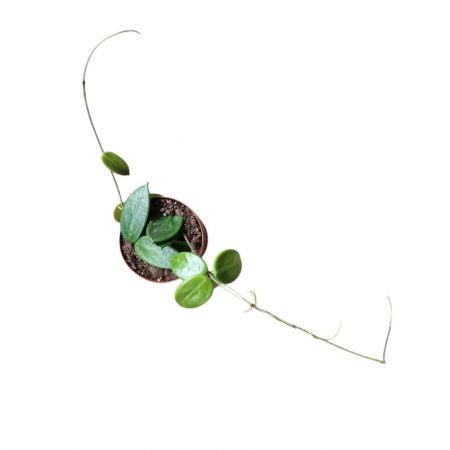
![Hoya Zambales with small fleshy dark green leaves in pot [1]](https://gomagcdn.ro/domains2/eufloria.ro/files/product/original/hoya-zambales-d6cm-605664.jpg "Hoya Zambales with small fleshy dark green leaves in pot [1]")
Hoya Zambales is a rare and enigmatic species from the mountains of Zambales Province, Philippines, with small fleshy deep green glossy leaves. Its white-pink flowers with a red corona emit a sweet honey fragrance. A compact montane epiphyte tolerant of cooler temperatures, a rare botanical jewel for collectors.
Approx height (including pot): 10 cm
Flowering state: No flowers
Country of origin: Netherlands
Pot diameter: 6 cm
- Description
- Characteristics
- Reviews (0)
- FAQ
🌿 Hoya Zambales — The Hidden Treasure of Philippine Mountains
Hoya Zambales is a rare and enigmatic species collected from the mountains of Zambales Province in western Luzon, the Philippines. This Hoya remains one of the most mysterious species in the genus, with a taxonomic identity still not fully defined, which confers upon it a special allure for collectors who value botanical rarity and exclusivity above all else.
Discovered by botanical explorers who traversed the montane forests of Zambales — a province renowned for its extraordinary biodiversity and unique ophiolite geological formations — this species grows as an epiphyte on tree trunks at altitudes of 500 to 1,500 metres, in an environment defined by persistent fog, abundant rainfall, and moderate temperatures that create ideal conditions for epiphytic growth.
For Hoya collectors, Zambales represents an exceptional acquisition — a species that combines extreme rarity with distinctive decorative appeal and surprising adaptability to indoor conditions. Its small, fleshy, elegantly contoured leaves, alongside fragrant flowers, make this plant a small botanical treasure that few collectors have the privilege of owning in their private collections.
Its adaptability to cultivation conditions is remarkable for such a rare species. Tolerant of temperature and humidity variations, Hoya Zambales integrates easily into any collection of tropical houseplants, requiring only attention to substrate drainage and light levels to thrive and eventually reward its caretaker with beautiful, fragrant blooms.
🌍 Origin and Botanical History
Hoya Zambales is listed in the horticultural trade under the name Hoya sp. Zambales, the “sp.” designation indicating that the species has not yet been formally described or that its exact identity remains under discussion among taxonomists. It belongs to the family Apocynaceae, subfamily Asclepiadoideae, genus Hoya, which comprises over 500 species distributed from tropical Asia to Oceania.
Zambales Province is located on the western coast of Luzon, the largest island in the Philippine archipelago. The Zambales Mountains, which dominate the provincial landscape, are formed predominantly from ophiolite — ultramafic rocks of oceanic origin — creating soils with unique chemical properties, rich in magnesium and iron, that support a specialised endemic flora found nowhere else on Earth.
The montane forests of Zambales, though threatened by deforestation and mining operations, still harbour scientifically undescribed species, and the genus Hoya is particularly well represented in the Philippines, with over 100 endemic species. This exceptional diversity makes the Philippines the global centre of Hoya biodiversity, a treasure trove for botanical exploration.
Introduction into cultivation was accomplished through specialised collectors who obtained plant material from local populations or botanical expeditions. Specimens available in the international trade derive from vegetative propagation, ensuring conservation of the original genotype without impacting wild populations.
🌱 The Foliage
The leaves of Hoya Zambales are small to medium, elliptic to oval in shape, measuring 4 to 8 centimetres in length and 2 to 4 centimetres in width. The leaf surface is fleshy, with a subtle waxy texture and a moderate sheen that reflects light in a pleasant manner, giving the foliage a healthy, vital appearance throughout the year.
The dominant colour is deep green, with a lighter midrib and fine lateral veins forming a discreet reticulate pattern. In specimens receiving bright light, leaves may display subtle bronze or reddish nuances along the margins, adding a touch of additional colour to the compact foliage. New leaves unfurl in light green and progressively darken as they mature and the cuticle thickens.
Leaf thickness is moderate, approximately 2 millimetres, sufficient to retain water and provide resilience during short drought periods. The petiole is short (5 to 8 mm), robust, and leaves are arranged oppositely on the stem, creating a pleasant symmetrical effect along the branches. The leaf margin is entire, slightly undulate, with a gently pointed apex.
The overall foliage appearance is compact and elegant, without extravagance, but with a consistent decorative quality that makes this Hoya a pleasant presence in any plant arrangement. The fleshy texture and discreet sheen of the leaves look attractive in every season, regardless of whether the plant is in flower or in its vegetative growth phase.
🌸 The Flowers
The flowers of Hoya Zambales are a pleasant surprise for collectors, appearing in small to medium umbels of 8 to 15 flowers on persistent peduncles at the axils of mature leaves along established stems. Each flower measures approximately 1 to 1.5 centimetres in diameter, with five creamy white to pale pink petals, slightly reflexed, possessing the waxy texture characteristic of all Hoya species.
The central corona is pink to light red, creating a delicate contrast with the lighter petals that exemplifies the refined beauty typical of Philippine Hoya species. The fragrance is sweet and pleasant, with floral and honey notes, moderate in intensity but sufficiently pronounced to be noticed near the plant, especially during the evening hours. Translucid nectar produced by the flowers adds a glassy visual effect to the umbels.
Flowering occurs predominantly during the warm season, once the plant reaches maturity (2 to 3 years). Floral peduncles are persistent and must never be cut. A mature plant can produce multiple umbels per season, creating an elegant display that complements the compact foliage beautifully.
As with all Hoya species, stimulating flowering requires bright indirect light, a slight nocturnal cooling during the cold season, and avoiding moving the plant during the flower bud formation period to prevent bud drop.
🌱 Growth Habit and Development
Hoya Zambales displays a compact twining habit, with thin but resilient stems that coil around supports or hang gracefully from elevated planters. Growth rate is moderate, adding 20 to 40 centimetres per year under good conditions. Natural branching is abundant, creating a full, attractive plant in a relatively short time without requiring any pruning intervention.
As a montane epiphyte, it prefers a very well-drained substrate with good air circulation around the roots. Adventitious roots form at nodes, allowing anchoring to moss or coconut fibre supports. Hanging planters or moss pole mounting are ideal presentation forms that showcase the plant’s natural growth habit to best effect.
Its montane origin grants it tolerance for cooler nocturnal temperatures (down to 14°C), making it well-suited for European apartments where tropical heat is not maintained year-round. Reproductive maturity is reached after 2 to 3 years of dedicated cultivation.
Like all Hoya plants, 'Zambales' has a trailing habit and is among the most decorative trailing plants for hanging pots, while also being easy-care.
- Light: Bright to moderate indirect light, ideally from an east or west-facing window. Avoid direct summer sun which can scorch the delicate leaves.
- Temperature: Optimal 18–27°C. Tolerates down to 14°C. Cooler nights (15–18°C) stimulate flowering initiation.
- Watering: Allow substrate to dry completely between waterings. In winter, once every 10–14 days. Use room-temperature water.
- Humidity: 50–70% ideal. Adapts to 45%. A humidifier or pebble tray helps maintain optimal levels.
- Substrate: Mix of pine bark (40%), perlite (30%), coconut coir (20%), charcoal (10%). Rapid drainage essential.
- Fertilising: Balanced liquid fertiliser at half strength, once monthly April–September.
- Propagation: By stem cuttings with 2 nodes, in water or moist sphagnum at 22–25°C. Rooting takes 3–5 weeks.
Lungime: 10 cm
Greutate (kg): 0.25 Kg
Denumire: Hoya
Diametru: 6 cm
Cerințe lumină: Partial umbra
Tip plantă: Decorative
Utilizare: Interior
Tip suport: Ghiveci
Material Suport: Plastic
Where does Hoya 'Zambales' come from?
How do you water Hoya 'Zambales'?
Is Hoya 'Zambales' toxic to pets?
What light does Hoya 'Zambales' need?
How is Hoya 'Zambales' propagated?
Recommendations

Ai nevoie și de un ghiveci decorativ?