EN/
EN/ Romana
Hoya Elliptica Ø12cm
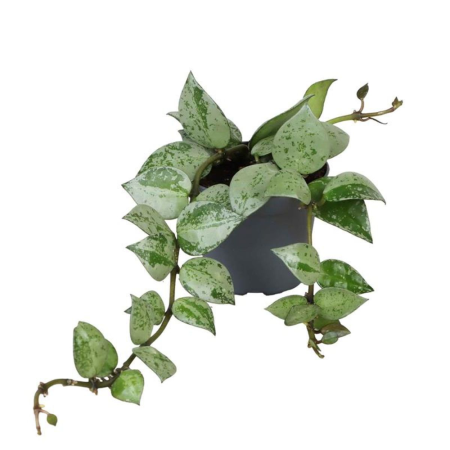
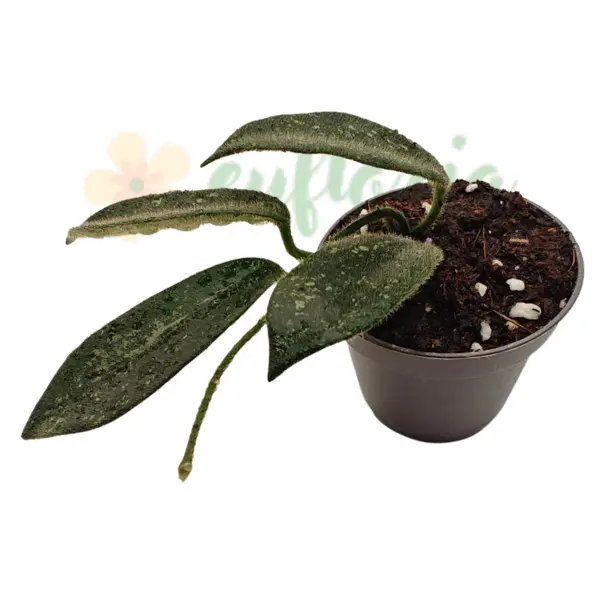
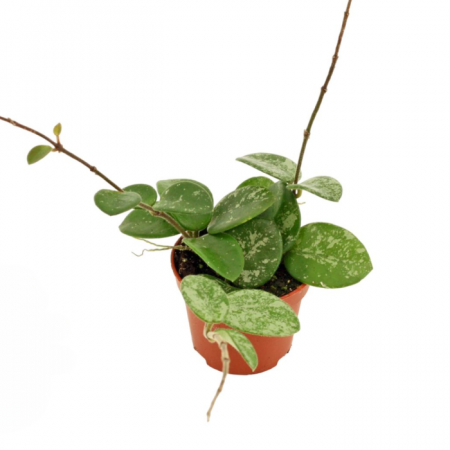
![Hoya Elliptica — rare plant with waxy leaves and prominent white veins, turtle shell pattern [0]](https://gomagcdn.ro/domains2/eufloria.ro/files/product/medium/hoya-elliptica-178620.png "Hoya Elliptica — rare plant with waxy leaves and prominent white veins, turtle shell pattern [0]")
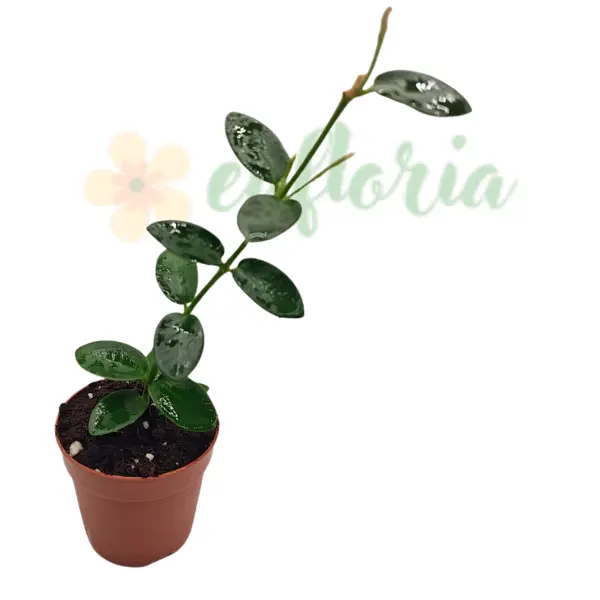
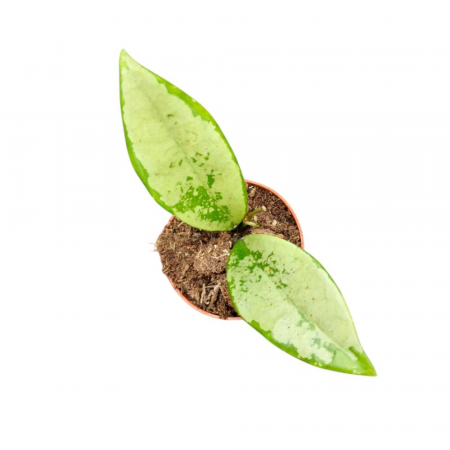
![Hoya Elliptica — rare plant with waxy leaves and prominent white veins, turtle shell pattern [1]](https://gomagcdn.ro/domains2/eufloria.ro/files/product/medium/hoya-elliptica-219107.png "Hoya Elliptica — rare plant with waxy leaves and prominent white veins, turtle shell pattern [1]")
![Hoya Elliptica — rare plant with waxy leaves and prominent white veins, turtle shell pattern [1]](https://gomagcdn.ro/domains2/eufloria.ro/files/product/original/hoya-elliptica-178620.png "Hoya Elliptica — rare plant with waxy leaves and prominent white veins, turtle shell pattern [1]")
![Hoya Elliptica — rare plant with waxy leaves and prominent white veins, turtle shell pattern [2]](https://gomagcdn.ro/domains2/eufloria.ro/files/product/original/hoya-elliptica-219107.png "Hoya Elliptica — rare plant with waxy leaves and prominent white veins, turtle shell pattern [2]")
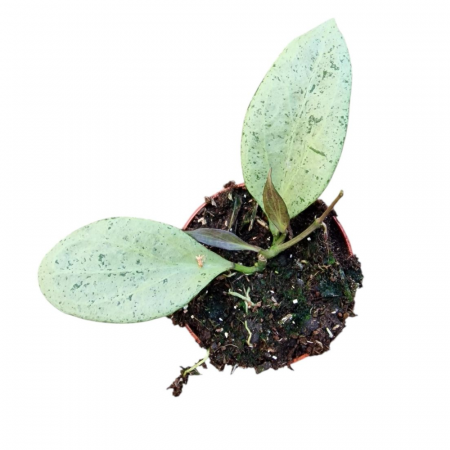
Hoya Elliptica is a rare Hoya species from the Apocynaceae family, native to the tropical forests of Southeast Asia, celebrated for its large, waxy leaves with prominent white veins that create a unique pattern resembling a turtle shell. Its fragrant flowers, clustered in spherical creamy-white umbels with a pink corona, emit a sweet vanilla scent that intensifies in the evening. A collector’s plant with strong personality, suitable for both hanging pots and moss pole supports.
Approx height (including pot): 20 cm
Flowering state: No flowers
Pot diameter: 12 cm
- Description
- Characteristics
- Reviews (0)
- FAQ
🌿 Hoya Elliptica — The Porcelain-Veined Jewel from Southeast Asian Jungles
Some plants captivate through a single spectacular trait, while others fascinate through the quiet harmony of every detail. Hoya elliptica belongs to the latter category — a species that does not demand attention but invites you to discover it gradually, leaf by leaf, vein by vein. Each leaf is a small masterpiece of natural art: oval, waxy surfaces in a rich, deep green, traversed by prominent white veins that trace an almost geometric pattern across the leaf blade, often compared to a turtle shell or the gothic stained-glass windows of a medieval cathedral.
Among Hoya collectors, elliptica holds a special place. It is neither the rarest nor the most demanding, yet it is one of the most elegant and distinctive species in the entire genus. Its leaves are unmistakable — once you have seen that pattern of white veins against a dark green background, you will never confuse it with any other species. It is a plant that brings an air of tropical refinement to any indoor space, whether placed on a sunny shelf, in an open terrarium, or allowed to develop its trailing vines from a hanging planter.
Hoya elliptica is an excellent choice for collectors who desire a plant with strong personality that does not require extreme care. With the right light and a balanced watering schedule, this Hoya will reward the grower’s patience with steady growth and, under optimal conditions, with fragrant inflorescences that transform any room into a corner of a tropical garden.
🌍 Origin and Botanical History
Hoya elliptica belongs to the family Apocynaceae (subfamily Asclepiadoideae) and was first described by the botanist Joseph Dalton Hooker in his monumental work “Flora of British India” published in 1883. The specific epithet “elliptica” derives from Latin and refers to the characteristic elliptical shape of the leaves — oval, slightly elongated, with symmetrically rounded base and apex. Hooker collected the first specimens from the Malay region, and since then the species has been identified across a vast range throughout tropical Southeast Asia.
The natural distribution of Hoya elliptica covers an extensive geographical area: peninsular Malaysia, Borneo, Sumatra, Java, Thailand, and the Philippines. In its natural habitat, the plant grows as an epiphyte in humid tropical lowland and montane forests, at elevations ranging from 100 to 1,200 metres. It clings to the trunks and branches of old-growth trees, using adventitious roots to anchor itself to the moist bark, benefiting from light filtered through the dense forest canopy. Annual precipitation in these regions frequently exceeds 2,500 mm, and the mean annual temperature remains between 24–28°C, with minimal seasonal variation.
Taxonomically, Hoya elliptica belongs to section Acanthostemma of the genus Hoya, alongside other species with large leaves and prominent venation. An interesting detail: in the horticultural trade, Hoya elliptica is sometimes confused with Hoya latifolia or Hoya macrophylla, all three having large, visibly veined leaves. However, elliptica is distinguished by its more rounded leaf shape, more pronounced venation, and waxier leaf blade texture. According to the World Checklist of Selected Plant Families (WCSP) maintained by Royal Botanic Gardens Kew, Hoya elliptica is an accepted species with limited taxonomic synonyms, confirming the stability of its botanical classification.
🌱 The Foliage — Exceptional Botanical Architecture
The leaves are, without question, the primary attraction of Hoya elliptica. Each leaf has an elliptical to nearly round shape, with impressive dimensions for the Hoya genus: between 6 and 12 cm in length and 4–8 cm in width at maturity. The texture is waxy, thick, and succulent — typical of the Hoya genus — but what makes elliptica truly special is the network of veins that traverses the entire surface of the leaf blade.
The veins are a gleaming silvery-white, strongly raised and visible on both the upper and lower surfaces of the leaf. The primary vein (midrib) is straight and prominent, and from it spring parallel secondary veins that arch elegantly toward the leaf margin, creating a regular, almost hypnotic pattern. This natural design has earned the plant numerous popular nicknames: “turtle shell Hoya,” “nerve plant Hoya,” or, in Asian collector communities, “silver vein Hoya.”
The base colour of the leaves varies between dark green and medium green, depending on the amount of light received. Specimens grown in bright indirect light develop a more intense, deeper green, while those grown in partial shade display a lighter, almost emerald green. The leaf surface has a natural, waxy sheen that reflects light in a subtle, elegant manner. To the touch, the leaves are surprisingly thick and solid — an adaptation to the epiphytic habitat, where the capacity to store water in leaf tissues is essential for survival during drier periods.
A detail worth mentioning: young leaves initially emerge with a slightly bronzed or reddish tinge, especially along the veins, and gradually turn green as they mature. This chromatic transition adds a dynamic element to the collection — the plant looks subtly different during each phase of active growth.
🌸 The Flowers — Fragrant Stars of Tropical Wax
Like all Hoya species, elliptica produces spectacular flowers grouped in spherical or hemispherical umbels. Each umbel contains between 15 and 30 individual flowers, and the total diameter of the inflorescence can reach 5–7 cm. The individual flowers are small (approximately 10–15 mm in diameter) but perfect in their five-petalled star shape — the classic structure of Hoya flowers that has earned them the universal nickname “wax flowers.”
The flower colours are delicate and refined: the petals are creamy-white to pale pink, with an inner corona of deep pink to burgundy-red. The contrast between the light petals and the darker corona creates a remarkable visual effect, amplified by the waxy, glossy texture that makes the flowers appear almost artificial. Each flower produces tiny droplets of sweet nectar that glisten like miniature jewels under natural light.
The fragrance of Hoya elliptica flowers is among the most pleasant in the genus: a sweet, floral blend with notes of vanilla and honey that intensifies significantly during the evening hours and throughout the night. This scent emission pattern is an adaptation to the plant’s natural pollinators — nocturnal moths of the family Sphingidae — which are attracted by the sweet scent during their crepuscular flights. In an apartment, the fragrance is strong enough to be detected 1–2 metres from the plant, without being overwhelming.
Flowering occurs predominantly in spring and summer, although under indoor cultivation with constant temperatures, the plant may produce flowers at other times of the year as well. A crucial aspect: the floral peduncles (spurs) are permanent and should never be cut after the flowers wilt — new flowers will emerge from the same peduncle in subsequent seasons. A mature, well-cared-for plant can simultaneously produce 3–5 umbels, transforming the pot into a truly magical floral spectacle.
🌱 Growth Habit and Complete Care Guide
Hoya elliptica is an epiphytic liana with moderate to slow growth. Under optimal indoor cultivation conditions, the plant develops new vines at a rate of approximately 15–25 cm per year, placing it in the medium-growth Hoya category. Its habit is predominantly trailing — the vines elongate naturally and arch under the weight of the large, waxy leaves, making the plant ideal for both hanging pots and trellis or moss pole supports.
Adventitious roots appear frequently along the vines, especially under high humidity conditions, and can be guided onto a moss support to create a climbing effect. Compared to other popular species in the genus, Hoya elliptica has a vigour similar to Hoya carnosa but produces significantly larger and heavier leaves, giving it a more imposing appearance even at smaller overall plant sizes.
Here are the detailed care requirements for Hoya elliptica:
- Light: Medium to bright indirect light. An east- or west-facing window is ideal. The plant tolerates lower indirect light, but growth will be slower and flowering less likely. Avoid direct midday summer sun, which can scorch the leaves. In insufficient light conditions, the veins become less visible and the leaves lose colour intensity.
- Temperature: Optimal range 18–28°C. Minimum tolerated temperature for short periods: 12°C. Day/night temperature differentials of 5–8°C stimulate flowering. Avoid cold draughts and placement near air conditioning units.
- Watering: Allow the substrate to dry 70–80% between waterings. During the warm season (April–September): water every 7–10 days. In winter: every 14–21 days. Use room-temperature water, preferably filtered or left to settle for 24 hours. Never let the plant sit in stagnant water in the saucer.
- Humidity: Optimum 50–70%. The plant adapts to lower humidity (40%), but growth is slower. A humidifier or occasional leaf misting helps, especially in winter when indoor air is dry due to central heating.
- Substrate: Airy, well-draining mix: 40% pine bark (medium fraction 8–15 mm), 25% perlite, 20% sphagnum moss, 10% horticultural charcoal, 5% vermiculite. Optimal pH: 5.5–6.5. A substrate that is too compact or dense will cause root rot.
- Fertilisation: Balanced liquid fertiliser (NPK 20-20-20) diluted to half the recommended concentration, once every 2–3 weeks during the growing season (April–September). Cease fertilisation in winter. Additionally, a phosphorus-rich fertiliser (NPK 10-30-20) applied 2–3 times in spring can stimulate flowering.
- Propagation: Via tip cuttings with 2–3 nodes, planted in moist substrate (perlite + sphagnum 1:1) or by air layering. Rooting takes 4–6 weeks at 22–25°C and high humidity (70–80%). Water propagation is possible but less effective for this species.
Lungime: 15 cm
Greutate (kg): 0.5 Kg
Denumire: Hoya
Diametru: 12 cm
Cerințe lumină: Lumina indirectă
Tip plantă: Plantă agățătoare
Utilizare: Interior
Tip suport: Ghiveci
Material Suport: Plastic
How often should I water Hoya elliptica?
Is Hoya elliptica toxic to cats and dogs?
What is the best substrate for Hoya elliptica?
When does Hoya elliptica bloom indoors?
How can I propagate Hoya elliptica?
Ai nevoie și de un ghiveci decorativ?