EN/
EN/ Romana
Hoya sp. Tanggamus 'Black Margin'
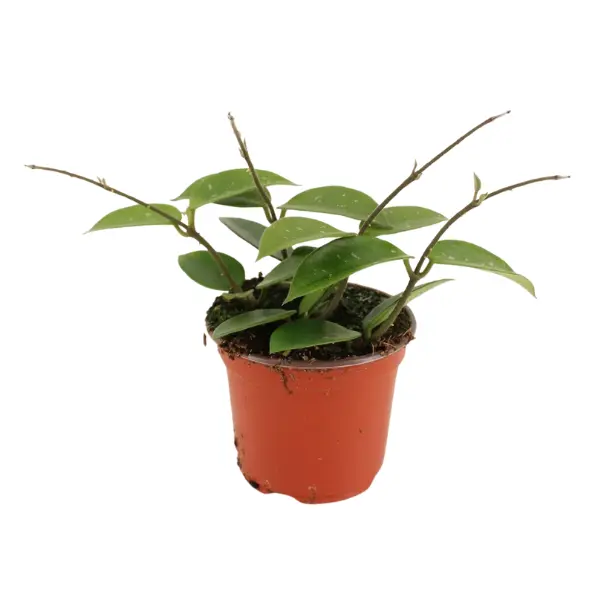
![Hoya sp. Tanggamus — leaves with black margins, Eufloria [0]](https://gomagcdn.ro/domains2/eufloria.ro/files/product/medium/hoya-insularis-copie-849905.webp "Hoya sp. Tanggamus — leaves with black margins, Eufloria [0]")
![Hoya sp. Tanggamus — leaves with black margins, Eufloria [1]](https://gomagcdn.ro/domains2/eufloria.ro/files/product/medium/hoya-insularis-copie-000348.webp "Hoya sp. Tanggamus — leaves with black margins, Eufloria [1]")
![Hoya sp. Tanggamus — leaves with black margins, Eufloria [1]](https://gomagcdn.ro/domains2/eufloria.ro/files/product/original/hoya-insularis-copie-849905.webp "Hoya sp. Tanggamus — leaves with black margins, Eufloria [1]")
![Hoya sp. Tanggamus — leaves with black margins, Eufloria [2]](https://gomagcdn.ro/domains2/eufloria.ro/files/product/original/hoya-insularis-copie-000348.webp "Hoya sp. Tanggamus — leaves with black margins, Eufloria [2]")
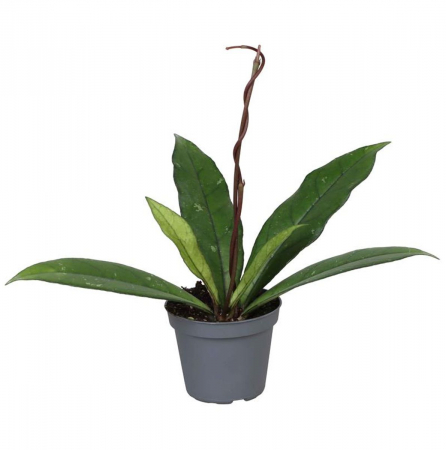
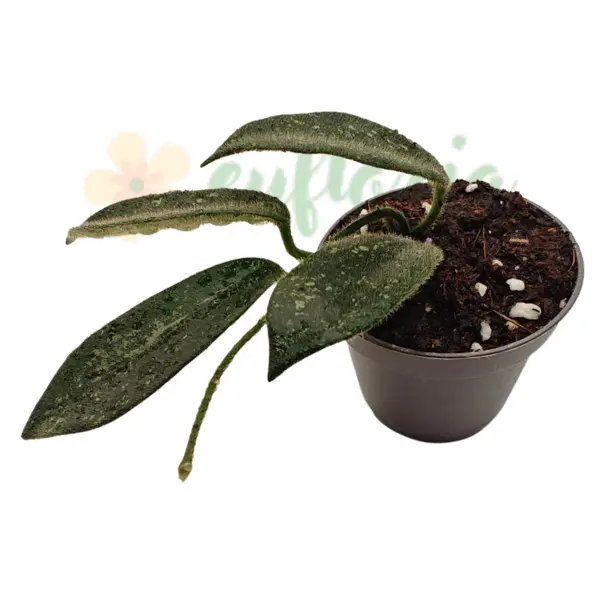
Hoya sp. Tanggamus 'Black Margin' is a rare and still formally undescribed species from the Apocynaceae family, collected from the montane forests of the Tanggamus region in southern Sumatra, Indonesia. It is distinguished by oval, waxy leaves of an intense green, outlined by a spectacular black-burgundy margin that deepens under strong indirect light. A fascinating challenge for Hoya collectors, with remarkable decorative potential and a distinctive botanical status.
Flowering state: No flowers
Country of origin: Indonesia
Pot diameter: (no pot)
Nodes: 1-2
- Description
- Characteristics
- Reviews (0)
- FAQ
🌿 The Dark Margins of Sumatra — An Unnamed Hoya Bearing the Jungle's Signature
Hoya sp. Tanggamus 'Black Margin' is one of those botanical discoveries that remind us the world of tropical plants is far from being fully mapped. Collected from the montane forests of the Tanggamus region in southern Sumatra, Indonesia, this species has not yet been formally described by taxonomists — the "sp." abbreviation in its name signals precisely this pending status, a plant that has been identified as distinct from all other known species within the genus Hoya, but whose official Latin description and publication in a journal of systematic botany has not yet taken place.
What makes Black Margin a truly remarkable presence is not just its taxonomic status, but above all the dramatic visual impact of its foliage. Each leaf displays a dark, nearly black margin that outlines the green surface of the leaf blade with an almost artificially precise graphic quality. This strong contrast between the intense green of the leaf centre and the near-black burgundy border of the margin creates a decorative effect that very few houseplants can match. As the plant receives more light (always indirect, filtered), the margins darken further and the contrast intensifies — a chromatic spectacle that evolves alongside the cultivation conditions.
Black Margin is part of the recent wave of new Hoya species discovered in Indonesia, a region that continues to astonish collectors worldwide with its seemingly inexhaustible botanical diversity. For Hoya enthusiasts, this represents a rare opportunity to own a species that, upon its formal description, will undoubtedly become one of the most sought-after in the genus — and specimens cultivated before publication will hold a special value, both sentimental and collectible.
🌍 Origin and Botanical History
Hoya sp. Tanggamus 'Black Margin' originates from the Tanggamus Regency, located in Lampung Province at the southernmost tip of the island of Sumatra, Indonesia. The Tanggamus region is dominated by Mount Tanggamus (2,102 m elevation), an extinct volcano cloaked in dense tropical montane forests with exceptional biodiversity and a high degree of endemism. The montane forests of this area, situated at elevations between 800 and 1,600 metres, provide ideal conditions for epiphytic Hoya growth: consistently high atmospheric humidity, moderate temperatures without extreme fluctuations, light filtered through the dense canopy, and a natural substrate formed from mosses, lichens, and decomposed plant matter accumulated on the branches of host trees.
The genus Hoya, first described by botanist Robert Brown in 1810, belongs to the family Apocynaceae (subfamily Asclepiadoideae) and comprises over 500 recognised species, with dozens of new species described each year. The island of Sumatra, alongside Borneo and the Philippines, represents one of the most important centres of diversity for this genus. The designation "sp." (species) indicates that the plant has not yet been formally described according to the International Code of Botanical Nomenclature — it is recognised as a distinct species by collectors and researchers, but its official publication, with a holotype deposited in a reference herbarium and a Latin description, has not yet occurred.
The informal epithet 'Black Margin' was attributed by Indonesian collectors who first observed this species' most striking trait: the remarkably dark margins of its leaves, which stand out dramatically against the green background of the leaf blade. This type of marginal pigmentation, while not unique within the genus Hoya, reaches an intensity in this species that is rarely encountered, making it instantly recognisable even to less experienced collectors.
🌱 The Dark-Margined Foliage
The leaves constitute the primary point of attraction for this Hoya and fully justify the informal name 'Black Margin'. The leaf blade is oval to slightly elongated, measuring approximately 8-12 cm in length and 4-6 cm in width at maturity, though specimens cultivated under optimal conditions may develop slightly larger leaves. The leaf texture is semi-thick, with a waxy consistency characteristic of many Hoya species, lending the foliage a subtle sheen that reflects light pleasantly.
The base colour of the leaf is an intense, deep green, with slightly lighter tones around the central vein. However, what immediately captures attention is the leaf margin, which displays a continuous band of very dark pigmentation, ranging from deep burgundy to near-black, depending on light exposure. This margin is 2-4 mm wide and outlines the entire perimeter of the leaf with almost geometric regularity. The visual effect is particularly elegant — the leaf appears outlined in black ink, like a botanical illustration that has come to life.
The intensity of the marginal colouration varies directly with the amount of light the plant receives. In stronger indirect light, the margins become darker and more sharply defined, achieving that near-black shade that gave it its name. In lower light, the margins may become more bordeaux or dark red, but they never disappear entirely — a sign that the pigmentation is a stable genetic trait, not merely a temporary stress response. Secondary veins are visible on the leaf surface, creating a fine pattern that adds to the visual texture of the foliage. Young leaves often display a reddish tint across their entire surface, which gradually retreats toward the margins as the leaf matures.
🌸 The Flowers
Like most Hoya species, Tanggamus 'Black Margin' produces flowers grouped in umbels — compact, spherical or hemispherical inflorescences formed from multiple small florets arranged radially on a common peduncle. The flowers, though not yet exhaustively documented due to the species' undescribed status, are typical of the genus Hoya: small, waxy, with five petals arranged in a star and a central crown (corona) that gives the flowers their characteristic appearance of miniature jewels.
Flowering in cultivation requires patience and optimal conditions. As a general rule for Hoya species, the plant must reach a certain vegetative maturity before producing floral peduncles — usually at least 2-3 years from cutting root establishment under ideal conditions. Factors that favour flowering include: strong and consistent indirect light, moderate day-night temperature differentials (2-4°C), a period of slight substrate drying between waterings, and avoiding moving or rotating the plant once peduncles appear. It is essential not to cut old peduncles after the flowers drop, as Hoya re-blooms on the same peduncles in subsequent seasons.
🌱 Growth Habit and Development
Hoya sp. Tanggamus 'Black Margin' grows as an epiphytic or semi-epiphytic plant, developing long, supple branches with a climbing or trailing tendency. In its natural habitat, these branches attach to the bark of host trees through adventitious roots, creating spectacular green draperies on the trunks and branches of trees in the montane forest. In cultivation, the plant can be trained on a vertical support (coconut coir pole, trellis, wire hoop) or allowed to cascade freely from a hanging pot — both options beautifully showcase the dark-margined foliage.
The growth rate is moderate, typical of montane Hoya species — not as rapid as Hoya carnosa or Hoya pubicalyx, but not as slow as high-altitude species such as Hoya imbricata. Under optimal conditions, the plant can produce 2-4 new leaf pairs per branch during the growing season (spring to autumn). Young branches are slender and flexible, with a diameter of 2-3 mm, and often display a reddish pigmentation that fades as they lignify slightly.
- Light: Bright indirect, ideally near an east or northeast-facing window. Avoid direct sunlight which can scorch the leaves, but ensure sufficient light to maintain the intensity of the dark margins. Tolerates medium light, but margins will become less dramatic.
- Temperature: Optimal range 18-28°C. Tolerates short periods at 15°C minimum, but prefers consistent tropical temperatures. Moderate day-night differentials (20-25°C day, 17-20°C night) may stimulate flowering.
- Watering: Moderate, allowing the substrate to partially dry (top 2-3 cm) between waterings. Reduce frequency in winter. Rainwater or filtered water is ideal — hard water may affect nutrient absorption.
- Humidity: 70-85% is ideal. High humidity enhances growth and foliage appearance. A cool-mist humidifier or a pebble tray with water are practical solutions for maintaining humidity around the plant.
- Substrate: Very well-drained, airy — a mix of pine bark (40%), perlite (30%), coco coir (20%), and activated charcoal (10%). Ideal pH: 5.5-6.5. The substrate must not retain excess water — the epiphytic roots of Hoya are susceptible to root rot in stagnant moisture conditions.
- Fertilisation: Balanced liquid fertiliser (NPK 20-20-20) diluted to half the recommended strength, applied every 2-3 weeks during the active growing period (April-September). Cease fertilisation in winter.
- Propagation: Through stem cuttings with at least 2 nodes. Allow the cutting to callous for 24-48 hours, then plant in moist perlite or sphagnum moss. Rooting takes 4-8 weeks at 22-25°C and high humidity. Can also be propagated through air layering.
Denumire: Hoya
Diametru: (fără ghiveci)
Cerințe lumină: Partial umbra
Tip plantă: Decorative
Utilizare: Interior
What causes the leaf margins of Hoya sp. Tanggamus to be so dark?
Why is Hoya sp. Tanggamus classified as "sp." and what does that mean?
How do I maintain the high humidity needed for Hoya sp. Tanggamus?
How do I care for a rooted Hoya cutting without a pot?
When will Hoya sp. Tanggamus bloom and how can I encourage flowering?
Ai nevoie și de un ghiveci decorativ?