EN/
EN/ Romana
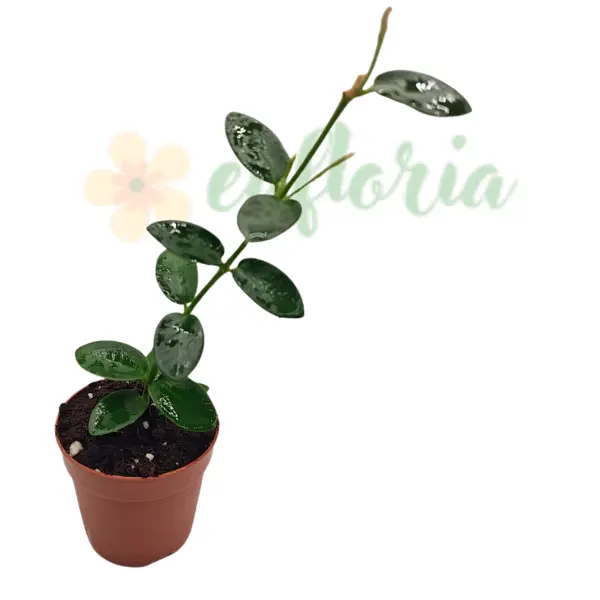
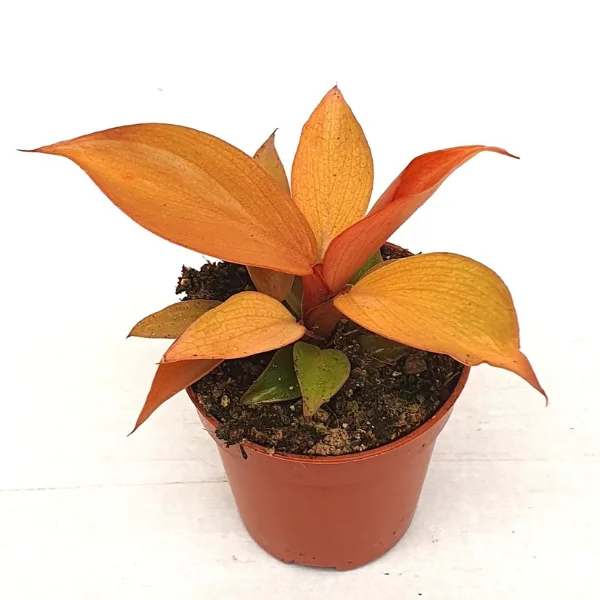
Hoya sp. Loei Ø7cm
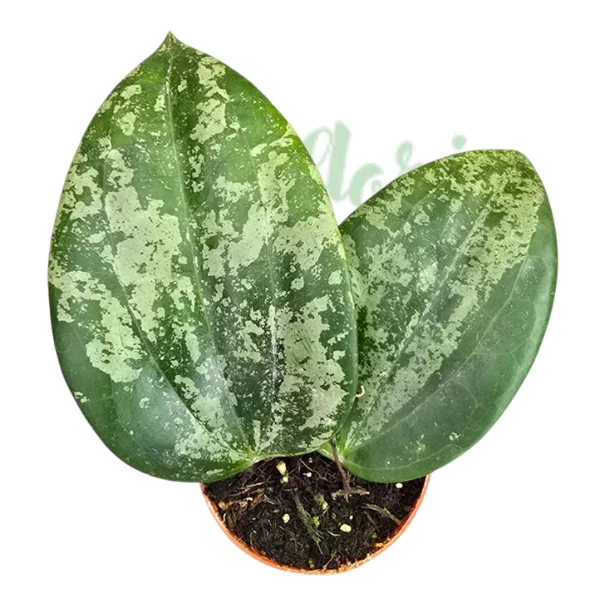
![Hoya sp. Loei — Rare Thai Species with Silver Splash Foliage [0]](https://gomagcdn.ro/domains2/eufloria.ro/files/product/medium/hoya-sp-loei-d6-831598.webp "Hoya sp. Loei — Rare Thai Species with Silver Splash Foliage [0]")
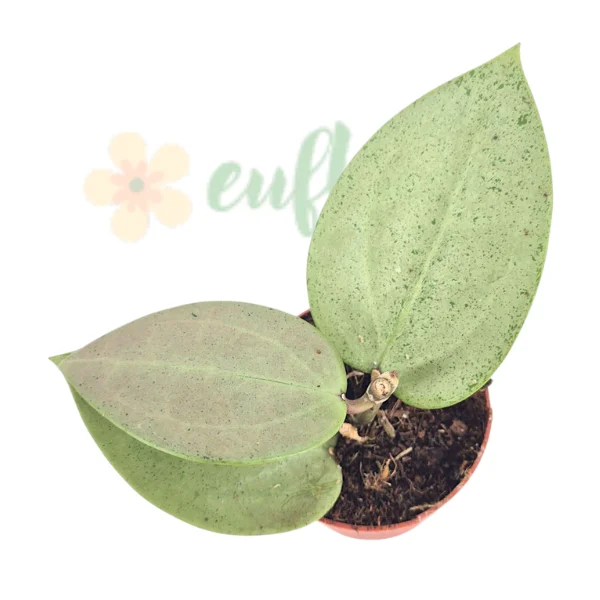
![Hoya sp. Loei — Rare Thai Species with Silver Splash Foliage [1]](https://gomagcdn.ro/domains2/eufloria.ro/files/product/medium/hoya-sp-loei-d6-368345.webp "Hoya sp. Loei — Rare Thai Species with Silver Splash Foliage [1]")
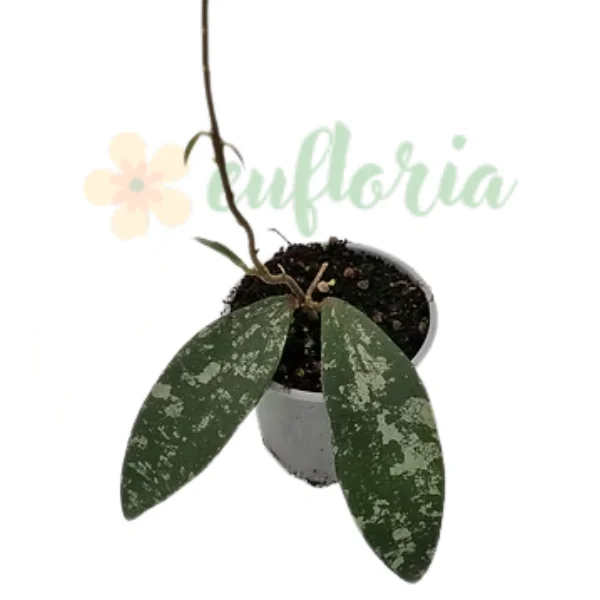
![Hoya sp. Loei — Rare Thai Species with Silver Splash Foliage [1]](https://gomagcdn.ro/domains2/eufloria.ro/files/product/original/hoya-sp-loei-d6-831598.webp "Hoya sp. Loei — Rare Thai Species with Silver Splash Foliage [1]")
![Hoya sp. Loei — Rare Thai Species with Silver Splash Foliage [2]](https://gomagcdn.ro/domains2/eufloria.ro/files/product/original/hoya-sp-loei-d6-368345.webp "Hoya sp. Loei — Rare Thai Species with Silver Splash Foliage [2]")
Approx height (including pot): 10 cm
Flowering state: No flowers
- Description
- Characteristics
- Reviews (0)
- FAQ
🏔️ A Mysterious Beauty from Thailand's Mountain Forests
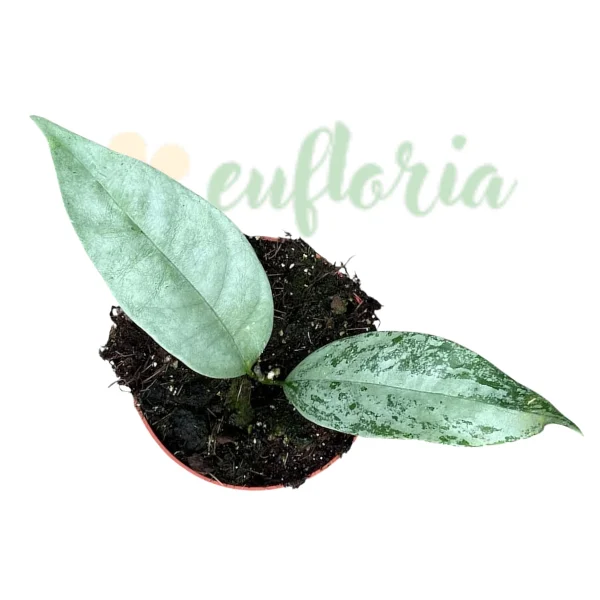
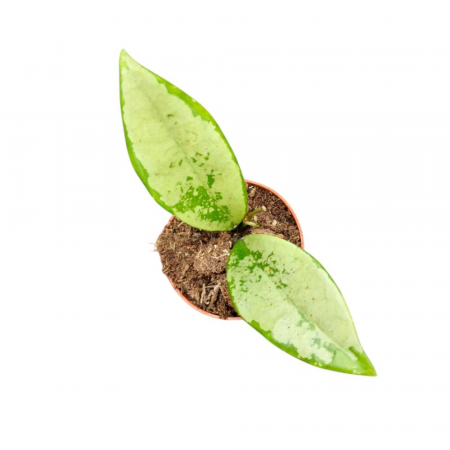
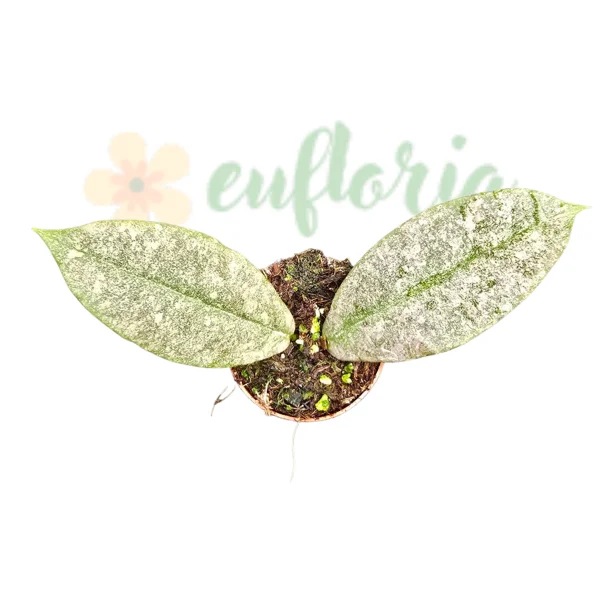
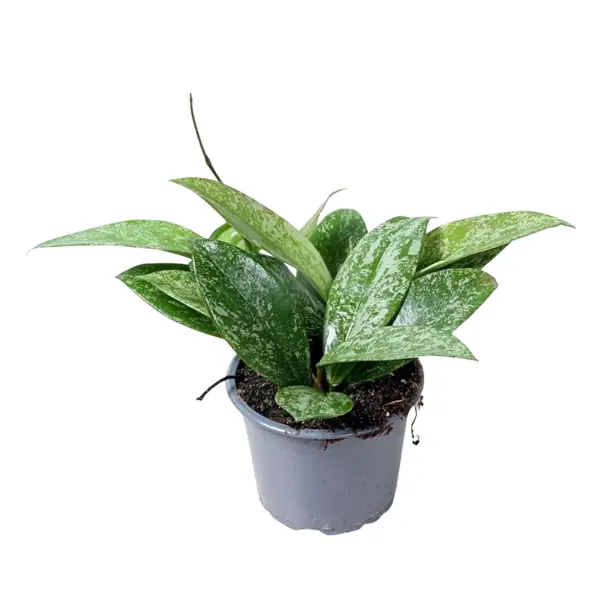
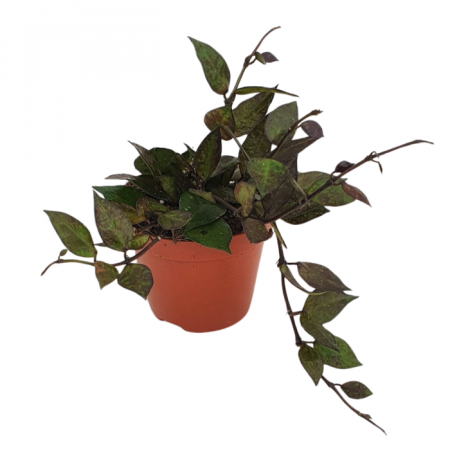
Hoya sp. Loei (also known as Hoya sp. SR 2007-13 from Loei Province) is a rare and still unnamed Hoya species from the montane forests of northeastern Thailand. This collector's treasure combines striking silver-splashed foliage with the promise of exceptionally fragrant flowers — a combination that has made it highly sought-after among Hoya enthusiasts worldwide. The long, slender leaves adorned with shimmering silver variegation create an immediately eye-catching display, while the plant's easy-growing nature makes it accessible to beginners despite its rarity. Vermont Hoyas describes it as "a great Hoya when grown for the foliage alone and even a better Hoya if you are looking for a flowering challenge." For those patient enough to coax it into bloom, the reward is flowers of extraordinary fragrance.
🌏 Origins & Discovery
This species originates from Loei Province in northeastern Thailand, a region known for its mountainous terrain and cool-climate forests. GrowTropicals notes that it is "likely found within montane evergreen forests such as Phu Kradueng or Phu Ruea National Parks at mid-elevation (around 1,000–1,300 m)." Phu Kradueng National Park, Thailand's second-oldest national park established in 1962, rises to 1,316 metres with a distinctive flat-topped plateau — an environment characterised by cool temperatures (average 15-20°C year-round, dropping to freezing in winter), high humidity, and diverse forest types from tropical to pine savannah. The plant was introduced to cultivation by Thai Hoya collector and hybridiser Surisa Somadee, whose accession number SR 2007-13 has become the plant's alternative designation. Vermont Hoyas notes: "I emailed Ric Morier, and he told me that it was the number of Surisa Somadee in Thailand and this plant belonged in the Hoya acuta/verticillata complex." The species remains officially undescribed and unnamed, adding to its mystique among collectors.
🍃 Foliage — Silver-Splashed & Elegant
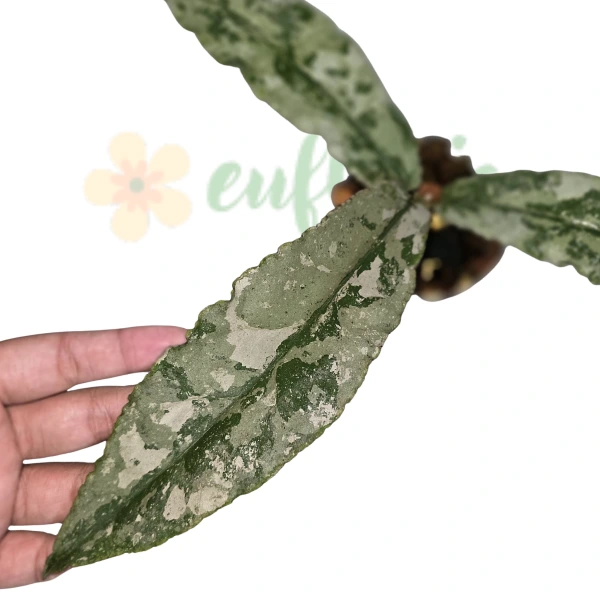
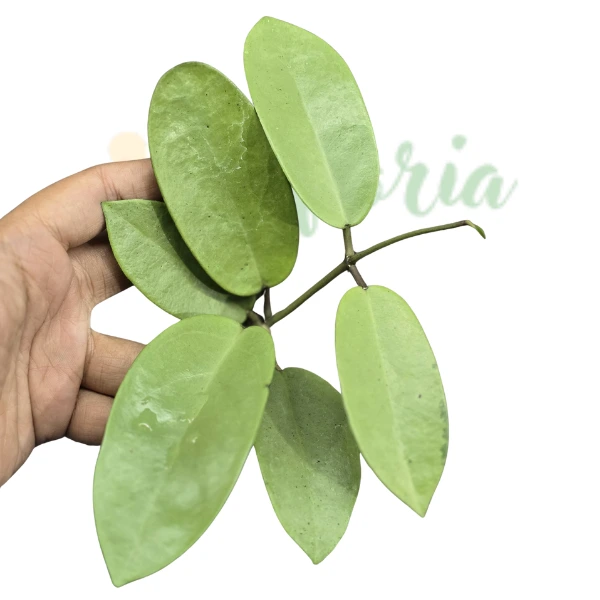
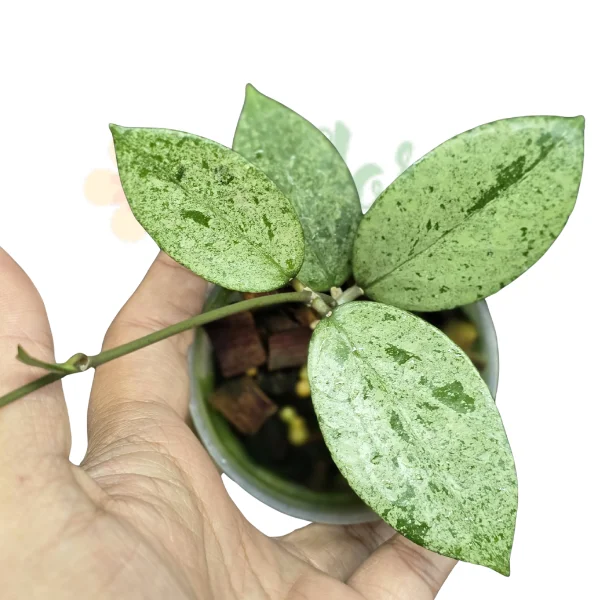
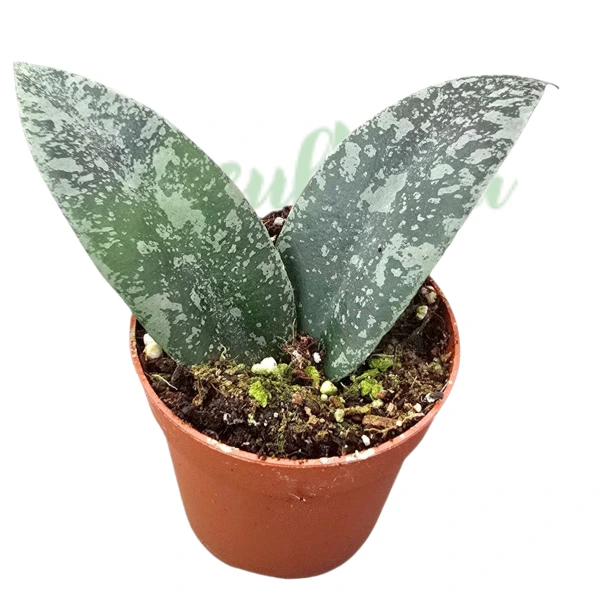
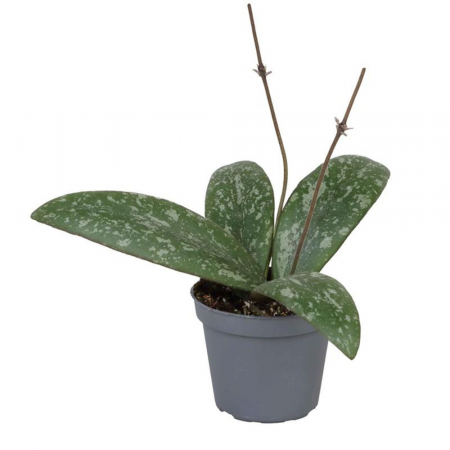
The foliage is the primary attraction of this species. Steve's Leaves describes the leaves as "narrow elliptical with parallel venation and splashes of silver variegation." Greenboog elaborates: "long, slender leaves adorned with a mesmerizing splash variegation pattern that shimmers with hints of silver against a rich green backdrop." Rare Hoya reports that "adult leaves can reach 12-14 inches long" — an impressive size that makes established specimens truly spectacular. The leaves are thick and elongated, with prominent parallel veins creating texture against the green-and-silver colouration. The silver splash pattern varies between leaves and intensifies under proper lighting conditions, creating an ever-changing display. Gardino Nursery describes them simply as "gorgeous long narrow leaves with some flecks."
🌸 Flowers — Rare But Extraordinarily Fragrant
The flowers of Hoya sp. Loei are notoriously difficult to produce but magnificently rewarding when they appear. Vermont Hoyas chronicles a five-year journey to flowering: "After nearly five years it finally flowers... They say that patience is a virtue, but truth be told I had just about run out of it." The flower description from Hoya 092122 states: "a beautiful flower with a cream to light-green coloured corolla that reflexes completely with maturity. The corona of the flower is wide, upright, and white." Steve's Leaves describes them as "porcelain white flowers with orange and pink at the centres of the coronas." The fragrance is the true reward — Vermont Hoyas reports: "The flowers if you are lucky enough to ever see them are incredibly fragrant." Unsolicited Plant Talks confirms: "Although its blooms are rare, they are incredibly fragrant, making them well worth the wait." Greenboog notes the flowers are "typically white with a yellow or orange centre."
🌿 Growth Habit & Development
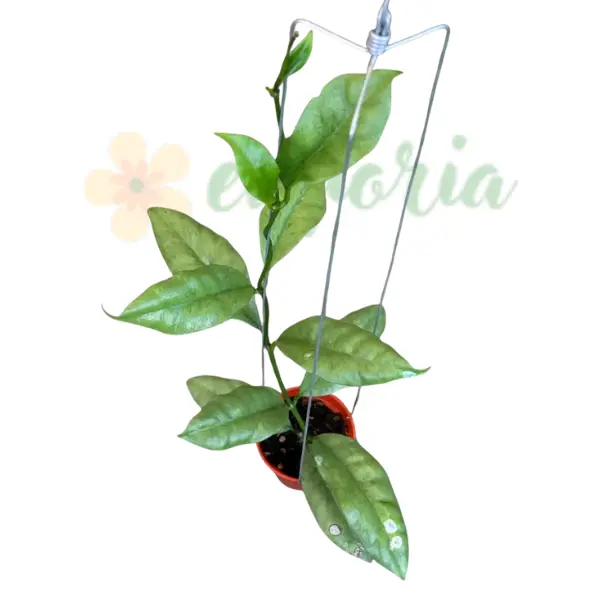
Growth habit is trailing or climbing, making this species suitable for both hanging baskets and trellised displays. Steve's Leaves notes the "trailing or twining growth habit." Greenboog indicates the plant can reach "up to 3m" in length. The plant is widely described as an easy grower despite its flowering challenges. Unsolicited Plant Talks states: "As an otherwise easy grower, this Hoya is highly recommended for both beginners and seasoned plant enthusiasts alike." Vermont Hoyas confirms: "It is an easy grower that I can highly recommend!" The challenge lies specifically in flowering, not in keeping the plant alive and thriving — the foliage alone makes cultivation worthwhile.
Care Requirements:
- Light: Bright, indirect light is essential. GrowTropicals advises: "Provide bright, indirect light or dappled shade. Avoid direct sun, even morning sun, as it may scorch the leaves and reduce the silver pattern contrast." Unsolicited Plant Talks recommends to "recreate a dense forest environment" with "very little, if any, direct sunlight." The silver splash pattern is most vibrant under adequate light; too little light will cause the markings to fade. Greenboog suggests "some direct morning sun can be beneficial" but to "protect from harsh, direct sunlight."
- Water: Allow soil to dry between waterings. Steve's Leaves advises: "Water when soil surface is dry to the touch." 3B's Flowers recommends "a 'soak and dry' routine — water deeply, then allow the soil to dry between waterings." Unsolicited Plant Talks notes: "This Hoya tolerates a drier environment." Overwatering is the primary cause of problems — Greenboog warns to "avoid overwatering, which can lead to root rot."
- Soil: Fast-draining substrate is critical. Greenboog emphasises: "well drained soil. Hoya hates clogged soil!" Use a chunky mix of orchid bark, perlite, and well-draining potting medium. The roots need excellent aeration — this epiphytic species does not tolerate soggy conditions.
- Temperature: 18-29°C (65-85°F) is the optimal range according to Greenboog. Given its montane forest origins at 1,000-1,300m elevation where temperatures are cooler than tropical lowlands, this species may appreciate slightly cooler conditions than many Hoyas. Unsolicited Plant Talks notes: "This Hoya does not require high heat, but does not tolerate cold as well as other varieties." Protect from temperatures below 14°C (57°F).
- Humidity: Moderate to high humidity is preferred. 3B's Flowers notes the plant "enjoys moderate to high humidity, but adapts well to typical home conditions." Greenboog recommends to "mist regularly or use a pebble tray." Unsolicited Plant Talks advises: "May require humidifier in cooler, drier months." Given its cloud forest origins, higher humidity (60-80%) will promote optimal growth.
- Feeding: Feed monthly during the growing season with a balanced fertilizer at half-strength. Reduce or stop feeding in winter. This species is not a heavy feeder — avoid over-fertilisation which can cause salt buildup and damage roots.
Botanical Info: Family: Apocynaceae (subfamily Asclepiadoideae) | Genus: Hoya | Species: Hoya sp. (undescribed) | Alternative Names: Hoya sp. Loei Province, Hoya sp. SR 2007-13 (from Loei Province), Hoya sp. Phu Kradueng | Collector: Surisa Somadee (Thailand) | Taxonomic Complex: Hoya acuta/verticillata complex | Type: Trailing/Climbing Epiphytic Vine | Native Range: Loei Province, Thailand (montane evergreen forests, 1,000-1,300m elevation) | Flowering: Cream to light-green corolla with white/orange/pink corona, reflexed, extremely fragrant (rare to produce) | Growth Rate: Moderate
Lungime: 10 cm
Greutate (kg): 0.1 Kg
Denumire: Hoya
Diametru: 6 cm
Cerințe lumină: Partial umbra
Tip plantă: Decorative
Utilizare: Interior
Tip suport: Ghiveci
Material Suport: Plastic
Is Hoya sp. Loei toxic to cats and dogs?
No, Hoya sp. Loei is not toxic to cats, dogs, or other household pets. The ASPCA confirms that Hoya plants are non-toxic to cats, dogs, and horses, and this applies to the entire genus including undescribed species like Hoya sp. Loei. One online retailer lists this plant as "not pet-safe," but this appears inconsistent with established guidance — the scientific and horticultural consensus is clear that Hoyas are safe. As with any plant, eating large quantities might cause mild stomach upset (a mechanical response, not toxicity), but the plant poses no poisoning risk. The milky latex sap may cause minor skin irritation if handled, but it is not dangerous.
Why won't my Hoya sp. Loei flower?
This species is notoriously difficult to bring into bloom. Vermont Hoyas documented a five-year journey to first flowering, noting: "They say that patience is a virtue, but truth be told I had just about run out of it." The plant forms peduncles (flower stalks) but may not bud up for years. To encourage flowering: provide bright, indirect light (insufficient light is often the issue); keep the plant root-bound (Hoyas flower better when slightly constrained); never remove old peduncles (the plant eventually blooms from them); maintain consistent care without major environmental changes; and be patient. Hoya 092122 reports their plant "has only bloomed for us once" and "did not bloom since" despite continued care. The good news: the foliage alone makes cultivation worthwhile while you wait.
What does Hoya sp. Loei smell like when it flowers?
When this species finally blooms, the fragrance is extraordinary. Vermont Hoyas reports: "The flowers if you are lucky enough to ever see them are incredibly fragrant." Unsolicited Plant Talks confirms: "Although its blooms are rare, they are incredibly fragrant, making them well worth the wait." Specific scent descriptions are limited due to how rarely the plant flowers in cultivation, but the consensus is that the fragrance is intense and highly valued. However, Hoya 092122 notes that in their experience, the flowers "did not produce an appreciable scent" — suggesting that fragrance may vary by clone, environmental conditions, or individual perception. Most sources describe the fragrance as a major reward for patient growers.
Is Hoya sp. Loei the same as Hoya sp. SR 2007-13?
Yes — Hoya sp. Loei Province and Hoya sp. SR 2007-13 are the same plant. The name "SR 2007-13" is the accession number assigned by Thai Hoya collector Surisa Somadee, who introduced the plant to cultivation around 2007. Vermont Hoyas explains: "I emailed Ric Morier, and he told me that it was the number of Surisa Somadee in Thailand." You may also see it labelled as "Hoya sp. Phu Kradueng Loei Province SR 2007-13" — all these names refer to the same undescribed species from Loei Province, Thailand. The plant remains taxonomically undescribed (no official species name), so collector designations and locality names are used instead.
How do I maintain the silver variegation on my Hoya sp. Loei?
The silver splash pattern is most pronounced under bright, indirect light. GrowTropicals specifically notes to "avoid direct sun, even morning sun, as it may scorch the leaves and reduce the silver pattern contrast." Too little light causes the silver markings to fade and lose their shimmer. Position near a bright window with filtered light, or supplement with grow lights. Maintaining moderate-to-high humidity (60-80%) also supports healthy leaf development and colour expression. The silver splash is genetic and won't disappear entirely, but optimal conditions bring out its full beauty. New leaves may appear less splashed initially and develop more silver as they mature.
Where exactly does Hoya sp. Loei come from?
This species originates from Loei Province in northeastern Thailand. GrowTropicals specifies the habitat as "montane evergreen forests such as Phu Kradueng or Phu Ruea National Parks at mid-elevation (around 1,000–1,300 m)." Phu Kradueng National Park is Thailand's second-oldest protected area, featuring a dramatic flat-topped mountain plateau at over 1,200 metres elevation. The climate is notably cooler than tropical lowlands — averaging 15-20°C year-round, dropping to freezing in winter. The diverse forest types range from tropical to pine savannah. Understanding this cool, humid montane origin helps explain why this species appreciates slightly cooler temperatures and higher humidity than many lowland tropical Hoyas.
How to care for Hoya?
Bright indirect light, moderate watering, drained substrate. 18-27°C.
How often to water?
When dry. Weekly summer, 2-3 weeks winter.
Toxic?
No, Hoya is non-toxic.
Propagation?
Cuttings 2-3 nodes water/sphagnum. 2-6 weeks.
Recommendations

Ai nevoie și de un ghiveci decorativ?