EN/
EN/ Romana
Hoya kanyakumariana Ø6cm
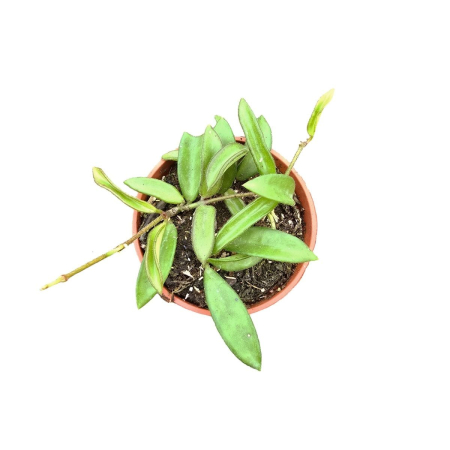
![Hoya kanyakumariana - Rare miniature indoor plant [1]](https://gomagcdn.ro/domains2/eufloria.ro/files/product/original/hoya-endauensis-298616.webp "Hoya kanyakumariana - Rare miniature indoor plant [1]")
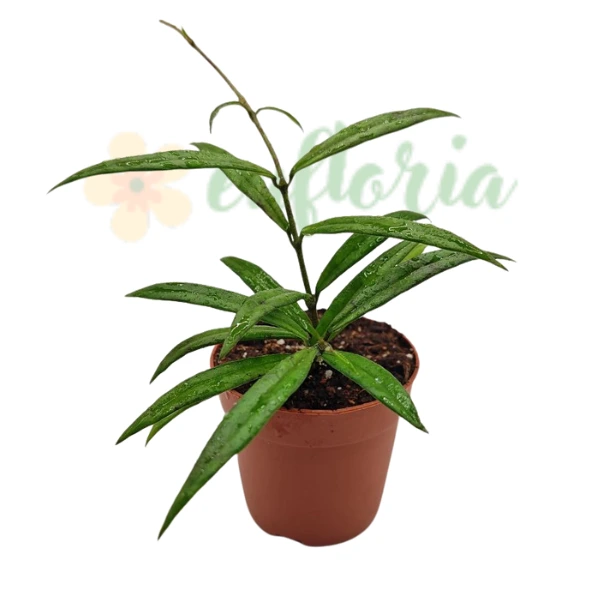
Hoya kanyakumariana – a rare Hoya species with miniature, round, thick leaves. Native to southern India. Produces fragrant, star-shaped flowers. Prefers bright indirect light, high humidity, and well-draining substrate. Non-toxic, safe for pets.
Note: Product images are for guidance only. Due to different batches of imported products, there may be differences between the images on the website and the actual appearance of the products.
Approx height (including pot): 10 cm
Flowering state: No flowers
- Description
- Characteristics
- Reviews (0)
- FAQ
🌿 Hoya kanyakumariana — A Window to the Tropical Jungle
Hoya kanyakumariana is one of the lesser-known species within the Hoya genus, a botanical gem hailing from the eastern reaches of the Indian peninsula, specifically the Kanyakumari region — the southernmost tip of mainland India, where the Indian Ocean, Arabian Sea, and Bay of Bengal converge in a symphony of warm, humid currents. The scientific name honours this very geographical origin, forever linking the plant to the tropical landscapes of Tamil Nadu.
Described relatively recently in taxonomic history, Hoya kanyakumariana belongs to the family Apocynaceae (subfamily Asclepiadoideae), the same vast family that houses over 500 Hoya species distributed from Southeast Asia to Oceania. In its natural habitat, this species grows as an epiphyte in moist tropical forests, clinging to tree trunks and feeding on plant debris accumulated in bark crevices.
What makes Hoya kanyakumariana special in the houseplant collection is its unique combination of small, succulent leaves arranged along thin, flexible stems that cascade elegantly from any elevated container. The leaves have a waxy texture characteristic of the Hoya genus, with an intense green shade that deepens further under bright light conditions. Their reduced size and oval-lanceolate shape give the plant a delicate, almost miniature appearance, distinctly different from the more robust species like H. carnosa or H. kerrii.
🌍 Origin and Natural Distribution
Hoya kanyakumariana is endemic to the Kanyakumari region of southern India, an area characterised by a humid tropical climate with abundant rainfall during the monsoon season and consistent temperatures throughout the year. This zone sits at the convergence of three major water bodies, creating a unique microclimate that supports remarkable biodiversity.
In its natural habitat, Hoya kanyakumariana colonises the middle storey of the tropical forest, where light is filtered through dense tree canopies. As an epiphyte, it does not parasitise its host trees but procures nutrients from accumulated plant debris, rainfall, and the high atmospheric humidity. Its aerial roots are adapted to anchor the plant on vertical supports and to absorb water rapidly from the surrounding environment.
This epiphytic growth habit explains why the species prefers an aerated, well-drained substrate in cultivation. The roots cannot tolerate standing water — in nature, rain passes quickly and roots dry between showers. This adaptation must be respected in indoor culture, where overwatering is the plant's primary enemy.
🌱 Complete Care Guide
Hoya kanyakumariana is a surprisingly adaptable plant, suitable for both beginners and experienced collectors. The secret to success lies in respecting a few simple principles inspired by its natural environment.
Light plays an essential role in the plant's harmonious development. Hoya kanyakumariana prefers bright, indirect light — positioned near an east or west-facing window where it receives a few hours of gentle morning or evening sun. Direct midday sun can scorch the delicate leaves, especially in summer. In insufficient light conditions, the plant survives but grows more slowly and is less likely to flower.
Watering should be approached with moderation. Allow the substrate to dry completely between waterings — a perpetually moist substrate will lead to root rot. During the warm season (spring-summer), water approximately once a week; in winter, reduce frequency to once every two weeks or even less, depending on room temperature. The safest method: insert your finger into the substrate up to the second knuckle — if it feels dry, it's time to water.
Substrate should be light, aerated with excellent drainage. A mix of universal potting soil with perlite and pine bark in equal proportions works perfectly. You can also add activated charcoal to prevent mould and keep the substrate fresh for longer.
Temperature and humidity are important factors. Hoya kanyakumariana thrives at temperatures between 18-28°C, with a relative humidity of at least 50%. In apartments with dry air, regularly mist the leaves or place the pot on a tray with wet pebbles. Avoid cold draughts and proximity to radiators.
🌸 Flowering — The Reward of Patience
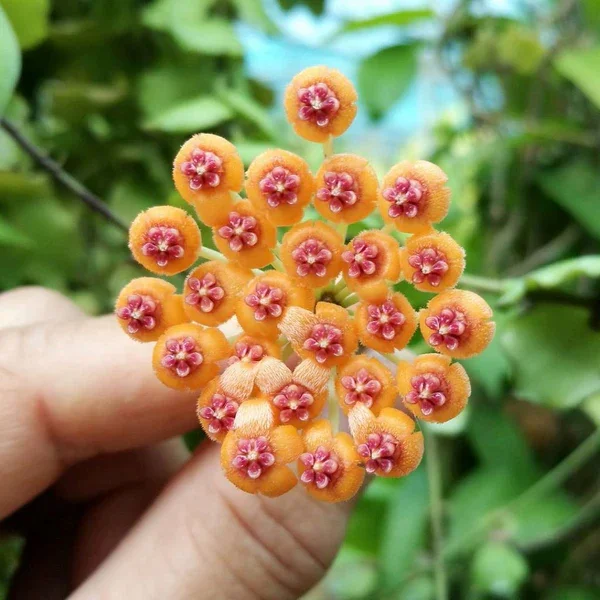
Like all Hoya species, kanyakumariana has the capacity to produce spectacular umbel-shaped inflorescences — spherical bouquets of small, waxy flowers with a delicate fragrance that intensifies in the evening. The flowers have an almost artificial texture, appearing sculpted from wax or porcelain, and remain open for several days.
To encourage flowering, the plant needs a few specific conditions: bright indirect light, a slight hydric stress (short periods of complete substrate drying), and patience — most specimens begin flowering after 2-3 years from rooting. Once the plant has produced a flower peduncle, do NOT cut it after the flowers wilt — the same peduncle will produce new flowers in subsequent seasons.
Flower fragrance varies depending on the time of day and environmental conditions. Many Hoya species emit their strongest scent in the evening, an evolutionary adaptation to attract nocturnal pollinators in their natural habitat. In indoor cultivation, this subtle perfume transforms the room into a small tropical oasis.
🌱 Propagation and Long-term Growth
Hoya kanyakumariana propagates most easily through stem cuttings. Cut a 10-15 cm stem section with at least 2-3 nodes, remove the lower leaves, and place the cutting in clean water or directly in moist substrate. In water, roots appear in 2-4 weeks; in substrate, the process may take 3-6 weeks. The optimal temperature for rooting is 22-25°C.
Repotting is done rarely — Hoyas prefer to be slightly root-bound, which also stimulates flowering. Only repot when roots emerge from drainage holes or when the substrate has decomposed (every 2-3 years). Choose a pot only 1-2 cm larger in diameter than the previous one.
As a trailing plant, Hoya kanyakumariana looks spectacular in hanging pots, on high shelves, or in kokedama-style arrangements. The stems can reach considerable lengths over time, creating a living green curtain that adds a natural element to any interior space. It can also be guided along a hoop or ladder support for a different decorative effect.
Lungime: 10 cm
Greutate (kg): 0.1 Kg
Denumire: Hoya
Diametru: 12 cm
Cerințe lumină: Strong, indirect light
Tip plantă: Decorative
Utilizare: Interior
Tip suport: Ghiveci
Material Suport: Plastic
Is Hoya kanyakumariana toxic to cats and dogs?
No, Hoya kanyakumariana is not toxic to cats and dogs. All Hoya species are considered safe for pets according to ASPCA. This makes it an excellent choice for homes with curious pets, without requiring any special protective measures.
How do I care for Hoya kanyakumariana?
Hoya kanyakumariana prefers bright indirect light but can tolerate semi-shade conditions. Water only when the substrate has completely dried out — this species is sensitive to excess moisture. The ideal temperature range is 18-28°C, and higher humidity (60-80%) encourages healthy growth. Fertilize monthly during the growing season with a balanced fertilizer diluted to half strength.
How do I get Hoya kanyakumariana to bloom?
To encourage blooming, provide bright indirect light for at least 6 hours a day and a rest period during the cold season with less frequent watering and slightly lower temperatures (15-18°C). Do not cut old peduncles — Hoya kanyakumariana blooms repeatedly on the same peduncles. Young plants may need 2-3 years of maturity before their first bloom.
What makes Hoya kanyakumariana so special?
Hoya kanyakumariana is one of the smallest Hoya species, with round, fleshy leaves measuring just 1-2 cm. Native to the southern tip of India (Kanyakumari), this rare species is highly sought after by collectors for its miniature size and fragrant flowers grouped in umbels. It is ideal for terrariums and small spaces.
What substrate should I use for Hoya kanyakumariana?
Hoya kanyakumariana requires a very well-draining and aerated substrate. An ideal mix contains pine bark, perlite, and sphagnum moss in equal proportions. Avoid compact substrates that retain too much moisture, as this species has thin roots prone to rot. The pot must have adequate drainage holes.
Does Hoya bloom indoors?
How often should Hoya be watered?
How do you propagate Hoya?
Recommendations

Ai nevoie și de un ghiveci decorativ?