EN/
EN/ Romana
Ficus pumila 'Bellus' Ø6cm
![Ficus pumila 'Bellus' — small heart-shaped variegated green with cream leaves, Ø6cm pot Eufloria [0]](https://gomagcdn.ro/domains2/eufloria.ro/files/product/medium/ficus-pumila-bellus-625780.png "Ficus pumila 'Bellus' — small heart-shaped variegated green with cream leaves, Ø6cm pot Eufloria [0]")
![Ficus pumila 'Bellus' — small heart-shaped variegated green with cream leaves, Ø6cm pot Eufloria [1]](https://gomagcdn.ro/domains2/eufloria.ro/files/product/medium/planta-naturala-de-interior-ficus-pumila-bellus-d6-612149.png "Ficus pumila 'Bellus' — small heart-shaped variegated green with cream leaves, Ø6cm pot Eufloria [1]")
![Ficus pumila 'Bellus' — small heart-shaped variegated green with cream leaves, Ø6cm pot Eufloria [1]](https://gomagcdn.ro/domains2/eufloria.ro/files/product/original/ficus-pumila-bellus-625780.png "Ficus pumila 'Bellus' — small heart-shaped variegated green with cream leaves, Ø6cm pot Eufloria [1]")
![Ficus pumila 'Bellus' — small heart-shaped variegated green with cream leaves, Ø6cm pot Eufloria [2]](https://gomagcdn.ro/domains2/eufloria.ro/files/product/original/planta-naturala-de-interior-ficus-pumila-bellus-d6-612149.png "Ficus pumila 'Bellus' — small heart-shaped variegated green with cream leaves, Ø6cm pot Eufloria [2]")
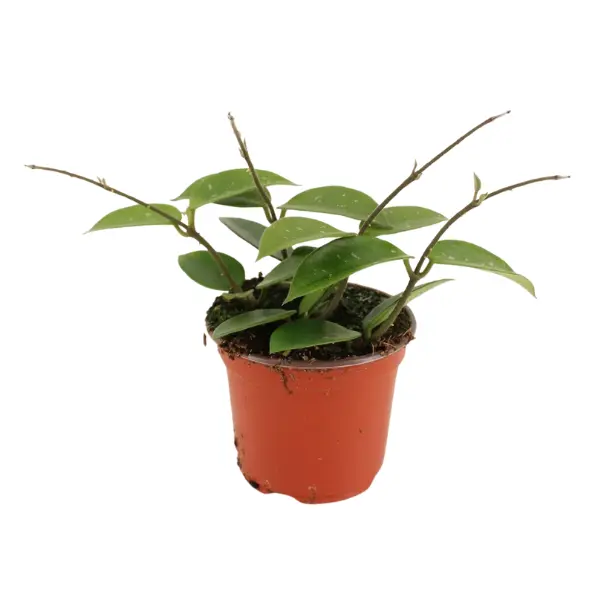
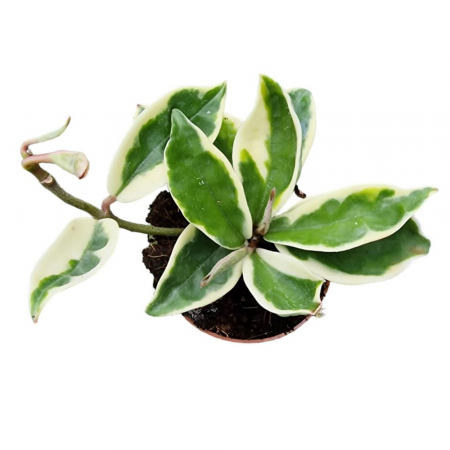
Ficus pumila 'Bellus' — variegated creeping fig with small heart-shaped leaves, green with cream-white margins. Climbing/pendant plant, ideal for terrariums and small hanging pots. Humidity 60-85%, indirect light, 16-24°C. Delicate decorative choice.
Approx height (including pot): 10 cm
Pot diameter: 6 cm
- Description
- Characteristics
- Reviews (0)
- FAQ
🌿 A Cascade of Miniature Leaves — a Living Carpet That Tames Any Surface
Ficus pumila 'Bellus' is one of the most charming small plants in the green world: a creeping dwarf fig whose thin, flexible stems carry hundreds of delicate little leaves, as dense as scales and as soft as silk. Unlike tree-like figs, this species grows horizontally or in a cascade, forming a living carpet that covers the ground, spills over the edge of the pot or climbs, clinging by itself, onto any textured surface you offer it.
The 'Bellus' variety is prized for its particularly fine, wavy foliage, with slightly crinkled edges that give the whole plant a frothy, airy look, like vegetal lace. It is the kind of plant that softens hard lines, fills gaps and brings a living, moving texture wherever it is placed — on a shelf to trail elegantly, in a terrarium to clothe the background, or beside other plants as a carpet of greenery that ties them all together.
Offered in a 6 cm pot, it is a young plant full of vitality, ready to begin its journey of covering and climbing. It grows quickly in good conditions and rewards care with an ever-increasing density of foliage, soon becoming a generous and charming presence.
For the plant lover seeking texture, movement and a versatile species capable of trailing, climbing or carpeting, 'Bellus' is a small green jewel — delicate in appearance, yet surprisingly lively and adaptable.
🌍 Origin and Botanical History
Ficus pumila belongs to the Moraceae family, the great family of figs and mulberries, and is native to East Asia — to China, Japan, Taiwan and Vietnam, where it grows wild in moist forests, on rocks, walls and tree trunks. The epithet "pumila" means "dwarf" in Latin, a reference to the small size of the leaves and of the whole plant compared with its tree-like relatives, some of the largest plants in the world.
In its natural habitat, this plant is a tireless climber: its young stems produce adventitious roots that grip any surface, allowing it to climb walls and rocks like ivy, covering large areas with a dense green carpet. In many mild-climate regions it is used precisely to clothe façades, fences and stone walls, creating that romantic effect of a wall covered in greenery.
The 'Bellus' variety is a horticultural selection prized for its finer, wavy foliage, ideal for pot culture, terrariums and indoor arrangements. Although it is the same vigorous species, in the controlled space of a home it stays compact and easy to manage, keeping its charm as a miniature climbing plant.
The fact that it comes from moist forests explains one of its most important needs: humidity. Unlike desert plants, Ficus pumila thrives in a humid atmosphere and does not tolerate the substrate drying out completely — an essential detail for keeping it healthy at home.
🌱 The Foliage
The foliage is, without doubt, the great joy of this plant. The little leaves are small — usually 1–2.5 cm long — heart-shaped or oval, set densely and alternately along the thin stems, creating that compact, textured carpet effect that makes it unmistakable. In the 'Bellus' variety, the leaf margins are slightly wavy and crinkled, adding extra volume and a lively, frothy feel to the whole plant.
The colour is a fresh, medium to deep green, sometimes with lighter tones on the young leaves, which emerge in a tender, almost translucent green before darkening at maturity. The leaf surface has a fine texture, slightly rough to the touch because of the delicate veins, which form a fine, reticulated pattern visible on close inspection.
The stems are thin, flexible and branching, able either to hang gracefully over the edge of the pot or to climb if given support. As the plant grows, the foliage becomes ever denser, forming a generous green mass that can be shaped at will — left to trail freely, trained on a support or trimmed to stay compact.
This density and texture make 'Bellus' a particularly prized plant for indoor arrangements and terrariums, where its tiny foliage creates a living backdrop, gives scale to the other plants and fills empty spaces with delicate, ever-fresh greenery.
🌸 The Flowers and Fruit
Ficus pumila has a fascinating mode of reproduction, characteristic of the whole Ficus genus: the flowers are hidden inside a fleshy structure called a syconium, which at maturity becomes a small "fruit" resembling a miniature fig. These structures appear, however, only on adult, mature plants that have undergone a change of form and developed thick stems and larger leaves — a stage that rarely occurs in apartment culture.
Indoors, grown in a pot, the plant almost always remains in its juvenile, climbing form, with small leaves, and produces neither flowers nor visible fruit. This is by no means a disadvantage — on the contrary, it is precisely the juvenile form, with its small, dense foliage, that we love about 'Bellus'.
The ornamental value of this plant therefore lies entirely in its textured foliage and versatile habit. You do not buy it for flowers, but for the living carpet of little leaves it weaves ceaselessly, month after month, regardless of the season.
🌱 Growth and Development
Ficus pumila 'Bellus' is a vigorous plant, fast-growing in good conditions, that spreads its stems in all directions, covering, trailing or climbing as space allows. It is extremely versatile: you can grow it as a trailing plant on a high shelf, as a climber on a moss pole, as living wallpaper in a terrarium or as a ground cover in larger pots alongside other plants.
Its only real demand is constant humidity — both of the air and of the substrate, which it prefers always lightly moist, never bone-dry. Otherwise, it is a grateful, easily pleased plant, ideal for those who want textured, dynamic greenery. To keep it dense and compact, you can pinch and trim it periodically, encouraging branching.
- Light: bright, indirect light; it tolerates partial shade too, but in too little light the foliage thins out; shield it from strong direct sun that can scorch its delicate little leaves.
- Temperature: prefers 18–26 °C and constant warmth; keep it away from cold below 12 °C and from cold draughts.
- Watering: keep the substrate constantly lightly moist, watering as soon as the top layer begins to dry; never let the plant dry out completely, but do not keep it in standing water either.
- Humidity: enjoys high humidity; regular misting, grouping with other plants, a terrarium or a humidifier keep its foliage fresh and healthy.
- Substrate: an airy, well-draining mix that can still retain moisture — a quality universal substrate with added perlite and coco fibre is ideal.
- Fertilising: feed every 3–4 weeks in the warm growing season with a balanced, diluted green-plant fertiliser; reduce in winter.
- Propagation: very easy from stem cuttings with a few leaves, which root quickly in water or directly in moist substrate.
Thanks to its fine texture and versatile habit, 'Bellus' beautifully complements terrariums and arrangements of humidity-loving plants, being that detail of small greenery that ties together and enlivens the whole composition.
Lungime: 15 cm
Greutate (kg): 0.1 Kg
Denumire: Ficus
Cerințe lumină: Umbra
Tip plantă: Decorative
Utilizare: Interior
Tip suport: Ghiveci
Material Suport: Plastic
Does Ficus pumila 'Bellus' cling to walls on its own?
How to maintain the variegation?
Why are leaves drying?
Is Ficus pumila 'Bellus' toxic?
How is it propagated?
Ai nevoie și de un ghiveci decorativ?