EN/
EN/ Romana
Begonia 'Brown Forest' Ø12cm
![Begonia 'Brown Forest' [1]](https://gomagcdn.ro/domains2/eufloria.ro/files/product/original/begonia-brown-forest-d12-046335.webp "Begonia 'Brown Forest' [1]")
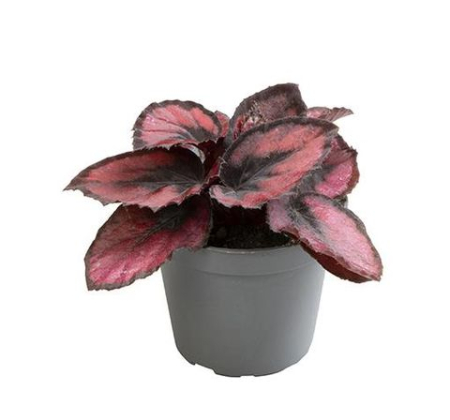
Begonia 'Brown Forest' is a rhizomatous begonia with large leaves in warm chocolate-brown, dark green, and bronze tones. Evokes the tropical forest atmosphere. Compact habit, 25-40 cm. Prefers moderate indirect light. Caution: toxic plant – contains calcium oxalates.
Note: Product images are for guidance only. Due to different batches of imported products, there may be differences between the images on the website and the actual appearance of the products.
Approx height (including pot): 35 cm
Pot diameter: 12 cm
- Description
- Characteristics
- Reviews (0)
- FAQ
🌿 Begonia 'Brown Forest' – Warm Tones of the Tropical Forest
Begonia 'Brown Forest' is an elegant rhizomatous begonia that owes its name to the warm shades of brown, chocolate, and dark green of its textured leaves. It evokes the mysterious atmosphere of a tropical forest and brings a touch of natural sophistication to any indoor space.
🌍 Origins & Botanical History
Begonia 'Brown Forest' belongs to the Begoniaceae family and is a horticultural cultivar from the rhizomatous begonia group. The genus Begonia comprises over 2,000 species, native to tropical and subtropical regions worldwide. This cultivar was selected for its unique forest-toned coloration, distinguishing it from begonias with classic silver variegation.
🌿 Foliage – Warm Shades of Chocolate and Deep Green
The leaves of Begonia 'Brown Forest' are large, asymmetric, with a slightly embossed texture. The dominant color is a warm chocolate-brown, with zones of dark green and bronze-copper reflections. The pattern varies from leaf to leaf, with concentric bands and color sectors creating a depth effect. The leaf surface has a subtle sheen that accentuates the warm tones. The underside is often reddish.
🌱 Growth Habit & Development
Begonia 'Brown Forest' has a compact, rhizomatous growth habit, reaching 25-40 cm in height. It prefers moderate indirect light – too much light can fade the colors, while too little reduces contrast. Moderate to high humidity is beneficial. The substrate should be well-draining, slightly acidic, kept evenly moist. The ideal temperature is 18-26°C (65-79°F). Avoid watering on the leaves.
Lungime: 12 cm
Greutate (kg): 1 Kg
Denumire: Begonia
Diametru: 12 cm
Cerințe lumină: Strong, indirect light
Tip plantă: Decorative
Utilizare: Interior
Tip suport: Ghiveci
Material Suport: Plastic
Stadiu:
Is Begonia 'Brown Forest' toxic to cats and dogs?
Yes, all Begonia species including 'Brown Forest' are toxic to cats, dogs, and horses according to the ASPCA. The plant contains soluble calcium oxalates, with the highest concentration in the underground rhizomes. If ingested, pets may experience oral irritation, excessive drooling, vomiting, and difficulty swallowing. While rarely life-threatening, symptoms are uncomfortable. Keep this plant out of reach of pets, and contact your veterinarian immediately if you suspect ingestion.
Why are the edges of my Begonia 'Brown Forest' leaves turning brown?
Brown leaf edges on Rex begonias typically indicate one of several issues: low humidity is the most common cause – these plants need 50-70%+ humidity and struggle in dry indoor air, especially during winter heating season. Other causes include inconsistent watering (both over and underwatering), mineral buildup from hard tap water (switch to filtered or rainwater), or salt accumulation from over-fertilizing. Increase humidity with a pebble tray or humidifier (never mist the leaves directly), and ensure consistent watering when the top layer of soil dries.
How much light does Begonia 'Brown Forest' need?
Begonia 'Brown Forest' thrives in bright, indirect light – similar to the dappled light of a forest understory. An east-facing or north-facing window is ideal, or a few feet back from south/west windows. Direct sunlight will scorch the delicate leaves, causing brown patches and fading of the distinctive coloration. Conversely, too little light leads to leggy, sparse growth and dull foliage. If natural light is insufficient, especially in winter, supplement with grow lights positioned above the plant.
How do I water Begonia 'Brown Forest' correctly?
Water when the top 2-3 cm of soil feels dry – typically once weekly, but this varies with conditions. Water thoroughly until it drains from the bottom, then discard excess water immediately (never let the plant sit in water). The critical rule: avoid getting water on the leaves, as wet foliage invites powdery mildew and fungal diseases. Water at the base of the plant only. Rex begonias prefer consistent moisture but are more tolerant of slight drying than soggy soil, which causes fatal root rot.
Why is my Begonia 'Brown Forest' dropping leaves?
Leaf drop in Rex begonias can result from several factors: overwatering causing root rot (check for soggy soil and mushy roots), sudden temperature changes or cold drafts, moving the plant frequently, or natural winter dormancy – some Rex cultivars drop leaves during shorter winter days and regrow in spring. Check the rhizome: if it's firm, the plant will recover. If leaves are yellowing before dropping, reduce watering. If they're drying and crisping, increase humidity. Ensure temperatures stay above 15°C and avoid placement near heating vents or drafty windows.
How do you properly care for Begonia Brown Forest?
Begonia Brown Forest requires bright, indirect light and high air humidity. Water moderately, allowing the top layer of soil to dry between waterings. Avoid getting water on the leaves, as this can cause spots and rot. Ideal temperature is 18-24°C, and the soil should be well-draining and rich in organic matter.
How often should you water Begonia Brown Forest?
Begonia Brown Forest should be watered moderately, letting the top 2-3 cm of soil dry out between waterings. In summer, watering 1-2 times per week is usually enough, while in winter the frequency should be reduced. It is important not to water directly on the leaves and to ensure good drainage to prevent root rot.
What type of light does Begonia Brown Forest prefer?
Begonia Brown Forest prefers bright, indirect light. Direct sunlight can burn the delicate metallic-textured leaves, causing discoloration and scorching. A spot near an east- or north-facing window is ideal. Insufficient light can lead to loss of the intense leaf colors.
Is Begonia Brown Forest toxic to pets?
Yes, Begonia Brown Forest contains insoluble calcium oxalates that can cause oral cavity irritation, excessive drooling, and difficulty swallowing in pets. Toxicity is considered mild to moderate. It is recommended to keep the plant out of reach of cats and dogs, especially those prone to nibbling on plants.
What type of soil is suitable for Begonia Brown Forest?
Begonia Brown Forest needs well-draining soil, rich in organic matter, with a slightly acidic pH (5.5-6.5). An ideal mix contains peat, perlite, and pine bark. The substrate should retain moisture without becoming waterlogged, as the roots are sensitive to excess water. Adding vermicompost improves soil structure.
What does Begonia 'Brown Forest' look like?
How do I care for Begonia 'Brown Forest'?
Why is my Begonia 'Brown Forest' losing its leaf color?
Is Begonia 'Brown Forest' demanding to care for?
Can I keep Begonia 'Brown Forest' in the bathroom?
Ai nevoie și de un ghiveci decorativ?