EN/
EN/ Romana
Aglaonema 'Grand Poppy' Ø19cm
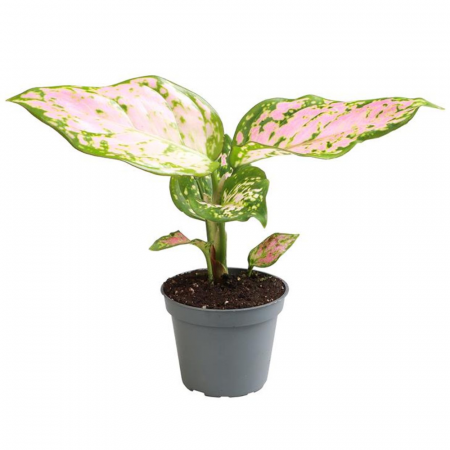
![Aglaonema 'Grand Poppy' — olive-green leaves with large coral pink and red spots, Ø19cm pot Eufloria [0]](https://gomagcdn.ro/domains2/eufloria.ro/files/product/medium/406817.png "Aglaonema 'Grand Poppy' — olive-green leaves with large coral pink and red spots, Ø19cm pot Eufloria [0]")
![Aglaonema 'Grand Poppy' — olive-green leaves with large coral pink and red spots, Ø19cm pot Eufloria [1]](https://gomagcdn.ro/domains2/eufloria.ro/files/product/medium/074368.png "Aglaonema 'Grand Poppy' — olive-green leaves with large coral pink and red spots, Ø19cm pot Eufloria [1]")
![Aglaonema 'Grand Poppy' — olive-green leaves with large coral pink and red spots, Ø19cm pot Eufloria [1]](https://gomagcdn.ro/domains2/eufloria.ro/files/product/original/406817.png "Aglaonema 'Grand Poppy' — olive-green leaves with large coral pink and red spots, Ø19cm pot Eufloria [1]")
![Aglaonema 'Grand Poppy' — olive-green leaves with large coral pink and red spots, Ø19cm pot Eufloria [2]](https://gomagcdn.ro/domains2/eufloria.ro/files/product/original/074368.png "Aglaonema 'Grand Poppy' — olive-green leaves with large coral pink and red spots, Ø19cm pot Eufloria [2]")
Aglaonema 'Grand Poppy' — Thai cultivar with lanceolate olive-green leaves painted with large spots and striations in coral pink, magenta red, peach and cream. Pattern reminiscent of poppy fields. Tolerant, purifies air. Humidity 50-70%, 18-27°C. Colorful easy-care choice.
Approx height (including pot): 75 cm
Culoare flori: Alb/Crem
Flowering state: With flowers
Pot diameter: 19 cm
- Description
- Characteristics
- Reviews (0)
- FAQ
🌿 The Fire of Poppies Caught in Leaves — Vibrant Warmth and Tropical Elegance
Aglaonema 'Grand Poppy' wears its name with pride: it is a plant in which tropical green ignites with tones of poppy-red and warm pink, as if a field of poppies had been captured and preserved in the veins of the leaves. The centre of each leaf pulses in a vivid colour, from coral to raspberry, while the margins stay a deep green that frames and, by contrast, intensifies that incandescent heart. It is a plant that brings warmth and energy to any room, without the need for a single flower.
Unlike plants that reveal their colour only when flowering, 'Grand Poppy' offers this chromatic spectacle permanently, year after year, through its foliage. Its red does not fade with the passing season but renews itself with each new leaf, every specimen a small living flame, always lit. For those who love bold colour and interiors with personality, it is a choice that instantly transforms the atmosphere of a room.
Offered as a mature, generous specimen in a 19 cm pot, this Aglaonema already has the stature and density of a foreground plant. Its rich clump, with numerous overlapping leaves, creates an impressive volume that works beautifully as a warm focal point in a living room, a hallway or a corner you want to liven up with a patch of vivid colour.
For the plant lover seeking vitality, warmth and a strong chromatic character, 'Grand Poppy' is a memorable choice — incandescent, generous beauty that instantly lifts your mood every time you look at it.
🌍 Origin and Botanical History
The genus Aglaonema belongs to the Araceae family, the great aroid family that also includes philodendrons, monstera and anthurium. The plants of this genus originate in the tropical and subtropical forests of South-East Asia and the western Pacific islands, ranging from India and southern China to Thailand, the Philippines and New Guinea. In their habitat, they grow on the shady forest floor, beneath the dense canopy of tall trees, receiving only filtered light — an adaptation that explains their remarkable tolerance for low indoor light.
The genus name comes from ancient Greek, from "aglaos" (shining) and "nema" (thread), a reference to the glossy stamens of the flowers. The genus was scientifically described by the botanist Heinrich Wilhelm Schott. In Asian tradition, Aglaonema has for centuries been considered a plant of luck and prosperity, kept in homes and shops as a sign of good fortune — and the red varieties are associated especially with energy, joy and abundance.
The 'Grand Poppy' cultivar belongs to the wave of coloured Aglaonemas developed through Thai hybridisation programmes, where breeders transformed a once predominantly silver-green genus into a true palette of reds, pinks and warm tones. 'Grand Poppy' takes this chromatic quest toward the vivid, incandescent tones of poppies — a horticultural achievement that combines the classic resilience of Aglaonema with a colour of spectacular intensity.
Its origin as a tropical understorey plant explains its entire character: a preference for constant warmth, high humidity and indirect light, and a sensitivity to cold. Knowing this native environment, it becomes simple to recreate the right conditions at home.
🌱 The Foliage
The foliage is, of course, the entire reason for this plant's existence. The leaves, broad and elongated, slightly pointed at the tip, usually reach 15–25 cm in length and are carried on firm petioles that hold them in an airy, gently arching arrangement. Their surface has a fine sheen that catches the light and makes the warm tones of red and pink glow.
The hallmark of the 'Grand Poppy' cultivar is the dramatic distribution of colour: the centre of the leaf, along the main vein and its branches, ignites in coral-red, raspberry-pink and peach, while the margins stay a dark green that frames that incandescent heart. Here and there, patches of red spread toward the edges like flames, and the stems too can take on pinkish tones — the whole arrangement a living composition of warm and cool, of fire and foliage.
The texture of the leaves is firm yet pleasant to the touch, with a slightly fleshy consistency that helps them stay turgid and healthy even in the drier air of homes. Young leaves emerge rolled from a central bud and unfurl gradually, often with an even stronger chromatic intensity at first, then maturing into a balance of red and green — a slow but charming spectacle for those who follow the plant's growth.
On a mature specimen in a 19 cm pot, the leaves overlap generously, creating a full volume and a rounded, balanced silhouette that looks spectacular without becoming chaotic. Seen up close, each leaf is a controlled explosion of colour; seen from afar, the whole plant becomes a warm, vibrant patch that visually enlivens any space.
🌸 The Flowers
Like all aroids, Aglaonema can produce the family's typical inflorescence: a central spadix in the shape of a small cob, partly wrapped in a bract called a spathe, of a discreet greenish-white. The flowers appear mainly on mature, well-cared-for specimens and have the value of a botanical curiosity rather than a properly decorative one.
In apartment culture, many enthusiasts choose to remove the inflorescences as soon as they appear, so the plant concentrates its energy on producing new, intensely coloured leaves — because in 'Grand Poppy' the incandescent foliage is the true spectacle, not the pale flower. The light green spathe adds nothing to the explosion of red in the leaves, and removing it keeps the clump compact and vigorous.
If you do choose to let the flower develop, you can read it as a sign that your plant has reached maturity and truly feels at home. Whatever you do, the real ornamental value always remains in its fiery foliage, which does not fade with the passing of an ephemeral flower.
🌱 Growth and Development
Aglaonema 'Grand Poppy' is a slow- to moderate-growing plant that gradually builds a dense clump from several short, thick stems, each sending out leaf after leaf. With age, the plant may develop visible stems at the base and lateral shoots, which can be separated for propagation. The habit stays compact and balanced, ideal for a table, a low stand or directly on the floor, as a warm, colourful focal point.
It is a remarkably forgiving plant: it tolerates medium light, occasional forgetfulness with watering and the drier air of apartments, making it suitable both for beginners and for those who want a striking plant without fuss. It need only be protected from cold and excess water — with constant warmth and a well-draining substrate, it will keep its intensely coloured foliage for many years. For the brightest red, give it generous, indirect light.
- Light: medium to bright, indirect light; the more generous the light (without harsh midday sun), the more intense and vivid the red and pink of the leaves.
- Temperature: prefers 18–27 °C and constant warmth; sensitive to cold, it must be kept away from temperatures below 15 °C and from cold draughts.
- Watering: keep the substrate lightly moist, letting the top layer (2–3 cm) dry between waterings; water less in winter and avoid water pooling at the roots.
- Humidity: enjoys high humidity; occasional misting, grouping with other plants or a humidifier keeps its foliage in peak condition.
- Substrate: an airy, well-draining houseplant mix, with added perlite and fine bark for good air circulation at the roots.
- Fertilising: feed monthly in the warm season with a balanced foliage-plant fertiliser diluted to half strength; stop feeding in winter.
- Propagation: by separating lateral shoots when repotting or from stem cuttings with a few leaves, rooted in a warm, moist substrate.
To showcase its chromatic warmth, 'Grand Poppy' looks superb alongside other coloured Aglaonemas and green foliage plants with similar needs, which accentuate its vibrant red by contrast.
Lungime: 40 cm
Greutate (kg): 1 Kg
Denumire: Aglaonema
Cerințe lumină: Partial umbra
Tip plantă: Decorative
Utilizare: Interior
Tip suport: Ghiveci
Material Suport: Plastic
Why is it called 'Grand Poppy'?
How large are the colored spots?
How to water correctly?
Is Aglaonema 'Grand Poppy' toxic?
How is it propagated?
Ai nevoie și de un ghiveci decorativ?