EN/
EN/ Romana
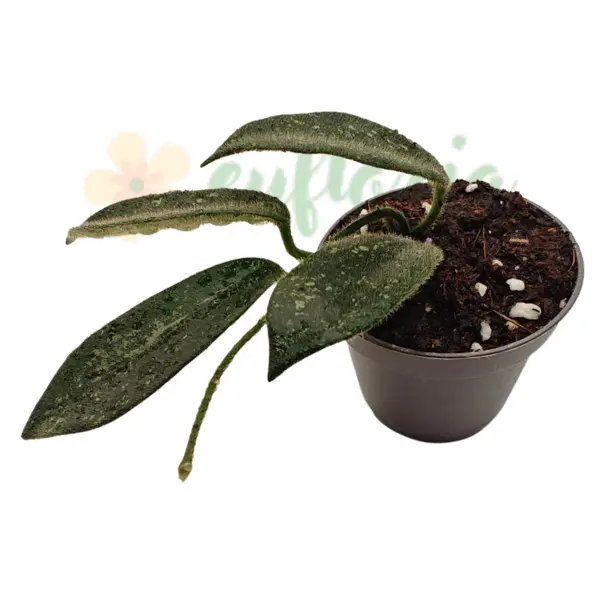
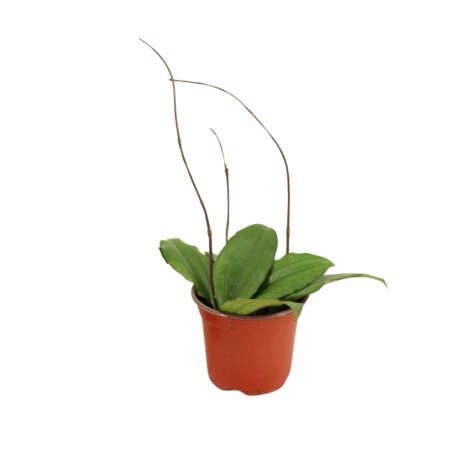
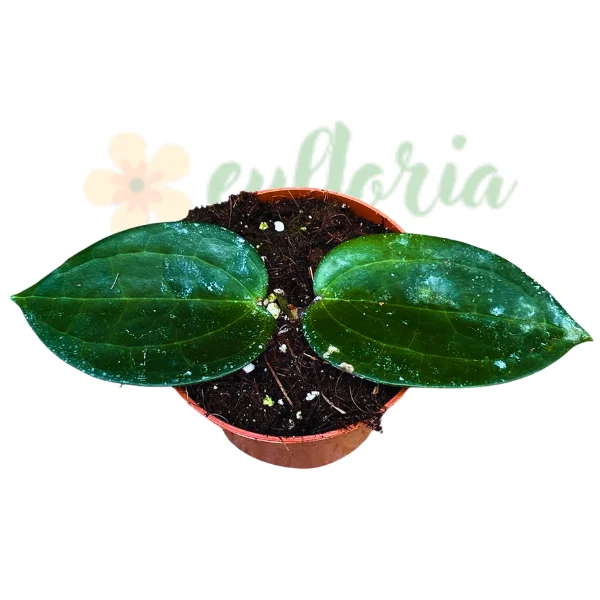
Hoya meliflua 'Island' Ø10,5cm
![Hoya meliflua 'Island' Ø10,5cm [0]](https://gomagcdn.ro/domains2/eufloria.ro/files/product/medium/hoya-meliflua-island-d10-5-667369.webp "Hoya meliflua 'Island' Ø10,5cm [0]")
![Hoya meliflua 'Island' Ø10,5cm [1]](https://gomagcdn.ro/domains2/eufloria.ro/files/product/medium/hoya-meliflua-island-d10-5-825202.webp "Hoya meliflua 'Island' Ø10,5cm [1]")
![Hoya meliflua 'Island' Ø10,5cm [1]](https://gomagcdn.ro/domains2/eufloria.ro/files/product/original/hoya-meliflua-island-d10-5-667369.webp "Hoya meliflua 'Island' Ø10,5cm [1]")
![Hoya meliflua 'Island' Ø10,5cm [2]](https://gomagcdn.ro/domains2/eufloria.ro/files/product/original/hoya-meliflua-island-d10-5-825202.webp "Hoya meliflua 'Island' Ø10,5cm [2]")
Approx height (including pot): 15 cm
Flowering state: No flowers
Pot diameter: 10.5 cm
- Description
- Characteristics
- Reviews (0)
- FAQ
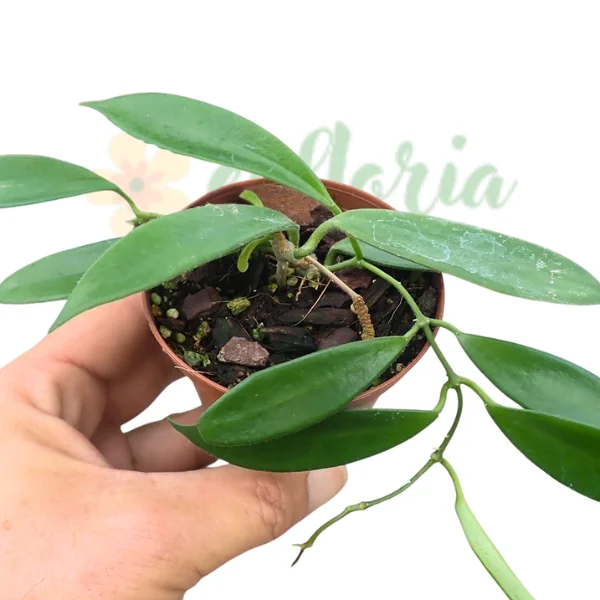
Hoya meliflua 'Island' is a Philippine endemic with some of the cleanest, most architectural foliage in the genus – stiff, glossy, succulent leaves with no visible veining whatsoever – paired with flowers that produce so much dark nectar that it literally drips. The species name tells the story: from Latin mellis (honeydew) and fluo (to flow), referring to the abundant nectar that stains the flowers. When it blooms, the fragrance evolves from an initial glue-like note into rich, sweet chocolate. This is a species that delivers both visual minimalism and sensory drama.
The Species
Hoya meliflua was first described in 1837 by Francisco Manuel Blanco, who initially misidentified it as a Stapelia. The species was correctly placed in the genus Hoya by Elmer Drew Merrill in 1918 (Species Blancoanae, p. 318). It is endemic to the Philippines – recorded from Apayao, La Union, Rizal, Bataan, Laguna, Mindoro, Palawan, Negros, Panay, and Leyte. In its natural habitat, it grows as an epiphyte in montane forests at elevations of 1,000–1,200 metres above sea level. The 'Island' designation indicates a locality form selected from one of the Philippine islands, prized for consistent characteristics.
The Foliage
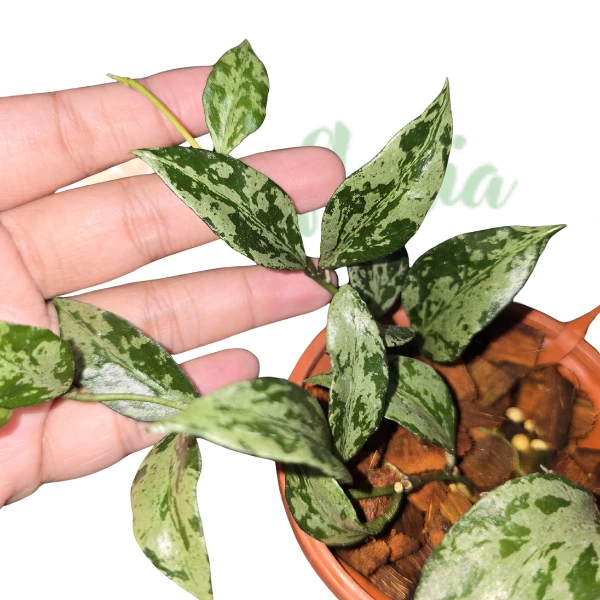
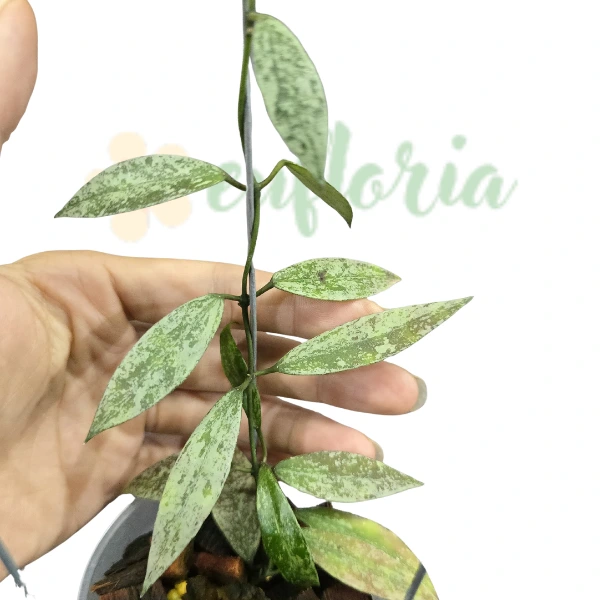
The leaves are the first thing collectors notice. Hoya meliflua produces stiff, succulent-like leaves that are remarkably clean in appearance – dark green, glossy, with no evident venation on the upper surface. Wikipedia describes them as having "a very clean look to them with no venation." World of Succulents records leaf dimensions of up to 13 cm long and 6 cm wide, attached to the stem by a petiole up to 2 cm long. The leaves are elongate-ovate, leathery to fleshy, with a glossy cuticle that gives the plant a polished, almost artificial appearance. Under bright light, the leaves may develop subtle reddish edges – Jordan's Jungle notes "subtle reddish edges, particularly when exposed to bright light." The foliage has a hearty, lush quality that makes the plant visually substantial even when not in bloom.
Growth Habit
This is a large-growing Hoya with thick, branched stems that can reach 3–4 metres in length. However, H. meliflua has an unusual characteristic: it does not twine well. Multiple sources note that the branches quickly turn hard and stiff, making them difficult to guide once mature. Tropics@Home specifically warns: "It is necessary to guide new shoots before the stem hardens. A mature stem will be impossible to bend without breaking it." The species is sometimes called "little fraterna" due to its similarity to Hoya fraterna, though it remains distinctly smaller. Llifle notes that the plant "isn't much of a climber, but looks really nice hanging in a basket" and "needs a sturdy support as it grows heavy with time." Best displayed as a hanging basket specimen or trained early on a robust trellis.
The Flowers
The flowers are pink to reddish-orange (sometimes nearly white), appearing in umbels of 10–30 blooms. Each flower measures approximately 1.5 cm in diameter with a revolute (reflexed) corolla. At the base of the central column are five prominent nectaries that produce copious dark-coloured nectar – this nectar drips readily and stains the flowers, giving mature blooms a characteristic chestnut-coloured mottling. The fragrance is distinctive and evolves over time: Llifle notes that "at first the flowers have a strange scent, similar to glue but not so strong, but as the flowers mature the scent turns more sweet – they smell like chocolate." Gabbar Farms and multiple other sources confirm the chocolate fragrance. The flowers are long-lasting and appear primarily in spring and summer, with occasional autumn blooms. Flowering is promoted by temperature differentials between day and night.
⚠️ Nectar Warning: The dark nectar produced by H. meliflua stains very easily. When displaying flowering plants, protect surfaces beneath the plant. The staining is a natural characteristic, not a sign of disease.Care Requirements
- Light: Bright indirect light to partial shade. Tolerates full sun in mild climates but may develop reddish leaf edges. Avoid deep shade – the plant becomes leggy and less likely to flower.
- Water: Allow substrate to dry substantially between waterings. Water thoroughly when dry, then wait. The succulent leaves store moisture well. Overwatering leads to root rot. Reduce watering significantly in winter.
- Soil: Well-draining epiphytic mix – orchid bark, perlite, and coco coir. The roots need excellent aeration. Slightly acidic to neutral pH (6.1–7.5).
- Temperature: 20–25°C (68–77°F) is ideal. World of Succulents notes tolerance down to 4°C for brief periods, making this more cold-tolerant than many tropical Hoyas. USDA zones 11a–11b. Protect from frost.
- Humidity: Above 60% is recommended for optimal growth. Tolerates lower humidity but benefits from misting during dry periods.
- Feeding: Balanced fertilizer at half strength monthly during the growing season. Stop in winter.
- Training: Guide new shoots early, before stems harden. Once mature, stems are stiff and inflexible.
Botanical Summary
Family: Apocynaceae | Genus: Hoya | Species: Hoya meliflua (Blanco) Merr. (1918) | Form: 'Island' (Philippine locality form) | Synonyms: Stapelia meliflua Blanco (1837), Hoya luzonica Schltr. | Common Names: Wax Plant, Little Fraterna, Porcelain Flower | Type: Epiphytic Climbing/Trailing Vine | Origin: Philippines (endemic) – Luzon, Mindoro, Palawan, Visayas, Leyte | Habitat: Montane forest, 1,000–1,200 m elevation | Flowering: Umbels of 10–30 pink to reddish-orange flowers, 1.5 cm, chocolate fragrance (evolving from glue-like when fresh), dark dripping nectar, spring–summer–autumn, long-lasting | Growth Rate: Moderate | Stems: Up to 3–4 m, thick, stiff when mature
Lungime: 10 cm
Greutate (kg): 1 Kg
Denumire: Hoya
Diametru: 10.5 cm
Cerințe lumină: Partial umbra
Tip plantă: Decorative
Utilizare: Interior
Tip suport: Ghiveci
Material Suport: Plastic
Is Hoya meliflua easy to grow?
Yes. Multiple specialist sources describe H. meliflua as easy-to-care-for and suitable for beginners. Llifle notes it is "considered as an easy-to-care and very temperature-tolerant plant and is suitable for Hoya beginners." World of Succulents records that the species can tolerate temperatures as low as 4°C for brief periods – considerably more cold-tolerant than many tropical Hoyas. The main care requirements are straightforward: bright indirect light (tolerates some direct sun), well-draining epiphytic substrate, allow soil to dry between waterings, and provide support for the heavy, stiff stems. Flowering is "regular but not often" according to Tropics@Home, and is promoted by temperature differentials between day and night. The primary challenge is not keeping the plant alive – it is managing the stiff stems (train early!) and the staining nectar when it blooms.
Why are my Hoya meliflua stems so stiff and hard to bend?
This is a natural characteristic of the species, not a sign of any problem. Hoya meliflua has unusually thick, woody stems that harden quickly as they mature. Tropics@Home specifically warns: "It is necessary to guide new shoots before the stem hardens. A mature stem will be impossible to bend without breaking it." Multiple sources note that unlike many Hoyas, H. meliflua "doesn't twine well" and "the branches quickly turn hard." If you want to train the plant on a trellis or shape it in a particular direction, you must work with new, still-flexible growth. Once a stem has hardened, it is essentially fixed in position. For this reason, Llifle recommends the species "looks really nice hanging in a basket" where its natural, somewhat unruly growth habit becomes an asset rather than a challenge. The plant also becomes heavy with time and needs sturdy support.
What does Hoya meliflua smell like?
The fragrance evolves as the flowers mature. Llifle provides the most detailed description: "At first the flowers have a strange scent, similar to glue but not so strong, but as the flowers mature the scent turns more sweet – they smell like chocolate." Multiple specialist sources (Gabbar Farms, Plantophiles, MyBageecha) confirm the chocolate fragrance of mature flowers. The initial glue-like note is mild and not unpleasant, but it can surprise first-time growers who expect immediate sweetness. Give the flowers a few days to develop their full chocolate scent. The fragrance is moderate in intensity – noticeable at close range and pleasant without being overpowering. Because the flowers are long-lasting, you can enjoy the chocolate scent for an extended period during the bloom.
Why is dark liquid dripping from my Hoya meliflua flowers?
This is completely normal – in fact, it is the defining characteristic of the species. The species name meliflua literally means "flowing with honey" (from Latin mellis = honeydew and fluo = to flow). Wikipedia explains: "The flowers are reddish orange and have nectaries near the base of the central column from which a dark sap is produced that stains very easily." This dark nectar is produced naturally to attract pollinators in the plant's native Philippine forests. It will stain surfaces, fabrics, and skin with a brown colour that can be difficult to remove. When displaying flowering plants, place a catch tray beneath the pot or hang the plant over a surface you don't mind marking. The dripping nectar is not a sign of disease, overwatering, or any problem – it is simply what this species does.
Is Hoya meliflua 'Island' toxic to cats and dogs?
No. Hoya meliflua is confirmed non-toxic to cats, dogs, and other household pets. World of Succulents explicitly states: "H. meliflua is non-toxic to humans and pets." The species belongs to the Hoya genus, which is generally considered safe for households with animals. One caveat: the plant produces abundant dark nectar when flowering, which can stain fur, skin, fabrics, and surfaces. While not harmful if ingested in small amounts, the nectar is sticky and creates noticeable brown marks. If you have pets that might investigate the flowers, consider placing the plant out of reach during blooming periods – both for the cleanliness of your pet and the protection of your surfaces.
How to care?
Bright indirect light, moderate watering, drained substrate. 18-27°C.
Bloom?
Yes, waxy flowers. Don't cut peduncles.
Watering?
Fully dry soil. Weekly summer, 2-3 weeks winter.
Toxic?
No, non-toxic.
Propagation?
Cuttings 2-3 nodes water/sphagnum. 2-6 weeks.
Recommendations
Ai nevoie și de un ghiveci decorativ?