EN/
EN/ Romana
Hoya linearis Ø14cm
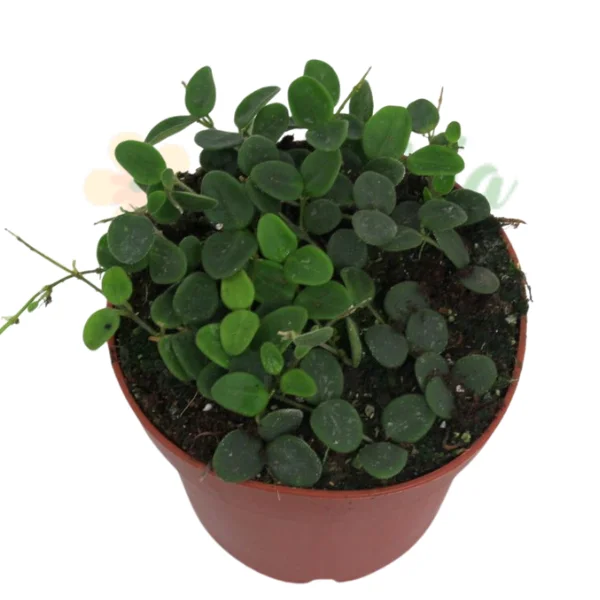
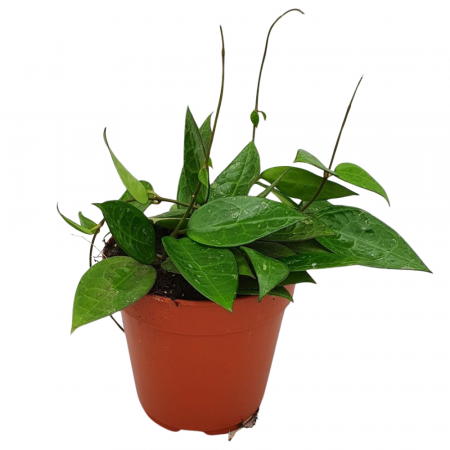
![Hoya linearis - trailing indoor plant with thin velvety leaves and fragrant flowers [0]](https://gomagcdn.ro/domains2/eufloria.ro/files/product/medium/hoya-linearis-d14cm-977859.jpg "Hoya linearis - trailing indoor plant with thin velvety leaves and fragrant flowers [0]")
![Hoya linearis - trailing indoor plant with thin velvety leaves and fragrant flowers [1]](https://gomagcdn.ro/domains2/eufloria.ro/files/product/medium/hoya-linearis-d14cm-441315.jpg "Hoya linearis - trailing indoor plant with thin velvety leaves and fragrant flowers [1]")
![Hoya linearis - trailing indoor plant with thin velvety leaves and fragrant flowers [1]](https://gomagcdn.ro/domains2/eufloria.ro/files/product/original/hoya-linearis-d14cm-977859.jpg "Hoya linearis - trailing indoor plant with thin velvety leaves and fragrant flowers [1]")
![Hoya linearis - trailing indoor plant with thin velvety leaves and fragrant flowers [2]](https://gomagcdn.ro/domains2/eufloria.ro/files/product/original/hoya-linearis-d14cm-441315.jpg "Hoya linearis - trailing indoor plant with thin velvety leaves and fragrant flowers [2]")
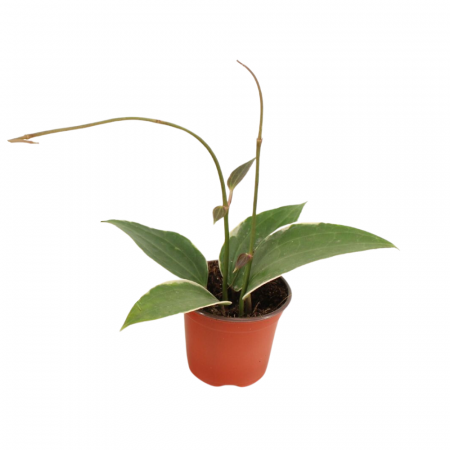
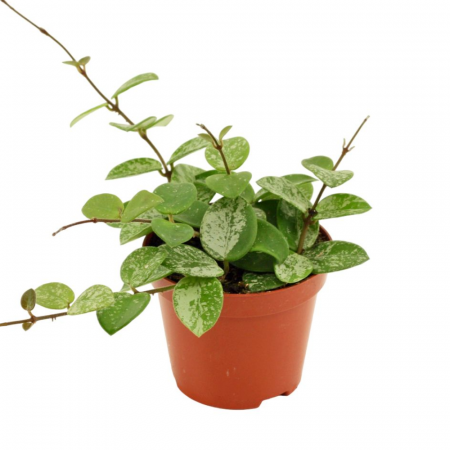
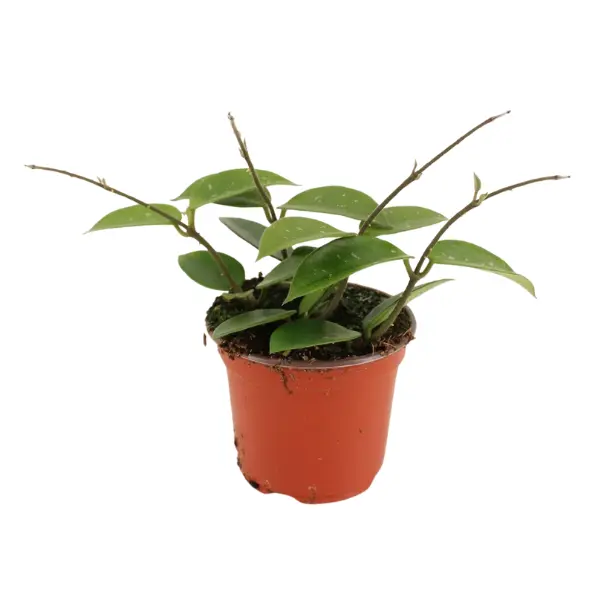
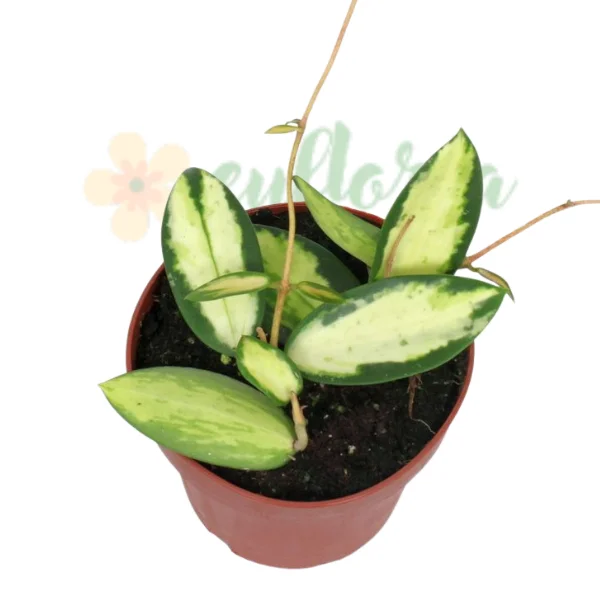
Hoya linearis is a rare and unusual species from the Apocynaceae family, native to the Himalayan mountains, remarkable for its thin, elongated leaves with a velvety touch — completely different from the waxy foliage typical of the Hoya genus. Its delicate white flowers emit a subtle lemon and honey fragrance that intensifies in the evening. An epiphytic trailing plant perfect for hanging pots, Hoya linearis is one of the most cold-tolerant Hoya species, thanks to its montane origins.
Approx height (including pot): 30 cm
Flowering state: No flowers
- Description
- Characteristics
- Reviews (0)
🌿 A Veil of Silky Green Suspended in Air
Some plants simply refuse to conform to the typical patterns of their genus, and Hoya linearis is, without a doubt, one of the most spectacular rebels in the entire Apocynaceae family. Unlike other Hoya species, whose waxy, glossy leaves are their unmistakable signature, Hoya linearis dares to be different — its leaves are thin, elongated, covered in a fine, delicate fuzz that gives them an almost velvety texture, an emotional contrast with the other members of the genus. It is a plant that seems to flow from its pot like a botanical spring, creating living curtains of bright green that sway gently in the air currents of the room.
Native to the mountainous regions of the Himalayas, in Nepal and northern India, Hoya linearis is one of the few Hoya species that lives at high altitudes, between 1,500 and 2,000 metres, in a considerably cooler climate than that of most of its tropical relatives. This adaptation to lower temperatures makes it surprisingly tolerant in our homes, where it does not demand the tropical heat that other Hoyas require. It is a plant that brings an air of Asian elegance and Himalayan mystery to any interior space, transforming a simple window corner into a hanging garden.
At Eufloria.ro, we offer Hoya linearis in 14 cm pots, with long, dense branches that already create a spectacular cascade effect. Each specimen is a living organism that promises to grow and develop before your eyes, adding a few centimetres of fresh green each month to your plant story. It is the perfect choice for those seeking a plant with a strong personality, different from anything they have seen before, who wish to bring a piece of the Himalayan mist into their home. Delivery across the EU.
🌍 Origin and Botanical History
Hoya linearis belongs to the Apocynaceae family (subfamily Asclepiadoideae) and was first described by the English botanist David Don in his work "Prodromus Florae Nepalensis" in 1825, based on specimens collected in Nepal. The specific name "linearis" comes from the Latin "linearis", meaning "line-shaped", a direct reference to the unique, extremely elongated and narrow form of its leaves — a characteristic that dramatically differentiates it from all other species in the Hoya genus.
The natural distribution of the species covers a fascinating geographical strip along the Himalayan chain: Nepal, northern India (particularly the Sikkim, Darjeeling, and Assam regions), Bhutan, and possibly eastern Tibet. Unlike most Hoyas, which are lowland tropical jungle plants, Hoya linearis is a montane species, growing at altitudes of 1,500-2,000 metres, where night-time temperatures can drop considerably and where persistent fog provides constant humidity.
In its natural habitat, Hoya linearis grows epiphytically on tree trunks and branches in cloud forests, where its pendulous branches can reach impressive lengths of 2-3 metres. The plants form dense curtains of vegetation that sway in the mountain breeze, capturing fog droplets that provide the water and nutrients they need. This epiphytic lifestyle explains why the plant prefers an airy substrate that does not retain excess water, and why it feels most comfortable when its roots can breathe freely.
🌱 The Foliage
The leaves of Hoya linearis are, without question, its most distinctive feature and the reason this species sparks a wave of amazement among collectors. Unlike typical Hoya leaves — thick, waxy, broad and glossy — the leaves of Hoya linearis are exceptionally thin and elongated, 4-6 centimetres long and barely 2-3 millimetres wide. Their shape is linear, almost cylindrical, with a slightly concave cross-section on the upper surface, creating a small longitudinal groove that captures dew drops in nature.
The texture of the leaves is one of the most pleasant surprises this plant offers. Instead of the glossy, waxy surface typical of the genus, the leaves of Hoya linearis are covered in a fine layer of trichomes (microscopic hairs) that give them a velvety feel to the touch, almost like botanical fur. This pubescence has a functional role: in the mountain habitat, the tiny hairs capture micro-particles of water from fog, directing them towards the base of the leaf and then to the roots — an ingenious water-collecting mechanism.
The foliage colour is a bright, fresh green with slightly grey-green hues due to the pubescence. As the leaves age, they take on a deeper, darker green, while new growth tips are a delicate lime-green, creating a subtle contrast of shades along the branches. The leaves grow in opposite pairs on the stems, creating a regular, symmetrical pattern that amplifies the ornamental effect of the green cascade.
🌸 The Flowers
Hoya linearis produces some of the most delicate and fragrant flowers in the entire Hoya genus. The flowers are grouped in umbels of 8-15 individual flowers, each flower measuring approximately 1-1.5 centimetres in diameter. The petals are white, immaculate, with a fine, almost translucent texture, while the central crown (corona) is cream-white with delicate hints of yellow or pale pink — a refined contrast reminiscent of nature's floral jewellery.
The fragrance of the flowers is one of the species' hidden treasures. Unlike other Hoyas with heavy-sweet, almost nauseating perfumes, Hoya linearis emits a subtle, fresh fragrance with notes of lemon and honey, which intensifies in the evening and during the night, attracting nocturnal pollinators in its natural habitat. It is the kind of scent that discreetly fills a room without becoming overwhelming — a natural air freshener of rare elegance.
The flowers usually appear in late summer and autumn, on short peduncles that form at the nodes of mature stems. An important aspect is that the flower peduncles are persistent — they should not be cut after the flowers wilt, as the plant will produce new flowers on the same peduncles the following season. To encourage flowering, the plant benefits from a winter rest period with cooler temperatures (12-15°C) and reduced watering, followed by a return to normal conditions in spring.
🌱 Growth Habit and Development
Hoya linearis is a plant with a pronounced pendulous habit, whose thin, flexible stems cascade from pots, reaching lengths of 60-120 centimetres in cultivation, and even more in nature. The growth rate is moderate — not as fast as some Pothos or Tradescantia, but constant and satisfying, with visible growth of several centimetres per month during the growing season. The branches develop naturally, creating a dense mass of vegetation that transforms any hanging pot into a living cascade.
As an epiphytic plant, Hoya linearis has a relatively small root system in relation to its aerial vegetative mass, which means it does not require large pots — a pot with a diameter of 12-14 centimetres is sufficient for a mature specimen. In fact, the plant flowers more readily when the roots are slightly compacted, a common phenomenon in many Hoyas.
- Light: Bright, indirect light. Tolerates medium light, but grows more slowly and flowers less readily. Avoid intense direct summer sun, which can burn the delicate leaves.
- Temperature: 15-25°C optimal. Tolerates 5-10°C in winter — one of the most cold-resistant Hoyas, thanks to its mountain origins. Avoid prolonged temperatures above 30°C.
- Watering: Allow the top 2-3 cm of substrate to dry between waterings. More sensitive to overwatering than to moderate drought. In winter, reduce watering frequency significantly.
- Humidity: Prefers 50-70% humidity. Benefits from regular misting or a humidifier, especially in winter when indoor air is dry.
- Substrate: Airy, well-draining mix: 40% perlite/pumice, 30% pine bark, 20% peat/coco coir, 10% activated charcoal. Overly dense, water-retentive substrates cause root rot.
- Fertilising: Half-strength liquid fertiliser, once every 2-3 weeks during the growing season (April-September). Stop fertilising in winter.
- Propagation: By stem cuttings of 10-15 cm, placed in moist substrate with perlite or directly in water. Rooting takes 3-6 weeks. Optimal period: spring-summer.
Lungime: 14 cm
Greutate (kg): 1.5 Kg
Denumire: Hoya
Diametru: 14 cm
Cerințe lumină: Strong, indirect light
Tip plantă: Decorative
Utilizare: Interior
Tip suport: Ghiveci
Material Suport: Plastic
Ai nevoie și de un ghiveci decorativ?