EN/
EN/ Romana
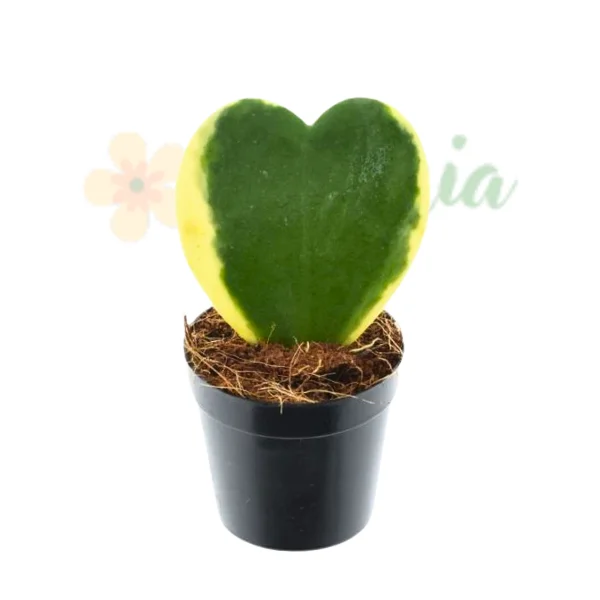
Hoya flagellata 'Silver' D7
![Hoya flagellata 'Silver' – Colour-Shifting Leaves & Hairy Flowers [0]](https://gomagcdn.ro/domains2/eufloria.ro/files/product/medium/hoya-flagellata-silver-d7-023958.webp "Hoya flagellata 'Silver' – Colour-Shifting Leaves & Hairy Flowers [0]")
![Hoya flagellata 'Silver' – Colour-Shifting Leaves & Hairy Flowers [1]](https://gomagcdn.ro/domains2/eufloria.ro/files/product/medium/hoya-flagellata-silver-d7-609593.webp "Hoya flagellata 'Silver' – Colour-Shifting Leaves & Hairy Flowers [1]")
![Hoya flagellata 'Silver' – Colour-Shifting Leaves & Hairy Flowers [2]](https://gomagcdn.ro/domains2/eufloria.ro/files/product/medium/hoya-flagellata-silver-d7-118895.webp "Hoya flagellata 'Silver' – Colour-Shifting Leaves & Hairy Flowers [2]")
![Hoya flagellata 'Silver' – Colour-Shifting Leaves & Hairy Flowers [1]](https://gomagcdn.ro/domains2/eufloria.ro/files/product/original/hoya-flagellata-silver-d7-023958.webp "Hoya flagellata 'Silver' – Colour-Shifting Leaves & Hairy Flowers [1]")
![Hoya flagellata 'Silver' – Colour-Shifting Leaves & Hairy Flowers [2]](https://gomagcdn.ro/domains2/eufloria.ro/files/product/original/hoya-flagellata-silver-d7-609593.webp "Hoya flagellata 'Silver' – Colour-Shifting Leaves & Hairy Flowers [2]")
![Hoya flagellata 'Silver' – Colour-Shifting Leaves & Hairy Flowers [3]](https://gomagcdn.ro/domains2/eufloria.ro/files/product/original/hoya-flagellata-silver-d7-118895.webp "Hoya flagellata 'Silver' – Colour-Shifting Leaves & Hairy Flowers [3]")
Approx height (including pot): 10 cm
Flowering state: No flowers
- Description
- Characteristics
- Reviews (0)
- FAQ
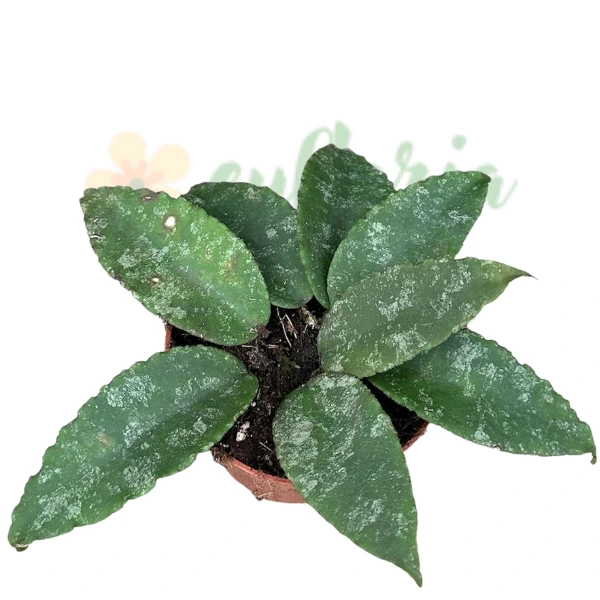
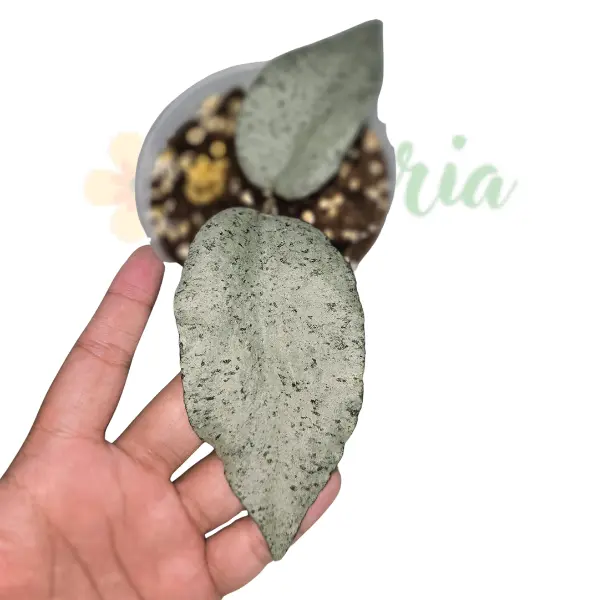
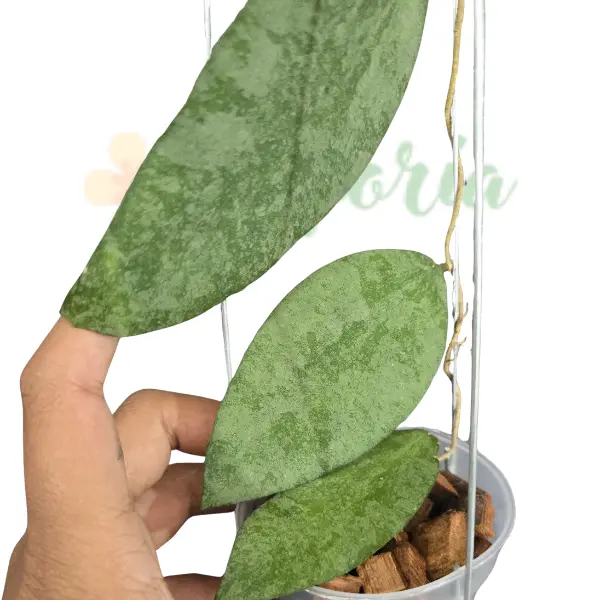
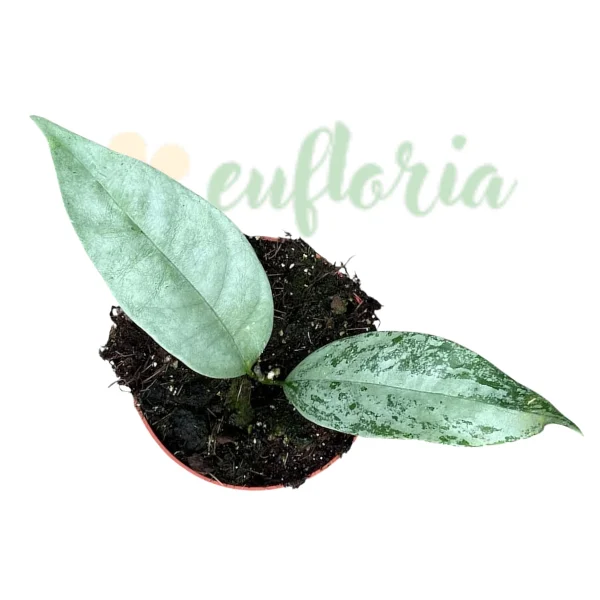
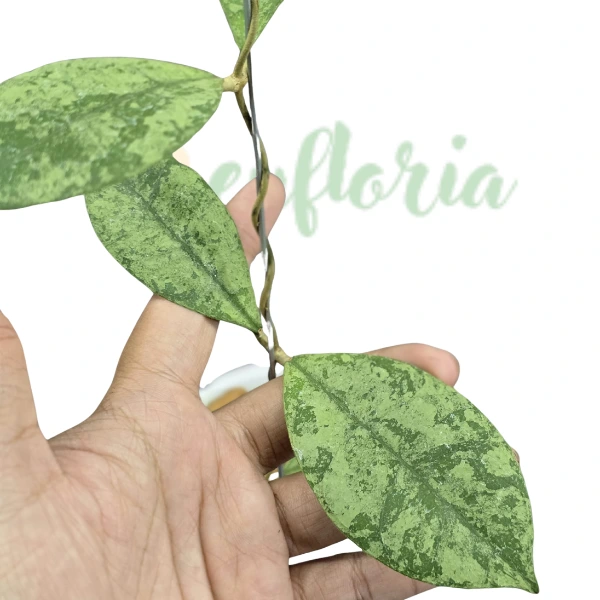
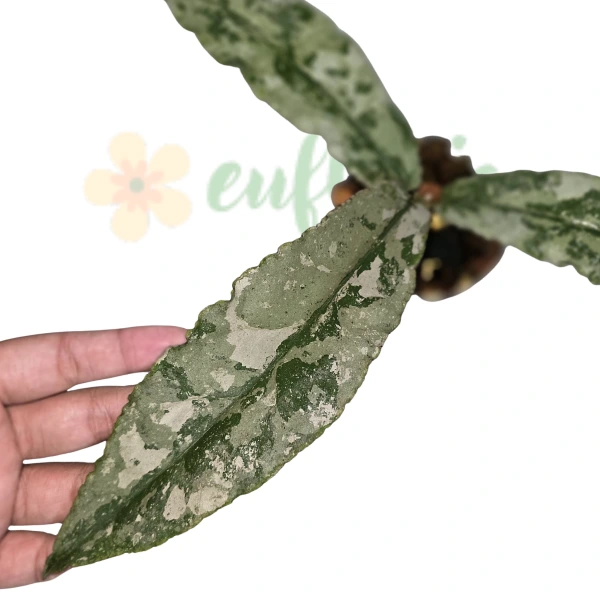
Hoya flagellata 'Silver' is the silver-splashed form of a species that fascinates collectors with its dramatic colour-shifting foliage and extraordinary hairy flowers. Where many Hoyas offer one standout trait – great leaves or great flowers – Hoya flagellata delivers a genuinely complex visual experience: leaves that emerge dark maroon before hardening to deep forest green, that can flush entirely red to burgundy under strong light, and that in this Silver form carry generous splashes of metallic silver across a sandpaper-textured surface. And then the flowers arrive – small, fuzzy, deeply pigmented stars with long hairs sprouting from the corona, unlike anything else in the typical houseplant world. This is a collector's Hoya: slow-growing, character-rich, and endlessly interesting.
The species Hoya flagellata was described by T. Green and published in The Hoyan, Vol. 15, in 1994. It is native to Thailand, where it grows as an epiphyte or lithophyte in tropical forests, clinging to trees or rocks in warm, humid conditions. The species name comes from the Latin flagellum, meaning "whip," referencing the plant's long, slender, whip-like stems. Its taxonomy is debated: Vermont Hoyas notes that the flowers are so similar to Hoya caudata that many collectors believe flagellata may simply be a distinct form of caudata rather than a separate species. However, flagellata is distinguished by its narrower, harder leaves, more pronounced sun-stress colouration, and different growth habit. Foliage Factory lists Hoya caudata's synonymy with flagellata in the taxonomic identifiers, confirming this close relationship. Regardless of how taxonomy eventually settles, in the plant trade Hoya flagellata is treated as a distinct entity – and the Silver form is among its most visually striking expressions.
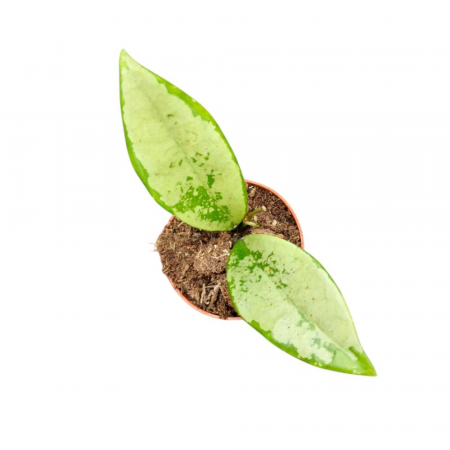
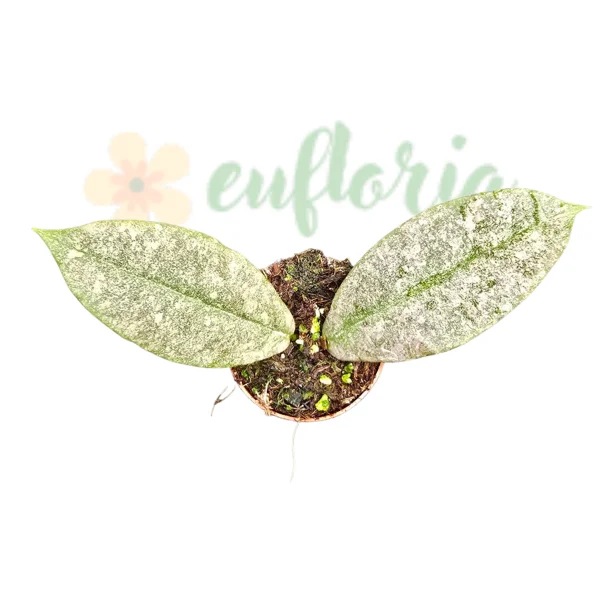
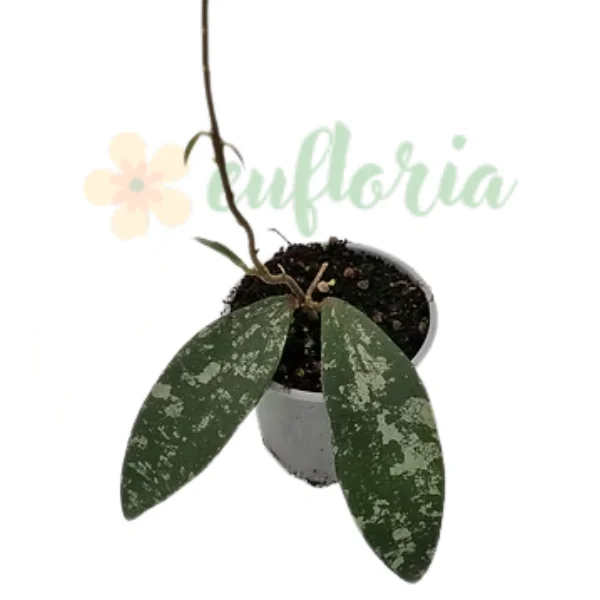
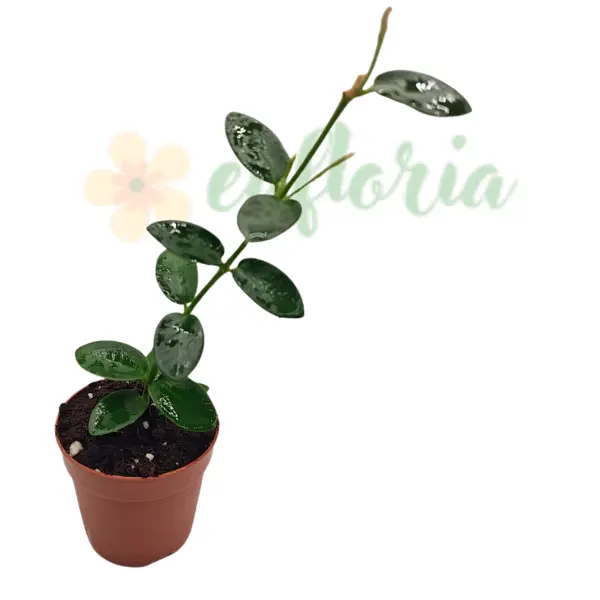
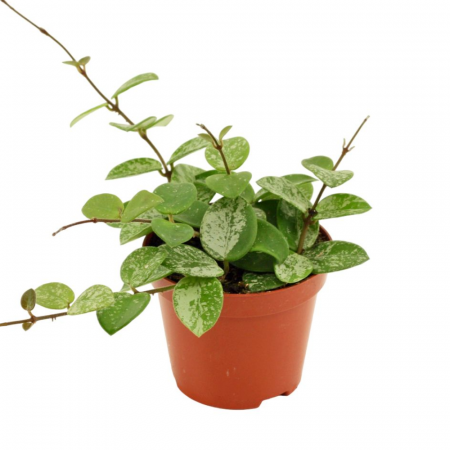
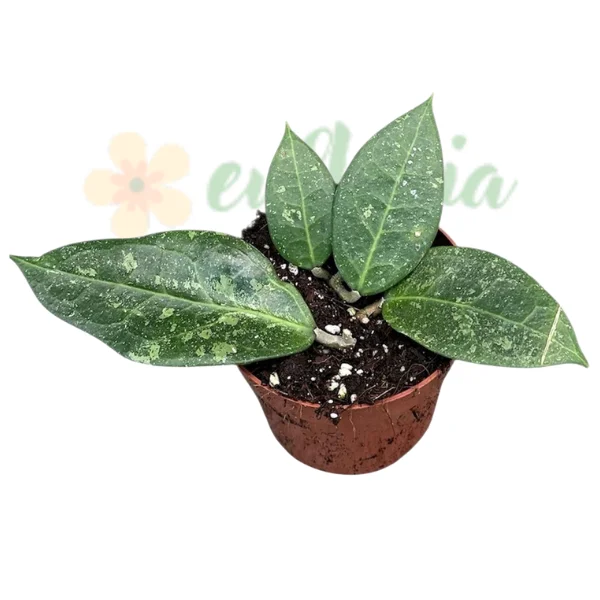
The leaves of the Silver form are long, narrow, and lance-shaped, measuring approximately 10 cm long and 4 cm wide at maturity. They are thick, hard, and leathery with a distinctive sandpaper-like texture – a rough, tactile surface quite unlike the smooth, glossy leaves of many other Hoyas. New leaves emerge a striking dark maroon colour before gradually hardening and maturing to deep forest green. This colour transition alone makes young growth on this plant a visual event. The defining feature of the Silver form is the generous silver splash variegation scattered across the leaf surface, giving each leaf a metallic, almost frost-dusted appearance. The Hoya Store Australia describes the related gold form as having "an incredible satin finish" – and the Silver form carries a similarly lustrous quality, but in cool silver tones rather than warm bronze. Under strong light, the leaves undergo dramatic sun-stress, flushing from green through red-green to full burgundy – a natural, healthy response that many collectors deliberately encourage. The silver splash markings remain visible through the colour changes, creating complex layered effects of silver over green, silver over red, or silver over deep burgundy.
The flowers are extraordinary and unlike those of most common Hoyas. They are star-shaped, approximately 12-20 mm across, with reflexed petals covered in a pubescent (hairy) texture. The corolla ranges from white to cream, while the corona is deep red to hot pink, with remarkable long white hairs sprouting from the centre – giving each bloom an almost alien, otherworldly appearance. Gabriella Plants describes "fascinating white flowers covered in hairs, red coronas with long hairs sticking out the center." The Hoya Store Australia documents the gold form's flowers as having a "hot-pink corona from which sprouts long white hairs" and notes an intriguing behaviour: the corolla partially closes at night, then opens flat again in the morning. Flowers form in small umbels of up to 15 blooms from persistent peduncles. They are gently fragrant and last approximately 4 days. Vermont Hoyas, with characteristic honesty, notes an interesting experience: their cutting sat for nearly a year doing "absolutely nothing" before suddenly producing two peduncles and flowering – without ever growing a new leaf first.
Growth is slow. MyHoyas.com confirms this species is "rather easy to grow, but it doesn't grow too fast so it's easy to keep on a smaller support." Vines can eventually reach up to 1.5-3 metres with support, but the pace is unhurried. The growth habit features long, slender stems with relatively long internodes. This makes it well-suited to trailing from hanging baskets, training on small trellises or hoops, or mounting on cork or driftwood.
Care Requirements:
- Light: Bright, indirect light is ideal and critical for developing the full visual potential of this plant. In good light, the silver splash markings are more prominent, and the foliage develops its famous red-to-burgundy sun-stress colouration – a desirable feature, not a problem. Tolerates some direct morning or late afternoon sun. Avoid harsh midday sun, which can cause scorching. In low light, the silver variegation fades, the leaves remain plain green, and flowering potential is significantly reduced. Move the plant to brighter conditions if the silver is losing contrast.
- Water: This is a critical point: Hoya flagellata does not tolerate wet feet. Experienced growers note this species is sensitive to overwatering and soggy substrates. Allow approximately 80% of the substrate to dry between waterings, then water thoroughly and allow all excess to drain. The thick, hard, semi-succulent leaves store moisture well. Use a breathable pot (terracotta or clear orchid pots) to improve aeration. Reduce watering significantly in winter. If in doubt, underwater rather than overwater – this species handles drought far better than soggy roots.
- Soil: Chunky, fast-draining, highly aerated substrate is essential. A mix of orchid bark, perlite, and coco chips provides excellent drainage and root aeration. Avoid dense, peat-heavy soils that retain too much moisture. Some growers find this species performs well in semi-hydroponics (LECA) when roots are oxygenated and nutrients are balanced. The substrate should dry quickly and allow air to reach the roots.
- Temperature: 18-26°C is the ideal range. This is a warm-growing species from Thailand's tropical forests. Avoid temperatures below 15°C. Protect from cold drafts and sudden temperature fluctuations. Consistent warmth encourages steady growth and supports flowering.
- Humidity: 60-80% produces the best growth and most prominent silver splash expression. However, there is an important nuance: some experienced growers report that Hoya flagellata can have problems with excessive humidity, particularly when combined with poor air circulation. Good air movement is essential. Do not mist the leaves directly – standing moisture on the rough, textured surface can invite fungal issues. A humidifier providing ambient humidity with a fan for air circulation is the ideal setup. Average household humidity (40-50%) is tolerated, especially in a well-draining substrate.
- Feeding: Half-strength balanced liquid fertilizer monthly during the growing season (spring-summer). Low maintenance overall. This is a slow grower that processes nutrients gradually – do not overfeed. Stop fertilizing in autumn and winter.
Botanical Info: Family: Apocynaceae | Genus: Hoya | Species: Hoya flagellata T.Green (1994) | Form: Silver (silver-splashed foliage selection) | Closely related to / possibly conspecific with: Hoya caudata | Common Names: Whip Hoya, Silver Whip Wax Plant (informal) | Type: Epiphytic/Lithophytic Climbing Vine | Origin: Thailand | Zone: USDA 10-12 (indoor cultivation in temperate climates) | Flowering: Pubescent/hairy, white-cream corolla, deep red/hot-pink corona with long protruding hairs, up to 15 per umbel, closes at night, gently fragrant, approx. 4 days | Growth Rate: Slow
Lungime: 10 cm
Greutate (kg): 0.25 Kg
Denumire: Hoya
Diametru: 7 cm
Cerințe lumină: Partial umbra
Tip plantă: Decorative
Utilizare: Interior
Tip suport: Ghiveci
Material Suport: Plastic
Is Hoya flagellata 'Silver' difficult to grow?
The short answer is: easy to keep alive, slow to grow, and occasionally frustrating in its own endearing way. MyHoyas.com describes the species as "rather easy to grow, but it doesn't grow too fast." Vermont Hoyas' experience is illuminating – their cutting sat for nearly a year showing no growth at all before suddenly producing flowers. The key care principles are straightforward but must be respected: excellent drainage with fast-draining substrate (this species hates wet feet); bright indirect light for silver expression and sun-stress colouration; let the substrate dry substantially (about 80%) between waterings; maintain warm temperatures (18-26°C); provide ambient humidity with good air circulation (avoid direct misting). The main challenge is patience – this is a slow grower that operates on its own timeline. Once established and comfortable, it rewards with fascinating foliage changes and extraordinary hairy flowers.
How do I keep the silver markings on Hoya flagellata 'Silver' looking vibrant?
The silver splash markings on the Silver form are a stable genetic trait – they will not disappear entirely. However, their visibility and vibrancy depend on growing conditions. Bright, indirect light is the single most important factor: in adequate light, the silver contrast is strong and shimmering. In low light, the markings can appear muted or less defined. Foliage Factory specifically notes that faded variegation should be addressed by moving the plant to brighter indirect light to restore silver splash contrast. Using rainwater or filtered water (rather than hard tap water) helps avoid mineral buildup on the textured leaf surface that can dull the silvery appearance. Good humidity (60-80%) supports healthy leaf development with full silver expression. Avoid direct misting of leaves – the rough surface can trap water droplets that interfere with the clean metallic finish.
Why are my Hoya flagellata 'Silver' leaves turning red?
This is completely normal and is actually one of the most desirable features of the species. Hoya flagellata is famous for its dramatic sun-stress response: when exposed to strong light, the leaves shift from deep forest green through red-green to full burgundy or deep red. Vermont Hoyas notes that leaves "get almost totally red in good light." Gabriella Plants confirms this as "completely natural and normal" and "actually a sign that the plant is healthy." The colour change is reversible – if you move the plant to lower light, the foliage gradually returns to green. Many collectors deliberately provide brighter light to encourage the red colouration, as the effect is strikingly beautiful. In the Silver form, the silver splash markings remain visible through the colour change, creating complex layered effects of silver over red or silver over burgundy. Genuine sunburn (permanent brown, dry patches) is different from sun-stress (even colour shift) – the former should be avoided, the latter should be enjoyed.
What is the relationship between Hoya flagellata and Hoya caudata?
This is one of the most discussed questions in Hoya taxonomy. Vermont Hoyas notes that the flowers of Hoya flagellata are so similar to Hoya caudata that many collectors believe flagellata may simply be another form or clone of caudata rather than a truly separate species. Indeed, some taxonomic sources list Hoya flagellata as a synonym of Hoya caudata. However, there are observable differences: flagellata typically has narrower, harder leaves than caudata; the sun-stress colour response is more intense (leaves can become almost entirely red or burgundy); the leaf texture is rougher, more sandpaper-like; and the growth habit features more slender, whip-like stems (hence the name, from Latin flagellum = "whip"). In cultivation and trade, the two are treated as distinct plants. Whether future taxonomic revision merges them or confirms their separation, the Silver form of flagellata remains a visually unique plant with its own distinct character.
Is Hoya flagellata 'Silver' toxic to cats and dogs?
Hoya flagellata is not classified as toxic to cats, dogs, or other household pets. The Hoya genus is generally considered safe for animals and humans. While no specific ASPCA testing data exists for this particular species, it belongs to the same genus as Hoya carnosa, which is confirmed non-toxic. As with any plant, ingesting large amounts of plant material can cause mild gastrointestinal discomfort. The milky latex sap released when stems are cut can cause minor skin irritation in sensitive individuals – use gloves when pruning. The rough, sandpaper-like texture of the leaves makes them naturally unappealing to chewing, which provides a practical deterrent for curious pets.
How to care?
Bright indirect light, moderate watering, drained substrate. 18-27°C.
Bloom?
Yes, waxy flowers. Don't cut peduncles.
Watering?
Fully dry. Weekly summer, 2-3 weeks winter.
Toxic?
No, non-toxic.
Propagation?
Cuttings 2-3 nodes water/sphagnum. 2-6 weeks.
Recommendations
Ai nevoie și de un ghiveci decorativ?