EN/
EN/ Romana
Hoya sp. Gunung Gading Ø6cm
![Hoya Gunung Gading în ghiveci – frunze verzi lucioase, plante rare [0]](https://gomagcdn.ro/domains2/eufloria.ro/files/product/medium/hoya-sp-gunung-gading-d12-723932.png "Hoya Gunung Gading în ghiveci – frunze verzi lucioase, plante rare [0]")
![Hoya Gunung Gading în ghiveci – frunze verzi lucioase, plante rare [1]](https://gomagcdn.ro/domains2/eufloria.ro/files/product/medium/hoya-sp-gunung-gading-d12-665232.png "Hoya Gunung Gading în ghiveci – frunze verzi lucioase, plante rare [1]")
![Hoya Gunung Gading în ghiveci – frunze verzi lucioase, plante rare [2]](https://gomagcdn.ro/domains2/eufloria.ro/files/product/medium/hoya-sp-gunung-gading-d12-527116.png "Hoya Gunung Gading în ghiveci – frunze verzi lucioase, plante rare [2]")
![Hoya Gunung Gading în ghiveci – frunze verzi lucioase, plante rare [3]](https://gomagcdn.ro/domains2/eufloria.ro/files/product/medium/hoya-sp-gunung-gading-d12-449755.png "Hoya Gunung Gading în ghiveci – frunze verzi lucioase, plante rare [3]")
![Hoya Gunung Gading în ghiveci – frunze verzi lucioase, plante rare [1]](https://gomagcdn.ro/domains2/eufloria.ro/files/product/original/hoya-sp-gunung-gading-d12-723932.png "Hoya Gunung Gading în ghiveci – frunze verzi lucioase, plante rare [1]")
![Hoya Gunung Gading în ghiveci – frunze verzi lucioase, plante rare [2]](https://gomagcdn.ro/domains2/eufloria.ro/files/product/original/hoya-sp-gunung-gading-d12-665232.png "Hoya Gunung Gading în ghiveci – frunze verzi lucioase, plante rare [2]")
![Hoya Gunung Gading în ghiveci – frunze verzi lucioase, plante rare [3]](https://gomagcdn.ro/domains2/eufloria.ro/files/product/original/hoya-sp-gunung-gading-d12-527116.png "Hoya Gunung Gading în ghiveci – frunze verzi lucioase, plante rare [3]")
![Hoya Gunung Gading în ghiveci – frunze verzi lucioase, plante rare [4]](https://gomagcdn.ro/domains2/eufloria.ro/files/product/original/hoya-sp-gunung-gading-d12-449755.png "Hoya Gunung Gading în ghiveci – frunze verzi lucioase, plante rare [4]")
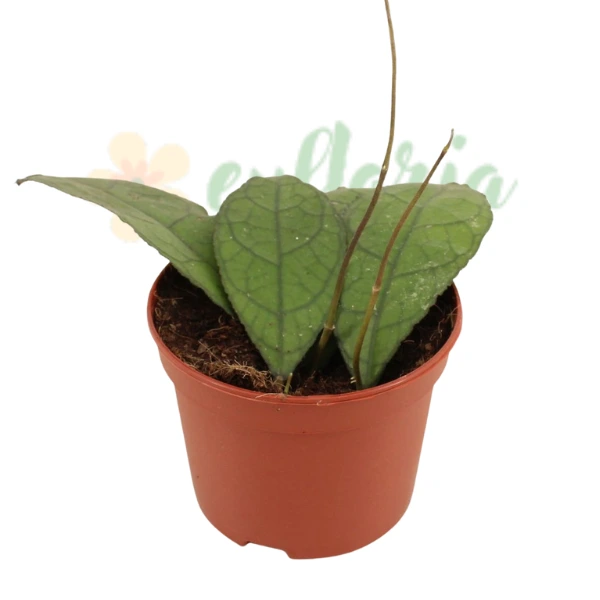
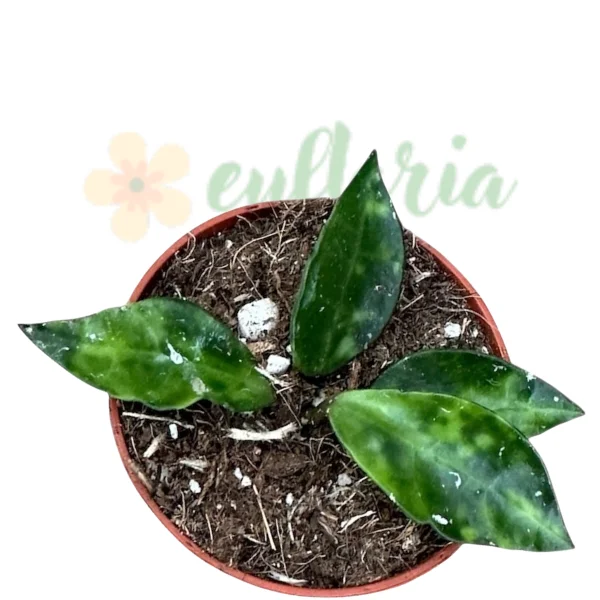
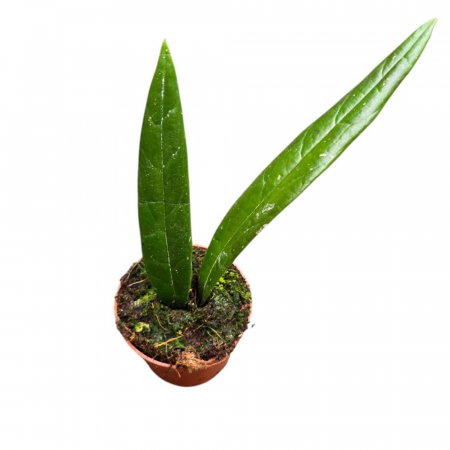
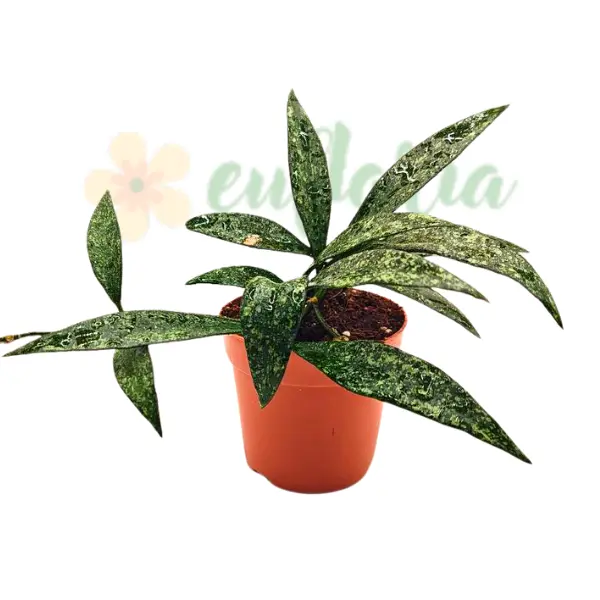
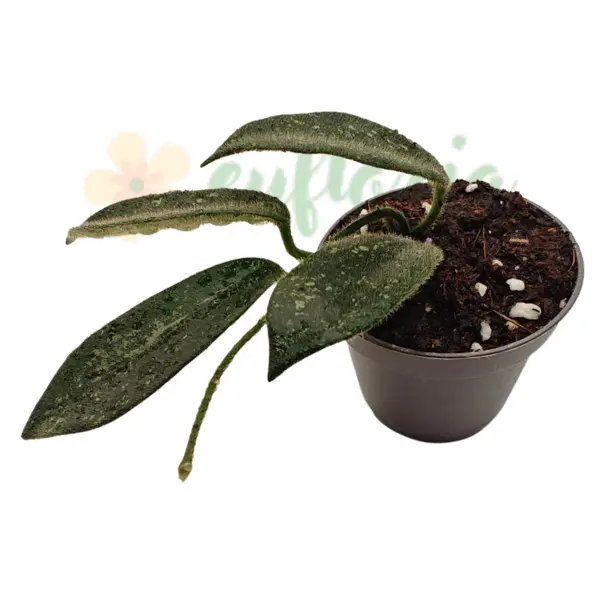
Hoya sp. Gunung Gading is a taxonomically unidentified Hoya species native to Gunung Gading National Park, Sarawak, Borneo. Prized for its glossy, oval, rich green leaves and delicate fragrant flower umbels. A genuine botanical rarity for passionate Hoya collectors.
Note: Product images are for guidance only. Due to different batches of imported products, there may be differences between the images on the website and the actual appearance of the products.
Approx height (including pot): 15 cm
Flowering state: No flowers
- Description
- Characteristics
- Reviews (0)
- FAQ
🌿 Hoya sp. Gunung Gading — a botanical mystery from the heart of Borneo
In the vast world of the Hoya genus, there are species that science has meticulously catalogued over centuries, and others that remain shrouded in mystery, awaiting formal description. Hoya sp. Gunung Gading firmly belongs to the latter category — a taxonomically unidentified species collected from Gunung Gading National Park, a spectacular nature reserve in the state of Sarawak, on the island of Borneo, Malaysia. Its working name, “sp.” (short for species), reveals precisely this status: it is a genuine Hoya, but one that botanists have not yet managed to classify into a described species.
What makes this plant truly fascinating is precisely this aura of the unknown. Every specimen you cultivate at home is, in a sense, a living fragment of unexplored Bornean jungle — a plant that perhaps only a few hundred people worldwide have in their collection. Its glossy, oval leaves in rich green with subtle reflections grow on twining stems that gracefully climb any available support, seeking light filtered through tropical canopies.
For the passionate Hoya collector, this species represents an exceptional acquisition — not only for its intrinsic beauty but also for the potential of owning something truly rare, something you won’t find in any botanical encyclopaedia yet.
🌍 Origin and Botanical Context
Gunung Gading National Park is located in western Sarawak, on the northwestern coast of Borneo, Malaysia. The park covers approximately 4,100 hectares and is centred around Mount Gading, with a maximum elevation of 906 metres. The area is primarily famous for its populations of Rafflesia — the world’s largest flower — but also harbours extraordinary biodiversity of epiphytes, orchids, and naturally, Hoya species.
The humid tropical forests on the slopes of Mount Gading provide ideal conditions for Hoya: consistently high ambient humidity (80–95%), moderate temperatures (20–30°C year-round), light filtered through stratified canopies, and an abundance of tree trunks as support for epiphytic growth. Hoya species from this region are adapted to an extremely stable microclimate, making them relatively tolerant in indoor culture as long as adequate humidity and light are provided.
The genus Hoya was described by Robert Brown in 1810, honouring the botanist and gardener Thomas Hoy. It comprises over 500 recognised species, mostly distributed across Southeast Asia, Australia, and the Pacific Islands. Borneo is considered one of the centres of maximum diversity for the genus, with dozens of described species and probably equally many still undescribed, hidden in its impenetrable forests.
🌱 The Foliage
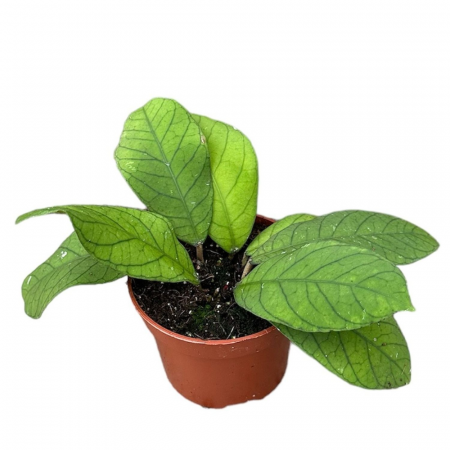
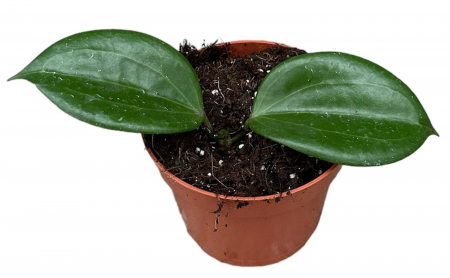
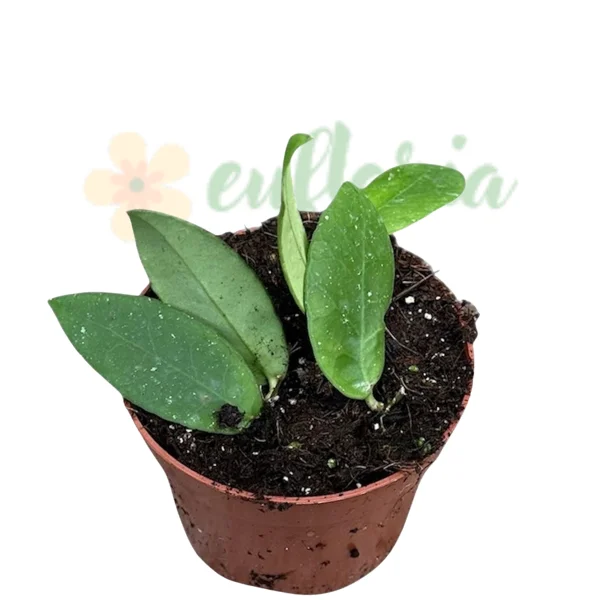
The leaves of Hoya sp. Gunung Gading are the element that first catches attention. Oval-elliptical in shape, with a slightly pointed apex and rounded base, they reach dimensions of 8–15 cm in length and 4–7 cm in width at maturity. The adaxial (upper) surface is smooth, glossy, with the waxy cuticle typical of the Hoya genus that gives the leaves a “lacquered” appearance, almost like a porcelain finish.
The dominant colour is a medium to dark green, uniform, without natural variegation. However, in bright indirect light, subtle reflections can be observed that give an impression of depth. The midrib is visible on both surfaces, while lateral veins are fine and discrete. Petioles are short and sturdy, supporting leaves in alternate positions along the stem.
The leaf texture is firm but not rigid — rather fleshy, with a medium thickness suggesting water storage capacity, a common adaptation in tropical epiphytes that experience brief periods of water deficit between rains. This semi-succulent consistency makes the plant surprisingly tolerant of occasional watering lapses.
🌸 Flowers
Like all Hoya species, Hoya sp. Gunung Gading produces flowers in umbels (spherical clusters), developed on peduncles that emerge at leaf axils. Peduncles are permanent — once formed, the same peduncle can produce repeated inflorescences over years, which is why they should never be pruned after flowering.
Individual flowers are delicate, with the waxy texture characteristic of the genus, arranged in umbels of 10–20 flowers. Colour varies depending on conditions, but Hoya species from this region tend to produce flowers in shades from creamy-white to pale pink, with a contrasting central corona. The fragrance is, as typical for the genus, sweet and intensifies in the evening, attracting nocturnal pollinators.
In indoor cultivation, flowering is possible but requires patience — the plant must reach sufficient maturity and benefit from strong indirect light and mild watering stress (allowing the substrate to dry more than usual) to stimulate flower bud formation.
🌱 Growth Habits and Care
Hoya sp. Gunung Gading is a twining epiphytic plant with long, flexible stems that naturally climb tree trunks in the tropical forest. In cultivation, it can be guided on an arch, trellis, or support, or left to trail freely from a hanging planter. Growth rate is moderate, with new stems extending 20–40 cm per year under optimal conditions.
Like most Bornean Hoya, this species appreciates a warm, humid, well-lit environment without direct sun. Care requirements are typical for the genus:
- Light: Bright, indirect light. An east or west-facing window is ideal. Avoid direct midday sun which can scorch leaves.
- Temperature: 18–28°C. Minimum tolerated: 15°C. Being native to lowland tropics, it does not need a cold dormancy period.
- Watering: Allow substrate to dry almost completely between waterings. Hoya prefer to be underwatered rather than overwatered. In winter, significantly reduce watering frequency.
- Humidity: 50–80% ideal. Tolerates lower humidity (40%) but will grow better with higher moisture. A humidifier greatly helps in winter.
- Substrate: Extremely well-draining mix: 40% perlite/pumice, 30% pine bark, 20% coco coir, 10% activated charcoal.
- Fertilising: Balanced fertiliser (NPK 20-20-20) diluted to half strength, monthly during growing season. Phosphorus supplement can stimulate flowering.
- Propagation: Stem cuttings with 2–3 nodes, in moist sphagnum or perlite. Best period: spring–summer.
Lungime: 15 cm
Greutate (kg): 0.1 Kg
Denumire: Hoya
Diametru: 6 cm
Cerințe lumină: Partial umbra
Tip plantă: Decorative
Utilizare: Interior
Tip suport: Ghiveci
Material Suport: Plastic
How often should I water Hoya sp. Gunung Gading?
Hoya sp. Gunung Gading prefers moderate watering, allowing the substrate to partially dry between waterings. During the warm season, water once every 7-10 days, and reduce to once every 2-3 weeks in winter. Overwatering can cause root rot — ensure the pot has good drainage.
Is Hoya sp. Gunung Gading toxic to pets?
No, Hoya sp. Gunung Gading is considered non-toxic to humans and pets. The Hoya genus does not contain harmful substances, making it a safe choice for homes with cats, dogs, or small children. However, it is recommended to place the plant at height to prevent leaf damage.
What substrate is recommended for Hoya sp. Gunung Gading?
Hoya sp. Gunung Gading requires an airy, well-draining substrate. An ideal mix includes pine bark, perlite, sphagnum moss, and a thin layer of universal potting mix in roughly equal proportions. The substrate should retain some moisture without staying wet, mimicking the epiphytic conditions of its natural habitat.
When does Hoya sp. Gunung Gading bloom indoors?
Hoya sp. Gunung Gading can bloom in cultivation if given sufficient bright indirect light and a winter rest period with reduced watering. Flowers typically appear in spring or summer, clustered in delicate umbels. As a rare and little-studied species, indoor flowering may require patience and optimal light and humidity conditions.
Why is it called Hoya "sp." Gunung Gading without a species name?
The abbreviation "sp." stands for "species" and indicates the plant belongs to the Hoya genus but has not yet been formally described and named by botanists. "Gunung Gading" refers to its collection location — Gunung Gading National Park in Sarawak, Borneo. Many recently discovered Hoya species are still awaiting formal classification, which makes them even more valuable to collectors.
Recommendations
Ai nevoie și de un ghiveci decorativ?