EN/
EN/ Romana
Hoya 'Christine' Ø10.5cm
![Hoya Christine - epiphytic plant with elongated deep-green leaves and waxy texture [0]](https://gomagcdn.ro/domains2/eufloria.ro/files/product/medium/hoya-christine-d12-363805.webp "Hoya Christine - epiphytic plant with elongated deep-green leaves and waxy texture [0]")
![Hoya Christine - epiphytic plant with elongated deep-green leaves and waxy texture [1]](https://gomagcdn.ro/domains2/eufloria.ro/files/product/medium/hoya-christine-d12-586027.webp "Hoya Christine - epiphytic plant with elongated deep-green leaves and waxy texture [1]")
![Hoya Christine - epiphytic plant with elongated deep-green leaves and waxy texture [1]](https://gomagcdn.ro/domains2/eufloria.ro/files/product/original/hoya-christine-d12-363805.webp "Hoya Christine - epiphytic plant with elongated deep-green leaves and waxy texture [1]")
![Hoya Christine - epiphytic plant with elongated deep-green leaves and waxy texture [2]](https://gomagcdn.ro/domains2/eufloria.ro/files/product/original/hoya-christine-d12-586027.webp "Hoya Christine - epiphytic plant with elongated deep-green leaves and waxy texture [2]")
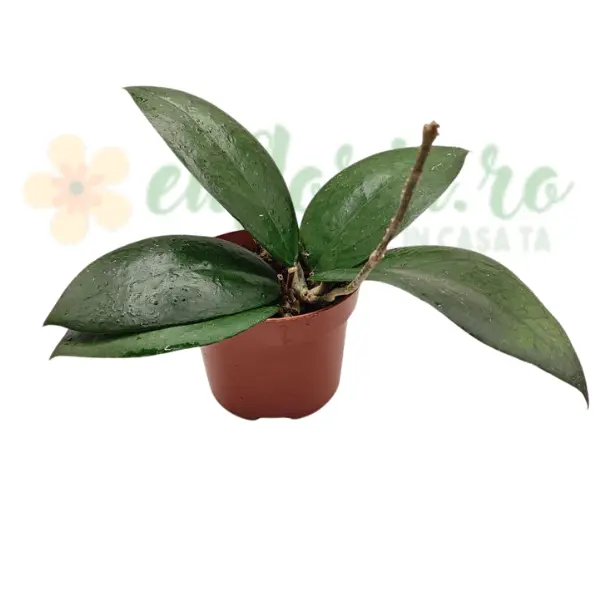
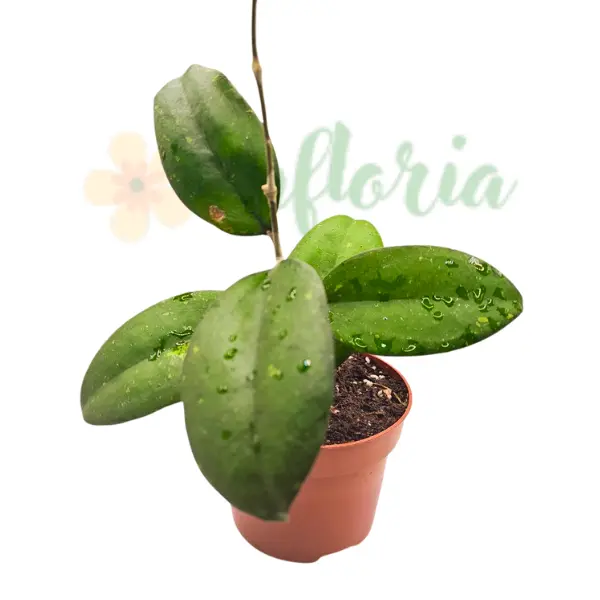
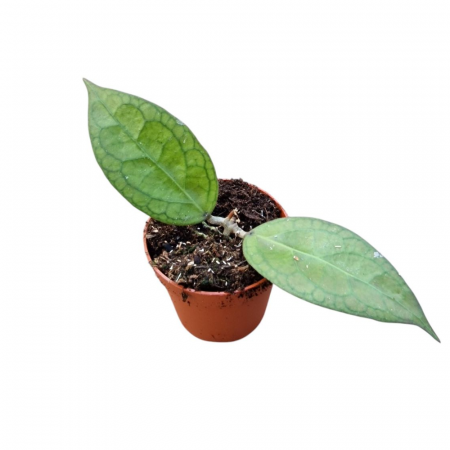
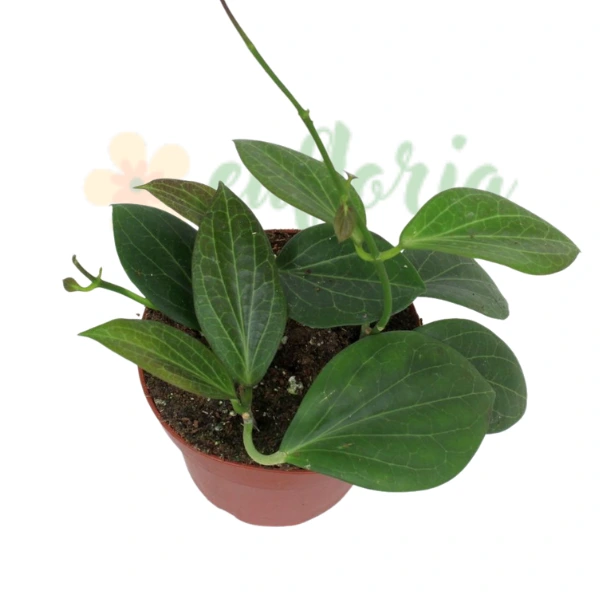
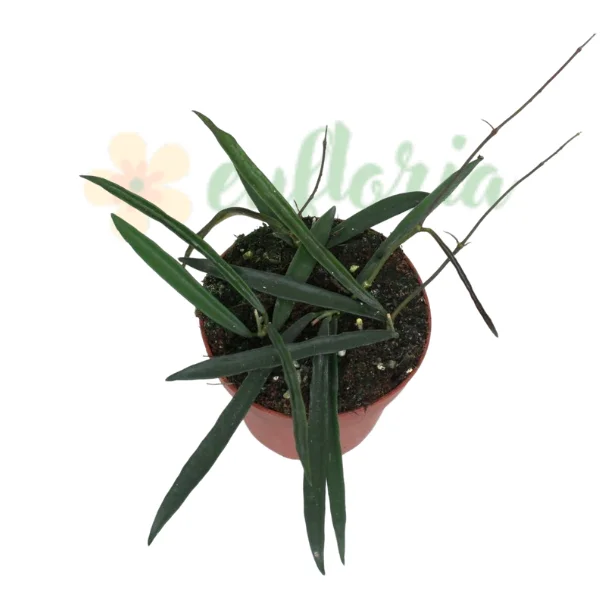
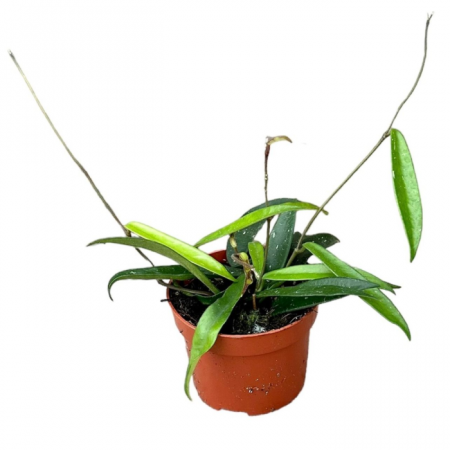
Hoya 'Christine' is a rare and refined cultivar from the Apocynaceae family, prized for its elongated, elegant, deep-green leaves with visible veins and waxy texture. Like all Hoya, it produces fragrant star-shaped flower umbels when conditions are optimal. An epiphytic plant with trailing habit, ideal for hanging or training on a support. Available in 10.5 cm pots.
Note: Product images are for guidance only. Due to different batches of imported products, there may be differences between the images on the website and the actual appearance of the products.
Approx height (including pot): 15 cm
Flowering state: No flowers
- Description
- Characteristics
- Reviews (0)
- FAQ
🌿 The Discreet Elegance of the Asian Jungle
In the vast world of the genus Hoya — a genus comprising over 500 species of epiphytic and lianoid plants spread across tropical Asia and Oceania — the cultivar 'Christine' stands out through a discreet but memorable elegance. This Hoya captivates not through chromatic extravagance but through the purity of its lines: elongated, symmetrical leaves of an intense green with the waxy sheen characteristic of the genus, gracefully arranged on slender, flexible branches that invite hanging or training on a support.
Hoya 'Christine' is a plant that grows in harmony with the space provided: in a hanging basket, its branches arch naturally, creating an elegant green cascade; on a vertical support, it clings with aerial roots, gradually covering the structure with dense, orderly foliage. It is a plant that does not demand constant attention but rewards consistent care with harmonious development and, eventually, the fragrant flower umbels that are the hallmark of the entire Hoya genus.
For Hoya collectors, 'Christine' represents a valuable addition due to its relative rarity and distinctive foliar characteristics. For those taking their first steps into the world of epiphytes, it offers an accessible introduction to a genus that, once discovered, often becomes a lifelong passion.
🌍 Origin and Botanical History
The genus Hoya was described by Robert Brown in 1810, named in honour of Thomas Hoy, gardener to the Duke of Northumberland at Syon House. With over 500 recognised species, Hoya belongs to the family Apocynaceae (subfamily Asclepiadoideae) and ranges from India and southern China, through the entire Malay Archipelago, to Australia and the Pacific Islands.
Most Hoya species are epiphytes — growing on trunks and branches of trees in tropical forests without being parasitic. Aerial roots serve for anchorage and atmospheric moisture absorption, while waxy leaves reduce water loss during dry periods. This life strategy makes Hoya perfectly adapted to indoor cultivation, where indirect light and moderate humidity replicate the natural sub-canopy environment.
'Christine' is likely a hybrid or selected cultivar whose exact origin is partly obscure — a frequent situation in the Hoya world, where numerous cultivars circulate under commercial names without complete taxonomic documentation.
🌱 The Foliage
The leaves of 'Christine' define this cultivar's charm. Elongated, lanceolate, measuring 8 to 12 centimetres in length and 3 to 5 centimetres in width, they present the classic Hoya leaf form but with particularly elegant proportions — narrower and longer than many other species.
The dominant colour is an intense, uniform green with the subtle waxy sheen that is a hallmark of the Hoya genus. The foliar texture is thick, semi-succulent, with a firm consistency to the touch suggesting resistance to dehydration. Veins are visible on the leaf surface, creating a delicate pattern adding visual depth to the uniform green.
Leaves are arranged oppositely on stems, in symmetrical pairs that give branches an orderly, balanced appearance. New growth appears in lighter green, sometimes with slight pinkish tones, before maturing to the deep green of adult leaves.
🌸 The Flowers
Like all Hoya species, 'Christine' can produce the spectacular flower umbels that have made the genus a collector favourite. The flowers, grouped in spherical umbels, have the characteristic waxy-star appearance — each small flower (under 1 cm) features a waxy corolla with a contrasting central crown (corona). The perfume, typical of Hoya, is sweet and intensifies in the evening.
Flower peduncles (spurs) must never be cut after flowering, as Hoya rebloom from the same peduncles year after year. Obtaining first flowers requires patience — usually 2-4 years from cutting, on mature, well-established plants.
🌱 Growth Habit and Care
Hoya 'Christine' grows as an epiphytic vine with slender, flexible stems reaching 1-2 metres in length under indoor cultivation. Branches produce aerial roots at nodes, allowing the plant to anchor on supports or cling to textured surfaces.
Growth rate is moderate, accelerating in the warm season (spring-summer) and slowing in winter. The plant is long-lived — Hoya specimens can survive for decades, growing continuously and producing ever more abundant flowers as they mature.
- Light: Bright indirect light. Tolerates a few hours of direct morning sun. Insufficient light reduces flowering chances.
- Temperature: 18–27°C optimal. Not below 10°C. A period of lower temperatures (15-18°C) in winter can stimulate flowering.
- Watering: Allow substrate to dry almost completely between waterings. Hoya tolerates drought better than overwatering. Reduce in winter.
- Humidity: 50–70%. Benefits from increased humidity but tolerates 40%.
- Substrate: Very well-draining mix: orchid bark, perlite, coco coir. Never dense or water-retaining substrate.
- Fertilisation: Diluted liquid fertiliser every 2-3 weeks spring-summer. Pause in winter.
- Propagation: Through stem cuttings with 2-3 nodes, in water, perlite, or moist sphagnum. Roots easily in warm, humid conditions.
Lungime: 10.5 cm
Greutate (kg): 0.5 Kg
Denumire: Hoya
Diametru: 10.5 cm
Cerințe lumină: Strong, indirect light
Tip plantă: Decorative
Utilizare: Interior
Tip suport: Ghiveci
Material Suport: Plastic
Is Hoya 'Christine' toxic to cats and dogs?
Nu. Hoya «Christine» nu este toxică pentru pisici, câini și alte animale de companie. Plantele din genul Hoya sunt clasificate ca fiind sigure pentru animale de companie de către ASPCA. Deși mestecarea oricărei plante poate provoca ușoare tulburări stomacale, Hoya «Christine» nu prezintă niciun risc toxic sau otrăvitor. Seva lăptoasă care apare atunci când tulpinile sunt tăiate poate provoca iritații minore ale pielii la persoanele sensibile, dar nu este periculoasă. Parfumul floral puternic în timpul înfloririi este, de asemenea, complet sigur pentru animalele de companie.
How do I get my Hoya 'Christine' to bloom?
Flowering in Hoya 'Christine' requires maturity and the right conditions. First, ensure the plant receives bright, indirect light – insufficient light is the most common reason Hoyas fail to bloom. Keep the plant slightly root-bound, as Hoyas are more inclined to flower when their roots fill the pot. During winter, reduce watering for 4-5 weeks to simulate a mild dry rest period, which can encourage spring blooming. Feed with a phosphorus-rich fertilizer during the growing season. Most importantly, never remove the peduncles (flower stalks) after blooming – Hoyas rebloom from the same peduncles year after year. Some growers report first blooms within 2 years of establishing the plant.
What makes Hoya 'Christine' different from Hoya pachyclada (subquintuplinervis)?
Hoya 'Christine' is a hybrid that has Hoya subquintuplinervis (formerly called pachyclada) as one parent, crossed with Hoya pottsii. While it inherits the thick, robust leaf texture of subquintuplinervis, 'Christine' differs in several ways: the leaves are slightly larger (8-10 cm vs. the typically rounder, smaller leaves of pure subquintuplinervis), the veining is more prominent, and the growth habit is more upright and compact. The biggest difference is in the flowers – 'Christine' produces reflexed blooms with a distinct pink-ringed corona and an exceptionally powerful sweet fragrance that lasts nearly two weeks per cluster, whereas subquintuplinervis flowers tend to be smaller with a different color profile.
Why are the leaves on my Hoya 'Christine' wrinkling?
Wrinkled or puckered leaves on Hoya 'Christine' are almost always a sign of underwatering or very low humidity. The thick, fleshy leaves store water like a succulent, and when their reserves are depleted, they visibly shrink and wrinkle. Water the plant thoroughly when the top half of the soil is dry, ensuring water flows from the drainage holes. If low humidity is the issue (especially during winter heating season), group plants together, use a pebble tray, or run a humidifier nearby. Wrinkled leaves typically recover and plump up within a day or two of proper watering. If wrinkling persists despite adequate watering, check for root rot – overwatered roots can die and stop absorbing water, creating paradoxical dehydration symptoms.
Can I grow Hoya 'Christine' in a hanging basket?
While Hoya 'Christine' can be grown in a hanging basket, it's not the most natural choice for this cultivar. Unlike many trailing Hoyas (such as H. carnosa or H. linearis), 'Christine' has a more upright, compact growth habit inherited from its Hoya subquintuplinervis parent. It performs better on a small tabletop trellis, a plant shelf near a bright window, or in a standard pot where its structured form can be appreciated. That said, as the plant matures and develops longer stems, it can eventually cascade attractively from a hanging position. If you prefer a hanging display, ensure the location still provides bright, indirect light – hanging positions far from windows often don't provide enough light for the plant to bloom.
How to care?
Bright indirect, moderate water, drained substrate. 18-27°C.
Bloom?
Yes, waxy fragrant flowers.
Watering?
Fully dry. Weekly summer, 2-3 wks winter.
Toxic?
No.
Propagation?
Cuttings 2-3 nodes. 2-6 wks.
Recommendations
Ai nevoie și de un ghiveci decorativ?