EN/
EN/ Romana
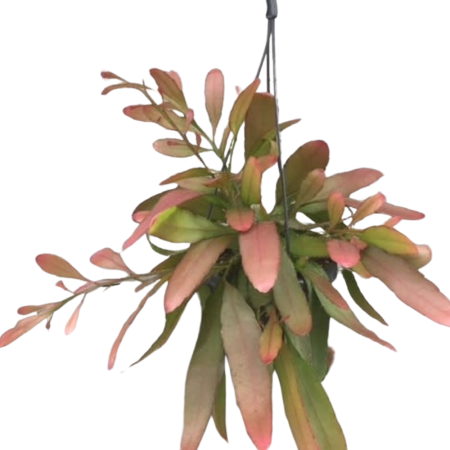
Aeschynanthus 'Pink Polka' Ø12cm
![Aeschynanthus 'Pink Polka' - lipstick plant with pink tubular flowers and glossy green foliage [0]](https://gomagcdn.ro/domains2/eufloria.ro/files/product/medium/aeschynanthus-pink-polka-d12-685637.png "Aeschynanthus 'Pink Polka' - lipstick plant with pink tubular flowers and glossy green foliage [0]")
![Aeschynanthus 'Pink Polka' - lipstick plant with pink tubular flowers and glossy green foliage [1]](https://gomagcdn.ro/domains2/eufloria.ro/files/product/medium/aeschynanthus-pink-polka-d12-854172.png "Aeschynanthus 'Pink Polka' - lipstick plant with pink tubular flowers and glossy green foliage [1]")
![Aeschynanthus 'Pink Polka' - lipstick plant with pink tubular flowers and glossy green foliage [1]](https://gomagcdn.ro/domains2/eufloria.ro/files/product/original/aeschynanthus-pink-polka-d12-685637.png "Aeschynanthus 'Pink Polka' - lipstick plant with pink tubular flowers and glossy green foliage [1]")
![Aeschynanthus 'Pink Polka' - lipstick plant with pink tubular flowers and glossy green foliage [2]](https://gomagcdn.ro/domains2/eufloria.ro/files/product/original/aeschynanthus-pink-polka-d12-854172.png "Aeschynanthus 'Pink Polka' - lipstick plant with pink tubular flowers and glossy green foliage [2]")
Aeschynanthus 'Pink Polka' is a refined cultivar from the Gesneriaceae family, native to the tropical forests of Southeast Asia, valued for its pale pink tubular flowers dotted with darker markings and for its dense, glossy, deep green foliage. This epiphytic plant has a naturally pendant habit, with arching stems that cascade elegantly over the pot rim, making it an ideal choice for hanging pots or high shelves. A beginner-friendly species that rewards attentive care with spectacular waves of flowers.
Approx height (including pot): 15 cm
Flowering state: No flowers
Pot diameter: 12
- Description
- Characteristics
- Reviews (0)
🌿 Aeschynanthus 'Pink Polka' — Tropical Elegance in Pink Cascades
Aeschynanthus 'Pink Polka' is one of the most delicate and expressive cultivars of the genus — an epiphytic plant that turns its arching stems into a true botanical spectacle when it blooms. Commonly known as the "Lipstick Plant" because its tubular flowers resemble slender lipstick tubes, the 'Pink Polka' variety stands out thanks to the pale pink shade of its corollas, sprinkled with darker spots that give it an almost playful charm.
For houseplant enthusiasts looking for a species with a distinctive personality, Aeschynanthus 'Pink Polka' offers the perfect combination of dense, glossy foliage with a slightly waxy texture, and romantic flowers clustered at the tips of its long stems. It is a superb choice for hanging pots, where the stems cascade naturally, forming a pendant crown that can easily reach 60–80 cm under optimal conditions.
Native to the tropical forests of Southeast Asia, this plant combines the hardiness of wild epiphytes with the refined elegance of a collector's species. Its beauty lies not only in the blooms but also in the compact structure of its foliage — deep green, with a smooth surface that reflects light, giving any interior space a fresh, lively appearance.
For plant lovers who want to bring a touch of the exotic into the home without committing to a fussy species, 'Pink Polka' is probably the friendliest introduction to the world of Aeschynanthus. It tolerates minor neglect, rewards attentive care with waves of flowers, and grows at a balanced pace — neither too fast nor too slow — so that every new pendant stem can be watched with delight.
🌍 Origin and Botanical History
The genus Aeschynanthus was first described in 1822 by the British botanist Nathaniel Wallich in his work "Tentamen Florae Napalensis Illustratae". The name comes from Ancient Greek, combining "aischuno" (to be ashamed) and "anthos" (flower) — a poetic reference to the bright red flowers of the first species described, a shade so intense that the plants seemed to "blush" in the tropical sun.
The Gesneriaceae family, to which Aeschynanthus belongs, includes more than 3,000 species distributed across the tropical and subtropical regions of the world, including the familiar Streptocarpus, Saintpaulia (African violet), and Columnea. Aeschynanthus itself numbers around 150 species, nearly all epiphytic, with a distribution concentrated in the humid arc stretching from the eastern Himalayas to Papua New Guinea.
The 'Pink Polka' cultivar is a modern horticultural selection, developed to offer a softer, more romantic alternative to the scarlet tones of the wild species. Its signature pattern — a pale pink corolla dotted with intensely coloured spots — gives it the "Polka" name, a direct nod to the polka dot patterns so beloved in 1950s fashion. Its popularity exploded in the past decade when collectors rediscovered pendant plants as a central element of contemporary interior decor.
In their natural habitat, plants of the genus Aeschynanthus grow epiphytically, clinging to the bark of tall trees in the humid tropical forests of Borneo, Java, Sumatra, Malaysia, Thailand, and southern China. There, at altitudes ranging from 200 to 1,500 metres, they enjoy light filtered by the dense forest canopy, constant humidity, and monsoon rains that keep their moss substrate perpetually moist. This epiphytic origin explains many of the plant's requirements in cultivation: impeccable drainage, a humid and well-aerated atmosphere, and a substrate that mimics the composition of the tropical moss from which it draws nutrients in nature.
🌱 The Foliage
The leaves of Aeschynanthus 'Pink Polka' are one of its main decorative attractions, offering a compact and orderly appearance even outside the blooming periods. They are oval-elongated in shape, 3 to 5 cm long and 1.5 to 2.5 cm wide. The upper surface is smooth and glossy, a deep green with golden-yellow reflections when pierced by light, while the underside is paler and slightly more matte.
The leaf texture is succulent — semi-fleshy and slightly thickened — an adaptation to epiphytic life that allows them to retain water during brief dry spells. This characteristic makes them surprisingly resistant to minor watering neglect, although the plants should not be allowed to suffer for long. The leaf margins are smooth, slightly recurved, and the central vein stands out in relief on the underside of the blade.
On young branches, the leaves are arranged opposite, in pairs, at regular intervals of 2–3 cm along the stem — an arrangement that creates the visual effect of a "green chain", extremely elegant when the plant is placed in a hanging pot. The leaves retain their vigour and colour throughout the year, providing a constant decorative feature even in the winter months when the plant enters a relative dormancy and slows its growth.
One detail collectors appreciate is how the leaves respond to changes in light: under strong filtered light they take on an intense metallic sheen and maximum chromatic saturation, while under weaker light they remain deep green with a slightly matte appearance. This behaviour can be used to fine-tune the look of the plant by moving it between different positions depending on the desired effect.
🌸 The Flowers
The flowers of Aeschynanthus 'Pink Polka' are the distinctive element that has brought it fame in modern horticultural collections. They appear grouped in terminal clusters of 4–8 corollas at the tips of mature stems and take the tubular shape characteristic of the genus — a narrow, elongated calyx opening into a corolla with five delicately reflexed lobes.
The main colour is a creamy pale pink, sprinkled with darker coral-pink spots toward the tip of the corolla — the pattern that gives the cultivar its name. A single flower is approximately 4–6 cm long, and when fully open the blooms resemble miniature trumpets emerging from the dense foliage, providing a spectacular colour contrast. Prominent stamens extend slightly from the corolla, adding a touch of elegance to the floral structure.
The main blooming period is late summer and early autumn, although under stable light and temperature conditions the plant can flower intermittently throughout the year. The flowers have no perceptible fragrance but capture the eye through pure visual beauty. In cultivation, generous flowering requires bright indirect light, a slight winter dry spell, and regular feeding during the warm season.
One secret to abundant flowering in this species is nighttime cooling in the autumn months: a controlled temperature drop to 15–17 °C for 4–6 weeks stimulates the differentiation of flower buds. In modern apartments with uniform temperatures, the effect can be reproduced by moving the plant to a cooler room or closer to a window during that period.
🌱 Growth and Development
Aeschynanthus 'Pink Polka' has a moderate growth rate, developing long, semi-flexible stems that can reach 40–80 cm within a few years. Its habit is naturally pendant: the stems arch gracefully over the edge of the pot, forming a cascading crown ideal for hanging pots, high shelves, or suspended baskets. Unlike some fussier epiphytes, this cultivar is valued for its toughness and ease of care — an excellent introduction to the Aeschynanthus world for beginner growers.
To stimulate branching and a fuller appearance, pinching the tips of young stems every 2–3 months during the growing season is recommended. This simple practice forces the plant to develop new lateral shoots, turning a modest trailing specimen into a dense, flower-rich crown. The plant responds quickly to repotting — every 2–3 years into a pot 2–3 cm larger — but prefers relatively tight pots that encourage flowering.
Its care requirements reflect its tropical epiphytic origin: filtered light, consistent moderate-to-high humidity, impeccable drainage, and a warm atmosphere free of sudden temperature swings.
- Light: bright indirect light. Tolerates morning filtered light but avoid direct midday sun, which can scorch the leaves and dehydrate the succulent tissue.
- Temperature: 18–26 °C during the growing season. In winter, prefers 15–18 °C with reduced watering to encourage flowering the following spring. Does not tolerate temperatures below 12 °C.
- Watering: moderate — water when the top 1–2 cm of substrate has dried out. More often in summer, rarely in winter, avoiding any excess. Standing water quickly causes rot in epiphytic roots.
- Humidity: 50–70%. Mist the leaves with soft room-temperature water, place the pot on a tray with moist pebbles, or use a humidifier in dry winter interiors.
- Substrate: airy epiphyte mix — a blend of peat, perlite, fine pine bark, and sphagnum moss. Excellent drainage is mandatory, ideally with a layer of expanded clay at the bottom of the pot.
- Fertilising: liquid fertiliser for flowering plants, diluted to half strength, once every 2–3 weeks in spring and summer. Stop feeding entirely in winter to allow the plant its natural rest.
- Propagation: through stem cuttings of 8–10 cm taken in spring. They root easily in water or directly in moist substrate, under a clear dome to maintain humidity during root formation.
Lungime: 30 cm
Greutate (kg): 1 Kg
Denumire: Aeschyanthus
Diametru: 12 cm
Cerințe lumină: Partial umbra
Tip plantă: Decorative
Utilizare: Interior
Tip suport: Ghiveci
Material Suport: Plastic
Ai nevoie și de un ghiveci decorativ?