
 EN/
EN/ Romana
Hoya serpens Ø6cm
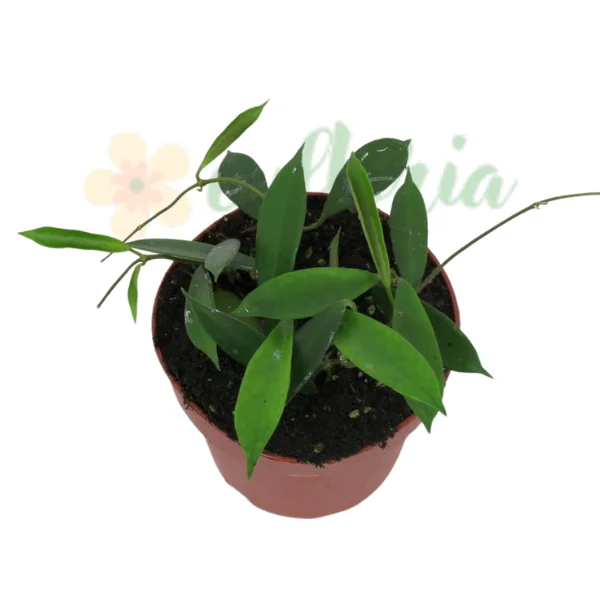
![Hoya serpens with small round leaves and translucent lemon-yellow flowers [0]](https://gomagcdn.ro/domains2/eufloria.ro/files/product/medium/hoya-serpens-d6-944961.webp "Hoya serpens with small round leaves and translucent lemon-yellow flowers [0]")
![Hoya serpens with small round leaves and translucent lemon-yellow flowers [1]](https://gomagcdn.ro/domains2/eufloria.ro/files/product/medium/hoya-serpens-d6-293265.webp "Hoya serpens with small round leaves and translucent lemon-yellow flowers [1]")
![Hoya serpens with small round leaves and translucent lemon-yellow flowers [2]](https://gomagcdn.ro/domains2/eufloria.ro/files/product/medium/hoya-serpens-366832.webp "Hoya serpens with small round leaves and translucent lemon-yellow flowers [2]")
![Hoya serpens with small round leaves and translucent lemon-yellow flowers [1]](https://gomagcdn.ro/domains2/eufloria.ro/files/product/original/hoya-serpens-d6-944961.webp "Hoya serpens with small round leaves and translucent lemon-yellow flowers [1]")
![Hoya serpens with small round leaves and translucent lemon-yellow flowers [2]](https://gomagcdn.ro/domains2/eufloria.ro/files/product/original/hoya-serpens-d6-293265.webp "Hoya serpens with small round leaves and translucent lemon-yellow flowers [2]")
![Hoya serpens with small round leaves and translucent lemon-yellow flowers [3]](https://gomagcdn.ro/domains2/eufloria.ro/files/product/original/hoya-serpens-366832.webp "Hoya serpens with small round leaves and translucent lemon-yellow flowers [3]")
Hoya serpens — refined Himalayan hoya with small round leaves and translucent lemon-yellow flowers with greenish-white corona, fragrant.
Approx height (including pot): 10 cm
Flowering state: No flowers
Country of origin: Netherlands
- Description
- Characteristics
- Reviews (0)
- FAQ
🌿 Hoya serpens — green snake from the Himalayas
Hoya serpens (the name means "snake-shaped" in Latin, reflecting its creeping growth) is a refined species from the Himalayas (India, Nepal), with small round-oval deep green leaves covered in fine hairs. Grows slowly and compactly, forming dense cushions of small leaves. Flowers are exceptional — translucent lemon-yellow with greenish-white corona, sweetly fragrant.
The species comes from cool and humid mountains, so it prefers cooler conditions than standard tropical hoyas. A desired piece for advanced collectors.
🌍 Origin
Himalayas (India, Nepal) — mountain forests at 1500-2500 m altitude, cool humid climate.
🌱 How to care for it
Medium-bright indirect light, humidity 70-90%, temperatures 15-24°C (cool nights 10-15°C for flowering). Airy substrate with sphagnum.
🌸 Flowering
Translucent lemon-yellow flowers with greenish-white corona, extremely elegant. Sweet evening fragrance.
🌿 Safety
Not toxic to cats, dogs or children. Safe Apocynaceae.
Lungime: 10 cm
Greutate (kg): 0.1 Kg
Denumire: Hoya
Diametru: 6 cm
Cerințe lumină: Partial umbra
Tip plantă: Decorative
Utilizare: Interior
Tip suport: Ghiveci
Material Suport: Plastic
Why is my Hoya serpens not flowering?
Hoya serpens can take several years to reach flowering maturity — Gardening Collective notes it "can take up to 7 years" for plants to bloom. Beyond maturity, the most common reason for failure to flower is not meeting this Himalayan species' specific needs. Vermont Hoyas explains the challenge: high temperatures with humidity produces growth but no flowers; cooler temps with low humidity causes leaves to drop. The ideal combination is cooler temperatures (18-23°C / high 60s to low 70s°F) with high humidity (60%+). Adequate light is also critical — The Midwestern Jungle found that increasing light intensity was key to triggering blooms. Keep the plant slightly root-bound, which encourages flowering. Never remove old peduncles, as flowers rebloom from the same spurs.
Is Hoya serpens difficult to grow?
Hoya serpens has a reputation for being challenging, but "difficult" is relative to your growing conditions. The main challenge is that this Himalayan species requires high humidity (60-90%) combined with cooler temperatures (18-23°C) — conditions that differ from typical warm-tropical Hoyas and can be hard to maintain in average homes. Vermont Hoyas notes: "Tough plant to have success with unless you live in the right area of the country." Many successful growers use greenhouse cabinets, terrariums, or cloches to create the consistent humid, cool conditions this species prefers. If you can provide those conditions, Hoya serpens grows vigorously. If you cannot, consider whether a greenhouse cabinet or terrarium setup might work for you before purchasing.
What humidity does Hoya serpens need?
High humidity is essential — this is the most critical care requirement for Hoya serpens. Gardening Collective states that "humidity levels below 60% trigger the plant to stop growing," and recommends levels above 80% for optimal growth. Unsolicited Plant Talks recommends 60-90% humidity and notes that "many collectors have found that Hoya serpens thrives in enclosed spaces like greenhouse cabinets or cloches, which help keep humidity stable." In a typical home with 40-50% humidity, this plant will struggle. Solutions include: using a humidifier, growing in a greenhouse cabinet or terrarium, placing on a humidity tray, or grouping with other plants. Transitioning between high and low humidity environments can shock the plant — acclimate slowly if moving to different conditions.
What do Hoya serpens flowers look like and smell like?
The flowers are fuzzy (pubescent), flat, star-shaped, and approximately 1.5 cm across. Wikipedia describes them as having "a light green corolla and a white corona with a bit of pink towards the center of the flower, with finally a yellow center." The Midwestern Jungle describes the colour as "minty green." Flowers appear in umbels of up to 15 blooms that tend to hang downward. The fragrance is sweet but subtle when few flowers are open — Myhoyas.com notes "the fragrance isn't vague when lots of flowers are open at the same time." Some sources describe a spicy-floral aroma that intensifies in the evening. Individual flowers last approximately one week. Interestingly, unlike many Hoyas, this species produces very little nectar.
What temperature does Hoya serpens prefer?
Cooler than most tropical Hoyas! This Himalayan species prefers temperatures in the range of 18-23°C (high 60s to low 70s°F) for optimal growth and flowering. Vermont Hoyas specifically states: "Ideally temperatures in the high 60's to low 70's with lots of humidity will grow this plant like a champ." The plant tolerates a wider range (13-30°C / 55-86°F) but may struggle at the warmer end — high temperatures combined with low humidity causes problems, and high temperatures even with humidity may produce growth but prevent flowering. Avoid temperatures below 10°C (50°F) for extended periods. This cooler preference reflects the plant's origin in the high-altitude Himalayan forests where conditions are more temperate than typical lowland tropics.
Is Hoya serpens toxic to cats and dogs?
No, Hoya serpens is not toxic to cats, dogs, or other household pets. The ASPCA confirms that Hoya plants are non-toxic to cats, dogs, and horses. The genus does not contain compounds known to be poisonous to animals. As with any plant, eating large amounts of foliage might cause mild stomach upset simply because pets are not designed to digest plant material — but this is not a toxic reaction. The milky latex sap released when stems are cut can cause minor irritation to mouths or skin but is not dangerous. This makes Hoya serpens a safe choice for pet-friendly households.
How to care for Hoya serpens?
Hoya serpens thrives in bright indirect light, high humidity (60–80%) and temperatures of 18–25°C. The substrate should be well-draining and airy. Water only when the soil has partially dried out and ensure good air circulation.
What light does Hoya serpens need?
Hoya serpens prefers bright indirect light. Avoid intense direct sunlight which can scorch the delicate leaves. An east or west-facing window, possibly with a sheer curtain, is ideal.
How to water Hoya serpens?
Water Hoya serpens when the top 2–3 cm of substrate have dried out. This species likes consistent moisture but does not tolerate standing water. Reduce watering in winter. Use room-temperature water.
Is Hoya serpens toxic to pets?
Hoya serpens is considered non-toxic to cats and dogs according to ASPCA. However, ingestion of any plant may cause minor gastric discomfort, so it is best kept out of reach of pets.
When does Hoya serpens bloom?
Hoya serpens typically blooms during the warm season, from spring to summer. The flowers are small, spherical, greenish-white with a pink centre, and have a delicate fragrance. The plant needs to be mature and receive sufficient light to bloom.
Recommendations
Ai nevoie și de un ghiveci decorativ?







