EN/
EN/ Romana
Pelargonium crispum 'Lemona' Ø10.5cm
![Pelargonium crispum 'Lemona' Ø10.5cm — lemon geranium [0]](https://gomagcdn.ro/domains2/eufloria.ro/files/product/medium/muscata-parfumata-pelargonium-crispum-lemona-d10-5cm-483668.png "Pelargonium crispum 'Lemona' Ø10.5cm — lemon geranium [0]")
![Pelargonium crispum 'Lemona' Ø10.5cm — lemon geranium [1]](https://gomagcdn.ro/domains2/eufloria.ro/files/product/medium/muscata-parfumata-pelargonium-crispum-lemona-d10-5cm-515786.jpg "Pelargonium crispum 'Lemona' Ø10.5cm — lemon geranium [1]")
![Pelargonium crispum 'Lemona' Ø10.5cm — lemon geranium [2]](https://gomagcdn.ro/domains2/eufloria.ro/files/product/medium/muscata-parfumata-pelargonium-crispum-lemona-d10-5cm-147391.jpg "Pelargonium crispum 'Lemona' Ø10.5cm — lemon geranium [2]")
![Pelargonium crispum 'Lemona' Ø10.5cm — lemon geranium [3]](https://gomagcdn.ro/domains2/eufloria.ro/files/product/medium/muscata-parfumata-pelargonium-crispum-lemona-d10-5cm-201747.jpg "Pelargonium crispum 'Lemona' Ø10.5cm — lemon geranium [3]")
![Pelargonium crispum 'Lemona' Ø10.5cm — lemon geranium [4]](https://gomagcdn.ro/domains2/eufloria.ro/files/product/medium/muscata-parfumata-pelargonium-crispum-lemona-d10-5cm-776548.jpg "Pelargonium crispum 'Lemona' Ø10.5cm — lemon geranium [4]")
![Pelargonium crispum 'Lemona' Ø10.5cm — lemon geranium [5]](https://gomagcdn.ro/domains2/eufloria.ro/files/product/medium/muscata-parfumata-pelargonium-crispum-lemona-d10-5cm-685056.jpg "Pelargonium crispum 'Lemona' Ø10.5cm — lemon geranium [5]")
![Pelargonium crispum 'Lemona' Ø10.5cm — lemon geranium [6]](https://gomagcdn.ro/domains2/eufloria.ro/files/product/medium/muscata-parfumata-pelargonium-crispum-lemona-d10-5cm-906051.jpg "Pelargonium crispum 'Lemona' Ø10.5cm — lemon geranium [6]")
![Pelargonium crispum 'Lemona' Ø10.5cm — lemon geranium [1]](https://gomagcdn.ro/domains2/eufloria.ro/files/product/original/muscata-parfumata-pelargonium-crispum-lemona-d10-5cm-483668.png "Pelargonium crispum 'Lemona' Ø10.5cm — lemon geranium [1]")
![Pelargonium crispum 'Lemona' Ø10.5cm — lemon geranium [2]](https://gomagcdn.ro/domains2/eufloria.ro/files/product/original/muscata-parfumata-pelargonium-crispum-lemona-d10-5cm-515786.jpg "Pelargonium crispum 'Lemona' Ø10.5cm — lemon geranium [2]")
![Pelargonium crispum 'Lemona' Ø10.5cm — lemon geranium [3]](https://gomagcdn.ro/domains2/eufloria.ro/files/product/original/muscata-parfumata-pelargonium-crispum-lemona-d10-5cm-147391.jpg "Pelargonium crispum 'Lemona' Ø10.5cm — lemon geranium [3]")
![Pelargonium crispum 'Lemona' Ø10.5cm — lemon geranium [4]](https://gomagcdn.ro/domains2/eufloria.ro/files/product/original/muscata-parfumata-pelargonium-crispum-lemona-d10-5cm-201747.jpg "Pelargonium crispum 'Lemona' Ø10.5cm — lemon geranium [4]")
![Pelargonium crispum 'Lemona' Ø10.5cm — lemon geranium [5]](https://gomagcdn.ro/domains2/eufloria.ro/files/product/original/muscata-parfumata-pelargonium-crispum-lemona-d10-5cm-776548.jpg "Pelargonium crispum 'Lemona' Ø10.5cm — lemon geranium [5]")
![Pelargonium crispum 'Lemona' Ø10.5cm — lemon geranium [6]](https://gomagcdn.ro/domains2/eufloria.ro/files/product/original/muscata-parfumata-pelargonium-crispum-lemona-d10-5cm-685056.jpg "Pelargonium crispum 'Lemona' Ø10.5cm — lemon geranium [6]")
![Pelargonium crispum 'Lemona' Ø10.5cm — lemon geranium [7]](https://gomagcdn.ro/domains2/eufloria.ro/files/product/original/muscata-parfumata-pelargonium-crispum-lemona-d10-5cm-906051.jpg "Pelargonium crispum 'Lemona' Ø10.5cm — lemon geranium [7]")
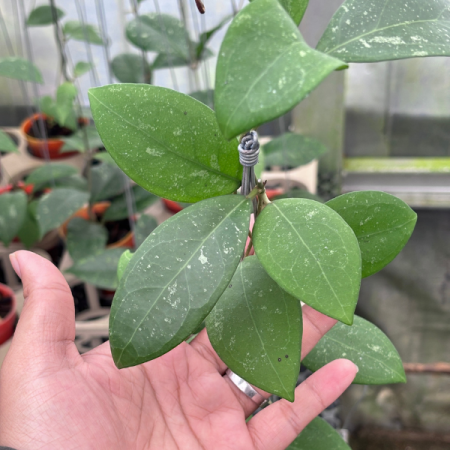
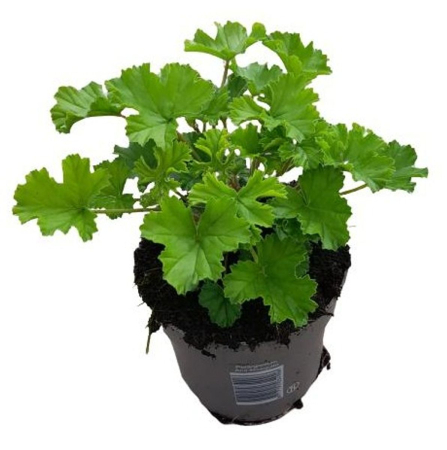
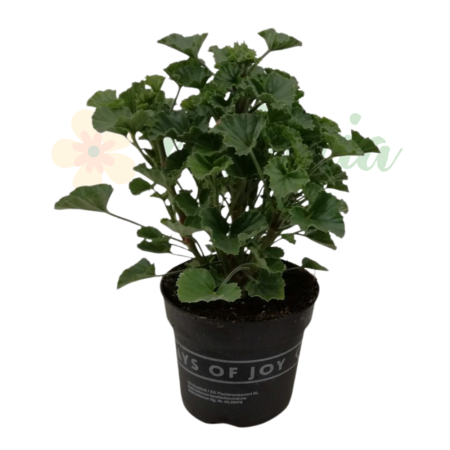
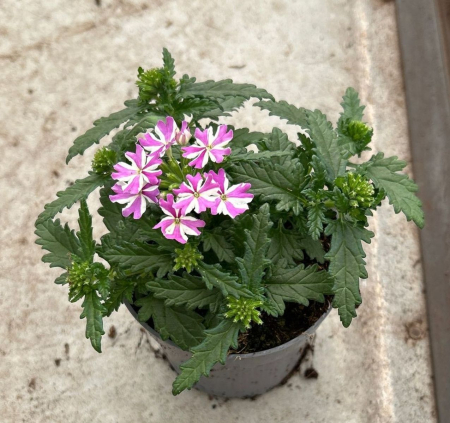
Pelargonium crispum 'Lemona' is a scented geranium variety with characteristic curly-wavy foliage and intense lemon fragrance. The edible leaves can be used to flavor desserts, teas, and aromatic water. Compact plant (30-50 cm), drought-tolerant, ideal for sunny balcony.
Note: Product images are for guidance only. Due to different batches of imported products, there may be differences between the images on the website and the actual appearance of the products.
Approx height (including pot): 20 cm
Flowering state: Cu sau fără flori
Pot diameter: 10.5 cm
- Description
- Characteristics
- Reviews (0)
- FAQ
Pelargonium crispum 'Lemona' is one of the most appreciated lemon-scented geraniums, a variety selected from the original Pelargonium crispum species for its intensely citrus-fragrant leaves. The name "Lemona" directly references the dominant olfactory note — strong lemon notes with subtle hints of mint and citronella. For lovers of aromatic plants with multiple uses (perfume, tea, cooking, aromatherapy), 'Lemona' is a classic choice reinvented for contemporary cultivators. The characteristic curly-wavy leaves of the species, combined with the strong fragrance, make it a plant with distinct personality on any sunny balcony.
Origin and Botanical Characteristics
Pelargonium crispum belongs to the Geraniaceae family, native to the South African Cape region. The species name "crispum" describes the curly-wavy edges of the leaves, a distinctive feature that differentiates this species from other Pelargoniums. The 'Lemona' cultivar was selected for high concentration of citrus essential oils (citral, limonene) — compounds responsible for the strong lemon fragrance. This species has been historically used both for essential oil production and as a culinary plant for flavoring desserts and teas.
The leaves are small (2-4 cm), curly-wavy, with characteristic lacy edges. When touched, they release a strong lemon fragrance with subtle mint notes, much more pronounced than that of real lemons. This characteristic makes P. crispum 'Lemona' one of the most appreciated "lemon plants" in horticultural selection, alongside Aloysia citrodora (lemon verbena) and Cymbopogon citratus (lemongrass).
The flowers are small (1-2 cm), grouped in sparse umbels, in pale purple shades with darker venation. Flowering is moderate and is not the main attraction — the fragrant foliage is the plant's star, offering constant decorative and olfactory value throughout the year under good conditions.
The stems are erect, branched from the base, reach 30-50 cm in height in early years. At maturity, the plant can reach 60-80 cm and forms a dense bush of fragrant leaves. Its compact and branched character makes it perfect for balcony pots or for lit shelves.
In its natural South African habitat, P. crispum grows in regions with pronounced dry seasons. This origin explains drought tolerance and preference for aerated substrates. The species is one of the most resistant scented Pelargoniums, surviving with minimal care under proper conditions.
Why It Is Appreciated — Culinary and Aromatic Uses
'Lemona' is not just a decorative plant — the leaves are edible and can be used to flavor desserts (especially cakes, jams, jellies), aromatic teas, and aromatic water (lemon water with fresh leaves). For cooking enthusiasts with fresh aromatic plants, this plant is a useful long-term investment — produces fragrant leaves throughout the season, offering fresh ingredients without additional cost.
In aromatherapy, essential oil extracted from P. crispum 'Lemona' is used for calming, anti-stress, and antiseptic effects. Dried leaves added to potpourri or aromatic pillows offer durable natural fragrance. For "natural living" and "do-it-yourself" enthusiasts, this plant offers numerous creative opportunities.
In compositions with other aromatic plants, 'Lemona' pairs excellently with lavender, rosemary, mint, basil, lemongrass. A "lemon garden" on the balcony (P. crispum 'Lemona' + Aloysia citrodora + Cymbopogon citratus) creates an intense and unique olfactory experience. See compatible balcony plants.
Care — Complete Guide for Cultivators
Pelargonium crispum 'Lemona' is one of the most tolerant scented geraniums, with simple requirements:
Light: Direct sun or very bright indirect light. 4-6 hours of direct sun daily stimulates both essential oil production and flowering. Under low light, fragrance is weaker and plant grows leggy. On sunny balcony, lemon fragrance is maximized.
Watering: Moderate — substrate slightly dry on top between waterings. Summer every 4-6 days, winter every 10-14 days. Tolerates short dry periods due to origin in semi-arid habitats. Excess water leads to root rot and diminished fragrant leaf quality.
Humidity: Tolerates dry air — doesn't need misting or humidifier. This makes it perfect for Romanian balconies with dry summer and apartments with strong heating.
Substrate: Aerated with excellent drainage, slightly alkaline to neutral. Universal mix for flowers with addition of perlite (20%) and coarse sand (10%). See universal substrate. pH 6.0-7.5.
Temperature: 15-25°C optimal, minimum 5°C. Doesn't tolerate frost — must be sheltered indoors or in greenhouse in winter.
Fertilizing: Fertilizer for "Geraniums" or flowering plants, weekly-biweekly during active season. Balanced fertilizer is sufficient — high nitrogen concentration can reduce fragrance.
Repotting: Annually in spring, into pots only slightly larger or with fresh substrate.
Pruning: Regular pruning stimulates branching and production of more fragrant leaves. Cut leaves can be harvested fresh for cooking, or dried for teas and potpourri.
Wintering: In autumn move indoors to a cool (10-15°C) and bright location. Reduce watering drastically. In spring, cut long branches and move back to balcony.
Common problems: Foliage without fragrance = insufficient light (move to sun). Yellowed leaves = overwatering. Brown leaf edges = too dry air (rare in this species). Aphid attacks may appear — combat with natural insecticidal soap.
Toxicity and Safety
Pelargonium crispum is considered toxic to cats, dogs, and horses due to geraniol, citronellol, and linalool compounds. It appears on the ASPCA toxic plant list. Symptoms of ingestion: vomiting, anorexia, depression, dermatitis. Keep the plant away from animals that tend to bite leaves.
For humans, 'Lemona' is safe to touch and the leaves are edible in small quantities (used in desserts, teas, aromatic salads, infusions). Essential oil is used in aromatherapy. Wash hands after handling if you have sensitive skin.
Why Choose It for Your Space
Pelargonium crispum 'Lemona' is a "plant with multiple utilities" — combining decorative value with culinary and aromatic utility. For lovers of aromatic plants with practical character (cooking, teas, aromatherapy), 'Lemona' is a long-term investment that recovers its cost through the offer of fresh ingredients throughout the season.
The Ø10.5cm diameter allows a stable start with already established roots. During growing season, the plant will continuously produce fragrant leaves that can be harvested without weakening it. For sunny balconies, 'Lemona' is a classic choice that doesn't disappoint.
For "Mediterranean balcony" enthusiasts with multifunctional aromatic plants, 'Lemona' pairs perfectly with other citrus/aromatic species — lemon balm, lemongrass, lemon basil, lavender. See compatible balcony plants. Delivery across the EU with specialized packaging.
Purchasing a P. crispum 'Lemona' is a practical decision for cooking enthusiasts with fresh aromatic ingredients — harvested leaves can be used the same day in cakes, jellies, or aromatic water. Additionally, the plant functions as a "natural air freshener" — even when touched by an air current, it releases subtle fragrance that purifies the space. For those who appreciate complete sensory experiences, 'Lemona' is a long-term investment that rewards through multiple uses.
Lungime: 15 cm
Greutate (kg): 1 Kg
Denumire: Pelargonium
Diametru: 10.5 cm
Cerințe lumină: Partial umbra
Tip plantă: Decorative
Utilizare: Exterior
Tip suport: Ghiveci
Material Suport: Plastic
Is Pelargonium 'Lemona' toxic?
Yes, toxic to cats, dogs, and horses. Listed on ASPCA. Causes vomiting.
Can I eat the leaves?
Yes, in small quantities — used in desserts, teas, salads. Lemon aroma is more pronounced than that of real lemons.
How do I use it in cooking?
Harvest fresh leaves and add at end of cooking. 1-2 leaves per portion for subtle flavor.
How do I winter it?
In autumn move indoors (10-15°C). Reduce watering drastically. See balcony plants.
How do I propagate it?
By stem cuttings of 8-12 cm, root easily in moist substrate in 2-3 weeks.
Ai nevoie și de un ghiveci decorativ?