EN/
EN/ Romana
Hoya engleriana Ø14cm
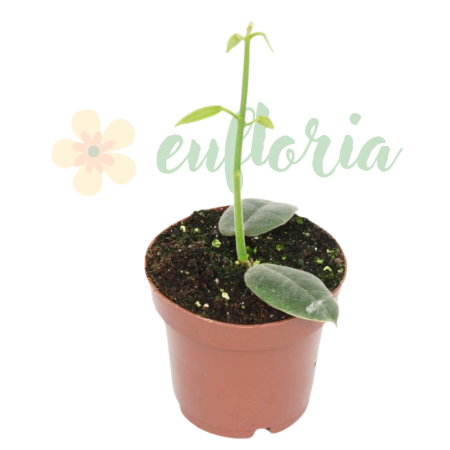
![Hoya engleriana Ø14cm — rare Philippine species [1]](https://gomagcdn.ro/domains2/eufloria.ro/files/product/original/hoya-engleriana-d14cm-450856.png "Hoya engleriana Ø14cm — rare Philippine species [1]")
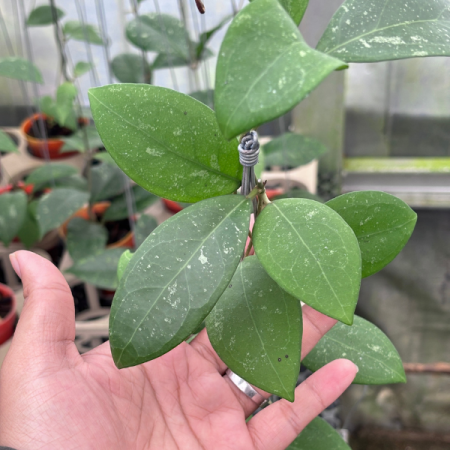
Hoya engleriana is a rare Hoya species from the Philippines, with thin elongated leaves (1-2 cm wide, 5-8 cm long) and spectacular flowers in dense pink-white star-shaped umbels. Climbing-trailing epiphytic plant from the Apocynaceae family. Prolonged summer flowering, ideal for hanging baskets.
Pot diameter: 14 cm
- Description
- Reviews (0)
- FAQ
Hoya engleriana is a rare Hoya species, native to the Philippines, appreciated in collections for its thin, elongated leaves with a slightly waxy texture and for its spectacular pink-white star-shaped flowers, appearing grouped in dense umbels. Named in honor of German botanist Adolf Engler, this species is considered a collector's piece for Hoya enthusiasts due to its unique character — the narrow, almost linear leaves contrast with the fleshy, wide leaves of most popular Hoya species, offering a visual variation that enriches any serious botanical collection. For exotic plant lovers, engleriana is a "calling card" of a sophisticated collection.
Origin and Botanical Characteristics
Hoya engleriana belongs to the Apocynaceae family, alongside Dischidia, Ceropegia, and Stephanotis. It is native to the tropical forests of the Philippines, particularly the islands of Luzon and Mindanao, where it grows as an epiphytic vine on tree trunks in its natural habitat. The species name "engleriana" honors Adolf Engler's contribution to botany, a common practice in botanical nomenclature to commemorate important botanists. The species was officially described in botanical literature in the 19th century and remains relatively rare on the European commercial market, being imported in limited numbers from Asia.
In its natural habitat, Hoya engleriana grows at medium altitudes (300-1000m), in forests with high humidity and light filtered through the canopy. This epiphytic origin explains many of the plant's requirements in cultivation: humid air, bright indirect light, and very aerated substrate are essential conditions for its long-term health. Adaptation to life on tree branches means the plant tolerates short dry periods but is very sensitive to stagnant water in the substrate.
The leaves are the defining visual element — elongated, thin (1-2 cm wide), 5-8 cm in length, with a fine slightly waxy texture. The base green is deep, glossy, offering an elegant contrast with the pink-white flowers when the plant blooms. These narrow leaves are an evolutionary adaptation to reduce water loss in habitats with variable humidity — a common trait in epiphytic species depending on limited water sources. Unlike Hoya with fleshy succulent leaves, engleriana has a more "elegant" appearance, almost graminoid (similar to grasses).
The stems are thin, flexible, climbing-trailing, can reach 35-45 cm at delivery, and extend progressively through slow but consistent growth. At full maturity, under ideal conditions, the plant can produce stems over 1 meter, offering a spectacular climbing character. Its semi-trailing character allows cultivation both in hanging baskets and on moss poles.
The flowers are one of the most appreciated features — they appear in dense umbels of 10-25 individual flowers, each measuring 1-1.5 cm. The star shape, with pink-white petals and pink-red center, offers a visual spectacle when the plant blooms. Flowering usually appears in summer and can last several weeks, and inflorescences can return year after year if the peduncle (floral stem) is left intact after flowering — Hoya forms new flowers on the same old peduncles. This is an important characteristic of the entire Hoya genus — peduncles are permanent structures.
Why It Is Appreciated in Collections
Hoya engleriana is one of those species that marks a serious Hoya collection — its rare character, unusual narrow leaves, and spectacular flowering grant it "intermediate-advanced" species status. For cultivators who already collect popular Hoya such as H. carnosa, H. kerrii, or H. pubicalyx, engleriana adds a new dimension with its unique character. The species is particularly appreciated by "Hoya enthusiasts" — the international community of collectors who dedicate their attention exclusively to the Hoya genus.
In Hoya collections, engleriana pairs excellently with species having contrasting characteristics — H. compacta with curled leaves, H. linearis with very thin leaves, or H. obovata with large leaves. This diversity of leaves within the same genus creates a rich visual experience in a collection of related species. See other Hoya for comparison. Combining Hoya with other epiphytic plants from the Apocynaceae family — Ceropegia woodii, Dischidia, Stephanotis — creates an "Apocynaceae section" with coherent character in any collection.
Care — Complete Guide for Cultivators
Hoya engleriana requires care similar to other Hoya, with emphasis on excellent drainage and strong light for flowering:
Light: Bright indirect light, essential for flowering. Tolerates gentle morning or evening sun. Under too low light, the plant survives but will not bloom. Best exposure: 1-2 meters from east/west-facing window or filtered south-facing. Full-spectrum LED grow lights are a valid alternative in spaces without suitable windows.
Watering: Moderate — substrate must dry completely between waterings. Hoya is very sensitive to stagnant water. Summer every 7-10 days, winter every 14-21 days. Succulent leaves retain water, plant tolerates short dry periods. Use room-temperature water, decanted or filtered — chlorine and salts can affect sensitive roots.
Humidity: 50-70% optimal. Hoya tolerates lower humidity than many other epiphytes, but occasional misting or humidifier helps maintain foliage quality. In winter with strong heating, grouping with other indoor plants creates a favorable microclimate.
Substrate: Very aerated, with excellent drainage. Orchid/epiphyte mix: universal substrate (30%), perlite (30%), fine pine bark (25%), sphagnum moss (10%), activated charcoal (5%). pH 5.5-6.5. Drainage at the bottom of the pot is essential.
Temperature: 18-28°C optimal, minimum 15°C. Below 12°C the plant enters dormancy. A 5-7°C variation between day and night stimulates flowering — common in apartment environment with cool windows in winter.
Fertilizing: Orchid or flowering plant fertilizer, diluted to half, monthly in growing season. To stimulate flowering, use a fertilizer with higher phosphorus in spring.
Repotting: Very rarely — every 3-4 years. Hoya prefers cramped pots — too large a pot can inhibit flowering. When repotting, let roots dry 1-2 days before placing in new substrate.
Important pruning: DO NOT cut floral peduncles (stems that bore flowers) after flowering — Hoya forms new flowers on the same peduncles year after year. Only remove dry leaves. This rule is fundamental for all Hoya — cutting peduncles means losing re-flowering capacity on those stems.
Common problems: No buds = insufficient light or lack of "positive stress" in winter. Yellowed leaves = overwatering. Curled leaves = dehydration. Spider mites appear in very dry air — check leaf undersides weekly.
Toxicity and Safety
Hoya engleriana, like many species from the Apocynaceae family, is considered mildly toxic to cats, dogs, and children — milky sap from stems can cause irritation. It appears on the ASPCA toxic plant list with mild severity. Symptoms of ingestion: mouth irritation, excessive drooling, vomiting. Keep the plant away from animals that tend to bite leaves.
For humans, contact with milky sap may cause mild dermatitis. Use gloves when repotting or pruning. Wash hands after handling.
Why Choose It for Your Collection
Hoya engleriana is a "knowledge piece" for rare Hoya enthusiasts — its unique character with narrow leaves and spectacular flowering in dense umbels makes it a natural focal point in any botanical collection. The Ø14cm diameter allows a stable start with already established roots and 35-45 cm stems. In 1-2 years, under good conditions, the plant will begin producing regular inflorescences.
For epiphytic plant enthusiasts, engleriana perfectly completes a collection alongside other rare Hoya such as Ceropegia or rare Anthurium. Its semi-trailing character allows varied cultivation styles — in hanging baskets, on moss poles, or as a shelf plant. Delivery across the EU with specialized packaging for rare Hoya — each specimen is individually selected and prepared to arrive in optimal condition.
Is Hoya engleriana toxic?
Yes, mildly toxic due to milky sap from Apocynaceae family. See other Hoya.
Why are leaves narrow?
Evolutionary adaptation to reduce water loss. Narrow leaves minimize evaporation surface.
How do I care for it to bloom?
Bright indirect light, cool/dry period in winter, phosphorus fertilizer in spring. DO NOT cut peduncles after flowering.
How do I propagate it?
By cuttings — cut 8-12 cm with a node, root in water. New plants in 4-6 weeks. See similar techniques.
Can I grow it on a moss pole?
Yes, perfect. Climbing character allows vertical growth. See other Hoya for comparison.
Ai nevoie și de un ghiveci decorativ?