EN/
EN/ Romana
Philodendron Florida Ghost Ø8cm
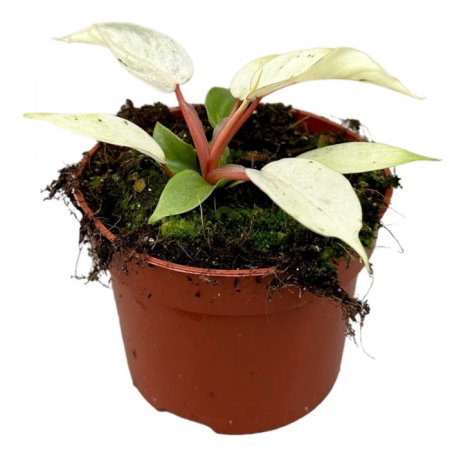
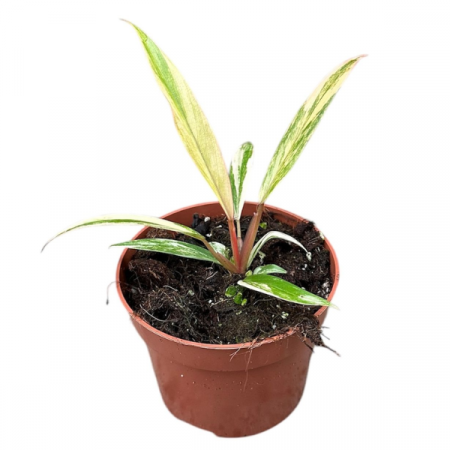
![Philodendron Florida Ghost - rare hybrid with lobed white leaves maturing to green [1]](https://gomagcdn.ro/domains2/eufloria.ro/files/product/original/philodendron-florida-ghost-d8cm-252017.jpg "Philodendron Florida Ghost - rare hybrid with lobed white leaves maturing to green [1]")
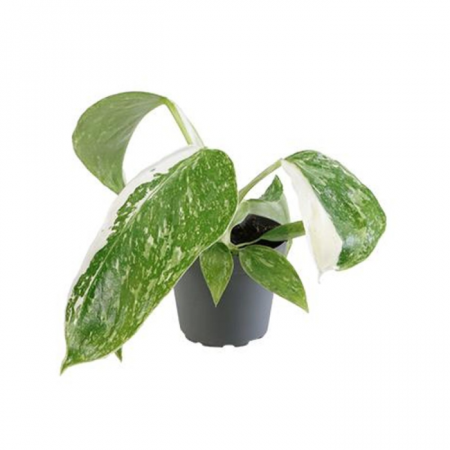
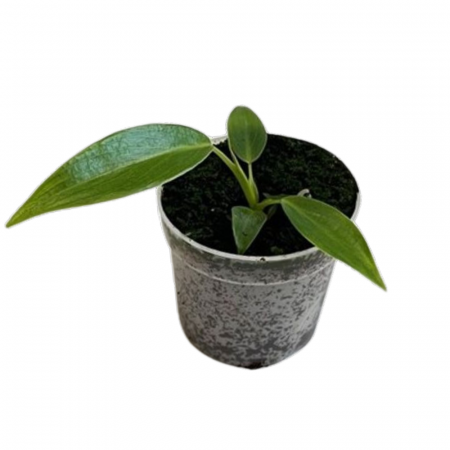
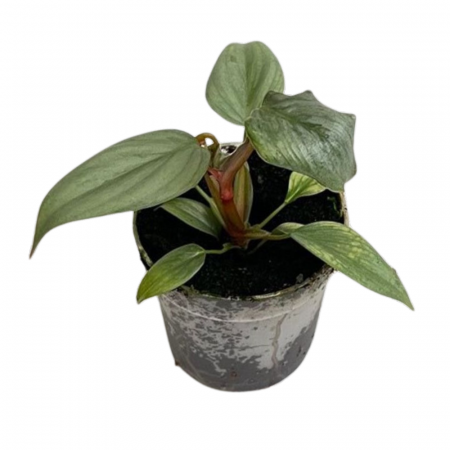
Philodendron Florida Ghost is a rare and spectacular hybrid from the Araceae family, prized for its lobed leaves that emerge in immaculate white-cream and gradually transform to deep green as they mature. The reddish-textured petioles and distinctive leaf shape make this plant an unmistakable collector's piece. Available in 8 cm pots, it is an ideal choice for lovers of rare and unusual plants. Delivery across the EU.
Approx height (including pot): 12 cm
Flowering state: No flowers
Pot diameter: 8 cm
- Description
- Characteristics
- Reviews (0)
- FAQ
🌿 The Green Ghost — an Ethereal Presence That Illuminates Any Collection
Philodendron Florida Ghost is one of the most spectacular and coveted varieties in the world of indoor plants, a natural hybrid that carries within it the mystery of perpetual change. Each new leaf emerges in an immaculate white-cream shade, almost translucent, like a botanical ghost making its appearance from the heart of the plant. As the leaf matures, it traverses a fascinating chromatic spectrum — from pure white, through lime-green tones, to the deep, glossy green of full maturity. This continuous metamorphosis makes every day spent alongside a Florida Ghost a new and captivating visual experience.
The popularity of this plant has exploded over the last decade among rare plant collectors, and the reason is easy to understand. The combination of the distinctive leaf lobes — reminiscent of a tropical oak leaf silhouette — and the ability to produce completely white leaves upon unfurling creates a dramatic effect that few other plants can match. Philodendron Florida Ghost is not just a plant; it is a living piece of botanical art, a constant subject of admiration and conversation.
At Eufloria.ro, we offer young, vigorous specimens, carefully grown and ready to reveal their personality in your collection. Each plant is unique — the tones of white and green vary from one specimen to another, making the acquisition of a Florida Ghost a truly personal and unrepeatable experience. Delivery across the EU.
🌍 Origin and Botanical History
Philodendron Florida Ghost is a hybrid belonging to the Araceae family, one of the most diverse families of monocotyledonous plants. Its exact origin is a subject of debate in the botanical community, but the general consensus places it as a hybrid between Philodendron squamiferum and Philodendron pedatum, two species native to the humid tropical forests of South America — particularly the Amazon basin, where the biodiversity of the genus Philodendron reaches its peak with over 400 described species.
The genus Philodendron was first described by German botanist Heinrich Wilhelm Schott in 1829. The name comes from ancient Greek: "philos" (lover) and "dendron" (tree), a reference to the natural epiphytic habitat of most species, which grow clinging to tree trunks in search of the filtered light beneath the dense tropical canopy. The "Florida Ghost" variety emerged as a natural mutation or horticultural selection of the "Florida" hybrid, noted for its ability to produce new leaves completely devoid of chlorophyll — those "ghost leaves" that gave it its name.
The natural distribution of the parent species covers a wide arc from southern Mexico, through Central America, to Brazil, Colombia, and Peru. These plants grow at altitudes of 0-800 m, in areas with abundant rainfall (1,500-3,000 mm/year) and constant temperatures between 20-30°C.
🌱 The Foliage
The leaves constitute the main spectacle of Philodendron Florida Ghost. They are deeply lobed, with 3-5 distinctive lobes that give the leaf a complex shape, somewhat resembling an open hand or an oversized oak leaf. At maturity, a single leaf can reach 15-25 cm in length by 10-18 cm in width, although mature specimens with vertical support can produce significantly larger leaves.
What makes this Philodendron truly unique is the chromatic behaviour of new leaves. Each young leaf emerges from a sheath (cataphyll) that can be an intense green-reddish colour, only to unfurl in a shade of pure white-cream, sometimes almost transparent. This initial depigmentation is due to the temporary absence of chlorophyll — the leaf is literally a white "ghost" that will gradually acquire green pigment over several weeks. Some leaves remain partially white even at maturity, retaining unpredictable and artistic areas of variegation.
The texture of the leaves is semi-glossy, with a slightly waxy surface that reflects light diffusely, amplifying the spectral effect of the white areas. The petioles (leaf stalks) present another distinctive trait: they are covered with small reddish-brown excrescences or "hairs," inherited from Philodendron squamiferum, giving the plant a wild, primitive aspect that beautifully contrasts with the ethereal elegance of the white leaves.
🌸 The Flowers
Like most species in the genus Philodendron, Florida Ghost produces spadix-type inflorescences wrapped in a spathe, typical of the Araceae family. The spathe is greenish-white in colour, and the spadix — the central axis bearing microscopic flowers — is cream-white. The flowers are small, lacking petals in the classical sense, but reproductively functional.
Flowering in indoor cultivation is extremely rare and occurs only in very mature specimens after years of growth in optimal conditions. Most collectors will never see a Florida Ghost bloom indoors, and this does not diminish the plant's attractiveness in any way — the spectacular foliage is its true crowning glory. If an inflorescence does appear, it lasts a few days and can be left on the plant or removed to direct energy towards new leaf production.
🌱 Growth Habit and Development
Philodendron Florida Ghost has a semi-epiphytic growth habit, with a tendency to grow upward when provided with vertical support (moss pole, coconut or plastic totem). Without support, the plant will grow more compactly but will produce smaller leaves. Growth speed is moderate — under ideal conditions, it can produce a new leaf every 3-5 weeks during the growing season (spring-autumn). Aerial roots are vigorous and represent a sign of health; they can be guided towards soil or a moist support to stimulate growth.
Here are the main care requirements for Philodendron Florida Ghost:
- Light: Bright, indirect light — essential for maintaining the "ghost" effect of new leaves. Avoid direct sunlight, which can burn the white areas that lack chlorophyll protection. An east or west-facing window with a light curtain is ideal.
- Temperature: 18-28°C optimal. Does not tolerate temperatures below 12°C. Avoid cold drafts and sudden temperature changes.
- Watering: Allow the top 3-4 cm of substrate to dry between waterings. Water thoroughly, then let all excess drain completely. Reduce frequency in winter. Overwatering is the main risk factor — roots rot quickly in permanently wet substrate.
- Humidity: 60-80% relative humidity ideal. Tolerates 40-50% but grows more slowly and produces smaller leaves. A humidifier or grouping plants together helps.
- Substrate: Airy, well-draining mix: 40% perlite or pumice, 30% pine bark (medium size), 20% peat or coco coir, 10% horticultural charcoal. Slightly acidic pH (5.5-6.5).
- Fertilisation: Balanced liquid fertiliser (NPK 20-20-20) diluted to half strength, once every 2-3 weeks during the growing season. Do not fertilise in winter.
- Propagation: Through stem cuttings with at least one node and an aerial root. Cuttings root in water, moist sphagnum, or perlite. Optimal period: spring-summer.
Lungime: 8 cm
Greutate (kg): 0.25 Kg
Denumire: Philodendron
Diametru: 8 cm
Cerințe lumină: Strong, indirect light
Tip plantă: Decorative
Utilizare: Interior
Tip suport: Ghiveci
Material Suport: Plastic
How often should I water Philodendron Florida Ghost?
Philodendron Florida Ghost should be watered when the top 3-4 cm of substrate have dried out. In summer, this typically means once every 5-7 days, and in winter once every 10-14 days. Water thoroughly and let all excess drain completely. Overwatering is the most common cause of problems, leading to root rot.
Is Philodendron Florida Ghost toxic to cats and dogs?
Yes, Philodendron Florida Ghost is toxic to pets. It contains calcium oxalate crystals that can cause oral mucosa irritation, excessive salivation, and difficulty swallowing. Toxicity is moderate — severe cases are rare, but it is recommended to place the plant away from curious animals.
Why don't the new leaves of Philodendron Florida Ghost stay white?
New leaves of Philodendron Florida Ghost emerge white because they initially lack chlorophyll. As they mature, the plant produces chlorophyll for photosynthesis, and the leaves gradually turn green. Bright indirect light can extend the white phase, but the transition to green is a natural and necessary process for the plant's survival.
What is the best substrate for Philodendron Florida Ghost?
The best substrate for Philodendron Florida Ghost is an airy mix consisting of 40% perlite or pumice, 30% pine bark (medium grade), 20% peat or coco coir, and 10% horticultural charcoal. The ideal pH is slightly acidic, between 5.5 and 6.5. The substrate must provide excellent drainage to prevent root rot.
How do I propagate Philodendron Florida Ghost?
Philodendron Florida Ghost is propagated through stem cuttings with at least one node and, ideally, an aerial root. Cut below a node with a sterilised knife, let the cut dry for 1-2 hours, then place the cutting in water, moist sphagnum, or perlite. Roots appear in 2-4 weeks. The optimal period is spring-summer.
Ai nevoie și de un ghiveci decorativ?