EN/
EN/ Romana
Drosera capensis Ø8,5cm
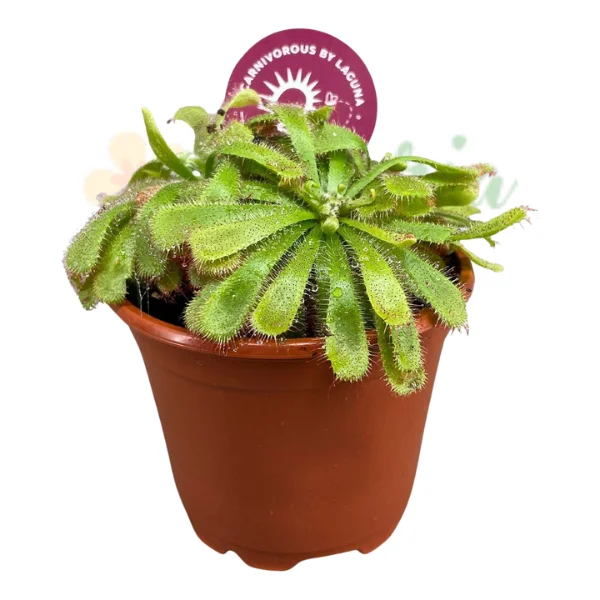
![Drosera capensis Cape Sundew — red sticky tentacles, pot Ø 8.5 cm [1]](https://gomagcdn.ro/themes/fashion/gfx/no-image.png "Drosera capensis Cape Sundew — red sticky tentacles, pot Ø 8.5 cm [1]")
Drosera capensis, the "sundew", is a fascinating carnivorous plant with leaves covered in reddish sticky tentacles. Perfect for lovers of unusual plants.
Diametru Ghiveci: 8.5 cm
- Description
- Reviews (0)
- FAQ
Drosera capensis – the captivating sundew
Drosera capensis, commonly known as the "sundew," is one of the most elegant and fascinating carnivorous plants. Native to the Cape Peninsula, South Africa, this small botanical gem captivates with its elongated leaves covered in reddish glands that secrete a sticky, glittering liquid similar to dewdrops – a lethal trap for insects.
Capture mechanism: The leaves are covered with thousands of glandular tentacles that secrete sticky mucilage. Insects stick to these tentacles, and the leaf gradually curls around the prey, digesting it with special enzymes.
Delicate flowers: In summer, Drosera capensis produces tall flower stems with small, pink-purple flowers – a beautiful contrast to its carnivorous nature.
Special care: Like all carnivorous plants, it needs distilled or rain water, abundant light, and acidic, nutrient-poor substrate (peat + sand).
Pot: Ø 8.5 cm | Plant height: ~13 cm
How do I care for Drosera capensis?
Drosera capensis needs strong direct light (minimum 4-6 hours daily), a substrate of equal parts peat and perlite, and distilled or rainwater. Keep a water tray under the pot permanently — never let the substrate dry out. Do not fertilize and never use tap water. Ideal temperature is 15-30°C (59-86°F).
Do I need to feed Drosera capensis with insects?
Not mandatory. Drosera capensis can survive without supplemental feeding if it receives enough light. However, occasional feeding with small insects (flies, mosquitoes) improves the plant's growth and vigour. Do not use meat, cheese, or other processed foods. If placed near a window, it will catch insects on its own.
Is Drosera capensis toxic to pets?
Drosera capensis is generally considered non-toxic to dogs and cats. The sticky mucilage produced by the tentacles is designed to catch insects and does not contain substances harmful to mammals. However, as with any plant, ingestion in large quantities may cause mild gastric discomfort.
Why has my Drosera lost the sticky droplets on its tentacles?
The lack of mucilage droplets usually indicates insufficient light or low humidity. Drosera capensis actively produces mucilage only under bright light conditions. Ensure it gets at least 4-6 hours of direct light daily. Also check that you are using distilled water — minerals from tap water can damage the plant.
Why are my Drosera capensis leaves turning black?
Blackening of old leaves is a natural process — individual leaves have a limited lifespan and die after a few months. The plant constantly produces new leaves from the centre of the rosette. If all leaves are blackening, check: water (must be distilled), light (must be strong), and substrate (must not contain fertilizers).