EN/
EN/ Romana
Monstera 'Thai Constellation' Ø6cm
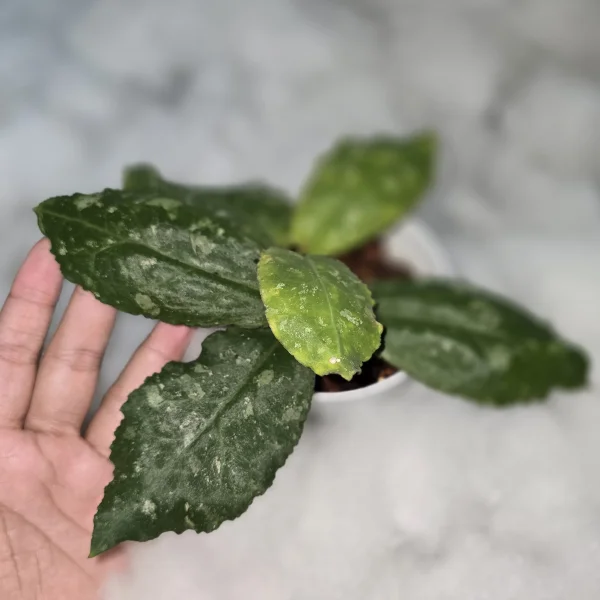
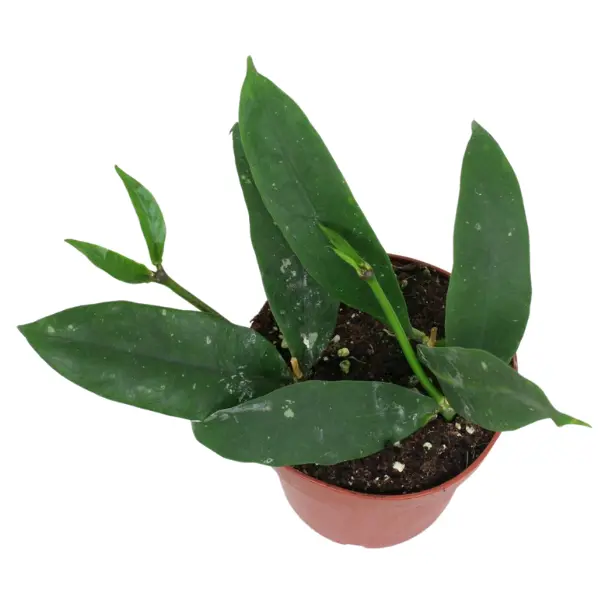
![Monstera 'Thai Constellation' — variegated plant with large green leaves sprinkled with stable creamy-gold variegation [1]](https://gomagcdn.ro/domains2/eufloria.ro/files/product/original/monstera-thai-constellation-d6cm-548755.png "Monstera 'Thai Constellation' — variegated plant with large green leaves sprinkled with stable creamy-gold variegation [1]")
Monstera 'Thai Constellation' is one of the most sought-after collector's plants in the world, a variety of Monstera deliciosa with stable creamy-gold variegation produced through tissue culture. The large leaves are sprinkled with creamy flecks like a constellation of stars, and at maturity develop the dramatic fenestrations characteristic of the genus. It grows more slowly than the green version but rewards patience with a spectacular presence, becoming the focal point of any room.
Approx height (including pot): 15 cm
Country of origin: Netherlands
Pot diameter: 6 cm
- Description
- Characteristics
- Reviews (0)
- FAQ
🌿 The Starry Sky of the Plant World
Monstera 'Thai Constellation' is one of the most desired collector's plants in the world, a true botanical jewel whose name says it all: its green leaves are sprinkled with creamy-gold spots and patches, like a constellation of stars scattered across a night sky. Every leaf is unique, with a variegation pattern unpredictable — a small universe in itself that turns the plant into a living work of art.
It belongs to the Araceae family and is a variety of the well-known Monstera deliciosa. Unlike unstable variegations that can fade over time, 'Thai Constellation' has a stable variegation produced through tissue culture in laboratories in Thailand — hence the name. This means the creamy-gold pattern stays constant throughout the plant's life, with no risk of reverting to green. It is a feature that sets it apart from other rare Monstera and explains why it is so sought after by collectors.
Young leaves start out whole, but as the plant matures it develops the fenestrations (holes) characteristic of the Monstera genus, combining two shows at once: creamy variegation and dramatic fenestration. It is a plant with a remarkable stage presence, capable of becoming the focal point of any room.
Offered on Eufloria.ro as a young tissue-culture plant, 'Thai Constellation' is a long-term investment that develops spectacularly over time. It is part of the Monstera category and is an ideal choice for collectors wanting an exceptional piece or for enthusiasts who want to start their variegated plant collection with a stable, rewarding variety.
Beyond its decorative value, 'Thai Constellation' has become a cultural phenomenon in the plant-loving community, featured in countless photos and collections around the world. Its price reflects not only its beauty but also the laboratory propagation effort and the slow growth — each specimen is the result of months of careful cultivation.
🌍 Origin and Botanical History
Monstera deliciosa, the parent species, belongs to the Araceae family and is native to the humid tropical forests of southern Mexico and Central America, where it grows as a vigorous climber, scaling tree trunks with the help of aerial roots. In its natural habitat it can reach impressive sizes, with leaves over a metre wide, deeply fenestrated.
'Thai Constellation' is a modern cultivar, developed through micropropagation (tissue culture) in Thailand, which is why each specimen starts in a laboratory rather than from seeds or traditional cuttings. This production method guarantees the stability of the variegation and explains its relatively limited availability and its collector's-plant price. The variegation is of the "sectorial-speckled" type, with creamy zones distributed irregularly, unlike the half-moon variegation of other cultivars.
The genus name Monstera comes from the Latin "monstrum", a reference to the "monstrous" size and the unusual, perforated appearance of the mature leaves. The genus comprises around 50 species, of which Monstera deliciosa is the best known and most widely cultivated in the world, having become a symbol of contemporary interior design.
A fascinating detail is the way light interacts with the leaves: the creamy, chlorophyll-free areas let light pass through more easily, creating a delicate translucent effect when the leaf is viewed against the light. The more bright indirect light the plant receives, the more new leaves tend to be better variegated and larger, which makes correct positioning the single most important factor in its aesthetic development. This is why many collectors rotate the plant periodically, so that all sides receive even light.
The creamy-gold variegation of 'Thai Constellation' is due to a mutation that reduces chlorophyll production in certain areas of the leaf. This is precisely why the plant grows more slowly than green Monstera deliciosa — it has less chlorophyll available for photosynthesis — and needs good light to maintain its pattern.
🌱 The Foliage
Monstera 'Thai Constellation' leaves are large, heart-shaped in young specimens, gradually becoming lobed and fenestrated as the plant matures. The surface is thick, slightly waxy, of a medium green overlaid with creamy-gold, yellowish and sometimes white spots and flecks. No pattern repeats: every leaf is a surprise, with a unique distribution of variegation.
Unlike the pure-white variegation of other plants, the creamy-gold tone of 'Thai Constellation' is warmer and more resistant to sunburn than pure white, although fully chlorophyll-free areas remain sensitive to strong direct light. This colour balance, between vivid green and warm gold, is one of the reasons the plant is so photogenic.
For those interested in botanical detail, it is worth knowing that the spathe and spadix of aroids play a role in attracting pollinators through heat and scent, a fascinating mechanism that ensures reproduction in the natural habitat. In apartment cultivation, however, the focus falls entirely on the foliage — the true star of this plant.
As the plant climbs a moss pole, the leaves become ever larger and more fenestrated, providing that spectacular architectural look. Compared with a delicate variegation such as that of Monstera adansonii variegata, 'Thai Constellation' offers larger leaves and a more massive, dramatic presence.
🌸 The Flowers and Fruit
Like all aroids, Monstera deliciosa produces an inflorescence formed of a spadix (central spike) wrapped in a creamy-white spathe. In indoor cultivation, however, flowering is extremely rare and appears only on very mature specimens in near-ideal conditions. In 'Thai Constellation', flowering is even rarer due to slow growth.
In its natural habitat, Monstera deliciosa is also prized for its edible fruit, tasting like a cross between pineapple and banana — hence the epithet "deliciosa". The fruit needs over a year to ripen and should be eaten only when perfectly ripe, as the unripe fruit contains irritating calcium oxalate crystals. In apartment cultivation, however, the plant is grown exclusively for its spectacular foliage, not for flowers or fruit.
🌱 Growth and Development
Monstera 'Thai Constellation' is a vigorous climbing plant which, although it grows more slowly than the green version due to the variegation, becomes impressive over time. To develop beautifully and produce ever larger, more fenestrated leaves, it needs a moss pole (support) to climb with its aerial roots. It is also a suitable statement decorative element in generous spaces, including as one of the office plants with good light.
An important point to remember is the slow growth: do not expect a new leaf every week as with an ordinary green plant. 'Thai Constellation' takes its time, and every new leaf is a small event, observed and celebrated by enthusiasts. The moss pole is not just decorative — it encourages the plant to produce larger leaves by imitating the host tree trunk found in nature.
Here are the essential care requirements:
The variegated areas of the leaf are more delicate than the green ones and can develop small brown spots if exposed to direct sun or cold draughts, so a stable, sheltered position is best. With the right environment, however, the plant remains healthy and productive, rewarding its owner with one of the most beautiful foliage displays in the houseplant world.
- Light: bright indirect light, essential for maintaining the variegation; avoid strong direct sun, which scorches the creamy areas. A bright, filtered window is ideal.
- Temperature: 18–27°C; avoid exposure below 15°C and cold draughts. It does not tolerate cold.
- Watering: let the top of the substrate (2–3 cm) dry between waterings; every 7–10 days in summer, less often in winter. Variegated areas are sensitive to excess water and rot.
- Humidity: 60–80% is ideal; high humidity encourages large, healthy leaves. A humidifier is recommended.
- Substrate: an airy aroid mix — pine bark, perlite, sphagnum and charcoal; well-draining, never compact.
- Fertilising: balanced diluted fertiliser, once every 2–4 weeks in the growing season; do not over-fertilise, as growth is slow.
- Support: a moss pole for climbing; wipe dust off the leaves for optimal photosynthesis.
With patience and good conditions, Monstera 'Thai Constellation' becomes a spectacular centrepiece, a plant that grows in value — both aesthetic and collectible — with every new leaf. For those just discovering the genus, more accessible varieties such as Monstera siltepecana are an excellent starting point.
Beyond its aesthetic value, 'Thai Constellation' is also an air-purifying plant, contributing to a healthier indoor environment. Combined with correct care, it becomes a long-term investment that ages beautifully and grows in collector's value over time — a true green heirloom for any plant enthusiast.
Lungime: 15 cm
Greutate (kg): 0.25 Kg
Denumire: Monstera
Diametru: 6 cm
Cerințe lumină: Partial umbra
Tip plantă: Decorative
Utilizare: Interior
Tip suport: Ghiveci
Material Suport: Plastic
Why does the variegation of Monstera 'Thai Constellation' not fade?
Why does Monstera 'Thai Constellation' grow so slowly?
What substrate is ideal for Monstera 'Thai Constellation'?
Is Monstera 'Thai Constellation' toxic to pets?
Why do the new leaves have no holes (fenestrations)?
Recommendations

Ai nevoie și de un ghiveci decorativ?