EN/
EN/ Romana
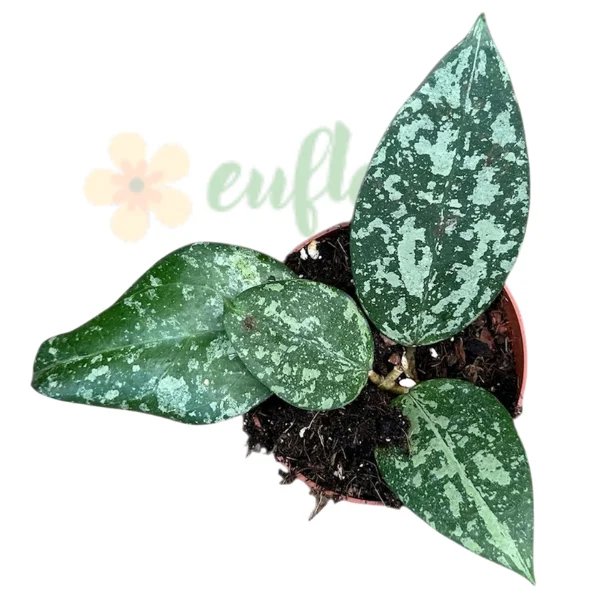
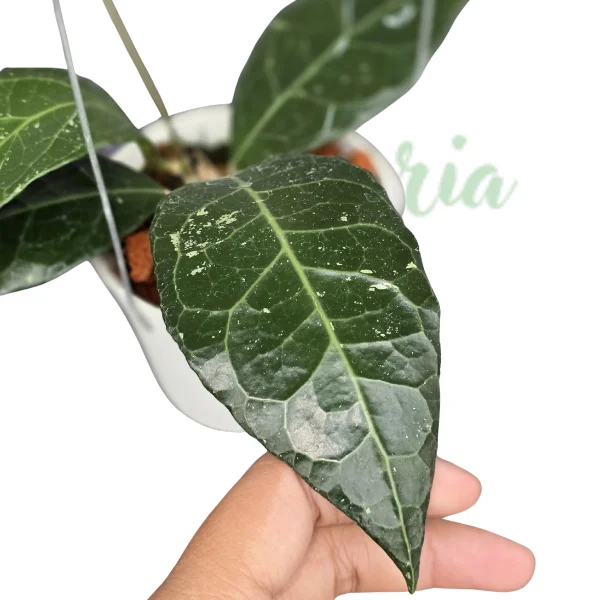
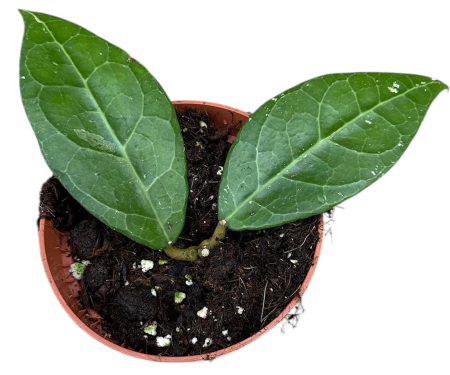
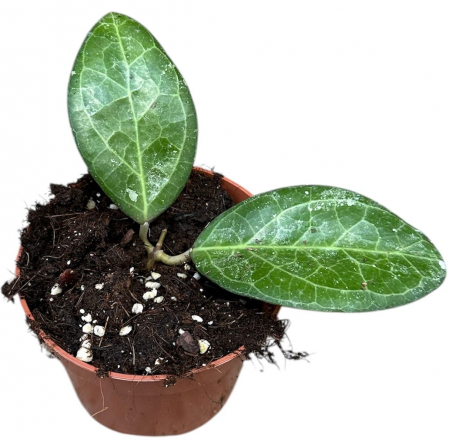
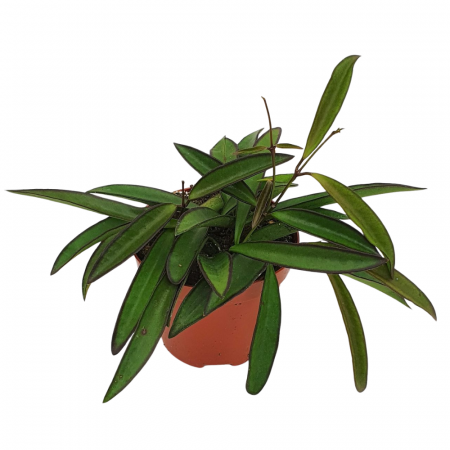
Hoya verticillata 'Lavia' Ø6cm
![Hoya verticillata 'Lavia' — Rare Cultivar with Fragrant Flowers [0]](https://gomagcdn.ro/domains2/eufloria.ro/files/product/medium/hoya-verticillata-lavia-d6-314426.webp "Hoya verticillata 'Lavia' — Rare Cultivar with Fragrant Flowers [0]")
![Hoya verticillata 'Lavia' — Rare Cultivar with Fragrant Flowers [1]](https://gomagcdn.ro/domains2/eufloria.ro/files/product/medium/hoya-verticillata-lavia-d6-757439.webp "Hoya verticillata 'Lavia' — Rare Cultivar with Fragrant Flowers [1]")
![Hoya verticillata 'Lavia' — Rare Cultivar with Fragrant Flowers [1]](https://gomagcdn.ro/domains2/eufloria.ro/files/product/original/hoya-verticillata-lavia-d6-314426.webp "Hoya verticillata 'Lavia' — Rare Cultivar with Fragrant Flowers [1]")
![Hoya verticillata 'Lavia' — Rare Cultivar with Fragrant Flowers [2]](https://gomagcdn.ro/domains2/eufloria.ro/files/product/original/hoya-verticillata-lavia-d6-757439.webp "Hoya verticillata 'Lavia' — Rare Cultivar with Fragrant Flowers [2]")
Approx height (including pot): 10 cm
Flowering state: No flowers
- Description
- Characteristics
- Reviews (0)
- FAQ
🌟 A Rare Cultivar of One of Asia's Most Widespread Hoyas
Hoya verticillata 'Lavia' is an unusual and rare cultivar of the widely distributed Hoya verticillata — a species that spans an enormous range from India through Southeast Asia to the Philippines. GrowTropicals describes this as "an unusual rare cultivar of Hoya verticillata" prized for its distinctive foliage and easy-care nature. The species itself is known for thick, waxy leaves arranged in whorls (the characteristic that gives verticillata its name), and large clusters of porcelain-white star-shaped flowers that release a sweet, lightly spicy fragrance. The 'Lavia' cultivar adds a collector's appeal to an already beloved species, making it a treasure for those who appreciate both botanical interest and elegant beauty. Easy to grow and rewarding with fragrant blooms, this is a Hoya that earns its place in any collection.
🌏 Origins & Botanical History
Hoya verticillata was first described in 1837 by George Don, based on earlier work by Vahl. According to Kew's Plants of the World Online (POWO), it is native to an exceptionally broad range: "Indian Subcontinent to S. China and W. & Central Malesia" — including India, Bangladesh, Thailand, Malaysia, Vietnam, Cambodia, the Philippines, Indonesia (Java, Sumatra, Sulawesi, Borneo), and Taiwan. This is one of the most widely distributed Hoya species in Asia. The species name "verticillata" comes from the Latin "verticillatus" meaning "whorled," referring to the distinctive arrangement of leaves around the stem. The taxonomy of this species has been notoriously confusing: Hoya acuta, Hoya parasitica, and Hoya verticillata were long considered separate species by different authorities, but current botanical consensus (including Kew) treats Hoya acuta and Hoya parasitica as synonyms of Hoya verticillata. Vermont Hoyas confirms: "Hoya parasitica is now considered to be a synonym for Hoya verticillata." The 'Lavia' cultivar is a selected form prized by collectors for its particular characteristics.
🍃 Foliage — Thick, Waxy & Distinctively Whorled
The leaves are thick, succulent, and waxy with a glossy surface — typical of the verticillata complex. They are oval to elliptical in shape with conspicuous veins throughout. Steve's Leaves describes them as "succulent green leaves... elliptical in shape with conspicuous veins throughout." Tropics@Home notes leaves can reach "10x4cm (4" x 1½"); plain green with faint veins" and describes them as "hard and succulent." The distinguishing characteristic of the species is the whorled leaf arrangement — leaves emerge in groups around the stem rather than in opposite pairs, which helps identify this species among similar Hoyas. The species is known for high variability: Tropics@Home notes "this is a species with highly variable leaves, but most clones are compact growing with thick leaves." The 'Lavia' cultivar represents a particular selected form within this variable species.
🌸 Flowers — Fragrant Porcelain Stars
The flowers are one of the great attractions of Hoya verticillata. Steve's Leaves describes them: "Flowers are porcelain-white, sometimes with a pink tint. They appear in large clusters and exude a sweet and lightly spicy fragrance." Tropics@Home provides additional detail: "reflexed; ~1.5cm (½"); white corolla and white corona with red center; up to 40 strongly perfumed flowers per umbel." The Nature of Home describes them as "cream-colored clusters of star-shaped blooms that dazzle with pink or reddish centers." The fragrance is notable — described as "strong, sweet" and particularly intense during evening hours. One of the appealing aspects of this species is that flowers are somewhat variable in colour between different clones, but all share the characteristic sweet scent. The plant re-blooms from the same peduncles (flower stalks), so these should never be removed after flowering.
🌿 Growth Habit & Development
Growth habit is that of a vining climber or trailer, typical of epiphytic Hoyas. GrowTropicals describes the 'Lavia' cultivar specifically as having "vining climber or trailer" growth habit. The plant can be grown in hanging baskets, allowed to trail from shelves, or trained to climb supports like trellises or moss poles. Tropics@Home notes that "cuttings root easily, but may take some time to grow. It may also take some time before first flowering." The species is generally considered easy to care for. GrowTropicals recommends it as "a perfect conservatory plant" with "easy care." This adaptability — thriving in various environments from coastal forests to rainforest understory in its native range — makes it a resilient houseplant.
Care Requirements:
- Light: Bright, indirect light to dappled shade. GrowTropicals specifies: "Bright indirect sunlight to dappled shade." The species needs adequate light to bloom — HoyaPlantCare notes: "Hoya verticillata thrives in bright, indirect light... it won't bloom or grow properly in low-light conditions." Morning sun is tolerated and can encourage flowering; avoid harsh afternoon sun which may scorch leaves.
- Water: Allow to dry between waterings. GrowTropicals advises: "Water when top 3cm of soil are dry." Tropics@Home recommends: "plenty, but(!) let it dry out between waterings." Overwatering is the primary cause of problems — the thick, succulent leaves store water and the plant is sensitive to constantly wet soil. Reduce watering in winter.
- Soil: Well-draining, aerated substrate is essential. Tropics@Home emphasises: "Hoya hates clogged soil!" Use a chunky mix of orchid bark, perlite, and quality potting soil. Good drainage is critical to prevent root rot.
- Temperature: Typical indoor temperatures (18-28°C) are ideal. Tropics@Home notes the species "does not tolerate temperatures below 10°C (50°F)." Protect from cold drafts and sudden temperature drops. The species is native to warm tropical climates and appreciates consistent warmth.
- Humidity: Will thrive in higher than ambient humidity. GrowTropicals notes it "will thrive in higher than ambient humidity." Steve's Leaves recommends "humidity 60% or more." While adaptable to average household humidity, higher humidity encourages faster growth and better flowering.
- Feeding: Apply balanced liquid fertilizer at half-strength every 2-4 weeks during the growing season (spring-summer). A phosphorus-rich fertilizer can encourage flowering. Reduce feeding in winter.
Botanical Info: Family: Apocynaceae (subfamily Asclepiadoideae) | Genus: Hoya | Species: Hoya verticillata (Vahl) G.Don (1837) | Cultivar: 'Lavia' | Synonyms: Hoya acuta Haw., Hoya parasitica (Wall. ex Hornem.) Wight, plus 30+ additional synonyms per Kew | Common Names: Wax Plant, Wax Flower, Porcelain Flower | Type: Epiphytic Climbing/Trailing Vine | Native Range: Indian Subcontinent to S. China and W. & Central Malesia (India, Bangladesh, Thailand, Malaysia, Vietnam, Cambodia, Philippines, Indonesia, Taiwan) | Zone: USDA 10-12 (indoor cultivation in temperate climates) | Flowering: White to cream, often with pink/red centres, up to 40 flowers per umbel, strongly fragrant (sweet, lightly spicy), blooms spring-summer | Growth Rate: Moderate
Lungime: 10 cm
Denumire: Hoya
Diametru: 6 cm
Cerințe lumină: Partial umbra
Tip plantă: Decorative
Utilizare: Interior
Tip suport: Ghiveci
Material Suport: Plastic
What is special about the 'Lavia' cultivar compared to other Hoya verticillata varieties?
Hoya verticillata is a highly variable species with many named varieties and cultivars including 'Splash' (silver speckled leaves), 'Albomarginata' (white-edged leaves), 'Variegata' (yellow/cream variegation), and regional forms like 'Laos' and 'Bogor'. The 'Lavia' cultivar is described by GrowTropicals as "an unusual rare cultivar" — it represents a selected form prized by collectors. Like all verticillata forms, it shares the species' characteristic fragrant flowers and whorled leaf arrangement, but the specific appearance that distinguishes 'Lavia' makes it sought after by serious Hoya collectors. All verticillata cultivars share similar care requirements and the species' characteristic fragrance.
How strong is the fragrance of Hoya verticillata flowers?
The fragrance is notably strong — Tropics@Home describes the flowers as "strongly perfumed" with "up to 40 strongly perfumed flowers per umbel." Steve's Leaves characterises the scent as "sweet and lightly spicy." The fragrance intensifies in the evening, a trait evolved to attract nocturnal pollinators in the wild. When the plant is in full bloom, the scent can easily perfume an entire room. Most collectors consider this a major attraction of the species. Those with fragrance sensitivity should consider placement — the plant can be moved away from bedrooms or living areas during flowering if the scent is overwhelming.
Why are my Hoya verticillata 'Lavia' leaves turning yellow?
Yellow leaves on Hoya verticillata are most commonly caused by overwatering. Greg App explains: "Overwatering and root rot are the most likely cause of problems in Hoya verticillata, since they are very sensitive to wet soil." Ensure your pot has drainage holes and your substrate is well-draining. Allow the top 3cm of soil to dry between waterings. Other possible causes include nutrient deficiency (if you haven't fertilized during growing season) or insufficient light. Check roots for rot if yellowing persists despite adjusting watering — healthy roots are firm and white/tan, rotted roots are mushy and dark.
How do I get my Hoya verticillata 'Lavia' to flower?
To encourage flowering: provide bright, indirect light — HoyaPlantCare notes the plant "won't bloom or grow properly in low-light conditions." Keep the plant somewhat root-bound, as Hoyas flower more readily when roots are constrained. Ensure adequate warmth and humidity. Never remove old flower stalks (peduncles) — the plant re-blooms from the same spurs year after year. A phosphorus-rich fertilizer during growing season can encourage blooming. Tropics@Home notes it "may take some time before first flowering" but the wait is rewarded with clusters of up to 40 strongly perfumed flowers.
Is Hoya verticillata the same as Hoya parasitica or Hoya acuta?
Yes — these names are now considered synonyms for the same species. Vermont Hoyas confirms: "Hoya parasitica is now considered to be a synonym for Hoya verticillata." Kew's Plants of the World Online lists Hoya acuta and Hoya parasitica among over 30 synonyms for Hoya verticillata. The taxonomic confusion arose because this highly variable species was described multiple times by different botanists across its vast range. If you see plants sold as Hoya parasitica, Hoya acuta, or Hoya verticillata, they belong to the same species complex. The accepted name today is Hoya verticillata (Vahl) G.Don.
Is Hoya verticillata 'Lavia' toxic to cats and dogs?
No, Hoya verticillata 'Lavia' is not toxic to cats, dogs, or other household pets. The ASPCA confirms that Hoya plants are non-toxic to cats, dogs, and horses. Greg App specifically states: "Hoya verticillata is not known to cause harm to humans or pets." As with any plant, eating large quantities might cause mild stomach upset simply because pets aren't designed to digest plant material — but this is not a toxic reaction. The milky latex sap may cause minor irritation if contacted, but is not dangerous.
How to care for Hoya?
Bright indirect light, moderate watering, drained substrate. 18-27°C.
How often to water?
When dry. Weekly summer, 2-3 weeks winter.
Propagation?
Cuttings 2-3 nodes in water/sphagnum. 2-6 weeks.
Recommendations
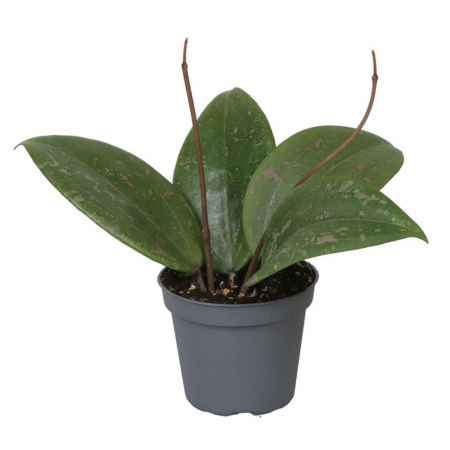
Ai nevoie și de un ghiveci decorativ?