EN/
EN/ Romana
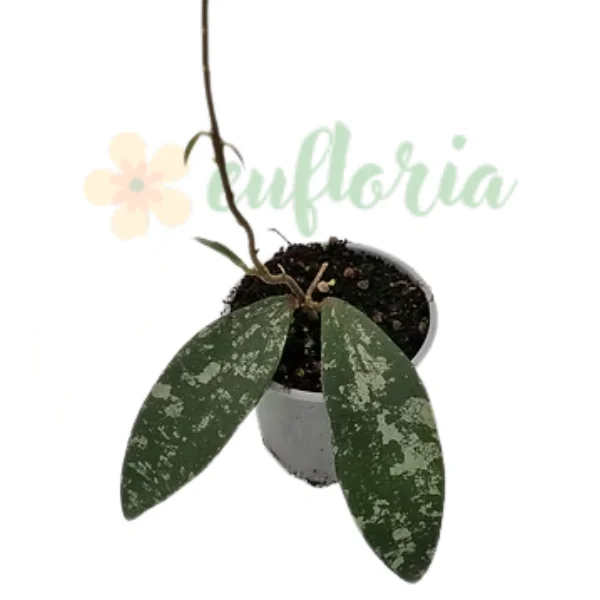
Hoya puber Ø14cm
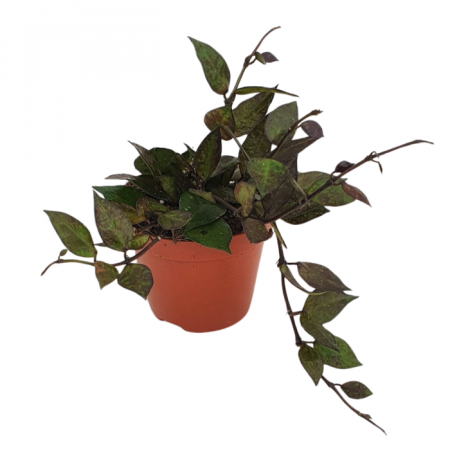
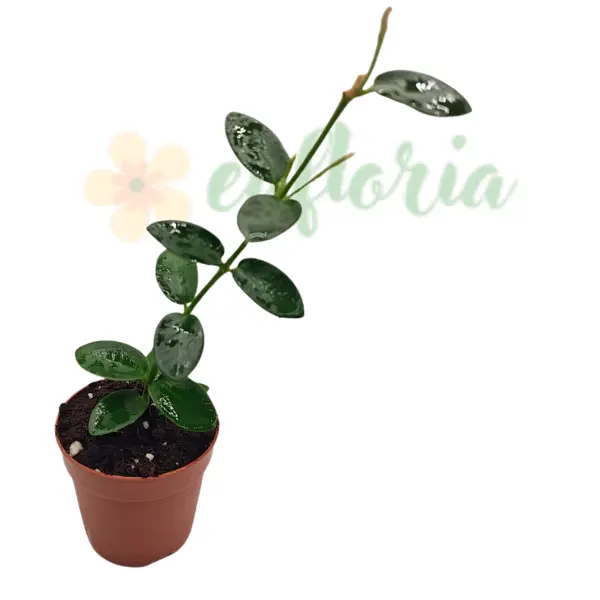
![Hoya puber - rare trailing plant with velvety leaves covered in fine hairs [1]](https://gomagcdn.ro/domains2/eufloria.ro/files/product/original/hoya-puber-d14cm-752979.jpg "Hoya puber - rare trailing plant with velvety leaves covered in fine hairs [1]")
Hoya puber is a rare species from the Apocynaceae family, native to the Indonesian islands, remarkable for its velvety foliage covered with fine hairs and its elegant trailing habit. Its fragrant flowers, clustered in pale pink umbels, emit a sweet scent that intensifies in the evening. A fascinating collector plant for rare Hoya enthusiasts.
Note: Product images are for guidance only. Due to different batches of imported products, there may be differences between the images on the website and the actual appearance of the products.
Approx height (including pot): 30 cm
Flowering state: No flowers
Pot diameter: 14 cm
- Description
- Characteristics
- Reviews (0)
- FAQ
🌿 Hoya puber — The Elegant Velvety Veil from Southeast Asian Jungles
There are plants that, at first glance, seem to belong to a realm of botanical fairy tales, and Hoya puber is one of them. This fascinating species from the Apocynaceae family owes its Latin name to the epithet “puber,” which loosely translates to “covered with fine hairs” — a direct reference to the delicate pubescence that clothes its young leaves and stems. It is a plant that invites contemplation, touch, and the slow discovery of every detail.
Hoya puber is a relatively rare species in cultivation, prized by exotic plant collectors for its trailing habit, textured foliage, and delicate, fragrant flowers. Unlike more common species in the Hoya genus, this plant remains a coveted item for tropical plant enthusiasts, combining refined aesthetics with surprising resilience in indoor conditions.
Each specimen of Hoya puber brings a piece of the humid tropical forest atmosphere into your interior, where this species naturally grows as an epiphyte on old tree trunks, bathed in canopy-filtered light and nourished by the constant air humidity.
🌍 Origin and Botanical History
Hoya puber is native to the tropical regions of Southeast Asia, found especially in the islands of the Indonesian archipelago, including Java, Sumatra, and Borneo. The species was first described by Dutch botanist Carl Ludwig Blume in the first half of the 19th century, as part of his extensive research on the flora of the Dutch East Indies.
The genus Hoya, to which this species belongs, was named in honour of Thomas Hoy, the gardener of the Duke of Northumberland, by botanist Robert Brown in 1810. With over 500 recognised species, the Hoya genus represents one of the most diverse groups of climbing plants in the Apocynaceae family.
In its natural habitat, Hoya puber grows at altitudes between 200 and 1,200 metres, in humid tropical forests where relative humidity consistently exceeds 70%. Here, the plant develops as an epiphyte, anchoring itself to tree bark with its adventitious roots and letting its branches hang gracefully in the moist air of the forest understorey.
🌱 The Foliage
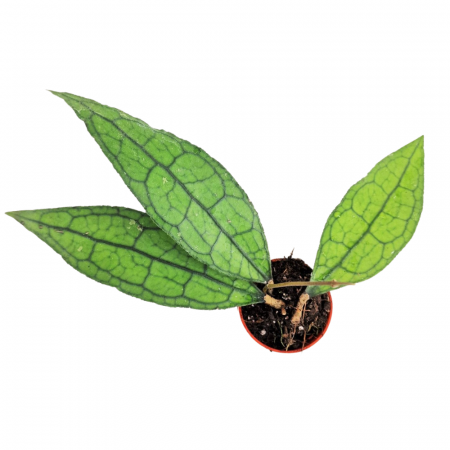
The leaves of Hoya puber are, without doubt, the element that defines this species’ personality. Elliptical to slightly lanceolate in shape, the leaves reach dimensions of 5–10 cm in length and 2–4 cm in width, presenting a unique texture thanks to the fine pubescence covering their surface, especially when young.
The foliage colour varies from medium green to rich dark green, with a subtle sheen that intensifies as the leaves mature and the fine hairs thin out. The central vein is slightly prominent, and the leaf texture is semi-succulent, a typical Hoya adaptation that allows them to store water for dry periods.
When light passes through the young leaves, a delicate translucent effect can be observed, highlighting the fine network of secondary veins. This characteristic makes Hoya puber a particularly photogenic plant, a favourite subject for plant photographers and macro-botany enthusiasts.
🌸 The Flowers
The flowers of Hoya puber are small botanical jewels, clustered in compact umbels of 8–15 flowers. Each individual flower has the characteristic Hoya shape — a five-petalled star with a central crown (corona) that reflects light with a waxy sheen. Colours range from pinkish-white to pale pink, with a deeper pink or dark red corona.
The flower fragrance is sweet and discreet, more intense in the evening and at night, when it attracts natural pollinators. The flowers produce abundant nectar, which accumulates in glistening droplets on the corona surface. In indoor conditions, Hoya puber can bloom once the plant has reached maturity — typically after 2–3 years from rooting.
An important note: the peduncles (flower stalks) should not be cut after the flowers drop, as Hoya reuses the same peduncle for successive blooms, year after year. Cutting the peduncles significantly reduces the plant’s flowering potential.
🌱 Growth Habit and Development
Hoya puber is a trailing plant, developing long, flexible branches that can reach 1–2 metres in cultivation. Growth is moderate to slow but consistent under optimal conditions. The plant is excellently suited for hanging baskets, where its branches can cascade freely, creating a remarkably decorative green waterfall effect.
Compared to more vigorous species such as Hoya carnosa or Hoya pubicalyx, Hoya puber has a more measured growth rate, making it ideal for smaller spaces. The branches develop adventitious roots at nodes, facilitating propagation through stem cuttings.
- Light: Bright, indirect light. Tolerates medium intensity, but flowering is stimulated by brighter conditions. Avoid direct summer sun which can scorch the leaves.
- Temperature: 18–28°C optimal. Minimum 12°C. Does not tolerate cold or cold draughts.
- Watering: Moderate. Allow the substrate to partially dry between waterings (top 2–3 cm). Reduce watering in winter. Excess water leads to root rot.
- Humidity: 50–70% ideal. Benefits from occasional misting, especially in summer. A humidifier significantly improves growth.
- Substrate: Very well-draining. Mix of pine bark, perlite, coco coir, and activated charcoal in equal parts.
- Fertilisation: Balanced liquid fertiliser (10-10-10) diluted to half strength, once monthly during the growing season (April–September).
- Propagation: Through stem cuttings with at least 2 nodes, in water or moist substrate, spring–summer.
Lungime: 14 cm
Greutate (kg): 1.5 Kg
Denumire: Hoya
Diametru: 14 cm
Cerințe lumină: Strong, indirect light
Tip plantă: Decorative
Utilizare: Interior
Tip suport: Ghiveci
Material Suport: Plastic
How often should I water Hoya puber?
Hoya puber prefers moderate watering, with the substrate allowed to partially dry between waterings (top 2-3 cm). In winter, reduce frequency to once every 10-14 days. Overwatering is the main cause of problems in Hoyas, leading to root rot. Use room temperature water.
Is Hoya puber toxic to pets?
No, Hoya puber is considered non-toxic for both humans and pets. The Hoya genus does not contain dangerous substances. The mild latex produced by stems when cut is harmless, but it is still recommended to place the plant where pets cannot damage the delicate branches.
Why does Hoya puber have hairy leaves?
The pubescence (fine hairs) on Hoya puber leaves is a natural adaptation to the tropical environment. These hairs help reduce water loss through transpiration, protect young leaves from excessive solar radiation, and may discourage certain insects. The species name “puber” literally means “covered with fine hairs” in Latin.
What is the best substrate for Hoya puber?
Hoya puber requires a very well-draining and aerated substrate, similar to other epiphytes. An ideal mix contains pine bark, perlite, coco coir, and activated charcoal in equal proportions. Avoid universal potting soil which retains too much moisture and can cause root rot.
When does Hoya puber bloom indoors?
Hoya puber can bloom indoors typically during the spring-summer period, once the plant has reached maturity (2-3 years from rooting). To encourage flowering, provide bright indirect light, a winter rest period with reduced watering, and never cut old peduncles — Hoya reuses them for successive blooms.
Ai nevoie și de un ghiveci decorativ?