EN/
EN/ Romana
Hoya minutiflora Ø7cm
![Hoya minutiflora [0]](https://gomagcdn.ro/domains2/eufloria.ro/files/product/medium/hoya-forbesii-splash-tabalong-copie-863204.webp "Hoya minutiflora [0]")
![Hoya minutiflora [1]](https://gomagcdn.ro/domains2/eufloria.ro/files/product/medium/hoya-minutiflora-341934.webp "Hoya minutiflora [1]")
![Hoya minutiflora [2]](https://gomagcdn.ro/domains2/eufloria.ro/files/product/medium/hoya-minutiflora-946946.webp "Hoya minutiflora [2]")
![Hoya minutiflora [3]](https://gomagcdn.ro/domains2/eufloria.ro/files/product/medium/hoya-minutiflora-035767.webp "Hoya minutiflora [3]")
![Hoya minutiflora [1]](https://gomagcdn.ro/domains2/eufloria.ro/files/product/original/hoya-forbesii-splash-tabalong-copie-863204.webp "Hoya minutiflora [1]")
![Hoya minutiflora [2]](https://gomagcdn.ro/domains2/eufloria.ro/files/product/original/hoya-minutiflora-341934.webp "Hoya minutiflora [2]")
![Hoya minutiflora [3]](https://gomagcdn.ro/domains2/eufloria.ro/files/product/original/hoya-minutiflora-946946.webp "Hoya minutiflora [3]")
![Hoya minutiflora [4]](https://gomagcdn.ro/domains2/eufloria.ro/files/product/original/hoya-minutiflora-035767.webp "Hoya minutiflora [4]")
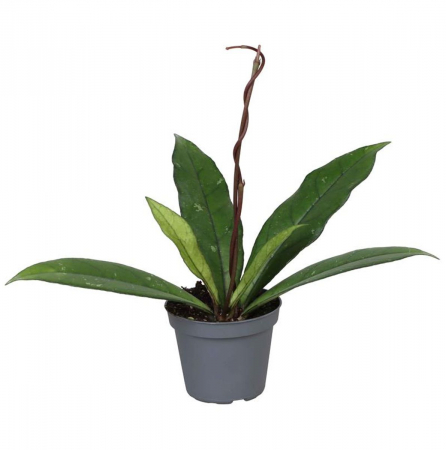
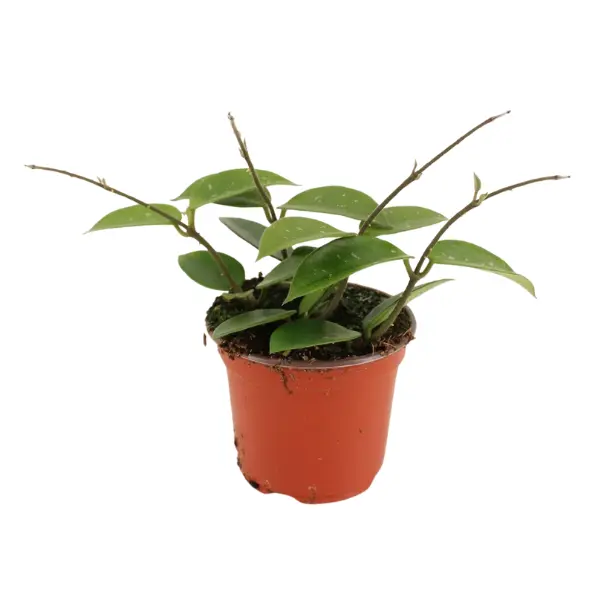
Hoya minutiflora is a delicate Hoya species from the Philippines, with small succulent leaves and miniature flowers – among the smallest in the Hoya genus. Compact twining habit. Prefers indirect light and well-draining substrate. Blooms relatively easily. Non-toxic plant.
Approx height (including pot): 20 cm
Flowering state: No flowers
Country of origin: Indonesia
- Description
- Characteristics
- Reviews (0)
- FAQ
🌿 Hoya minutiflora – Enchanting Miniature Flowers
Hoya minutiflora is a delicate and charming Hoya species, remarkable for its tiny flowers – among the smallest in the entire Hoya genus. The name "minutiflora" comes from Latin meaning "with small flowers," perfectly reflecting the unique characteristic of this species. It is an ideal plant for collectors who appreciate elegance in miniature.
🌍 Origins & Botanical History
Hoya minutiflora belongs to the Apocynaceae family and is native to the Philippines, where it grows as an epiphyte in humid tropical forests. The genus Hoya comprises over 500 species distributed across Southeast Asia, Australia, and the Pacific Islands. This species stands out for the exceptionally small size of its flowers, measuring only a few millimeters in diameter.
🌿 Foliage – Small, Elegant and Succulent
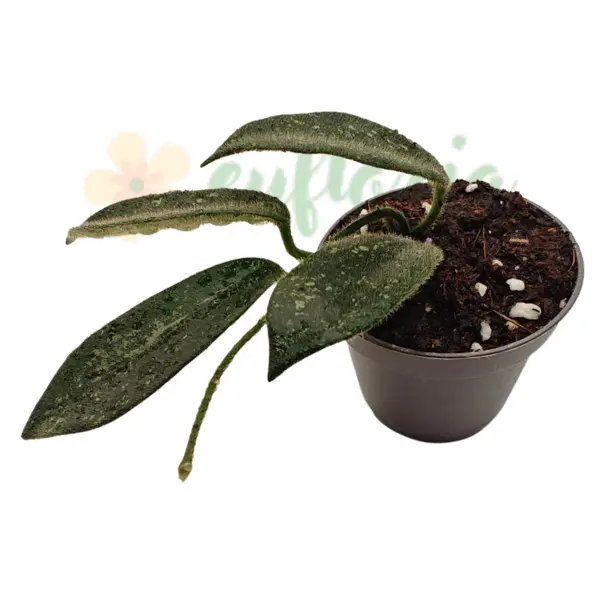
The leaves of Hoya minutiflora are small, oval-elongated, with a thick, semi-succulent texture. The color is deep green with a smooth, glossy surface. The compact leaf size creates a delicate, fairy-like effect along the thin, twining stems. It is a plant with a fine, graceful appearance, perfect for small spaces or terrariums.
🌸 Flowers – Miniature Jewels
The flowers of Hoya minutiflora are true natural jewels – tiny, waxy, grouped in small umbels. Despite their reduced size, they are perfectly formed and emit a sweet fragrance, surprisingly intense for their dimensions. The color ranges from white to pale pink. As with all Hoya species, flower peduncles should not be cut after blooming.
🌱 Growth Habit & Development
Hoya minutiflora has a compact, twining habit with thin stems that can arch or climb on a support. It prefers bright indirect light and a well-draining substrate of bark, perlite, and a small amount of peat. Water when the substrate has partially dried out. The ideal temperature range is 18-28°C (65-82°F), with moderate humidity. Growth is moderate, and the plant blooms relatively easily.
Lungime: 20 cm
Greutate (kg): 0.25 Kg
Denumire: Hoya
Diametru: 7 cm
Cerințe lumină: Partial umbra
Tip plantă: Decorative
Utilizare: Interior
Tip suport: Ghiveci
Material Suport: Plastic
What type of light does Hoya minutiflora prefer?
How should Hoya minutiflora be watered?
Does this species bloom easily?
Is it suitable for beginners?
What kind of substrate is ideal?
Does it need high ambient humidity?
Is it a toxic plant?
What can I do if new leaves dry up or fall off?
How do I care for a Hoya plant?
When does Hoya bloom?
How often should I water my Hoya?
Is Hoya toxic to pets?
How do I propagate Hoya?
Ai nevoie și de un ghiveci decorativ?