EN/
EN/ Romana
Hoya carnosa 'Grey Ghost' Ø6cm
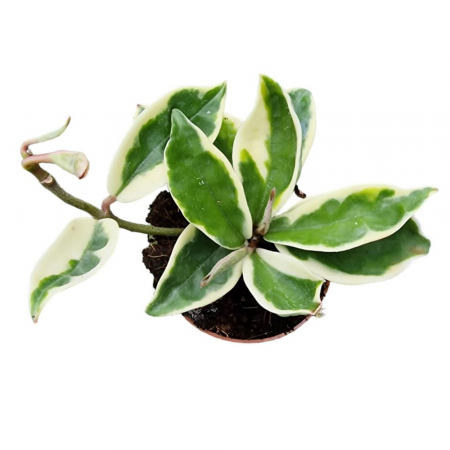
![Hoya 'Grey Ghost' – Collector's Silver Hoya with Fragrant Pink Flowers [0]](https://gomagcdn.ro/domains2/eufloria.ro/files/product/medium/hoya-carnosa-grey-ghost-d10-5-008350.webp "Hoya 'Grey Ghost' – Collector's Silver Hoya with Fragrant Pink Flowers [0]")
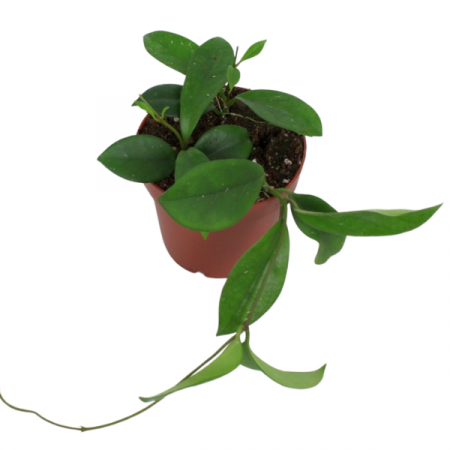
![Hoya 'Grey Ghost' – Collector's Silver Hoya with Fragrant Pink Flowers [1]](https://gomagcdn.ro/domains2/eufloria.ro/files/product/medium/hoya-carnosa-grey-ghost-d10-5-248088.webp "Hoya 'Grey Ghost' – Collector's Silver Hoya with Fragrant Pink Flowers [1]")
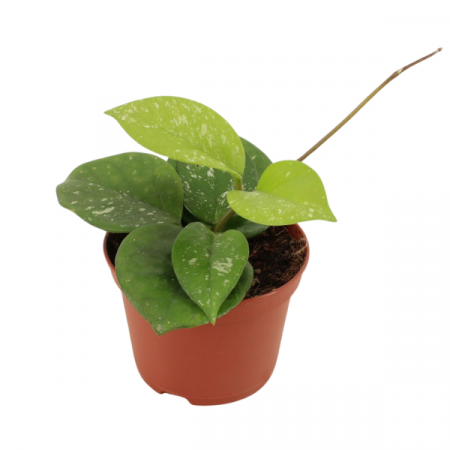
![Hoya 'Grey Ghost' – Collector's Silver Hoya with Fragrant Pink Flowers [2]](https://gomagcdn.ro/domains2/eufloria.ro/files/product/medium/hoya-carnosa-grey-ghost-d10-5-101170.webp "Hoya 'Grey Ghost' – Collector's Silver Hoya with Fragrant Pink Flowers [2]")
![Hoya 'Grey Ghost' – Collector's Silver Hoya with Fragrant Pink Flowers [1]](https://gomagcdn.ro/domains2/eufloria.ro/files/product/original/hoya-carnosa-grey-ghost-d10-5-008350.webp "Hoya 'Grey Ghost' – Collector's Silver Hoya with Fragrant Pink Flowers [1]")
![Hoya 'Grey Ghost' – Collector's Silver Hoya with Fragrant Pink Flowers [2]](https://gomagcdn.ro/domains2/eufloria.ro/files/product/original/hoya-carnosa-grey-ghost-d10-5-248088.webp "Hoya 'Grey Ghost' – Collector's Silver Hoya with Fragrant Pink Flowers [2]")
![Hoya 'Grey Ghost' – Collector's Silver Hoya with Fragrant Pink Flowers [3]](https://gomagcdn.ro/domains2/eufloria.ro/files/product/original/hoya-carnosa-grey-ghost-d10-5-101170.webp "Hoya 'Grey Ghost' – Collector's Silver Hoya with Fragrant Pink Flowers [3]")
Note: Non-toxic
Approx height (including pot): 15 cm
Flowering state: No flowers
Country of origin: Denmark
- Description
- Characteristics
- Reviews (0)
- FAQ
🌿 Hoya carnosa ‘Grey Ghost’ — the silver phantom of Hoya collectors
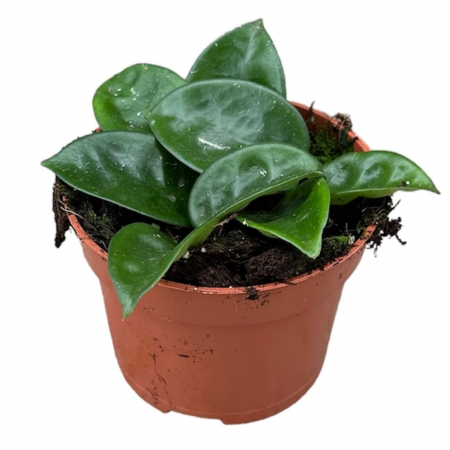
There are plants that win admirers through spectacular flowers, others through imposing size, but Hoya carnosa ‘Grey Ghost’ seduces through something far more subtle and rare: foliage that appears draped in a silver mist, like a vegetal phantom materialised in a pot. Each leaf is a palette of silver-grey, forest green and ashen tones that shift with the light of day, creating a hypnotic effect one never tires of.
This refined cultivar of the Hoya carnosa species — one of the oldest and most beloved Hoyas in ornamental culture — is the result of a natural mutation affecting chlorophyll distribution in leaf tissues. Unlike classic variegated forms where green alternates with white or yellow, in ‘Grey Ghost’ the entire leaf surface is enveloped in a translucent silver veil, giving the plant an evanescent, almost unreal appearance.
Offered in 6 cm pots, this young Hoya already displays the characteristic leaves with their silver reflections. With proper care, it will develop long, twining stems that can be trained on a support or left to cascade — each new leaf unfurling with the same mysterious silver patina.
🌍 Origin and Botanical History
Hoya carnosa was first described by botanist Robert Brown in 1810, being one of the first Hoya species introduced to European cultivation. Native to East Asia — southern China, Taiwan, Vietnam and Japan — this species grows naturally as an epiphyte in humid subtropical forests, at altitudes from sea level to 1,500 metres. The generic name “Hoya” honours Thomas Hoy, gardener to the Duke of Northumberland, while the epithet “carnosa” refers to the fleshy, succulent texture of the leaves.
The ‘Grey Ghost’ cultivar appeared as a spontaneous mutation in ornamental culture, selected for its unique silver patina. The phenomenon is caused by a microscopic air layer between the leaf epidermis and mesophyll tissue, which refracts light and creates the characteristic silver effect. This mechanism is similar to that found in other silver-leaved plants such as Begonia rex or Scindapsus pictus.
Hoya carnosa is probably the most cultivated species in the genus, with a history spanning over 200 years in horticulture. In the Victorian era, it was considered a prestige plant, cultivated in the greenhouses of European aristocracy. Today, its rare cultivars such as ‘Grey Ghost’ are among the most sought-after collector plants in the world.
🌱 The Foliage
The leaves of Hoya carnosa ‘Grey Ghost’ are the defining element of this exceptional cultivar. Each leaf measures 5-8 cm in length and 3-5 cm in width, with a classic ovate shape, entire margins and a slightly rounded tip. The texture is thick and fleshy, typical of the carnosa species — but what makes ‘Grey Ghost’ special is the translucent silver layer covering the entire leaf surface.
In natural light, the leaves seem to glow from within, with an opalescent effect that varies from blue-grey in shade to brilliant silver in direct light. The veins are subtly visible as darker lines beneath the silver veil, adding visual depth. New leaves unfurl with a slightly pink tint that gradually transforms into the characteristic silver as the leaf matures.
To the touch, the leaves have a firm, slightly waxy consistency with a smooth surface that reflects light. The petioles are short and robust. The stems are twining, flexible, with visible nodes from which adventitious roots can emerge.
🌸 The Flowers
The flowers of Hoya carnosa are celebrated in the horticultural world, and ‘Grey Ghost’ fully inherits this spectacular floral capacity. Spherical umbels contain 15-30 individual flowers, each approximately 1.5 cm in diameter. The flowers are light pink to white, with a waxy, lustrous texture that gives them the appearance of “porcelain flowers” — hence the species’ popular name.
The central corona, a more intense pink with a reddish-burgundy centre, contrasts elegantly with the paler petals. The fragrance is exceptional — sweet, intense, with notes of vanilla and chocolate, intensifying dramatically in the evening hours. Each umbel produces abundant nectar that may drip slightly, which is completely normal. Peduncles are permanent and should never be cut.
The main flowering period is from late spring to early autumn, but in optimal conditions the plant may produce flowers throughout the year. A winter rest period with lower temperatures and reduced watering stimulates abundant flowering the following season.
🌱 Growth Habit and Development
Hoya carnosa ‘Grey Ghost’ has the twining, climbing growth habit typical of the carnosa species. The stems extend continuously, seeking supports to anchor onto. Growth rate is moderate to slow, due to the reduced chlorophyll level in the silver leaves — photosynthesis is less efficient than in the classic green form. Nevertheless, the plant is robust and long-lived — specimens of Hoya carnosa have lived over 30 years in cultivation.
Compared to other Hoya carnosa cultivars, ‘Grey Ghost’ requires slightly more light to compensate for less efficient photosynthesis. It is ideal on a hoop, trellis, or in a hanging basket where the stems can cascade.
Care requirements:
- Light: Bright, indirect light. East or west-facing window. Requires more light than green Hoya carnosa to compensate for the silver foliage. 2-3 hours of direct morning sun are beneficial.
- Temperature: Optimal 18-27°C. Tolerates minimum 7°C for short periods. A winter cooling period (12-15°C) stimulates flowering.
- Watering: Allow the substrate to dry almost completely between waterings. Hoya carnosa tolerates drought better than overwatering. Water sparingly in winter.
- Humidity: 40-60%. Tolerates normal household humidity, but higher levels favour growth.
- Substrate: Well-draining mix: pine bark, perlite, sphagnum moss and universal potting mix in roughly equal proportions.
- Fertilisation: Balanced liquid fertiliser diluted to half strength, every 2-3 weeks during the growing season.
- Propagation: By stem cuttings with 2-3 nodes or by layering. Optimal rooting temperature: 22-25°C.
Lungime: 10 cm
Greutate (kg): 0.15 Kg
Denumire: Hoya
Diametru: 10.5 cm
Cerințe lumină: Partial umbra
Tip plantă: Decorative
Utilizare: Interior
Tip suport: Ghiveci
Material Suport: Plastic
How is Hoya carnosa 'Grey Ghost' different from regular Hoya carnosa?
Both are the same species – Hoya carnosa – but the 'Grey Ghost' is a selected cultivar with dramatically different foliage. Standard Hoya carnosa has deep green leaves with scattered silver speckles covering a relatively small portion of the leaf surface. In 'Grey Ghost', the silver speckles are so dense and extensive that they dominate the entire leaf, creating a predominantly silver-grey appearance with only minimal green showing through. The leaves have a matte, almost metallic sheen rather than the glossy surface of the standard form. The other major difference is growth rate: 'Grey Ghost' grows significantly slower than standard Hoya carnosa. The flowers, when they appear, are identical to the species – pink, star-shaped, fragrant, and produced in clusters from persistent peduncles. An interesting observation from growers: too much bright light can push 'Grey Ghost' leaves toward greener tones, while moderate indirect light preserves the coveted silver-grey colour.
Will Hoya carnosa 'Grey Ghost' flower?
Yes, it produces the classic Hoya carnosa flowers – clusters of up to 25 star-shaped baby pink blooms with plum-coloured centres, each around 20 mm across. The flowers are waxy, nectar-producing, and strongly sweet-scented (especially in the evening), lasting up to 7 days per cluster. However, blooming requires significant patience with this slow-growing cultivar. A young plant may take several years to reach maturity and build enough energy to flower. The keys to encouraging blooming are: consistent bright indirect light, allowing the plant to become slightly root-bound, feeding with a phosphorus-rich fertilizer during the growing season, and critically, never removing the old peduncles (flower spurs) – new flowers emerge from the same stalks year after year. A cool, drier rest period in winter can also help trigger spring budding.
How do I keep the silver-grey colour on Hoya carnosa 'Grey Ghost' leaves?
The silver-grey colouration is a genetic trait of this cultivar and is permanent – it does not wash off or fade with age. However, light levels can influence how the colour expresses itself. Growers have observed that too much bright light can cause new leaves to emerge with more green and less silver, while moderate bright indirect light preserves and maximises the silver-grey appearance. For the best results, provide bright but not harsh light – an east or west-facing window with no direct midday sun is ideal. Grow lights also work well during darker months. Avoid low-light conditions, which will cause slow growth and potentially leggy stems, even if the silver colour is maintained. Occasionally wiping leaves with a soft, damp cloth removes dust and allows the natural metallic sheen to show to best effect.
Why is my Hoya carnosa 'Grey Ghost' growing so slowly?
This is completely normal and is one of the defining characteristics of the 'Grey Ghost' cultivar. While standard Hoya carnosa is known for vigorous, fast growth, the 'Grey Ghost' is notably slower – some growers report only 4-5 new leaves per year, even under ideal conditions. This is widely documented and is not a sign of ill health. The extreme silver pigmentation on the leaves likely reduces the photosynthetic efficiency compared to greener forms, which contributes to the slower growth rate. Ensure you are providing bright indirect light, appropriate watering, and light feeding during the growing season, but accept that this cultivar rewards patience. The slow growth is part of what makes established specimens so valued among collectors.
Is Hoya carnosa 'Grey Ghost' toxic to cats and dogs?
No. Hoya carnosa, including the 'Grey Ghost' cultivar, is classified as non-toxic to cats, dogs, and horses by the ASPCA. No part of the plant is poisonous. As with any houseplant, ingesting large quantities of foliage may cause mild gastrointestinal upset, but there is no toxic compound of concern. The milky latex sap released when stems are cut can cause minor skin irritation in sensitive individuals – use gloves when pruning and wash hands afterwards. Given the extremely slow growth rate of this cultivar, it is worth keeping it out of reach of curious pets to avoid damage that takes a long time to replace.
How do you care for Hoya carnosa Grey Ghost?
Hoya carnosa Grey Ghost thrives in bright indirect light – an east or west-facing window works perfectly. Avoid direct summer sun, which can scorch the delicate silver-pigmented leaves. Water only when the top 2–3 cm of substrate has dried out completely; this species tolerates drought far better than overwatering. Use a well-draining mix of pine bark, perlite and peat in equal parts. The ideal temperature range is 18–27°C (65–80°F), with a cooler winter rest period of 15–18°C (59–65°F) that can encourage blooming. Humidity above 50% is beneficial, though the plant adapts well to average household conditions. Feed monthly during the growing season (April–September) with a balanced liquid fertiliser diluted to half the recommended strength.
Does Hoya carnosa Grey Ghost bloom?
Yes, Hoya carnosa Grey Ghost produces waxy, fragrant flowers arranged in spherical umbels. The blooms are typically pale pink with a dark-red centre and have a glossy, porcelain-like appearance. Their scent intensifies in the evening and at night, when it naturally attracts pollinators. To encourage flowering, provide a cooler winter rest period (15–18°C / 59–65°F) with reduced watering. It is essential never to cut the peduncles (flower stalks) after the blooms fade, as the same peduncles will produce new flowers in subsequent seasons. The plant typically blooms once it reaches maturity, which may take 2–3 years from rooting.
How often should you water Hoya carnosa Grey Ghost?
Hoya carnosa Grey Ghost prefers to dry out thoroughly between waterings. During the warm season (spring–summer), water roughly once a week, but only after the top 2–3 cm of substrate has dried out completely. In winter, reduce the frequency to once every 2–3 weeks, as the plant enters a vegetative rest period. Always use room-temperature water and make sure the pot has drainage holes. Overwatering is the main cause of problems with Hoyas – the fleshy roots are susceptible to rot if left sitting in stagnant water. A useful indicator: the leaves become slightly pliable when the plant needs watering.
Is Hoya carnosa Grey Ghost toxic?
No, Hoya carnosa Grey Ghost is considered non-toxic. According to the ASPCA, Hoya carnosa is not toxic to cats, dogs or horses, making it an excellent choice for pet-friendly households. However, as with any houseplant, ingesting large amounts of foliage may cause mild gastrointestinal discomfort (nausea, vomiting), so it is advisable to keep the plant out of reach of curious pets or small children. The milky sap released when stems are cut can irritate sensitive skin, so wearing gloves during propagation is recommended.
How do you propagate Hoya carnosa Grey Ghost?
Hoya carnosa Grey Ghost is most easily propagated through stem cuttings. Cut an 8–12 cm section of stem with 2–3 nodes and at least one pair of leaves. Remove the leaves from the lower node and let the cutting air-dry for 1–2 hours to allow the wound to callous over. Place the cutting in clean water or in a moist mix of sphagnum moss and perlite. Roots typically appear within 2–6 weeks. If using the water method, change the water every 2–3 days and transplant into substrate once the roots reach 3–5 cm. Propagation is best carried out in spring or summer, when the plant is actively growing. Keep in mind that Grey Ghost grows slowly, so be patient – rooting may take longer than with other Hoya carnosa cultivars.
How often should I water Hoya carnosa 'Grey Ghost'?
Hoya carnosa ‘Grey Ghost’ prefers to dry out almost completely between waterings. In the warm season, water once every 7-14 days depending on temperature and substrate. In winter, reduce significantly to once every 3-4 weeks. This Hoya tolerates drought far better than overwatering.
Why are the leaves silver on Hoya carnosa 'Grey Ghost'?
The silver appearance of ‘Grey Ghost’ leaves is caused by a microscopic air layer between the leaf epidermis and mesophyll tissue. This layer refracts light, creating the opalescent silver effect. It is not a disease or deficiency — it is a stable genetic trait of the cultivar. To maintain the silver intensity, provide bright indirect light.
Is Hoya carnosa 'Grey Ghost' toxic to cats?
No, Hoya carnosa ‘Grey Ghost’ is considered non-toxic to both cats and dogs as well as humans. The Hoya genus does not contain toxic substances. It is a safe choice for homes with pets, though it is recommended to place it at height to protect the decorative foliage.
When does Hoya carnosa 'Grey Ghost' bloom indoors?
Hoya carnosa ‘Grey Ghost’ typically blooms from late spring to early autumn. To stimulate flowering, provide a winter rest period with temperatures of 12-15°C and reduced watering. Never cut old peduncles — the plant reblooms from the same points year after year. The flowers have a sweet, intense fragrance with vanilla notes.
Recommendations
Ai nevoie și de un ghiveci decorativ?