
 EN/
EN/ Romana
Hoya shepherdii D6
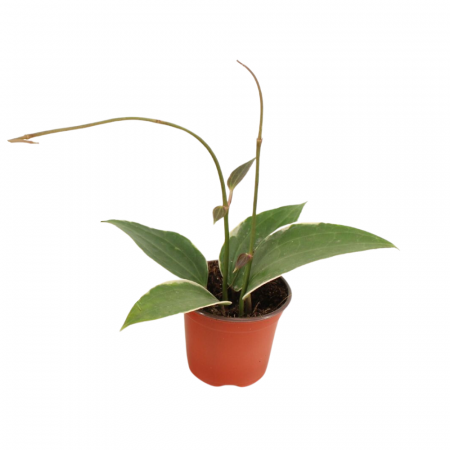
![Hoya shepherdii — Prolific Bloomer with Bean-Like Cascading Foliage [0]](https://gomagcdn.ro/domains2/eufloria.ro/files/product/medium/hoya-shepherdii-d6-332160.webp "Hoya shepherdii — Prolific Bloomer with Bean-Like Cascading Foliage [0]")
![Hoya shepherdii — Prolific Bloomer with Bean-Like Cascading Foliage [1]](https://gomagcdn.ro/domains2/eufloria.ro/files/product/medium/hoya-shepherdii-d6-706669.webp "Hoya shepherdii — Prolific Bloomer with Bean-Like Cascading Foliage [1]")
![Hoya shepherdii — Prolific Bloomer with Bean-Like Cascading Foliage [1]](https://gomagcdn.ro/domains2/eufloria.ro/files/product/original/hoya-shepherdii-d6-332160.webp "Hoya shepherdii — Prolific Bloomer with Bean-Like Cascading Foliage [1]")
![Hoya shepherdii — Prolific Bloomer with Bean-Like Cascading Foliage [2]](https://gomagcdn.ro/domains2/eufloria.ro/files/product/original/hoya-shepherdii-d6-706669.webp "Hoya shepherdii — Prolific Bloomer with Bean-Like Cascading Foliage [2]")
Note: Product images are for guidance only. Due to different batches of imported products, there may be differences between the images on the website and the actual appearance of the products.
Approx height (including pot): 10 cm
Flowering state: No flowers
- Description
- Characteristics
- Reviews (0)
- FAQ
The String Bean Hoya — Nature's Green Bean Vine
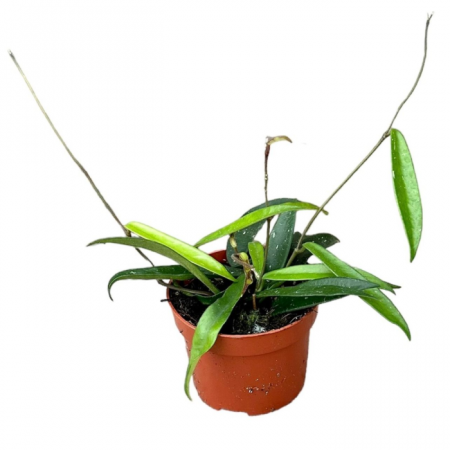
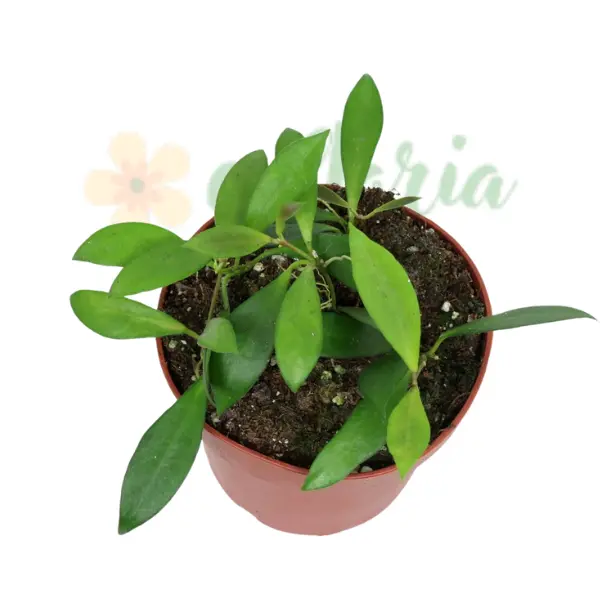
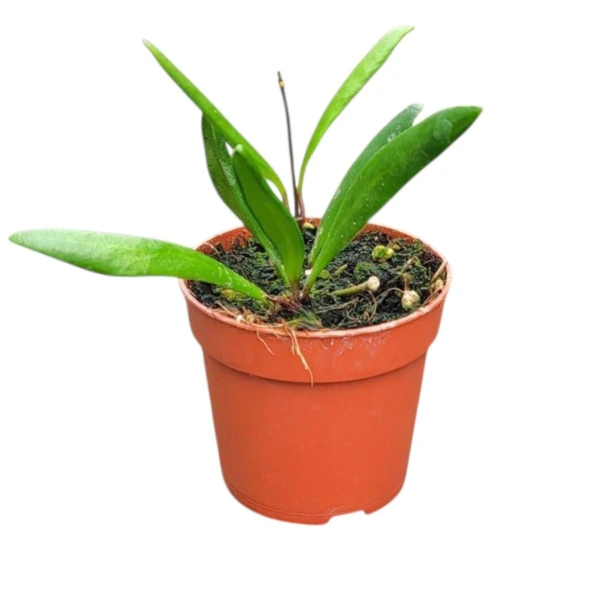
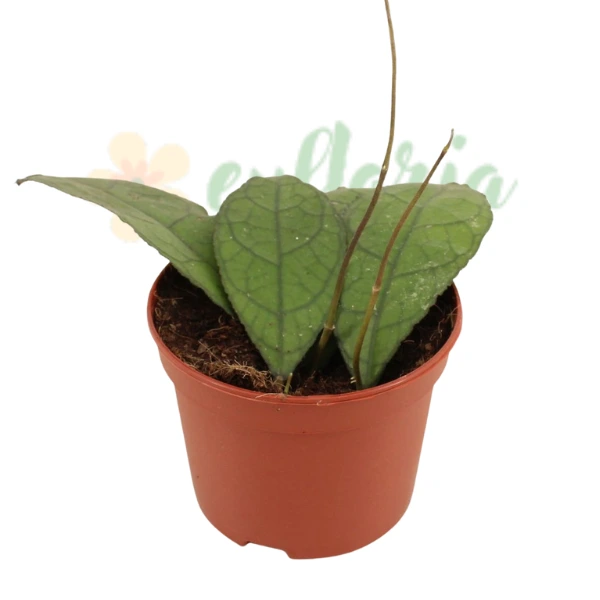
Hoya shepherdii is instantly recognisable and utterly charming — a cascading vine with long, narrow, dark green leaves that look remarkably like string beans or green beans hanging from the stems. The common names "String Bean Hoya" and "Green Bean Hoya" are perfectly descriptive: one glance at the thick, waxy, pendulous foliage and you understand exactly why. This Himalayan native combines unusual foliage with easy care and prolific flowering, making it one of the most beginner-friendly yet visually distinctive Hoyas in cultivation. Ohio Tropics describes it as "one of my freest blooming Hoyas," reporting that their plant "blooms several times a year." When those clusters of small, fragrant, white to pink flowers appear — releasing a sweet scent strong enough to fill entire rooms — you understand why this species has earned a devoted following among collectors and casual plant lovers alike.
🌏 Origins & Botanical History
Hoya shepherdii was described by Short ex Hooker (the "ex" indicates Short originally named it, but Hooker validly published it). According to Kew's Plants of the World Online, the native range is East Himalaya to Assam. The species grows as an epiphyte in the cool, wet forests of the eastern Himalayan foothills and the Assam region of northeastern India — an area characterised by high humidity, filtered light, and slightly cooler temperatures than lowland tropical regions. Plant & Interieur notes that the species "typically grows as an epiphyte (on trees) in cool and wet forests at higher elevations within these subtropical and temperate regions." This Himalayan origin means the plant appreciates good humidity and excellent air circulation, and can tolerate slightly cooler temperatures than many tropical Hoyas. The species' narrow, bean-like foliage is somewhat reminiscent of related species like Hoya kentiana and Hoya wayetii, though each has its own distinct characteristics.
🍃 Foliage — Long, Waxy & Bean-Like
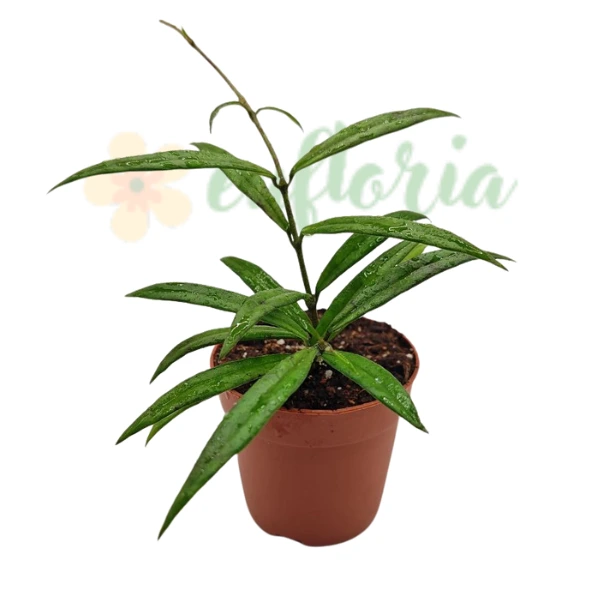
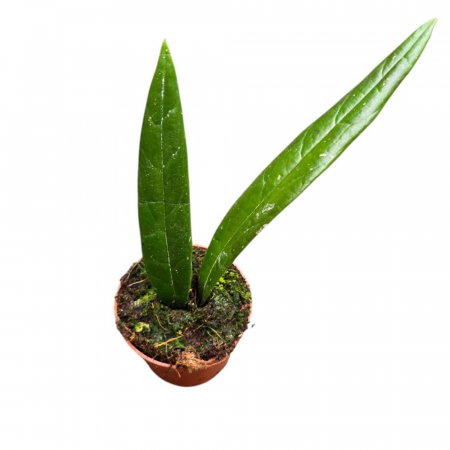
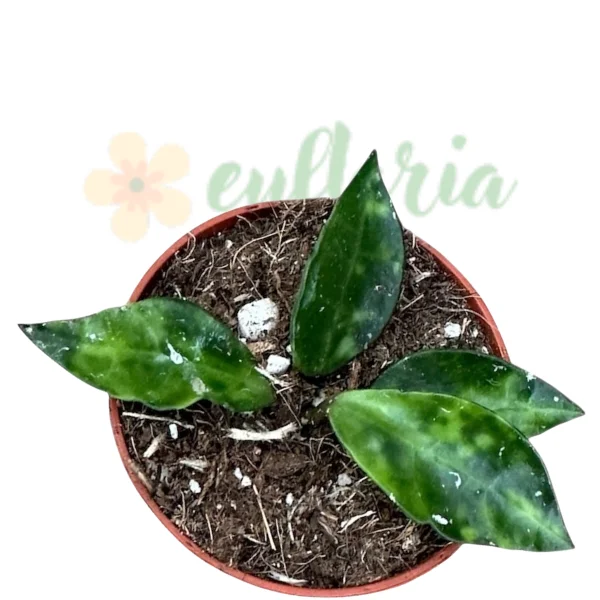
The leaves are the defining feature: long, narrow, thick, and waxy, measuring approximately 5-15 cm long and 1-2 cm wide, with a distinctive shape that immediately recalls string beans. They are deep, glossy green, slightly curved or arching, and hang pendulously from the stems — creating a cascading effect that makes this species ideal for hanging baskets. The texture is thick and succulent-like, which allows the plant to store water and tolerate drought. Wikipedia notes the foliage "superficially resembles a green bean, somewhat similar to Hoya kentiana and Hoya wayetii." The leaves attach to the stems at a sharply bent petiole (leaf stalk), causing them to hang downward in bunches. This distinctive hanging habit, combined with the bean-like shape, creates an architectural, almost sculptural effect that stands out among houseplants.
🌸 Flowers — Fragrant Clusters of Waxy Stars
The flowers are one of this species' greatest attractions. They appear in rounded clusters (umbels) of 5-20 blooms, with individual flowers measuring approximately 1-1.3 cm across. Flower colour ranges from white to pale pink, often with a small maroon or red centre (corona). Leaf & Clay describes them as "2-3 inch wide clusters composed of sweetly fragrant 1/2 inch wide white waxy star-shaped flowers with a small maroon eye." The blooms have that characteristic fuzzy, waxy, porcelain-like quality typical of Hoyas. The fragrance is notably strong — Ohio Tropics reports: "The fragrance is so strong (especially when it is in full bloom) that it is very apparent even from other rooms!" Gulley Greenhouse describes the scent as "chocolate-scented," while others describe it as sweet and floral. Flowering occurs primarily in late spring and summer, though well-established plants may bloom multiple times per year. This is considered one of the more reliably blooming Hoyas — an excellent choice for those who want to experience Hoya flowers without years of waiting. As with all Hoyas, never remove the peduncles (flower stalks) after blooming; the plant will rebloom from the same spurs.
🌿 Growth Habit & Development
Growth habit is trailing or cascading, making this species ideal for hanging baskets where the pendulous vines can display their bean-like foliage to full effect. The plant can also be trained to climb on a trellis or support. Vines can reach 3-12 metres in length depending on conditions, though indoor specimens are typically more compact. Growth rate is described as fast by several sources. JOMO Studio notes: "they grow long, pendulous vines that are weighed down by the thick, waxy foliage." The stems are woody and sturdy, capable of supporting the weight of the thick leaves. Like most Hoyas, this species prefers to be somewhat root-bound and will flower more prolifically when roots are constrained. Ohio Tropics confirms: "Like any Hoya, your plant can stay in the same pot for many years. In fact, they like to be root bound and will flower better that way."
Care Requirements:
- Light: Bright, indirect light is ideal. This species tolerates a range from medium to bright light, but adequate light is essential for flowering. Ohio Tropics emphasises: "If you've had your Hoya shepherdii for a while and it has not bloomed for you, try increasing the light exposure." Some direct morning sun is beneficial; avoid harsh midday sun which can scorch leaves. Lower light is tolerated but will result in slower growth, leggier vines, and reduced or absent flowering. Artificial grow lights work excellently if natural light is insufficient.
- Water: Allow the soil to dry out almost completely between waterings, then water thoroughly. This species is drought-tolerant due to its succulent-like leaves — it stores water and can withstand periods of neglect. Overwatering is the most common cause of problems; avoid soggy soil which leads to root rot. Steve's Leaves simply advises: "allow getting dry between waterings." Reduce watering in winter when growth slows. Use room-temperature water; cold water can shock the roots.
- Soil: Fast-draining, well-aerated substrate is essential. Use a mix of orchid bark, perlite, and potting soil, or a dedicated Hoya/epiphyte mix. Good drainage is critical — the roots need oxygen. Avoid dense, water-retentive soils. Planterina recommends soil with "excellent drainage" and notes that "String Bean Hoyas should never be planted in dense soil mixtures with moisture-retaining crystals."
- Temperature: 10-27°C (50-80°F) is the acceptable range, with optimal growth around 18-24°C (65-75°F). This Himalayan species can tolerate slightly cooler temperatures than many tropical Hoyas but should be protected from frost and cold drafts. Avoid temperatures below 10°C (50°F). Sprout Home recommends "60-65°F at night and 70-80°F during the day."
- Humidity: Average household humidity is generally acceptable, making this an easier Hoya than many humidity-demanding species. Ohio Tropics notes: "Average indoor temperatures and humidity will be just fine for your H. shepherdii. If you are comfortable indoors, your plant will be too." However, higher humidity (60-70%) encourages optimal growth. A humidifier during dry winter months is beneficial. Good air circulation helps prevent fungal issues.
- Feeding: Apply a balanced liquid fertilizer at half-strength monthly during the growing season (spring-summer). A fertilizer slightly higher in phosphorus can encourage flowering. Reduce or stop fertilizing in winter. Feed sparingly — Hoyas are not heavy feeders and excessive fertilizer can cause salt buildup.
Botanical Info: Family: Apocynaceae (subfamily Asclepiadoideae) | Genus: Hoya | Species: Hoya shepherdii Short ex Hook. | Common Names: String Bean Hoya, Green Bean Hoya, Shepherd's Hoya | Type: Trailing/Climbing Epiphytic Vine | Native Range: East Himalaya to Assam (northeastern India) | Zone: USDA 10-12 (indoor cultivation in temperate climates) | Flowering: White to pale pink with maroon/red centres, waxy, star-shaped, 5-20 per umbel, strongly fragrant (sweet/chocolate), late spring-summer (multiple blooms per year possible) | Growth Rate: Fast
Lungime: 10 cm
Greutate (kg): 0.1 Kg
Denumire: Hoya
Diametru: 6 cm
Cerințe lumină: Partial umbra
Tip plantă: Decorative
Utilizare: Interior
Tip suport: Ghiveci
Material Suport: Plastic
What is the difference between Hoya shepherdii and Hoya 'Minibelle'?
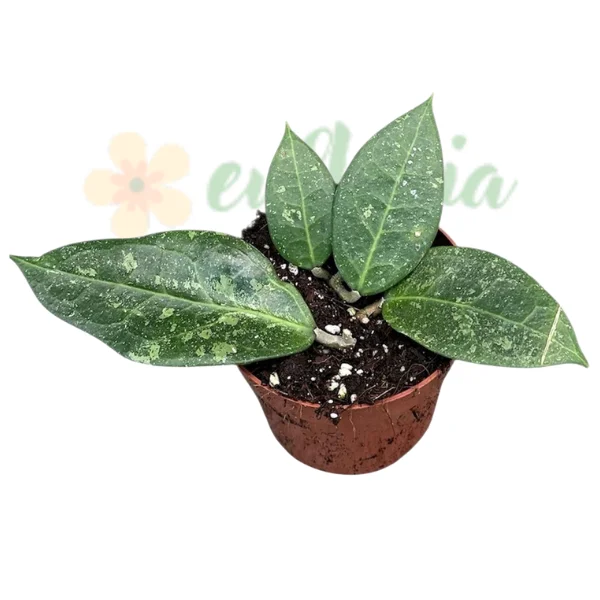
Hoya 'Minibelle' is a hybrid created by crossing Hoya shepherdii with Hoya carnosa — named after the hybridiser Ed Hummel's wife, Minibelle Hummel. The key differences: Foliage — shepherdii has plain, deep green, bean-like leaves; Minibelle inherits its shape from shepherdii but adds subtle silver flecking (splashes) from its carnosa parentage. Minibelle leaves can reach 10-20 cm long and typically display more prominent variegation. Flowers — shepherdii produces white to pale pink flowers; Minibelle produces light to dark pink flowers with red-centred white corona, up to 20 per umbel. The fragrance is similar, described as "reminiscent of shepherdii, but not as strong." Growth — Minibelle tends to be more compact and bushy; shepherdii is more trailing/cascading. Origin — shepherdii is a wild species from the Himalayas; Minibelle is a cultivated hybrid that combines traits of both parents. Both are easy to grow with similar care requirements.
How do I get my Hoya shepherdii to bloom?
Good news: Hoya shepherdii is one of the most reliably blooming Hoyas! Ohio Tropics calls it "one of my freest blooming Hoyas" that flowers "several times a year." To encourage blooming: provide bright, indirect light — insufficient light is the most common reason for failure to bloom. Keep the plant slightly root-bound, as Hoyas flower more prolifically when roots are constrained. Never remove old flower stalks (peduncles) — the plant rebloom from the same spurs repeatedly. Feed with a balanced or bloom-boosting fertilizer during the growing season. Maintain consistent care without major environmental changes. Unlike many Hoyas that take years to mature, shepherdii often blooms when relatively young. If your plant isn't blooming, increase light first — that's almost always the answer.
What does Hoya shepherdii smell like?
The fragrance is notably strong — one of the more powerfully scented Hoyas. Ohio Tropics reports: "The fragrance is so strong (especially when it is in full bloom) that it is very apparent even from other rooms!" Descriptions of the scent vary: Gulley Greenhouse describes it as "chocolate-scented," while others describe it as sweet and floral. Room 4 Plants gives a detailed assessment: "POTENT of sickly sweet floral with hints of citrus and as the flowers age strongly of old urine." The Midwestern Jungle (discussing the synonymous H. longifolia) describes it as "very floral." As with many Hoyas, individual perception of the fragrance varies, and the scent can change as flowers age. The fragrance intensifies when multiple flowers are open simultaneously and is generally stronger in the evening.
Is Hoya shepherdii easy to grow?
Yes! Hoya shepherdii is considered one of the easiest Hoyas to grow. JOMO Studio describes it as "a very easy Wax Plant to care for." Ohio Tropics confirms: "Hoyas are among the most forgiving, easy-care indoor plants." Key reasons for its easy-going nature: the thick, succulent-like leaves store water, making it drought-tolerant and forgiving of irregular watering; it tolerates average household humidity without demanding tropical levels; it adapts to a range of light conditions (though bright indirect is best); and it's not prone to many pests or diseases. The main caution is avoiding overwatering — let the soil dry between waterings. If you can grow a succulent or a pothos, you can grow this Hoya.
Is Hoya shepherdii the same as Hoya longifolia?
This is a point of confusion among collectors. The Midwestern Jungle states: "I learned that Hoya shepherdii is a synonym for Hoya longifolia." However, taxonomic sources like Kew's Plants of the World Online list both as accepted names for separate species. In practice, many plants sold as "shepherdii" and "longifolia" are difficult to distinguish and may be mislabelled or confused in the trade. Both have long, narrow, bean-like leaves and similar care requirements. If you have a plant labelled as either, the care will be essentially identical: bright indirect light, allow to dry between waterings, well-draining soil. The confusion in nomenclature is common in Hoyas — focus on the actual plant's characteristics rather than worrying too much about the precise name.
How big does Hoya shepherdii get?
Vines can potentially reach 3-12 metres in length depending on growing conditions, though indoor specimens are typically more compact. Weslor Flowers notes the species "can grow from 3 metres to 12 metres depending on location." Individual leaves measure approximately 5-15 cm long and 1-2 cm wide. The plant grows primarily as a trailing/cascading vine, making it ideal for hanging baskets where the pendulous foliage can display fully. It can also be trained to climb on a trellis or support. Growth rate is considered fast for a Hoya once the plant is established. The trailing habit means the plant takes up relatively little horizontal space while creating dramatic vertical or cascading displays.
How to care for Hoya?
Bright indirect light, moderate watering, drained substrate. 18-27°C.
Does Hoya bloom?
Yes, fragrant waxy flowers. Don't cut old peduncles.
How often to water?
When dry. Weekly summer, 2-3 weeks winter.
Toxic?
No, Hoya is non-toxic.
Propagation?
Cuttings 2-3 nodes water/sphagnum. 2-6 weeks.
Recommendations
Ai nevoie și de un ghiveci decorativ?







